
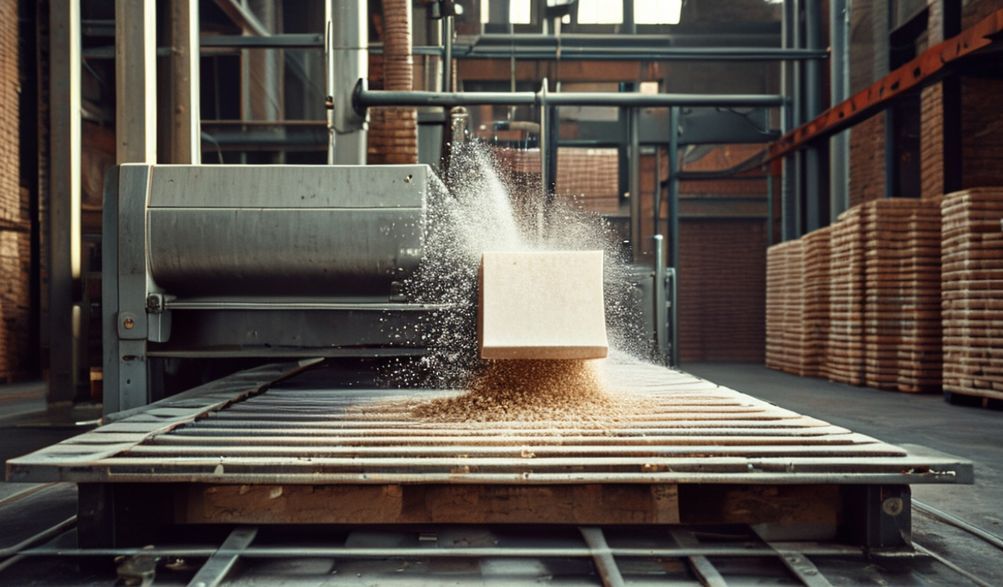
Революция в производстве кирпича: Машина для печати блоков на кирпичном заводе FUDA
На протяжении веков строительная отрасль сталкивалась с фундаментальной проблемой: поиском стабильных, высококачественных и доступных по цене кирпичей. Неоднородность размеров, переменная прочность и трудоемкое производство создавали сложности для проектов, приводя к задержкам, перерасходу средств и снижению структурной надежности. Сегодня технологическое решение меняет ландшафт производства кирпичей — машина для печати блоков.
В авангарде этой промышленной эволюции находится кирпичный завод FUDA. Известный как лидер отрасли, FUDA завоевал свою репутацию благодаря непреклонной приверженности внедрению передовых технологий, не как простого обновления, а как основной философии, направленной на повышение эффективности, улучшение качества продукции и удовлетворение огромных потребностей современного строительства.
В этой статье представлено подробное исследование блочно-печатного станка, используемого на FUDA. Мы разберем принцип его работы, оценим его конкретные преимущества и покажем, как он олицетворяет высший стандарт надежного современного производства кирпича. Опираясь на отраслевую практику и технические характеристики, это руководство служит надежным источником информации для строителей, подрядчиков, застройщиков и специалистов в области производства, стремящихся понять механизмы, которые создают наш мир.
Что такое блочная печатная машина? Объяснение основной технологии
Чтобы оценить его влияние, необходимо сначала понять саму машину. В контексте производства кирпича термин «блочная печать» выходит за рамки своей связи с текстилем. Здесь он представляет собой сложный процесс прецизионного формования и высокоплотного уплотнения, при котором сырье «печатается» в идеально сформированные, однородные кирпичи с замечательной стабильностью.
Определение процесса блочной печати в производстве кирпича
Процесс блочной печати — это метод изготовления кирпичей или бетонных блоков с использованием машины, которая применяет высокое давление для уплотнения материала в жёсткой форме, или «матрице». Точное количество сырья — обычно влажной бетонной смеси (цемент, песок, заполнитель) или стабилизированного грунта — загружается в камеру. Затем гидравлический или механический пресс прикладывает огромное давление, сжимая материал до формы матрицы. Это действие не только формирует блок, но и плотно уплотняет частицы, что критически важно для прочности конечного продукта. Свежесформированный блок затем извлекается на поддон, готовый к отвердеванию.
Ключевые компоненты современной машины для блочной печати
Современная машина для блочной печати представляет собой интегрированную систему из нескольких ключевых компонентов.
- Система подачи и дозатораЭто отправная точка. Бункер хранит сырьевую смесь, а система подачи, часто в виде конвейера или перемешивающего устройства, обеспечивает постоянный и контролируемый поток в формовочную камеру.
- Формовочная камера и пресс-формы:Сердце машины. В камере размещены сменные стальные формы, которые определяют форму и размер кирпича. На заводе FUDA библиотека форм позволяет производить различные типы продукции:
- Сплошные блоки:Для максимально несущих стен.
- Пустотелые блоки:Легче, с лучшими теплоизоляционными свойствами.
- Взаимосцепляющиеся кирпичи:Спроектированы для соединения без использования раствора, что ускоряет строительство.
- Тротуарная плитка и декоративные блоки:Для ландшафтного дизайна и эстетических целей.
- Гидравлическая или механическая система сжатия:Это обеспечивает усилие. Гидравлические системы ценятся за их плавное, управляемое и огромное давление, которое можно точно откалибровать для различных смесей материалов и желаемой плотности кирпичей.
- Система выгрузки и палетирования:После уплотнения система аккуратно выталкивает зеленый (неотвержденный) блок на поддон или стальной лист. Автоматический штабелер часто укладывает несколько блоков на один поддон для эффективного перемещения в зону отверждения.
Блочно-печатный станок против традиционных методов изготовления кирпича
Контраст с более старыми методами разителен:
- Ручное формование: Relies entirely on skilled labor, resulting in significant variations in size, density, and finish. Output is low, and the process is physically demanding.
- Экструзионные машины: These machines force material through a die to form a continuous column, which is then cut into bricks. While faster than manual methods, extrusion can sometimes produce bricks with less uniform density compared to the direct, omnidirectional pressure of a block print machine.
- The Block Print Advantage: It combines high automation with precision engineering. Every cycle produces a brick with near-identical dimensions and density. It dramatically reduces labor dependency, increases output exponentially, and ensures a product that meets strict engineering specifications.
Inside the FUDA Brick Making Factory: A Case Study in Efficiency
FUDA Brick Making Factory operates as a living testament to the power of strategic technological investment. Their facility is not just a collection of machines; it’s a synchronized ecosystem designed for peak performance.
FUDA’s Commitment to Technological Investment
FUDA’s philosophy is clear: consistency and scale are non-negotiable for serving large-scale commercial, industrial, and infrastructure projects. They view machinery like the block print machine not as an expense, but as the foundational investment for customer trust. By automating the core forming process, they eliminate human error from the equation, ensuring that every brick bearing the FUDA name meets an unwavering standard.
Integration into the Production Line
The block print machine is the pivotal component in a streamlined workflow:
- Подготовка сырья: Carefully selected sand, aggregate, and cement are batched and mixed with precise water content to achieve the optimal consistency for compaction.
- Кормление: The homogeneous mix is conveyed to the block print machine’s hopper.
- Printing/Compaction: The machine cycles automatically—filling, compacting, and ejecting bricks at a rapid, consistent pace.
- Курение: Pallets of green blocks are moved to a controlled curing chamber, where heat and humidity are managed to allow the cement to hydrate fully, achieving its designed strength.
- Drying & Stacking: After curing, bricks are dried and then automatically stacked or packaged for shipment.
Quality Control and Output Specifications
This integrated system allows FUDA to enforce rigorous quality control. Bricks produced by their block print machines are characterized by:
- Точность размеров: Tolerances within ±1-2mm, ensuring straight walls and simplified bricklaying.
- Высокая прочность на сжатие: The high-pressure compaction results in densities often exceeding 1500 kg/m³, with compressive strength reliably meeting or exceeding standards like IS 2185 (Part 1) for concrete blocks or relevant ASTM standards.
- Единообразие: Consistent color, texture, and weight across the entire production batch.
Top Advantages of Using a Block Print Machine for Brick Manufacturing
The adoption of block print technology delivers a compelling array of benefits that directly address the core challenges of construction.
Unmatched Product Consistency and Quality
This is the paramount advantage. Automated, cycle-after-cycle compression guarantees that every single brick has identical size, shape, and density. For architects, engineers, and masons, this consistency translates to predictable material usage, smoother construction processes, and structurally sound results.
High Production Speed and Scalability
While manual methods might produce a few hundred bricks per day, a single modern block print machine can produce 2,000 to 5,000 bricks per hour. This scalability is essential for FUDA to fulfill large orders and meet tight project deadlines without compromising on quality.
Значительное сокращение затрат на рабочую силу и физической нагрузки
The machine shifts the role of personnel from strenuous manual labor to skilled machine operation, monitoring, and maintenance supervision. This improves worker safety, reduces long-term physical strain, and optimizes labor costs for the factory.
Material Efficiency and Waste Reduction
The precision feeding and molding process minimizes spillage and overuse. Furthermore, because the bricks are so consistent, the rejection rate due to defects plummets. This leads to direct cost savings on raw materials and promotes more sustainable manufacturing practices.
Versatility in Brick Design and Type
With a simple change of the mold die, the same block print machine can switch production from standard solid blocks to decorative pavers or interlocking landscaping bricks. This flexibility allows a factory like FUDA to cater to diverse market segments without capital investment in multiple dedicated production lines.
Key Considerations When Operating a Block Print Machine
Maximizing the return on this advanced technology requires attention to several operational factors.
Raw Material Preparation is Crucial
The block print machine is a precision tool, and its performance is directly tied to its input. Critical factors include:
* Proper Grading: Well-graded aggregates ensure optimal packing and strength.
* Accurate Ratios: Cement-sand-aggregate ratios must be strictly followed.
* Влажность: This is vital. Too dry, and the brick won’t compact properly; too wet, and it may deform upon ejection. FUDA’s automated batching systems meticulously control this variable.
Machine Maintenance for Longevity
Preventive maintenance is key to avoiding costly downtime. A basic schedule includes:
* Ежедневно: Cleaning of the mold, hopper, and feed system; checking hydraulic fluid levels and for leaks.
* Weekly: Inspecting and tightening bolts, checking wear parts like mold liners and ram seals.
* Monthly/Annually: More thorough inspections, hydraulic fluid analysis and changes, and replacement of high-wear components as per the manufacturer’s manual.
Operator Training and Safety Protocols
A well-trained operator is the most important safety and efficiency feature. Training should cover:
* Machine startup/shutdown procedures.
* Safe operation, including lockout/tagout protocols.
* Basic troubleshooting and identification of common issues.
* Understanding the relationship between material input and machine output.
FAQ: Your Questions About Block Print Machines and FUDA Answered
Q1: What types of bricks can a block print machine at a factory like FUDA produce?
А: FUDA’s machines, through interchangeable molds, can produce a wide range, including: Solid Concrete Blocks (for foundations, load-bearing walls), Hollow Blocks (for partition walls, offering thermal/acoustic benefits), Paving Stones (for driveways, walkways), and Interlocking Bricks (for retaining walls, quick-assembly structures).
Q2: How does the block print process affect the final strength of the brick?
А: The high-pressure compaction (often measured in tons per square inch) forces particles closer together, eliminating voids and air pockets. This dense microstructure directly translates to higher compressive strength, making block-printed bricks ideal for structural applications.
Q3: Is the block print machine suitable for small-scale or startup brick yards?
А: The significant initial investment makes it most suitable for medium to large-scale production like FUDA’s. For small yards, the volume may not justify the cost. The decision hinges on a long-term ROI calculation, balancing capital expenditure against labor savings, material efficiency, and the ability to command a premium for consistent, high-quality products.
Q4: Can FUDA’s block print machines use recycled materials?
А: Yes, absolutely. Many modern block print machines are compatible with mixes incorporating industrial by-products like зола-унос (a pozzolan) or crushed recycled concrete as partial aggregate replacements. This aligns with global trends toward sustainable construction and can improve certain properties of the final block.
Q5: How does FUDA ensure the reliability of its brick-making machinery?
А: FUDA employs a multi-pronged approach: 1) Procurement: Sourcing robust machines from reputable manufacturers known for durability. 2) Профилактическое обслуживание: Adhering to a strict, scheduled maintenance regimen. 3) Техническая экспертиза: Employing trained in-house technicians and maintaining relationships with equipment suppliers for specialized support. 4) Quality Inputs: Using high-grade components and raw materials to reduce machine wear.
Заключение
The block print machine has unequivocally established itself as a cornerstone of efficient, high-quality brick production. As demonstrated by industry leaders like the FUDA Brick Making Factory, this technology is the bridge between raw material and reliable building component, ensuring consistency, strength, and scalability that manual or semi-automated methods cannot match.
Looking ahead, the evolution continues. We can expect further integration of the Internet of Things (IoT) for real-time machine monitoring and predictive maintenance, even greater automation in material handling, and continued innovation in sustainable material recipes for block printing.
For construction professionals, the lesson is clear: the integrity of a project begins with the quality of its most basic materials. Investing in—or sourcing from—manufacturers who utilize proven, precision technology like the block print machine is not just a procurement decision; it is a fundamental risk mitigation strategy. It ensures that the foundations of our buildings, homes, and infrastructure are as reliable as the engineering that designs them.
Call to Action: For your next project, specify machine-pressed, block-printed bricks to guarantee dimensional consistency and structural performance. When evaluating suppliers, prioritize those who, like FUDA, invest in advanced manufacturing technology—it is the most reliable indicator of a commitment to quality that will stand the test of time.
<