
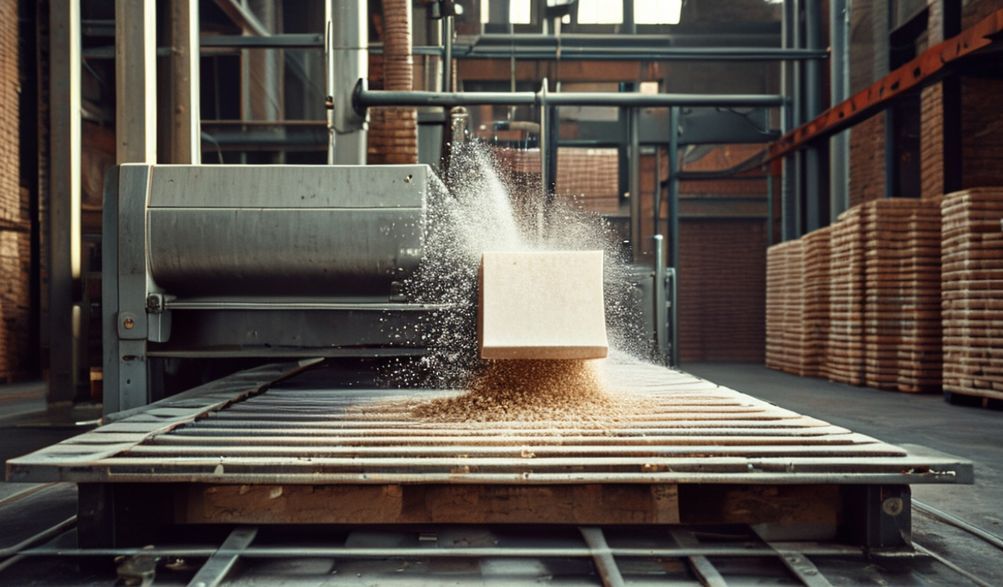
Cách mạng hóa sản xuất gạch: Máy in khối tại Nhà máy sản xuất gạch FUDA
Trong nhiều thế kỷ, ngành xây dựng đã vật lộn với một thách thức cơ bản: tìm nguồn gạch chất lượng cao, giá cả phải chăng và đồng đều. Kích thước không nhất quán, độ bền thay đổi và quy trình sản xuất tốn nhiều lao động đã gây khó khăn cho các dự án, dẫn đến chậm trễ, vượt chi phí và làm giảm độ vững chắc của công trình. Ngày nay, một giải pháp công nghệ đang định hình lại bức tranh sản xuất gạch – đó chính là máy in khối.
Tiên phong trong cuộc cách mạng công nghiệp này là Nhà máy Sản xuất Gạch FUDA. Được biết đến như một nhà lãnh đạo ngành, FUDA đã xây dựng danh tiếng dựa trên cam kết kiên định trong việc áp dụng công nghệ tiên tiến, không chỉ như một bản nâng cấp đơn thuần, mà như một triết lý cốt lõi để thúc đẩy hiệu quả, nâng cao chất lượng sản phẩm và đáp ứng nhu cầu khổng lồ của ngành xây dựng hiện đại.
Bài viết này cung cấp một cái nhìn sâu sắc về máy in khối được triển khai tại FUDA. Chúng tôi sẽ phân tích cách vận hành, định lượng những lợi ích cụ thể và chứng minh cách nó trở thành tiêu chuẩn vàng trong sản xuất gạch hiện đại, đáng tin cậy. Dựa trên những hiểu biết bám sát thực tiễn ngành và thông số kỹ thuật, hướng dẫn này là một nguồn tài liệu đáng tin cậy cho các nhà xây dựng, nhà thầu, chủ đầu tư và chuyên gia sản xuất muốn tìm hiểu về loại máy móc đang kiến tạo thế giới của chúng ta.
Máy in khối là gì? Giải thích Công nghệ Cốt lõi
Để đánh giá tác động của nó, trước tiên cần hiểu chính bản thân cỗ máy. Trong bối cảnh sản xuất gạch, thuật ngữ "in khối" vượt ra khỏi mối liên hệ với ngành dệt may. Ở đây, nó đại diện cho một quy trình tinh vi của việc đúc khuôn chính xác và nén chặt mật độ cao, nơi nguyên liệu thô được "in" thành những viên gạch đồng đều, hoàn hảo với độ nhất quán đáng kinh ngạc.
Xác Định Quy Trình In Khối trong Sản Xuất Gạch
Quy trình in khối là một phương pháp sản xuất gạch hoặc khối bê tông sử dụng máy móc áp dụng kỹ thuật nén áp suất cao trong khuôn cứng hay còn gọi là "khuôn đúc." Một lượng nguyên liệu thô được đo lường chính xác—thường là hỗn hợp bê tông ẩm (xi măng, cát, cốt liệu) hoặc đất ổn định—được đưa vào buồng. Sau đó, một pít-tông thủy lực hoặc cơ khí tác động áp lực cực lớn, nén vật liệu thành hình dạng của khuôn. Hành động này không chỉ tạo hình khối mà còn nén chặt các hạt vật liệu, yếu tố quan trọng cho độ bền của sản phẩm cuối cùng. Khối mới được tạo hình sau đó được đẩy ra khay, sẵn sàng cho quá trình bảo dưỡng.
Các Thành Phần Chính của Máy In Khối Hiện Đại
Một máy in khối hiện đại là một hệ thống tích hợp của nhiều thành phần quan trọng.
- Hệ Thống Phễu & Máy Cấp Liệu:Đây là điểm khởi đầu. Phễu chứa hỗn hợp nguyên liệu thô, và hệ thống cấp liệu, thường là băng tải hoặc máy khuấy, đảm bảo dòng chảy ổn định và được kiểm soát vào buồng đúc khuôn.
- Buồng Đúc Khuôn & Khuôn Mẫu:Trái tim của cỗ máy. Buồng này chứa các khuôn thép có thể thay thế để định hình kích thước và hình dạng viên gạch. Tại FUDA, một bộ sưu tập khuôn đa dạng cho phép sản xuất nhiều loại gạch khác nhau.
- Khối ĐặcĐối với các bức tường chịu lực tối đa.
- Gạch rỗng: Lighter, with better insulation properties.
- Gạch Lắp Ghép: Designed to fit together without mortar, speeding up construction.
- Paving Stones & Decorative Blocks: For landscaping and aesthetic applications.
- Hydraulic or Mechanical Compression System: This provides the force. Hydraulic systems are prized for their smooth, controllable, and immense pressure, which can be precisely calibrated for different material mixes and desired brick densities.
- Ejection and Palletizing System: Once compacted, the system gently ejects the green (uncured) block onto a pallet or steel plate. An automated stacker often layers multiple blocks on a single pallet for efficient movement to the curing area.
Block Print Machine vs. Traditional Brick Making Methods
The contrast with older methods is stark:
- Thủ công tạo khuôn: Relies entirely on skilled labor, resulting in significant variations in size, density, and finish. Output is low, and the process is physically demanding.
- Máy Ép Đùn: These machines force material through a die to form a continuous column, which is then cut into bricks. While faster than manual methods, extrusion can sometimes produce bricks with less uniform density compared to the direct, omnidirectional pressure of a block print machine.
- The Block Print Advantage: It combines high automation with precision engineering. Every cycle produces a brick with near-identical dimensions and density. It dramatically reduces labor dependency, increases output exponentially, and ensures a product that meets strict engineering specifications.
Inside the FUDA Brick Making Factory: A Case Study in Efficiency
FUDA Brick Making Factory operates as a living testament to the power of strategic technological investment. Their facility is not just a collection of machines; it’s a synchronized ecosystem designed for peak performance.
FUDA’s Commitment to Technological Investment
FUDA’s philosophy is clear: consistency and scale are non-negotiable for serving large-scale commercial, industrial, and infrastructure projects. They view machinery like the block print machine not as an expense, but as the foundational investment for customer trust. By automating the core forming process, they eliminate human error from the equation, ensuring that every brick bearing the FUDA name meets an unwavering standard.
Integration into the Production Line
The block print machine is the pivotal component in a streamlined workflow:
- Chuẩn bị nguyên liệu thô: Carefully selected sand, aggregate, and cement are batched and mixed with precise water content to achieve the optimal consistency for compaction.
- Cho ăn: The homogeneous mix is conveyed to the block print machine’s hopper.
- Printing/Compaction: The machine cycles automatically—filling, compacting, and ejecting bricks at a rapid, consistent pace.
- Chữa bệnh: Pallets of green blocks are moved to a controlled curing chamber, where heat and humidity are managed to allow the cement to hydrate fully, achieving its designed strength.
- Drying & Stacking: After curing, bricks are dried and then automatically stacked or packaged for shipment.
Quality Control and Output Specifications
This integrated system allows FUDA to enforce rigorous quality control. Bricks produced by their block print machines are characterized by:
- Độ chính xác kích thước: Tolerances within ±1-2mm, ensuring straight walls and simplified bricklaying.
- Độ Bền Nén Cao: The high-pressure compaction results in densities often exceeding 1500 kg/m³, with compressive strength reliably meeting or exceeding standards like IS 2185 (Part 1) for concrete blocks or relevant ASTM standards.
- Tính đồng nhất: Consistent color, texture, and weight across the entire production batch.
Top Advantages of Using a Block Print Machine for Brick Manufacturing
The adoption of block print technology delivers a compelling array of benefits that directly address the core challenges of construction.
Unmatched Product Consistency and Quality
This is the paramount advantage. Automated, cycle-after-cycle compression guarantees that every single brick has identical size, shape, and density. For architects, engineers, and masons, this consistency translates to predictable material usage, smoother construction processes, and structurally sound results.
High Production Speed and Scalability
While manual methods might produce a few hundred bricks per day, a single modern block print machine can produce 2,000 to 5,000 bricks per hour. This scalability is essential for FUDA to fulfill large orders and meet tight project deadlines without compromising on quality.
Significant Reduction in Labor Costs and Physical Strain
The machine shifts the role of personnel from strenuous manual labor to skilled machine operation, monitoring, and maintenance supervision. This improves worker safety, reduces long-term physical strain, and optimizes labor costs for the factory.
Material Efficiency and Waste Reduction
The precision feeding and molding process minimizes spillage and overuse. Furthermore, because the bricks are so consistent, the rejection rate due to defects plummets. This leads to direct cost savings on raw materials and promotes more sustainable manufacturing practices.
Versatility in Brick Design and Type
With a simple change of the mold die, the same block print machine can switch production from standard solid blocks to decorative pavers or interlocking landscaping bricks. This flexibility allows a factory like FUDA to cater to diverse market segments without capital investment in multiple dedicated production lines.
Key Considerations When Operating a Block Print Machine
Maximizing the return on this advanced technology requires attention to several operational factors.
Raw Material Preparation is Crucial
The block print machine is a precision tool, and its performance is directly tied to its input. Critical factors include:
* Proper Grading: Well-graded aggregates ensure optimal packing and strength.
* Accurate Ratios: Cement-sand-aggregate ratios must be strictly followed.
* Độ Ẩm This is vital. Too dry, and the brick won’t compact properly; too wet, and it may deform upon ejection. FUDA’s automated batching systems meticulously control this variable.
Machine Maintenance for Longevity
Preventive maintenance is key to avoiding costly downtime. A basic schedule includes:
* Hàng ngày: Cleaning of the mold, hopper, and feed system; checking hydraulic fluid levels and for leaks.
* Hàng tuần: Inspecting and tightening bolts, checking wear parts like mold liners and ram seals.
* Monthly/Annually: More thorough inspections, hydraulic fluid analysis and changes, and replacement of high-wear components as per the manufacturer’s manual.
Operator Training and Safety Protocols
A well-trained operator is the most important safety and efficiency feature. Training should cover:
* Machine startup/shutdown procedures.
* Safe operation, including lockout/tagout protocols.
* Basic troubleshooting and identification of common issues.
* Understanding the relationship between material input and machine output.
FAQ: Your Questions About Block Print Machines and FUDA Answered
Q1: What types of bricks can a block print machine at a factory like FUDA produce?
A: FUDA’s machines, through interchangeable molds, can produce a wide range, including: Solid Concrete Blocks (for foundations, load-bearing walls), Hollow Blocks (for partition walls, offering thermal/acoustic benefits), Paving Stones (for driveways, walkways), and Interlocking Bricks (for retaining walls, quick-assembly structures).
Q2: How does the block print process affect the final strength of the brick?
A: The high-pressure compaction (often measured in tons per square inch) forces particles closer together, eliminating voids and air pockets. This dense microstructure directly translates to higher compressive strength, making block-printed bricks ideal for structural applications.
Q3: Is the block print machine suitable for small-scale or startup brick yards?
A: The significant initial investment makes it most suitable for medium to large-scale production like FUDA’s. For small yards, the volume may not justify the cost. The decision hinges on a long-term ROI calculation, balancing capital expenditure against labor savings, material efficiency, and the ability to command a premium for consistent, high-quality products.
Q4: Can FUDA’s block print machines use recycled materials?
A: Yes, absolutely. Many modern block print machines are compatible with mixes incorporating industrial by-products like tro bay (a pozzolan) or crushed recycled concrete as partial aggregate replacements. This aligns with global trends toward sustainable construction and can improve certain properties of the final block.
Q5: How does FUDA ensure the reliability of its brick-making machinery?
A: FUDA employs a multi-pronged approach: 1) Procurement: Sourcing robust machines from reputable manufacturers known for durability. 2) Preventive Maintenance: Adhering to a strict, scheduled maintenance regimen. 3) Chuyên môn Kỹ thuật: Employing trained in-house technicians and maintaining relationships with equipment suppliers for specialized support. 4) Quality Inputs: Using high-grade components and raw materials to reduce machine wear.
Conclusion
The block print machine has unequivocally established itself as a cornerstone of efficient, high-quality brick production. As demonstrated by industry leaders like the FUDA Brick Making Factory, this technology is the bridge between raw material and reliable building component, ensuring consistency, strength, and scalability that manual or semi-automated methods cannot match.
Looking ahead, the evolution continues. We can expect further integration of the Internet of Things (IoT) for real-time machine monitoring and predictive maintenance, even greater automation in material handling, and continued innovation in sustainable material recipes for block printing.
For construction professionals, the lesson is clear: the integrity of a project begins with the quality of its most basic materials. Investing in—or sourcing from—manufacturers who utilize proven, precision technology like the block print machine is not just a procurement decision; it is a fundamental risk mitigation strategy. It ensures that the foundations of our buildings, homes, and infrastructure are as reliable as the engineering that designs them.
Call to Action: For your next project, specify machine-pressed, block-printed bricks to guarantee dimensional consistency and structural performance. When evaluating suppliers, prioritize those who, like FUDA, invest in advanced manufacturing technology—it is the most reliable indicator of a commitment to quality that will stand the test of time.
<