Pengantar Solusi Manufaktur Terintegrasi untuk Bahan Konstruksi
Permintaan sektor konstruksi global yang semakin meningkat akan komponen bangunan standar dan berkinerja tinggi telah mendorong evolusi manufaktur bata dan blok dari proses yang terfragmentasi menjadi operasi industri yang canggih. Mesin pembuat bata dan blok modern mewakili ekosistem produksi komprehensif yang mengintegrasikan pengolahan material, teknik presisi, dan logistik otomatis. Bagi distributor, spesialis pengadaan, dan investor industri, sistem ini menawarkan peluang yang belum pernah ada sebelumnya untuk mendominasi rantai pasokan regional dan memanfaatkan pengembangan infrastruktur.
Kerangka Teknis Komprehensif Sistem Manufaktur Industri
1.1 Arsitektur Alur Kerja Produksi Terintegrasi
Sistem manufaktur kontemporer berfungsi sebagai sel-sel produksi yang saling terhubung di mana setiap tahap dioptimalkan untuk efisiensi maksimum dan kualitas keluaran.
- Pengolahan dan Pencampuran Bahan Baku Otomatis:Operasi skala industri dimulai dengan infrastruktur penanganan material yang sistematis. Ini mencakup hopper penerima untuk agregat, sistem silo curah untuk material semen, dan sistem manajemen air otomatis dengan sensor kelembapan presisi. Sistem penimbangan dan pencampuran yang dikendalikan komputer memastikan resep dalam toleransi 0,5%, menjaga konsistensi sifat material di seluruh batch produksi. Sistem canggih menggabungkan deteksi kelembapan waktu nyata dan kompensasi otomatis untuk mempertahankan rasio air-semen yang optimal.
- Pencampuran dan Homogenisasi Intensitas Tinggi:Fase pencampuran menggunakan mixer aksi paksa kelas industri yang menciptakan campuran homogen melalui gerakan berputar dan berbalik arah secara bersamaan. Berbeda dengan mixer putar konvensional, sistem ini memastikan setiap partikel material semen melapisi agregat secara merata, mencapai potensi hidrasi penuh. Siklus pencampuran diatur waktunya dengan presisi dan disinkronkan dengan ritme produksi untuk menjaga aliran material yang berkelanjutan tanpa gangguan.
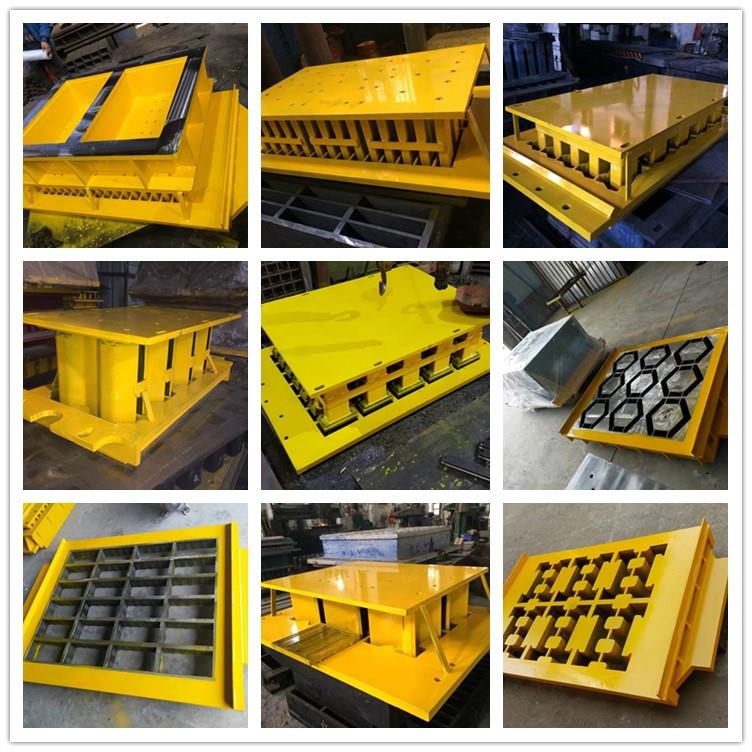
- Teknologi Kompresi dan Getaran Multi-Tahap:Proses pencetakan menerapkan prinsip-prinsip teknik canggih yang menggabungkan tekanan hidrolik melebihi 150 ton dengan getaran frekuensi tinggi melebihi 10.000 RPM. Proses aksi ganda ini secara simultan menghilangkan udara yang terperangkap sambil memadatkan partikel secara rapat, menghasilkan produk dengan rasio rongga minimal dan kekuatan tekan maksimal. Platform getaran menggunakan beberapa motor getaran dengan frekuensi dan amplitudo yang dapat disesuaikan untuk mengakomodasi berbagai desain produk dan karakteristik material.
- Sistem Pengawetan dan Penanganan Produk Otomatis:Penanganan pasca-cetakan melibatkan sistem transfer otomatis yang memindahkan produk mentah dengan lembut ke ruang pengawetan tanpa merusak strukturnya. Solusi industri menampilkan lingkungan pengawetan yang dapat diprogram dengan peningkatan suwa terkontrol dan pengelolaan kelembapan yang mengoptimalkan proses hidrasi. Fase penanganan akhir meliputi paletisasi robotik, pembungkusan regangan otomatis, dan sistem manajemen inventaris yang melacak batch produksi hingga pengiriman.
1.2 Klasifikasi Sistem Berdasarkan Metodologi dan Kemampuan Produksi
Solusi manufaktur dapat dikategorikan berdasarkan prinsip operasional dan volume produksinya, masing-masing melayani segmen pasar yang berbeda.
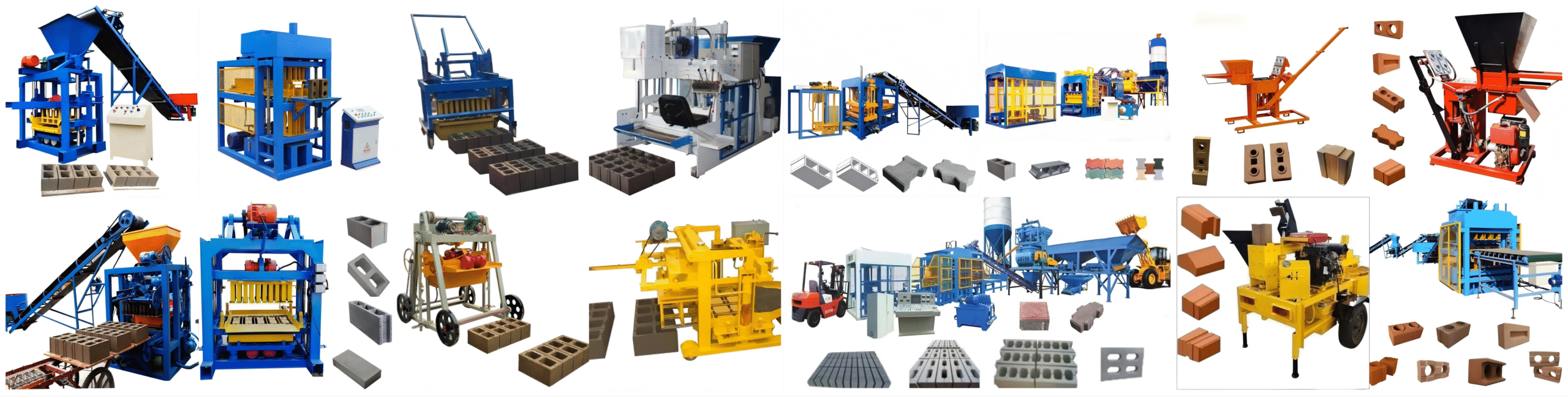
- Tier 1: Sistem Pabrik Tetap Berkapasitas Tinggi:Instalasi permanen ini menampilkan mesin produksi stasioner dengan pergerakan produk melalui konveyor otomatis dan kereta transfer. Dirancang untuk menghasilkan lebih dari 50.000 blok standar per shift 8 jam, sistem ini melayani pasar metropolitan besar dan proyek infrastruktur skala besar yang membutuhkan pasokan masif dan konsisten. Efisiensi operasionalnya mencapai puncak saat berjalan terus-menerus dengan pergantian produk yang minimal.
- Tingkat 2: Sistem Produksi Modular yang Fleksibel:Konfigurasi ini menggunakan pendekatan seluler di mana mesin semi-otomatis didukung oleh sistem penanganan material dan pengawetan yang independen. Dengan menawarkan output harian antara 10.000-30.000 unit, solusi ini memberikan fleksibilitas produk yang lebih besar bagi produsen yang melayani beberapa segmen pasar secara bersamaan. Sifat modularnya memungkinkan ekspansi bertahap seiring pertumbuhan bisnis.
- Tingkat 3: Unit Produksi Industri Bergerak:Dirancang untuk lokasi proyek sementara atau strategi manufaktur terdesentralisasi, sistem terintegrasi ini menggabungkan kemampuan pencampuran, kompresi, dan pengawetan dasar pada platform bergerak. Meski outputnya berkisar antara 5.000-15.000 unit per hari, keunggulan strategisnya terletak pada penghapusan biaya transportasi dengan memproduksi langsung di titik penggunaan, yang sangat berharga di lokasi terpencil atau untuk proyek-proyek khusus.
1.3 Penciptaan Nilai Strategis dan Keunggulan Kompetitif
Menerapkan teknologi manufaktur skala industri menghasilkan manfaat bisnis multidimensi yang melampaui metrik produksi dasar.
- Model Ekonomi Transformasional dan Revolusi Struktur Biaya: Industrial systems fundamentally alter production economics through massive scale advantages. The per-unit cost reduction achieved through automated operation, optimized material usage, and reduced labor creates insurmountable competitive barriers. The economic model shifts from variable cost dominance to fixed cost utilization, creating exponential profitability at scale.
- Uncompromising Quality Standardization and Compliance Assurance: Manufacturing consistency ensures every unit meets precise dimensional tolerances and performance specifications. This standardization enables construction methodologies based on predictable component performance, reduces installation time, minimizes material waste on-site, and guarantees compliance with international building standards including ASTM, EN, and ISO certifications.
- Production Intelligence and Data-Driven Optimization: Industrial Internet of Things (IIoT) integration transforms production management from reactive oversight to predictive optimization. Real-time monitoring of machine performance, material consumption, energy efficiency, and product quality creates a continuous improvement cycle. Advanced analytics identify subtle optimization opportunities that compound into significant competitive advantages over time.
- Strategic Supply Chain Integration and Market Influence: Control of high-volume production capacity positions manufacturers as strategic partners rather than mere suppliers. The ability to guarantee consistent supply for major projects creates long-term contractual relationships and provides influence over material specifications and construction methodologies within regional markets.
1.4 Implementation Methodology and Commercial Deployment
Successful implementation requires systematic planning across technical, operational, and commercial dimensions.
- Comprehensive Market Analysis and Production Strategy Development: Prior to investment, detailed market assessment must identify specific product opportunities, volume requirements, and competitive positioning. The production strategy should define target product mix, capacity utilization phasing, and distribution logistics to ensure the selected system matches market realities.
- Technical Feasibility and Infrastructure Planning: Site evaluation must assess geotechnical requirements for heavy machinery foundations, utility connections for industrial-scale power and water consumption, material storage and handling areas, and environmental compliance considerations. The implementation plan should include phased commissioning to minimize operational disruption.
- Operational Readiness and Human Capital Development: Successful operation requires developing technical teams capable of managing sophisticated industrial equipment. Implementation must include comprehensive training programs covering machine operation, preventive maintenance, quality control procedures, and troubleshooting methodologies.
- Financial Modeling and Investment Optimization: Capital allocation must be justified through detailed financial analysis projecting ROI, payback period, and lifetime equipment utilization. The model should account for production ramp-up periods, working capital requirements for raw material inventories, and maintenance reserve funding.
Kesimpulan
Industrial brick block making manufacturing machines represent the convergence of construction materials production with advanced industrial engineering. These comprehensive ecosystems transcend equipment functionality to become strategic business assets that redefine competitive dynamics in building materials supply. The substantial capital commitment required demands rigorous analysis and strategic planning, but the potential rewards—market dominance, unprecedented operational efficiency, and long-term business sustainability—justify the investment for serious industry participants. As global construction trends continue toward standardization, prefabrication, and quality assurance, industrial-scale manufacturing capability will increasingly become the defining characteristic of market leadership in the building materials sector.
Pertanyaan yang Sering Diajukan (FAQ)
Q1: What infrastructure requirements are necessary for installing an industrial-scale manufacturing system?
A: Comprehensive infrastructure must include: reinforced concrete foundations capable of supporting 20-50 tons of dynamic load, three-phase high-voltage electrical supply with transformer capacity of 150-400kVA, industrial water connection with daily capacity of 20-50 cubic meters, compressed air systems, adequate material storage yards with concrete paving, and warehouse facilities for finished product protection.
Q2: How does the operational cost structure differ between industrial systems and conventional machinery?
A: Industrial systems fundamentally transform cost structures: labor component decreases from 25-35% to 8-12% of production cost, energy consumption per unit decreases 30-40%, material waste reduces from 5-8% to 1-2%, and product damage during handling drops from 3-5% to under 0.5%. The cost structure shifts toward fixed depreciation with dramatically lower variable costs.
Q3: What technical expertise is required to maintain and operate these manufacturing systems?
A: Operating teams require cross-functional skills including: industrial mechanical systems maintenance, hydraulic and pneumatic systems troubleshooting, basic PLC programming and diagnostics, electrical control systems understanding, and quality control methodology implementation. Most suppliers provide structured training programs spanning 4-6 weeks for core technical teams.
Q4: What is the typical product range achievable with a single industrial manufacturing system?
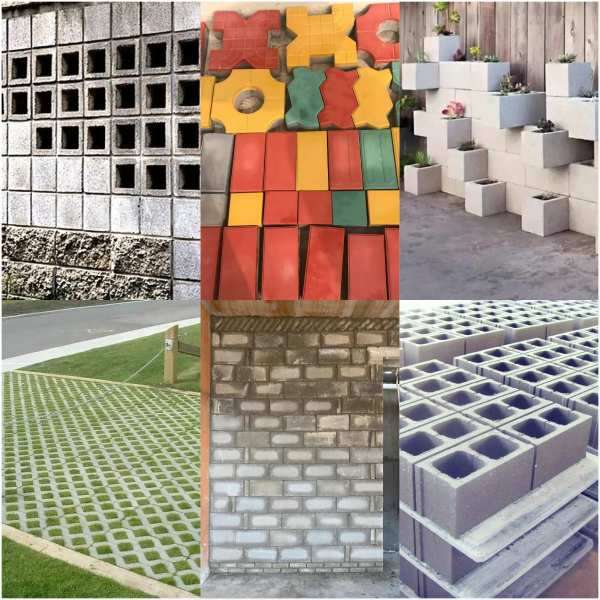
A: Comprehensive systems can typically produce over 50 different product variations including: standard hollow blocks (4″, 6″, 8″), solid bricks of various thicknesses, paving stones in multiple shapes and textures, interlocking masonry units, retaining wall systems, and specialized architectural products. Quick mold change systems enable product transitions within 30-90 minutes.
Q5: How do these systems address environmental compliance and sustainability requirements?
A: Modern systems incorporate multiple environmental features: water recycling systems that reduce consumption by 70-80%, dust collection systems that maintain ambient air quality, noise reduction engineering that limits emissions to 75dB or less, and energy-efficient motors with regenerative drives that lower power consumption. Many systems can utilize recycled aggregates and supplementary cementitious materials.
Q6: What quality assurance capabilities are integrated into industrial manufacturing systems?
A: Comprehensive QA systems include: in-line dimensional checking with laser measurement, automated weight monitoring with feedback to batching systems, continuous compressive strength testing through sample destruction, real-time moisture content monitoring, and automated visual inspection for surface defects. Data logging provides complete traceability for every production batch.