مقدمة في الحلول التصنيعية المتكاملة لمواد البناء
أدى تسارع الطلب في قطاع البناء العالمي على مكونات المباني الموحدة عالية الأداء إلى تحفيز تطور صناعة الطوب والكتل من عمليات مجزأة إلى عمليات صناعية متطورة. تمثل آلات تصنيع الطوب والكتل الحديثة أنظمة إنتاج شاملة تدمج معالجة المواد، والهندسة الدقيقة، والخدمات اللوجستية الآلية. بالنسبة للموزعين، وأخصائيي المشتريات، والمستثمرين الصناعيين، تقدم هذه الأنظمة فرصًا غير مسبوقة للهيمنة على سلاسل التوريد الإقليمية والاستفادة من تطوير البنية التحتية.
الإطار التقني الشامل لأنظمة التصنيع الصناعي
1.1 هندسة سير عمل الإنتاج المتكاملة
تعمل أنظمة التصنيع المعاصرة كخلايا إنتاج مترابطة حيث يتم تحسين كل مرحلة لتحقيق أقصى كفاءة وجودة في الإنتاج.
- المعالجة الآلية للمواد الخام والجرعاتتبدأ العمليات على النطاق الصناعي بالبنية التحتية المنهجية للمناولة المواد. وهذا يشمل قادوس الاستلام للركام، وأنظمة الصوامع السائبة للمواد الأسمنتية، وأنظمة إدارة المياه الآلية مع أجهزة استشعار الرطوبة الدقيقة. تضمن أنظمة الوزن والخلط الخاضعة للتحكم الحاسوبي الالتزام بالوصفة ضمن نطاق تحمل 0.5٪، مما يحافظ على خصائص المواد المتسقة عبر دفعات الإنتاج. وتدمج الأنظمة المتقدمة كشف الرطوبة في الوقت الفعلي والتعويض التلقائي للحفاظ على نسب الماء إلى الأسمنت المثلى.
- الخلط والتجانس عالي الكثافة:تستخدم مرحلة الخلط خلاطات صناعية ذات فعل قسري تخلق خليطًا متجانسًا من خلال حركات دوارة ومضادة للدوران في وقت واحد. على عكس الخلاطات الدوارة التقليدية، تضمن هذه الأنظمة تغطية كل جسيم من المواد الأسمنتية للركام بشكل موحد، مما يحقق إمكانية التميؤ الكاملة. يتم توقيت دورات الخلط بدقة ومزامنتها مع إيقاع الإنتاج للحفاظ على تدفق المواد المستمر دون انقطاع.
- التكنولوجيا متعددة المراحل للضغط والاهتزاز:تستخدم عملية التشكيل مبادئ هندسية متطورة تجمع بين ضغط هيدروليكي يتجاوز 150 طنًا واهتزاز عالي التردد يتجاوز 10000 دورة في الدقيقة. هذه العملية ثنائية الفعل تزيل الهواء المحبوس في نفس الوقت الذي تحزم فيه المواد الجسيمية بكثافة، مما يؤدي إلى منتجات ذات نسب فراغية ضئيلة وقوة ضغط قصوى. تستخدم منصة الاهتزاز محركات اهتزاز متعددة بتردد وسعة قابلين للتعديل لاستيعاب تصاميم المنتجات المختلفة وخصائص المواد.
- أنظمة المعالجة الآلية والتعامل مع المنتجاتتتضمن معالجة ما بعد التشكيل أنظمة نقل آلية تنقل المنتجات الخضراء برفق إلى غرف المعالجة دون إلحاق ضرر هيكلي. وتتميز الحلول الصناعية ببيئات معالجة قابلة للبرمجة مع التحكم في معدلات درجة الحرارة وإدارة الرطوبة التي تحسن عمليات الترطيب. تتضمن المرحلة النهائية من المعالجة التكديس الآلي بالروبوتات، والتغليف التمديدي الآلي، وأنظمة إدارة المخزون التي تتبع دفعات الإنتاج حتى الشحن.
1.2 تصنيف الأنظمة حسب منهجية الإنتاج والقدرة
يمكن تصنيف حلول التصنيف حسب مبادئها التشغيلية وأحجام إنتاجها، حيث يخدم كل منها قطاعات سوقية مختلفة.
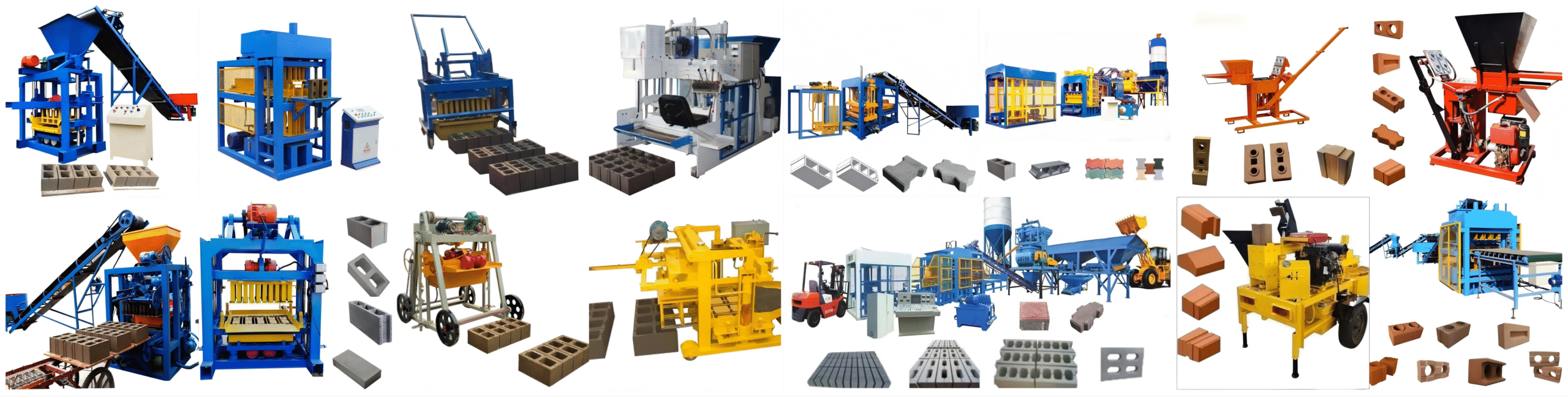
- المستوى الأول: أنظمة المصانع الثابتة عالية الإنتاجية These permanent installations feature stationary production machinery with product movement through automated conveyors and transfer cars. Designed for outputs exceeding 50,000 standard blocks per 8-hour shift, these systems serve major metropolitan markets and large-scale infrastructure projects requiring massive, consistent supply. Their operational efficiency peaks when running continuously with minimal product changeovers.
- Tier 2: Flexible Modular Production Systems: These configurations utilize a cellular approach where semi-automated machines are supported by independent material handling and curing systems. Offering daily outputs between 10,000-30,000 units, these solutions provide greater product flexibility for manufacturers serving multiple market segments simultaneously. Their modular nature allows for phased expansion as business grows.
- Tier 3: Mobile Industrial Production Units: Engineered for temporary project sites or decentralized manufacturing strategies, these integrated systems combine mixing, compression, and basic curing capabilities on a mobile platform. While output ranges between 5,000-15,000 units daily, their strategic advantage lies in eliminating transportation costs by manufacturing directly at point of use, particularly valuable in remote locations or for specialized projects.
1.3 Strategic Value Creation and Competitive Advantages
Implementing industrial-scale manufacturing technology generates multidimensional business benefits that transcend basic production metrics.
- Transformative Economic Model and Cost Structure Revolution: Industrial systems fundamentally alter production economics through massive scale advantages. The per-unit cost reduction achieved through automated operation, optimized material usage, and reduced labor creates insurmountable competitive barriers. The economic model shifts from variable cost dominance to fixed cost utilization, creating exponential profitability at scale.
- Uncompromising Quality Standardization and Compliance Assurance: Manufacturing consistency ensures every unit meets precise dimensional tolerances and performance specifications. This standardization enables construction methodologies based on predictable component performance, reduces installation time, minimizes material waste on-site, and guarantees compliance with international building standards including ASTM, EN, and ISO certifications.
- Production Intelligence and Data-Driven Optimization: Industrial Internet of Things (IIoT) integration transforms production management from reactive oversight to predictive optimization. Real-time monitoring of machine performance, material consumption, energy efficiency, and product quality creates a continuous improvement cycle. Advanced analytics identify subtle optimization opportunities that compound into significant competitive advantages over time.
- Strategic Supply Chain Integration and Market Influence: Control of high-volume production capacity positions manufacturers as strategic partners rather than mere suppliers. The ability to guarantee consistent supply for major projects creates long-term contractual relationships and provides influence over material specifications and construction methodologies within regional markets.
1.4 Implementation Methodology and Commercial Deployment
Successful implementation requires systematic planning across technical, operational, and commercial dimensions.
- Comprehensive Market Analysis and Production Strategy Development: Prior to investment, detailed market assessment must identify specific product opportunities, volume requirements, and competitive positioning. The production strategy should define target product mix, capacity utilization phasing, and distribution logistics to ensure the selected system matches market realities.
- Technical Feasibility and Infrastructure Planning: Site evaluation must assess geotechnical requirements for heavy machinery foundations, utility connections for industrial-scale power and water consumption, material storage and handling areas, and environmental compliance considerations. The implementation plan should include phased commissioning to minimize operational disruption.
- Operational Readiness and Human Capital Development: Successful operation requires developing technical teams capable of managing sophisticated industrial equipment. Implementation must include comprehensive training programs covering machine operation, preventive maintenance, quality control procedures, and troubleshooting methodologies.
- Financial Modeling and Investment Optimization: Capital allocation must be justified through detailed financial analysis projecting ROI, payback period, and lifetime equipment utilization. The model should account for production ramp-up periods, working capital requirements for raw material inventories, and maintenance reserve funding.
خاتمة
Industrial brick block making manufacturing machines represent the convergence of construction materials production with advanced industrial engineering. These comprehensive ecosystems transcend equipment functionality to become strategic business assets that redefine competitive dynamics in building materials supply. The substantial capital commitment required demands rigorous analysis and strategic planning, but the potential rewards—market dominance, unprecedented operational efficiency, and long-term business sustainability—justify the investment for serious industry participants. As global construction trends continue toward standardization, prefabrication, and quality assurance, industrial-scale manufacturing capability will increasingly become the defining characteristic of market leadership in the building materials sector.
الأسئلة الشائعة (FAQ)
Q1: What infrastructure requirements are necessary for installing an industrial-scale manufacturing system?
A: Comprehensive infrastructure must include: reinforced concrete foundations capable of supporting 20-50 tons of dynamic load, three-phase high-voltage electrical supply with transformer capacity of 150-400kVA, industrial water connection with daily capacity of 20-50 cubic meters, compressed air systems, adequate material storage yards with concrete paving, and warehouse facilities for finished product protection.
Q2: How does the operational cost structure differ between industrial systems and conventional machinery?
A: Industrial systems fundamentally transform cost structures: labor component decreases from 25-35% to 8-12% of production cost, energy consumption per unit decreases 30-40%, material waste reduces from 5-8% to 1-2%, and product damage during handling drops from 3-5% to under 0.5%. The cost structure shifts toward fixed depreciation with dramatically lower variable costs.
Q3: What technical expertise is required to maintain and operate these manufacturing systems?
A: Operating teams require cross-functional skills including: industrial mechanical systems maintenance, hydraulic and pneumatic systems troubleshooting, basic PLC programming and diagnostics, electrical control systems understanding, and quality control methodology implementation. Most suppliers provide structured training programs spanning 4-6 weeks for core technical teams.
Q4: What is the typical product range achievable with a single industrial manufacturing system?
A: Comprehensive systems can typically produce over 50 different product variations including: standard hollow blocks (4″, 6″, 8″), solid bricks of various thicknesses, paving stones in multiple shapes and textures, interlocking masonry units, retaining wall systems, and specialized architectural products. Quick mold change systems enable product transitions within 30-90 minutes.
Q5: How do these systems address environmental compliance and sustainability requirements?
A: Modern systems incorporate multiple environmental features: water recycling systems that reduce consumption by 70-80%, dust collection systems that maintain ambient air quality, noise reduction engineering that limits emissions to 75dB or less, and energy-efficient motors with regenerative drives that lower power consumption. Many systems can utilize recycled aggregates and supplementary cementitious materials.
Q6: What quality assurance capabilities are integrated into industrial manufacturing systems?
A: Comprehensive QA systems include: in-line dimensional checking with laser measurement, automated weight monitoring with feedback to batching systems, continuous compressive strength testing through sample destruction, real-time moisture content monitoring, and automated visual inspection for surface defects. Data logging provides complete traceability for every production batch.