
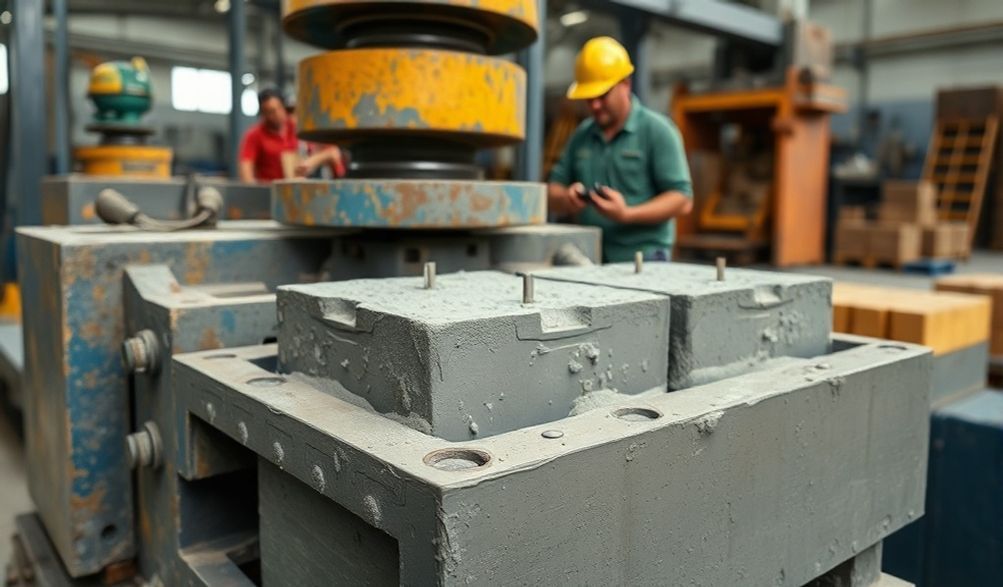
Panduan Utama Mesin Blok 4-30A: Fitur, Keuntungan, dan Cara Operasi
Pengantar
Dalam dunia manufaktur blok beton, efisiensi dan keandalan adalah fondasi profitabilitas. Bagi para profesional konstruksi, pemilik bengkel blok, dan pengusaha yang ingin meningkatkan skala produksi mereka, memilih mesin yang tepat adalah keputusan kritis yang memengaruhi output, kualitas produk, dan laba bersih. Panduan komprehensif ini berfokus pada tulang punggung industri:4-30A mesin blok.
Berdasarkan pengalaman teknis dan lapangan selama bertahun-tahun, tulisan ini menyajikan analisis yang jelas, otoritatif, dan terpercaya. 4-30A bukan sekadar peralatan; ia adalah solusi semi-otomatis yang menjembatani kesenjangan antara mesin manual yang padat karya dan pabrik sepenuhnya otomatis yang padat modal. Kami akan menguraikan spesifikasi, alur kerja operasional, serta nilai ekonominya, sehingga Anda dapat membuat keputusan investasi yang sepenuhnya terinformasi untuk bisnis Anda.
Apa itu Mesin Blok 4-30A? Spesifikasi Inti dan Desain
4-30A adalah model spesifik dalam seri mesin pembuat blok yang telah diakui secara luas. Desainnya mengutamakan konstruksi yang kokoh, output yang konsisten, dan kesederhanaan operasional, menjadikannya favorit bagi fasilitas produksi skala kecil hingga menengah.
Jenis dan Klasifikasi Mesin
4-30A diklasifikasikan sebagai sebuahmesin pembuat blok semi-otomatis, stasionerIni berarti ia mengotomatisasi proses inti pembentukan inti—getaran, pemadatan, dan pencetakan—tetapi memerlukan operator untuk melakukan tugas tertentu dalam setiap siklus, seperti memasukkan bahan baku dan mengeluarkan blok jadi. Klasifikasi ini menjadikannya sangat cocok untuk bisnis yang siap meningkatkan produksi melampaui kapasitas manual tanpa kompleksitas dan biaya lini produksi yang sepenuhnya otomatis.
Memecahkan Kode Nomor Model
Nomor model pada mesin industri jarang bersifat sembarangan. Meskipun spesifikasi dapat sedikit bervariasi antar produsen, "4-30A" biasanya menunjukkan:
- "4"Jumlah blok berukuran standar (misalnya, blok berlubang 4 inci) yang dihasilkan mesin dalam satu siklus.
- "30"Perkiraan waktu siklus dalam detik dalam kondisi optimal.
- "A"Sering kali menunjukkan seri model atau versi yang ditingkatkan, mengindikasikan perbaikan dari model dasar.
Konvensi penamaan ini memberikan pemahaman langsung dan sekilas tentang kemampuan inti mesin: memproduksi 4 balok kira-kira setiap 30 detik.
Spesifikasi Fisik dan Teknis Utama
Meskipun angka pastinya bergantung pada produsen, mesin standar 4-30A umumnya memiliki fitur:
- Dimensi:Kira-kira 2500mm (P) x 1800mm (L) x 2200mm (T). Ruang yang memadai untuk peralatan periferal juga diperlukan.
- Berat:Biasanya antara 2.800 hingga 3.500 kg, menunjukkan rangka yang kokoh dan tahan getaran.
- Persyaratan Daya:Biasanya ditenagai oleh motor listrik 11-15 kW (15-20 HP) untuk sistem getaran dan motor terpisah untuk unit daya hidrolik.
- Sistem Kontrol:Dioperasikan melalui panel Programmable Logic Controller (PLC) untuk kontrol siklus otomatis.
- Sistem Hidrolik:Termasuk unit tenaga hidrolik dengan tangki oli, pompa, katup, dan silinder yang bertanggung jawab atas pergerakan vertikal cetakan dan tekanan kepala pemadat.
Fitur Utama dan Komponen Mesin 4-30A
Keandalan dan kualitas keluaran dari 4-30A berasal dari komponen inti yang dirancang dengan baik.
Sistem Pencetakan
Inilah jantung mesin, tempat beton diubah menjadi balok yang presisi.
- Kotak Cetakan: A heavy-duty, precision-welded steel assembly that defines the block’s external dimensions. It’s designed for easy changeover to produce different block types.
- Core Rods: These create the hollow cavities in blocks. They are mounted on a core plate and must be robust to withstand constant vibration and pressure.
- Kepala Tamper: Also called the “press head,” it descends into the mold box to apply pressure on the concrete during vibration, ensuring top surface compaction and uniform density.
Vibration Mechanism
Superior compaction is non-negotiable for strong, durable blocks. The 4-30A employs a dual-vibration system:
- Table Vibration: The entire mold table vibrates at high frequency, ensuring compaction from the bottom up.
- Head Vibration: The tamper head also vibrates, compacting the concrete from the top down.
This synchronized action from both directions eliminates voids and achieves the high density required for load-bearing blocks and pavers.
Control System & Automation Level
The PLC-based control panel is the machine’s brain, offering:
- Automated Cycle Sequencing: The operator initiates a single cycle, and the PLC automatically controls the sequence: mold descent, material feed, vibration, head pressure, mold rise, and block ejection.
- Adjustable Parameters: Vibration time, pressure duration, and cycle delays can often be adjusted to fine-tune the process for different mix designs.
- Manual Override: Critical for setup, maintenance, and troubleshooting. Safety interlocks prevent operation during manual interventions.
- Fault Diagnostics: Basic models may have indicator lights, while advanced panels display error codes for quicker problem resolution.
Production Capacity and Output Expectations
Understanding real-world output is crucial for business planning. Theoretical maximums are often different from sustainable daily production.
Understanding Cycle Time and Daily Output
The “30” in 4-30A suggests a 30-second cycle time. In practice, a well-run machine with a skilled operator can achieve a cycle time of 35-45 seconds, accounting for material feeding and block removal.
Perhitungan Output:
* Per Jam: (3600 seconds / 40-second cycle) * 4 blocks = ~360 blocks/hour.
* Per Pergantian 8 Jam: 360 blocks/hour * 8 hours = ~2,880 blocks.
* Per 24-Hour Day (3 shifts): Up to ~8,640 blocks.
Important: This is a sustainable estimate. Output can be higher with perfect conditions or lower during mold changes, maintenance, or with slower material handling.
Compatible Block Types and Sizes
The 4-30A’s versatility is a key selling point. With the appropriate mold, it can produce:
* Bata Ringan: 4″, 6″, 8″ thickness (most common).
* Solid Blocks.
* Paving Interlock (for landscaping and driveways).
* Pembatas trotoar and other specialty products (may require specific mold kits).
Factors Influencing Production Rate
Maximizing output depends on more than just the machine:
* Raw Material Consistency: A well-proportioned, semi-dry concrete mix with consistent moisture content is essential. Wet or inconsistent mix causes sticking and delays.
* Pallet Quality & System: Worn or warped pallets cause block damage and machine jams. A manual or automated pallet return system drastically improves workflow.
* Operator Skill & Rhythm: An experienced, efficient operator is the most important factor in achieving target cycle times.
* Pemeliharaan Preventif: Unplanned downtime is the biggest killer of production targets. A disciplined maintenance schedule is non-negotiable.
Operational Workflow and Best Practices
Proper operation ensures safety, quality, and machine longevity.
Step-by-Step Operating Procedure
- Persiapan: Ensure the machine is lubricated, the hydraulic oil level is correct, and the mold is clean and secured.
- Mix Loading: The operator places a pallet on the feeding table and shovels or uses a feeder to deposit the concrete mix into the mold box.
- Inisiasi Siklus: The operator presses the cycle start button on the PLC panel.
- Automated Cycle: The machine sequentially lowers the mold, activates dual vibration, lowers the tamper head for pressure, releases vibration, raises the mold, and ejects the block onto the pallet.
- Penghapusan Blok: The operator (or a helper) removes the pallet with the fresh block and transfers it to the curing area, replacing it with a new empty pallet.
- Pengulangan: The process repeats for the next cycle.
Essential Safety Protocols
- APD Wajib: Safety glasses, steel-toe boots, and hearing protection.
- Keselamatan Mesin: Never bypass safety guards or interlocks. Keep hands clear of the mold area during automatic cycles.
- Lockout/Tagout: Always disconnect power and lock out the control panel before performing any maintenance or clearing a jam.
Routine Maintenance Checklist
Harian:
* Clean the mold box, core rods, and tamper head thoroughly after production.
* Check hydraulic oil levels and for any leaks.
* Inspect electrical connections.
* Lubricate all guide rods and moving parts as per the manual.
Mingguan:
* Check and tighten all bolts and nuts, especially on the vibration frame.
* Inspect hydraulic hoses for wear.
* Check the tension of drive belts (if applicable).
Bulanan:
* Change hydraulic oil and filters as recommended.
* Inspect vibration motors and mounting bolts.
* Conduct a thorough inspection of the mold box for wear or damage.
Advantages and Considerations for Your Business
A balanced view helps assess if the 4-30A is the right fit.
Primary Benefits
- Efektivitas Biaya: Offers a significantly higher output than manual machines at a fraction of the cost of a fully automatic plant.
- Pengurangan Ketergantungan Tenaga Kerja: One skilled operator can run the machine, reducing labor costs per block compared to manual operations.
- Exceptional Durability: Built with heavy-duty steel and industrial components for a long service life in harsh environments.
- Kualitas Produk yang Konsisten: The automated vibration and pressing cycle produces blocks with uniform density, dimensions, and strength, enhancing your market reputation.
Investment and ROI Analysis
- Biaya Awal: The price for a new 4-30A machine typically ranges from $18,000 to $30,000, depending on the manufacturer, configuration, and region. This does not include the cost of a mixer, loader, or pallet system.
- Periode Pengembalian Modal: For a business selling directly to the construction market, the payback period can often be achieved within 12-24 months based on local block prices and production volume.
- Vs. Fully Automatic: Fully automatic machines (like the 6-15 or 8-15 models) offer higher output with less labor but can cost 3-5 times more and require a more complex setup and higher skill level to maintain.
Potential Limitations & Solutions
- Need for Supporting Equipment: For optimal workflow, a pengaduk betondan sebuahbucket loader or material feeder are highly recommended. A pallet return system (even a simple roller conveyor) dramatically increases efficiency.
- Space Requirements: You need a covered production shed with a strong, level concrete floor, plus space for raw materials, block curing, and storage.
- Pelatihan Operator: Requires a dedicated, trainable operator. The machine’s efficiency is directly tied to the operator’s skill.
FAQ: Common Questions About the 4-30A Block Machine
Q1: What is the approximate price range for a new 4-30A block machine?
As noted, expect a range of $18,000 – $30,000 for the machine itself. Always request detailed quotations that include shipping, installation support, and initial spare parts.
Q2: Can one operator efficiently run this machine?
Yes, one skilled operator is sufficient to run the 4-30A cycle. However, a second person to handle pallet feeding and block removal can significantly boost overall production output by allowing the primary operator to focus solely on the machine cycle.
Q3: What concrete mix design is recommended for optimal results?
A semi-dry mix is crucial. A common starting ratio is 1 part cement, 3 parts sand, and 5 parts aggregate (1:3:5), with just enough water for cohesion (typically a water-cement ratio of 0.4-0.5). The mix should hold its shape when squeezed in your hand.
Q4: How does the 4-30A compare to a fully automatic block making machine?
The 4-30A is semi-automatic, requiring operator intervention per cycle. Fully automatic machines integrate material feeding, block ejection, and pallet handling into one continuous, computer-controlled process. They offer higher output (e.g., 6-10 blocks every 15 seconds) with minimal labor but at a much higher capital and operational complexity.
Q5: What are the most common spare parts I should keep in stock?
Always keep: vibration motor mounting bolts, hydraulic hose assemblies, O-rings and seals for the hydraulic cylinders, spare springs for the mold, and a set of replacement core rods. Your supplier can provide a recommended list.
Q6: What foundation and floor space are required for installation?
The machine must be bolted to a solid, level concrete foundation at least 300mm thick. The total floor space needed for comfortable operation, including material staging and block removal, is typically at least 10 meters in length and 6 meters in width.
Conclusion and Final Recommendations
The4-30A mesin blok stands as a testament to practical, efficient engineering. It is not the cheapest nor the most advanced option, but for a business aiming to graduate from manual production to a more scalable, quality-focused operation, it represents an outstanding balance of output, investment, and control.
Success with this machine hinges on three pillars: proper installation on a solid foundation, investment in operator training, and a religious adherence to preventive maintenance. Before finalizing any purchase, we strongly advise you to consult with multiple reputable manufacturers or suppliers. Request detailed specifications, visit a working installation if possible, and clearly understand the after-sales support, warranty terms, and availability of spare parts in your region. With due diligence, the 4-30A can become the reliable, profit-generating cornerstone of your block manufacturing business for years to come.
<