
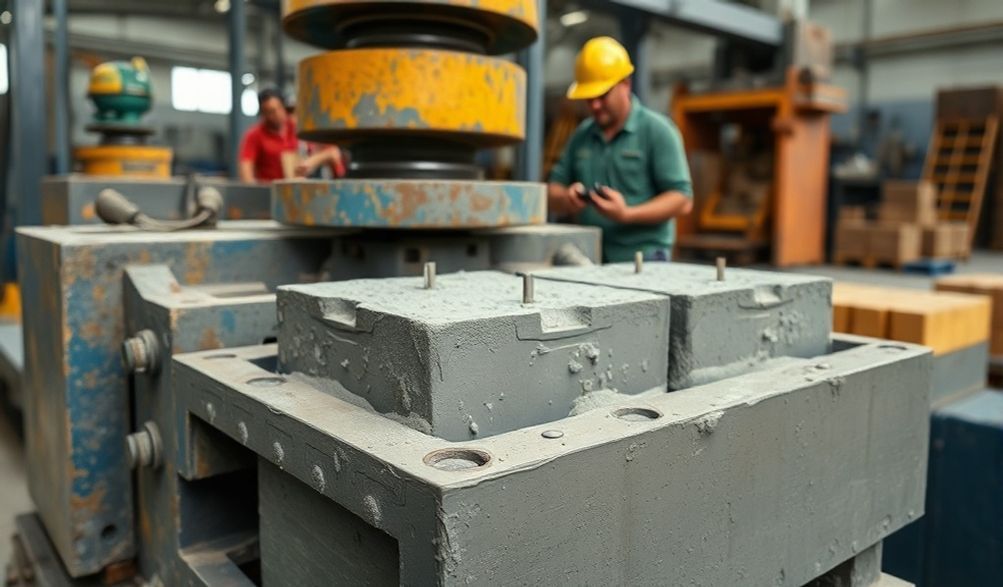
Inshinga yo Guhanga Amatafari 4-30A: Ibiranga, Inyungu, n'Uko Yakoreshwa
Intangamarara
Mu isi y’ubwubatsi bw’amabuye y’amatafari, ukoresha imikorere neza no kwihangana neza ni ingenzi cyane mu kuzamura inyungu. Ku banyamwuga mu bwubatsi, abanyamabuye y’amatafari, ndetse n’abacuruzi bashaka kongera umusaruro wabo, guhitamo ibikoresho bikwiye ni ingingo iboneye ishobora guhitamwo umusaruro, ubwiza bw’ibicuruzwa, ndetse n’inyungu z’umutungo. Iyi nyigisho yuzuye ishingiye ku bintu bikoreshwa cyane mu rwego rw’ubucuruzi:4-30A Igikoresho cyo gukora ibitambaro.
Gukurikije ubumenyi bw'ikoranabuhanga n'ubuhanga bukomoka mu mirimo yo hanze, iyi ngingo itanga isesengura risobanutse, rishimangira kandi rizirakwaho. 4-30A nta n'igikoresho gusa; ahubwo ni ikemurwa ry'ibikoresho bigarurira mu buryo bwa semi-omatike, bihuza imiyoboro iri hagati y'imashini zikoresha abakozi cyane n'ibigo bya moteri bikora mu buryo bwa otomatike bikunze kugura amafaranga menshi. Tuzasobanura neza ibisobanuro byayo, uko ikora, n'akamaro kayo mu by'ubukungu, bikagufasha gufata umwanzuro wuzuye wo kuyigura mu biro byawe.
Ni iki 4-30A Block Machine? Ibisobanuro By'ingenzi n'Imiterere
4-30A ni imashini ikora ibyatsi bya sima ikomoka mu muryango w’imashini zikora ibyatsi bya sima zizwi cyane cyane. Iyubakwa yayo yibanze ku kuba ifite imiterere ikomeye, ikora ibikorwa byihuse kandi byihuje, ndetse ikaba yoroshye mu gukoresha, bituma ari imashini ikunzwe mu byigo byo gukora ibyatsi bya sima by’ingano nto kugeza ku ya hagati.
Ubwoko bw'Imashini n'Ubwoko
4-30A yasobanuwe nk'mashini y’igipangu y’ibyumba y’amabuye y’amashanyarazi itagendaIbi bisobanura ko ikora mu buryo bwikora imirimo ishingiye ku gukora ingingo z'ibikoresho—kugenda, guhanahana, no gukora imiterere—ariko isaba umukozi gukora imirimo imwe na imwe muri buri cyiciro, nka gutanga ibikoresho by'ibanze no gusiba ibikoresho byakozwe. Iyi mihango iyishyira neza kubucuruzi bwahugiye kongerera ibikorwa byinshi kuruta ubushobozi bwo gukora n'amaboko, bitagomba ubunini n'igiciro cy'umurongo w'ibikoresho bikora mu buryo bwikora.
Gusobanura Inomero ya Moderi
Iminomero ya mudasobwa mu mashini z’ubucuruzi bihagije kuba ari imyemerere. Nubwo ibisobanuro bishobora gutandukana gato hagati abakora, "4-30A" ikunze kugaragaza:
- "4"Umubare w'amabuye y'ubatsi y'ingano rusange (urugero, amabuye y'ubatsi afite santimetero 4) mashini ikora mu gihe kimwe cya cycle.
- "Mirongo itatu": Igihe cya cycle gishingiye kuri segonda munsi y'ibintu byiza.
- A: Akenshi byerekana urutonde rwa modeli cyangwa verisiyo igezweho, ikagaragaza iterambere urenze icyitegererezo shingiro.
Iyi myitwarire y’izina ituma umenya ako kanya ubushobozi bw’ingenzi bw’iyi mashini: ikora amadirishya 4 hafi buri segonda 30.
Iby'ingenzi mu buryo bw'umubiri n'ubuhanga
Nubwoko butandukanye bukoreshwa na ba nyirubwite, imashini isanzwe ya 4-30A ikunze kugira ibi bikurikira:
- Ubunini:Hagati ya 2500mm (Uburebure) x 1800mm (Ubugari) x 2200mm (Ubuhindwe). Naho kujya harema n’ibikoresho by’inyongera bihagije.
- Uburemere:Mubisanzwe hagati ya kg 2,800 kugeza 3,500, byerekana inkingi ikomeye idahungabana.
- Ibikenewe by'ingufu:Mubisanzwe ikoreshwa na moteri y’amashanyarazi ya 11-15 kW (15-20 HP) kuri sisitemu yo kuzunguza hamwe na moteri itandukanye ya pak’y’ingufu za hydraulique.
- Sisteme yo GucungaIkoreshwa binyuze muri Programmable Logic Controller (PLC) panel kugira ngo igabanye imikorere y’imikorere y’ikoreshwa mu buryo bwikora.
- Sisitemu ya Hydraulique:Ibirimo ibikoresho bya hydraulic power unit hamwe na tanki y’amavuta, pampu, vali, na silinderi zishinzwe kugenda ku buryo buhagaritse bw’indundure hamwe n’umuvuduko w’umutwe wa tamper.
Ibintu By'ingenzi ndetse n'Ibice By'igikoresho cya 4-30A
Ibyiringiro n'ubuziranimpaka bya 4-30A biva mu bice by'ingenzi byubatswe neza.
Sisitemu yo Kubumba
Iyi ni yo mutima wa masini, aho beto ihindurwamo ibitoki byiza.
- Ibisahuri bya Moule:Inyubako y’ibyuma ikomeye, yubatse neza cyane, igenga ingano z’inyuma y’urubanza. Yateguwe kugira ngo ihinduke mu buryo bworoshye kugira ngo itange amoko atandukanye y’ibyuma.
- Core Rods: These create the hollow cavities in blocks. They are mounted on a core plate and must be robust to withstand constant vibration and pressure.
- Umutwe wo Guhindura Also called the “press head,” it descends into the mold box to apply pressure on the concrete during vibration, ensuring top surface compaction and uniform density.
Vibration Mechanism
Superior compaction is non-negotiable for strong, durable blocks. The 4-30A employs a dual-vibration system:
- Table Vibration: The entire mold table vibrates at high frequency, ensuring compaction from the bottom up.
- Head Vibration: The tamper head also vibrates, compacting the concrete from the top down.
This synchronized action from both directions eliminates voids and achieves the high density required for load-bearing blocks and pavers.
Control System & Automation Level
The PLC-based control panel is the machine’s brain, offering:
- Automated Cycle Sequencing: The operator initiates a single cycle, and the PLC automatically controls the sequence: mold descent, material feed, vibration, head pressure, mold rise, and block ejection.
- Adjustable Parameters: Vibration time, pressure duration, and cycle delays can often be adjusted to fine-tune the process for different mix designs.
- Manual Override: Critical for setup, maintenance, and troubleshooting. Safety interlocks prevent operation during manual interventions.
- Fault Diagnostics: Basic models may have indicator lights, while advanced panels display error codes for quicker problem resolution.
Production Capacity and Output Expectations
Understanding real-world output is crucial for business planning. Theoretical maximums are often different from sustainable daily production.
Understanding Cycle Time and Daily Output
The “30” in 4-30A suggests a 30-second cycle time. In practice, a well-run machine with a skilled operator can achieve a cycle time of 35-45 seconds, accounting for material feeding and block removal.
Output Calculation:
* Kuri sa: (3600 seconds / 40-second cycle) * 4 blocks = ~360 blocks/hour.
* Kuri Buri Shifiti y'Amasaha 8: 360 blocks/hour * 8 hours = ~2,880 blocks.
* Per 24-Hour Day (3 shifts): Up to ~8,640 blocks.
Important: This is a sustainable estimate. Output can be higher with perfect conditions or lower during mold changes, maintenance, or with slower material handling.
Compatible Block Types and Sizes
The 4-30A’s versatility is a key selling point. With the appropriate mold, it can produce:
* Amakaduriro: 4″, 6″, 8″ thickness (most common).
* Solid Blocks.
* Amabuye y'ubutaka y'uburyo bwo gushyira hamwe (for landscaping and driveways).
* Imigambi and other specialty products (may require specific mold kits).
Factors Influencing Production Rate
Maximizing output depends on more than just the machine:
* Raw Material Consistency: A well-proportioned, semi-dry concrete mix with consistent moisture content is essential. Wet or inconsistent mix causes sticking and delays.
* Pallet Quality & System: Worn or warped pallets cause block damage and machine jams. A manual or automated pallet return system drastically improves workflow.
* Operator Skill & Rhythm: An experienced, efficient operator is the most important factor in achieving target cycle times.
* Preventive Maintenance: Unplanned downtime is the biggest killer of production targets. A disciplined maintenance schedule is non-negotiable.
Operational Workflow and Best Practices
Proper operation ensures safety, quality, and machine longevity.
Step-by-Step Operating Procedure
- Iteguriro: Ensure the machine is lubricated, the hydraulic oil level is correct, and the mold is clean and secured.
- Mix Loading: The operator places a pallet on the feeding table and shovels or uses a feeder to deposit the concrete mix into the mold box.
- Gutangiza Umwuzure: The operator presses the cycle start button on the PLC panel.
- Automated Cycle: The machine sequentially lowers the mold, activates dual vibration, lowers the tamper head for pressure, releases vibration, raises the mold, and ejects the block onto the pallet.
- Gukuraho Ibigabanyo: The operator (or a helper) removes the pallet with the fresh block and transfers it to the curing area, replacing it with a new empty pallet.
- Repetition: The process repeats for the next cycle.
Essential Safety Protocols
- Mandatory PPE: Safety glasses, steel-toe boots, and hearing protection.
- Umutekano wa Machine: Never bypass safety guards or interlocks. Keep hands clear of the mold area during automatic cycles.
- Lockout/Tagout: Always disconnect power and lock out the control panel before performing any maintenance or clearing a jam.
Routine Maintenance Checklist
Buri munsi:
* Clean the mold box, core rods, and tamper head thoroughly after production.
* Check hydraulic oil levels and for any leaks.
* Inspect electrical connections.
* Lubricate all guide rods and moving parts as per the manual.
Buri cyumweru:
* Check and tighten all bolts and nuts, especially on the vibration frame.
* Inspect hydraulic hoses for wear.
* Check the tension of drive belts (if applicable).
Monthly:
* Change hydraulic oil and filters as recommended.
* Inspect vibration motors and mounting bolts.
* Conduct a thorough inspection of the mold box for wear or damage.
Advantages and Considerations for Your Business
A balanced view helps assess if the 4-30A is the right fit.
Primary Benefits
- Ubushobozi bwo gukoresha amafaranga neza: Offers a significantly higher output than manual machines at a fraction of the cost of a fully automatic plant.
- Gukendera ku Mbaraga z'Abakozi Bigabanutse: One skilled operator can run the machine, reducing labor costs per block compared to manual operations.
- Imyirongo Idahwitse: Built with heavy-duty steel and industrial components for a long service life in harsh environments.
- Consistent Product Quality: The automated vibration and pressing cycle produces blocks with uniform density, dimensions, and strength, enhancing your market reputation.
Investment and ROI Analysis
- Igiciro cy'ibanze: The price for a new 4-30A machine typically ranges from $18,000 to $30,000, depending on the manufacturer, configuration, and region. This does not include the cost of a mixer, loader, or pallet system.
- Payback Period: For a business selling directly to the construction market, the payback period can often be achieved within 12-24 months based on local block prices and production volume.
- Vs. Fully Automatic: Fully automatic machines (like the 6-15 or 8-15 models) offer higher output with less labor but can cost 3-5 times more and require a more complex setup and higher skill level to maintain.
Potential Limitations & Solutions
- Need for Supporting Equipment: For optimal workflow, a concrete mixer and a bucket loader or material feeder are highly recommended. A pallet return system (even a simple roller conveyor) dramatically increases efficiency.
- Ibipimo by'ingano y'ahantu: You need a covered production shed with a strong, level concrete floor, plus space for raw materials, block curing, and storage.
- Ibyigisho ku Bakozi: Requires a dedicated, trainable operator. The machine’s efficiency is directly tied to the operator’s skill.
FAQ: Common Questions About the 4-30A Block Machine
Q1: What is the approximate price range for a new 4-30A block machine?
As noted, expect a range of $18,000 – $30,000 for the machine itself. Always request detailed quotations that include shipping, installation support, and initial spare parts.
Q2: Can one operator efficiently run this machine?
Yes, one skilled operator is sufficient to run the 4-30A cycle. However, a second person to handle pallet feeding and block removal can significantly boost overall production output by allowing the primary operator to focus solely on the machine cycle.
Q3: What concrete mix design is recommended for optimal results?
A semi-dry mix is crucial. A common starting ratio is 1 part cement, 3 parts sand, and 5 parts aggregate (1:3:5), with just enough water for cohesion (typically a water-cement ratio of 0.4-0.5). The mix should hold its shape when squeezed in your hand.
Q4: How does the 4-30A compare to a fully automatic block making machine?
The 4-30A is semi-automatic, requiring operator intervention per cycle. Fully automatic machines integrate material feeding, block ejection, and pallet handling into one continuous, computer-controlled process. They offer higher output (e.g., 6-10 blocks every 15 seconds) with minimal labor but at a much higher capital and operational complexity.
Q5: What are the most common spare parts I should keep in stock?
Always keep: vibration motor mounting bolts, hydraulic hose assemblies, O-rings and seals for the hydraulic cylinders, spare springs for the mold, and a set of replacement core rods. Your supplier can provide a recommended list.
Q6: What foundation and floor space are required for installation?
The machine must be bolted to a solid, level concrete foundation at least 300mm thick. The total floor space needed for comfortable operation, including material staging and block removal, is typically at least 10 meters in length and 6 meters in width.
Conclusion and Final Recommendations
The4-30A Igikoresho cyo gukora ibitambaro stands as a testament to practical, efficient engineering. It is not the cheapest nor the most advanced option, but for a business aiming to graduate from manual production to a more scalable, quality-focused operation, it represents an outstanding balance of output, investment, and control.
Success with this machine hinges on three pillars: proper installation on a solid foundation, investment in operator training, and a religious adherence to preventive maintenance. Before finalizing any purchase, we strongly advise you to consult with multiple reputable manufacturers or suppliers. Request detailed specifications, visit a working installation if possible, and clearly understand the after-sales support, warranty terms, and availability of spare parts in your region. With due diligence, the 4-30A can become the reliable, profit-generating cornerstone of your block manufacturing business for years to come.
<