
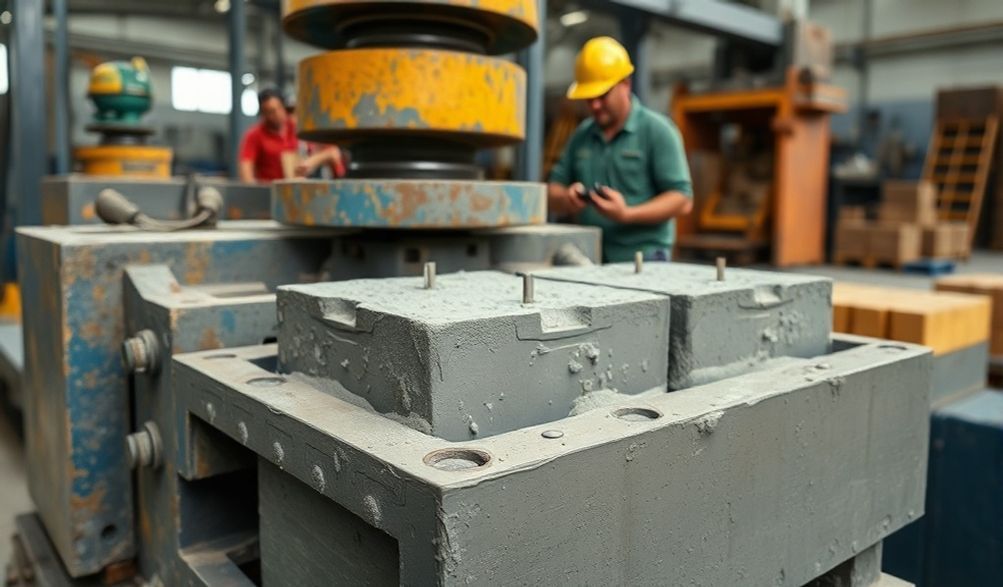
4-30A Blok Mashinasi Bo'yicha To'liq Qo'llanma: Xususiyatlari, Afzalliklari va Ishlatilishi
Kirish
Beton blok ishlab chiqarish dunyosida samaradorlik va ishonchlilik foydaning asosidir. Qurilish mutaxassislari, blok maydonchasi egalari va o'z ishlab chiqarishlarini kengaytirmoqchi bo'lgan tadbirkorlar uchun to'g'ri mashinalarni tanlash mahsulot chiqishi, mahsulot sifati va yakuniy natijaga ta'sir qiluvchi muhim qarordir. Ushbu qamrovli qo'llanma sanoatning asosiy ishchi kuchi bo'lgan:4-30A blok mashinasi.
Ushbu maqola ko'p yillik texnik tajriba va amaliy bilimlarga tayanib, aniq, ishonchli va ishonarli tahlilni taqdim etadi. 4-30A nafaqat oddiy uskuna, balki mehnat talab qiladigan qo'lda ishlaydigan mashinalar va kapital talab qiladigan to'liq avtomatik zavodlar o'rtasidagi bo'shliqni to'ldiradigan yarim avtomatik yechimdir. Biz uning texnik xususiyatlarini, ishlash jarayonini va iqtisodiy qiymatini chuqur o'rganib, sizga biznesingiz uchun to'liq asoslangan investitsiya qarori qabul qilishda yordam beramiz.
4-30A blok mashinasi nima? Asosiy texnik xususiyatlari va dizayni
4-30A keng tan olingan blok yasash mashinalari seriyasidagi aniq bir modeldir. Uning dizayni mustahkam qurilish, barqaror mahsulot chiqishi va ishlash soddaligini ustuvor qiladi, bu esa uni kichik va o‘rta miqyosli ishlab chiqarish ob'ektlari orasida sevimli qiladi.
Mashina turi va tasnifi
4-30A 30 amperli avtomatik ulagich sifatida tasniflanadi.yarim avtomatik, statsionar blok yasash mashinasiBu shuni anglatadiki, u yadro shakllantirish jarayonini—tebranish, zichlash va qoliplashni—avtomatlashtiradi, lekin har bir siklida xom ashyoni yuklash va tayyor bloklarni olib tashlash kabi ma'lum vazifalarni bajarish uchun operatorni talab qiladi. Bu tasnif uni to'liq avtomatlashtirilgan liniyaning murakkabligi va xarajatisiz, qo'lda ishlash imkoniyatlaridan tashqarida ishlab chiqarishni oshirishga tayyor bo'lgan korxonalar uchun juda mos qiladi.
Model raqamini dekodlash
Sanoat mashinalaridagi model raqamlari odatda tasodifiy emas. Ishlab chiqaruvchilar o'rtasida texnik xususiyatlar biroz farq qilishi mumkin bo'lsa-da, "4-30A" odatda quyidagilarni anglatadi:
- "4"Mashina bitta sikl davomida ishlab chiqaradigan standart o‘lchamdagi bloklar (masalan, 4 dyuymli kovak bloklar) soni.
- “O‘ttiz”Optimal sharoitda taxminiy davr vaqti soniyalarda.
- "A": Ko'pincha model seriyasini yoki yangilangan versiyasini bildiradi, asosiy modelga nisbatan yaxshilanishlarni ko'rsatadi.
Ushbu nomlash tizimi sizga mashinaning asosiy quvvati haqida darhol, bir qarashda tushuncha beradi: taxminan har 30 soniyada 4 blok ishlab chiqarish.
Asosiy fizik va texnik spetsifikatsiyalar
Aniq raqamlar ishlab chiqaruvchiga bog'liq bo'lsa-da, standart 4-30A mashinasi odatda quyidagilarga ega:
- O'lchamlar:Taxminan 2500mm (U) x 1800mm (K) x 2200mm (B). Periferik uskunalar uchun ham yetarli joy talab qilinadi.
- Og'irlik:Odatda 2800 dan 3500 kg gacha, mustahkam va tebranishga chidamli ramkani ko'rsatadi.
- Quvvat talablari:Odatda tebranish tizimi uchun 11-15 kVt (15-20 ot kuchi) elektr motor va gidravlik quvvat bloki uchun alohida motor bilan ishlaydi.
- Boshqaruv Tizimi:Dasturlash mumkin bo'lgan mantiqiy boshqaruvchi (PLC) paneli orqali avtomatlashtirilgan sikl boshqaruvi uchun ishlatiladi.
- Gidravlik Tizim:Shlangi blokni o'z ichiga oladi, bu esa neft idishi, nasoslar, klapanlar va tsilindrlardan iborat bo'lib, qolipning vertikal harakati va tamping boshining bosimi uchun javobgardir.
4-30A Mashinasining Asosiy Xususiyatlari va Komponentlari
4-30A modelining ishonchliligi va chiqish sifati uning yaxshi ishlab chiqilgan asosiy komponentlaridan kelib chiqadi.
Qoliplash tizimi
Bu mashinaning yuragi bo‘lib, u yerda beton aniq blokka aylantiriladi.
- Qoliob qutisi:Blokning tashqi o‘lchamlarini belgilovchi og‘ir yuklama uchun mo‘ljallangan, aniq payvandlangan po‘lat konstruksiya. Turli blok turlarini ishlab chiqarish uchun oson almashtirish imkoniyatini ta’minlaydi.
- Core Rods: These create the hollow cavities in blocks. They are mounted on a core plate and must be robust to withstand constant vibration and pressure.
- Tamper Head: Also called the “press head,” it descends into the mold box to apply pressure on the concrete during vibration, ensuring top surface compaction and uniform density.
Vibration Mechanism
Superior compaction is non-negotiable for strong, durable blocks. The 4-30A employs a dual-vibration system:
- Table Vibration: The entire mold table vibrates at high frequency, ensuring compaction from the bottom up.
- Head Vibration: The tamper head also vibrates, compacting the concrete from the top down.
This synchronized action from both directions eliminates voids and achieves the high density required for load-bearing blocks and pavers.
Control System & Automation Level
The PLC-based control panel is the machine’s brain, offering:
- Automated Cycle Sequencing: The operator initiates a single cycle, and the PLC automatically controls the sequence: mold descent, material feed, vibration, head pressure, mold rise, and block ejection.
- Adjustable Parameters: Vibration time, pressure duration, and cycle delays can often be adjusted to fine-tune the process for different mix designs.
- Manual Override: Critical for setup, maintenance, and troubleshooting. Safety interlocks prevent operation during manual interventions.
- Fault Diagnostics: Basic models may have indicator lights, while advanced panels display error codes for quicker problem resolution.
Production Capacity and Output Expectations
Understanding real-world output is crucial for business planning. Theoretical maximums are often different from sustainable daily production.
Understanding Cycle Time and Daily Output
The “30” in 4-30A suggests a 30-second cycle time. In practice, a well-run machine with a skilled operator can achieve a cycle time of 35-45 seconds, accounting for material feeding and block removal.
Output Calculation:
* Soatiga: (3600 seconds / 40-second cycle) * 4 blocks = ~360 blocks/hour.
* 8 Soatlik Smenaga: 360 blocks/hour * 8 hours = ~2,880 blocks.
* Per 24-Hour Day (3 shifts): Up to ~8,640 blocks.
Important: This is a sustainable estimate. Output can be higher with perfect conditions or lower during mold changes, maintenance, or with slower material handling.
Compatible Block Types and Sizes
The 4-30A’s versatility is a key selling point. With the appropriate mold, it can produce:
* Pustak G'ishtlar: 4″, 6″, 8″ thickness (most common).
* Solid Blocks.
* O'zaro bog'langan plitkalar (for landscaping and driveways).
* Bordür taşları and other specialty products (may require specific mold kits).
Factors Influencing Production Rate
Maximizing output depends on more than just the machine:
* Raw Material Consistency: A well-proportioned, semi-dry concrete mix with consistent moisture content is essential. Wet or inconsistent mix causes sticking and delays.
* Pallet Quality & System: Worn or warped pallets cause block damage and machine jams. A manual or automated pallet return system drastically improves workflow.
* Operator Skill & Rhythm: An experienced, efficient operator is the most important factor in achieving target cycle times.
* Preventive Maintenance: Unplanned downtime is the biggest killer of production targets. A disciplined maintenance schedule is non-negotiable.
Operational Workflow and Best Practices
Proper operation ensures safety, quality, and machine longevity.
Step-by-Step Operating Procedure
- Tayyorgarlik: Ensure the machine is lubricated, the hydraulic oil level is correct, and the mold is clean and secured.
- Mix Loading: The operator places a pallet on the feeding table and shovels or uses a feeder to deposit the concrete mix into the mold box.
- Tsiklni boshlash: The operator presses the cycle start button on the PLC panel.
- Automated Cycle: The machine sequentially lowers the mold, activates dual vibration, lowers the tamper head for pressure, releases vibration, raises the mold, and ejects the block onto the pallet.
- Блокни Ўчириш: The operator (or a helper) removes the pallet with the fresh block and transfers it to the curing area, replacing it with a new empty pallet.
- Repetition: The process repeats for the next cycle.
Essential Safety Protocols
- Mandatory PPE: Safety glasses, steel-toe boots, and hearing protection.
- Mashina xavfsizligi: Never bypass safety guards or interlocks. Keep hands clear of the mold area during automatic cycles.
- Lockout/Tagout: Always disconnect power and lock out the control panel before performing any maintenance or clearing a jam.
Routine Maintenance Checklist
Daily:
* Clean the mold box, core rods, and tamper head thoroughly after production.
* Check hydraulic oil levels and for any leaks.
* Inspect electrical connections.
* Lubricate all guide rods and moving parts as per the manual.
Weekly:
* Check and tighten all bolts and nuts, especially on the vibration frame.
* Inspect hydraulic hoses for wear.
* Check the tension of drive belts (if applicable).
Monthly:
* Change hydraulic oil and filters as recommended.
* Inspect vibration motors and mounting bolts.
* Conduct a thorough inspection of the mold box for wear or damage.
Advantages and Considerations for Your Business
A balanced view helps assess if the 4-30A is the right fit.
Primary Benefits
- Xarajat samaradorligi: Offers a significantly higher output than manual machines at a fraction of the cost of a fully automatic plant.
- Mehnatga bo'lgan qaramlikni kamaytirish: One skilled operator can run the machine, reducing labor costs per block compared to manual operations.
- Exceptional Durability: Built with heavy-duty steel and industrial components for a long service life in harsh environments.
- Consistent Product Quality: The automated vibration and pressing cycle produces blocks with uniform density, dimensions, and strength, enhancing your market reputation.
Investment and ROI Analysis
- Boshlang'ich xarajat: The price for a new 4-30A machine typically ranges from $18,000 to $30,000, depending on the manufacturer, configuration, and region. This does not include the cost of a mixer, loader, or pallet system.
- Payback Period: For a business selling directly to the construction market, the payback period can often be achieved within 12-24 months based on local block prices and production volume.
- Vs. Fully Automatic: Fully automatic machines (like the 6-15 or 8-15 models) offer higher output with less labor but can cost 3-5 times more and require a more complex setup and higher skill level to maintain.
Potential Limitations & Solutions
- Need for Supporting Equipment: For optimal workflow, a concrete mixer and a bucket loader or material feeder are highly recommended. A pallet return system (even a simple roller conveyor) dramatically increases efficiency.
- Space Requirements: You need a covered production shed with a strong, level concrete floor, plus space for raw materials, block curing, and storage.
- Operator tayyorlash: Requires a dedicated, trainable operator. The machine’s efficiency is directly tied to the operator’s skill.
FAQ: Common Questions About the 4-30A Block Machine
Q1: What is the approximate price range for a new 4-30A block machine?
As noted, expect a range of $18,000 – $30,000 for the machine itself. Always request detailed quotations that include shipping, installation support, and initial spare parts.
Q2: Can one operator efficiently run this machine?
Yes, one skilled operator is sufficient to run the 4-30A cycle. However, a second person to handle pallet feeding and block removal can significantly boost overall production output by allowing the primary operator to focus solely on the machine cycle.
Q3: What concrete mix design is recommended for optimal results?
A semi-dry mix is crucial. A common starting ratio is 1 part cement, 3 parts sand, and 5 parts aggregate (1:3:5), with just enough water for cohesion (typically a water-cement ratio of 0.4-0.5). The mix should hold its shape when squeezed in your hand.
Q4: How does the 4-30A compare to a fully automatic block making machine?
The 4-30A is semi-automatic, requiring operator intervention per cycle. Fully automatic machines integrate material feeding, block ejection, and pallet handling into one continuous, computer-controlled process. They offer higher output (e.g., 6-10 blocks every 15 seconds) with minimal labor but at a much higher capital and operational complexity.
Q5: What are the most common spare parts I should keep in stock?
Always keep: vibration motor mounting bolts, hydraulic hose assemblies, O-rings and seals for the hydraulic cylinders, spare springs for the mold, and a set of replacement core rods. Your supplier can provide a recommended list.
Q6: What foundation and floor space are required for installation?
The machine must be bolted to a solid, level concrete foundation at least 300mm thick. The total floor space needed for comfortable operation, including material staging and block removal, is typically at least 10 meters in length and 6 meters in width.
Conclusion and Final Recommendations
The4-30A blok mashinasi stands as a testament to practical, efficient engineering. It is not the cheapest nor the most advanced option, but for a business aiming to graduate from manual production to a more scalable, quality-focused operation, it represents an outstanding balance of output, investment, and control.
Success with this machine hinges on three pillars: proper installation on a solid foundation, investment in operator training, and a religious adherence to preventive maintenance. Before finalizing any purchase, we strongly advise you to consult with multiple reputable manufacturers or suppliers. Request detailed specifications, visit a working installation if possible, and clearly understand the after-sales support, warranty terms, and availability of spare parts in your region. With due diligence, the 4-30A can become the reliable, profit-generating cornerstone of your block manufacturing business for years to come.
<