
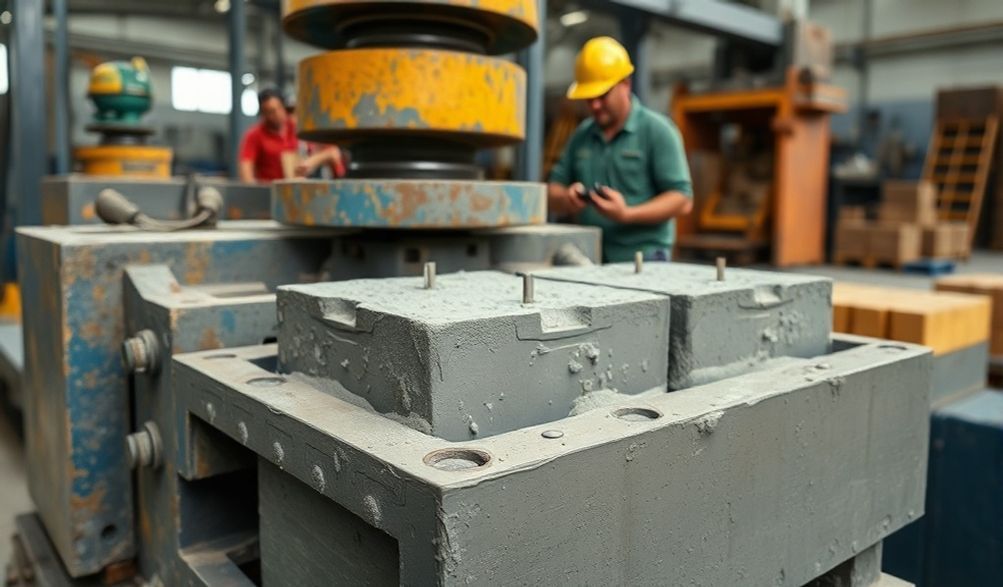
Jagoran Cikakke na Na'urar Block 4-30A: Siffofi, Fa'idodi, da Aiki
Gabatarwa
A cikin duniyar kera tubalin siminti, inganci da aminci sune tushen riba. Ga ƙwararrun masu gine-gine, masu shingen tubali, da 'yan kasuwa da ke neman haɓaka samar da su, zaɓin injinan da ya dace yana da muhimmanci wanda ke tasiri ga yawan samarwa, ingancin samfur, da kuma ƙarshen riba. Wannan cikakken jagora ya mai da hankali ne kan injin aiki na masana'antar:4-30Na'urar yin tubali.
Dangane da shekaru na ƙwarewar fasaha da gogewar aiki, wannan rubutun yana ba da cikakken bincike mai haske, ingantacce, kuma abin dogaro. Na'urar 4-30A ba kayan aiki kawai ba ce; ta kasance madaidaiciyar hanyar sarrafa kai-da-kai wacce ke haɗa gibin injinan hannu masu cin gajiyar ƙwazo da masana'antun cikakken kai-da-kai masu tsadar jari. Za mu bincika cikakkun bayananta, tsarin aiyukanta, da kimar tattalin arzikinta, don ba ku damar yin cikakkiyar shawara na saka hannun jari don kasuwancin ku.
Menene Injin Block 4-30A? Ƙayyadaddun Tsari da Ƙira
4-30A wani takamammen samfuri ne a cikin sanannen jerin injinan yin tubali. Ƙirarsa ta ba da fifiko ga ƙaƙƙarfan gini, daidaitaccen samarwa, da sauƙin aiki, wanda ya sa ya zama abin so ga ƙananan zuwa matsakaitan masana'antun samarwa.
Nau'in Injini da Rarrabawa
4-30A an rarraba shi a matsayinMashin na yin bulo mai sarrafa kansa, mai tsayayye.Wannan yana nufin cewa tana sarrafa tsarin samar da cibiyar – girgiza, matsawa, da gyare-gyare – amma tana buƙatar ma’aikaci don aiwatar da wasu ayyuka a kowane zagaye, kamar ciyar da albarkatun ƙasa da cire tubalan da aka gama. Wannan rarrabuwar ya sanya ta daidai don kasuwancin da ke shirye don ƙara samarwa fiye da iyawar hannu ba tare da rikitarwa da farashin cikakken layin sarrafa kansa ba.
Fassara Lambar Samfurin
Lambar samfura a cikin injinan masana'antu ba su da yawa. Ko da yake ƙayyadaddun bayanai na iya bambanta kaɗan tsakanin masana'antun, "4-30A" yawanci yana nufin:
- "4"Adadin tubalan da'irori masu girman ma'auni (misali, tubalan ramuka na inci 4) da na'ura ke samarwa a cikin zagaye guda.
- "Talatin"Matsakaicin lokacin zagayowar a cikin daƙiƙa a ƙarƙashin mafi kyawun yanayi.
- "A"Sau da yawa yana nuna jerin samfura ko ingantaccen siga, yana nuna ingantattun abubuwa akan samfurin asali.
Wannan tsarin suna yana ba ku fahimtar ainihin iyawar na'urar nan take: ta samar da tubalan 4 kusan kowane dakika 30.
Mahimman Bayyanai na Jiki da Fasaha
Dangane da ƙayyadaddun adadi ya dogara da masana'anta, na'urar 4-30A ta yau da kullun tana da:
- Girma:Kimanin 2500mm (Tsawon) x 1800mm (Fadi) x 2200mm (Tsawo). Ana kuma buƙatar isasshiyar sarari don kayan aikin gefe.
- Nauyi:Yawanci tsakanin kilogiram 2,800 zuwa 3,500, yana nuna tsayayyen ƙarfin da ke jure rawar jiki.
- Bukatar Wutar Lantarki:Gabaɗaya ana amfani da injin lantarki mai ƙarfi 11-15 kW (15-20 HP) don tsarin girgizawa da kuma injin daban don na'urar wutar lantarki.
- Tsarin Gudanarwa:Ana gudanar da shi ta hanyar na'urar sarrafa shirye-shirye (PLC) don sarrafa zagaye ta atomatik.
- Tsarin Hydraulic:Ya ƙunshi na'urar ikon hydraulic tare da tankin mai, famfunan ruwa, valves, da cylinders da ke da alhakin motsi a tsaye na mold da matsin tamper head.
Abubuwan Muhimmanci da Sassa na Injin 4-30A
Ingantaccen aiki da ingancin fitowar na'urar 4-30A sun samo asali ne daga ingantattun sassan jikinta.
Tsarin Gyare-gyare
Wannan ita ce zuciyar na'urar, inda siminti ke canzawa zuwa tubali daidai gwargwado.
- Akwatin Ƙirƙira:Wani kayan haɗin ƙarfe mai nauyi, wanda aka haɗa shi daidai daidai, wanda ke bayyana girman waje na tubalin. An tsara shi don sauƙin canzawa don samar da nau'ikan tubali daban-daban.
- Sanda mai tsakiyaWaɗannan suna samar da ramukan da ba su da ciki a cikin tubalan. An ɗora su akan farantin gindi kuma dole ne su kasance masu ƙarfi don jure rawar jiki da matsa lamba akai-akai.
- Kai na Tamper:Hakanan ana kiransa “kashin latsawa,” yana gangarowa cikin akwatin ƙera don ɗora matsi a kan siminti yayin girgizawa, yana tabbatar da daɗaɗɗen saman da daidaitaccen nauyi.
Tsarin Girgiza
Matsakaicin damfara mai inganci ba shi da muhimmanci don tubalin ƙarfi da dawwamama. Na'urar 4-30A tana amfani datsarin rawar jiki biyu:
- Girgizar Tebur The entire mold table vibrates at high frequency, ensuring compaction from the bottom up.
- Head Vibration: The tamper head also vibrates, compacting the concrete from the top down.
This synchronized action from both directions eliminates voids and achieves the high density required for load-bearing blocks and pavers.
Tsarin Gudanarwa & Matakin Kwanciyar Hankali
The PLC-based control panel is the machine’s brain, offering:
- Automated Cycle Sequencing: The operator initiates a single cycle, and the PLC automatically controls the sequence: mold descent, material feed, vibration, head pressure, mold rise, and block ejection.
- Adjustable Parameters: Vibration time, pressure duration, and cycle delays can often be adjusted to fine-tune the process for different mix designs.
- Manual Override: Critical for setup, maintenance, and troubleshooting. Safety interlocks prevent operation during manual interventions.
- Fault Diagnostics: Basic models may have indicator lights, while advanced panels display error codes for quicker problem resolution.
Production Capacity and Output Expectations
Understanding real-world output is crucial for business planning. Theoretical maximums are often different from sustainable daily production.
Understanding Cycle Time and Daily Output
The “30” in 4-30A suggests a 30-second cycle time. In practice, a well-run machine with a skilled operator can achieve a cycle time of 35-45 seconds, accounting for material feeding and block removal.
Ƙididdigar Fitowa:
* A Kowa Awa: (3600 seconds / 40-second cycle) * 4 blocks = ~360 blocks/hour.
* Kowane Shift na Sa'o'i 8: 360 blocks/hour * 8 hours = ~2,880 blocks.
* Per 24-Hour Day (3 shifts): Up to ~8,640 blocks.
Important: This is a sustainable estimate. Output can be higher with perfect conditions or lower during mold changes, maintenance, or with slower material handling.
Compatible Block Types and Sizes
The 4-30A’s versatility is a key selling point. With the appropriate mold, it can produce:
* Tubalin Ƙofa: 4″, 6″, 8″ thickness (most common).
* Solid Blocks.
* Paving Dutse (for landscaping and driveways).
* Ginshiƙan gefen hanya and other specialty products (may require specific mold kits).
Factors Influencing Production Rate
Maximizing output depends on more than just the machine:
* Raw Material Consistency: A well-proportioned, semi-dry concrete mix with consistent moisture content is essential. Wet or inconsistent mix causes sticking and delays.
* Pallet Quality & System: Worn or warped pallets cause block damage and machine jams. A manual or automated pallet return system drastically improves workflow.
* Operator Skill & Rhythm: An experienced, efficient operator is the most important factor in achieving target cycle times.
* Kula da Kariya: Unplanned downtime is the biggest killer of production targets. A disciplined maintenance schedule is non-negotiable.
Operational Workflow and Best Practices
Proper operation ensures safety, quality, and machine longevity.
Step-by-Step Operating Procedure
- Shirye-shirye: Ensure the machine is lubricated, the hydraulic oil level is correct, and the mold is clean and secured.
- Mix Loading: The operator places a pallet on the feeding table and shovels or uses a feeder to deposit the concrete mix into the mold box.
- Farawar Zagayen The operator presses the cycle start button on the PLC panel.
- Automated Cycle: The machine sequentially lowers the mold, activates dual vibration, lowers the tamper head for pressure, releases vibration, raises the mold, and ejects the block onto the pallet.
- Block Removal: The operator (or a helper) removes the pallet with the fresh block and transfers it to the curing area, replacing it with a new empty pallet.
- Maimaitawa: The process repeats for the next cycle.
Essential Safety Protocols
- Mandatory PPE: Safety glasses, steel-toe boots, and hearing protection.
- Tsaron Injini: Never bypass safety guards or interlocks. Keep hands clear of the mold area during automatic cycles.
- Lockout/Tagout: Always disconnect power and lock out the control panel before performing any maintenance or clearing a jam.
Jadawalin Kulawa na Yau da Kullum
Kullum:
* Clean the mold box, core rods, and tamper head thoroughly after production.
* Check hydraulic oil levels and for any leaks.
* Inspect electrical connections.
* Lubricate all guide rods and moving parts as per the manual.
Mako-mako:
* Check and tighten all bolts and nuts, especially on the vibration frame.
* Inspect hydraulic hoses for wear.
* Check the tension of drive belts (if applicable).
Kowane wata:
* Change hydraulic oil and filters as recommended.
* Inspect vibration motors and mounting bolts.
* Conduct a thorough inspection of the mold box for wear or damage.
Advantages and Considerations for Your Business
A balanced view helps assess if the 4-30A is the right fit.
Primary Benefits
- Tasiri Mai Tsada: Offers a significantly higher output than manual machines at a fraction of the cost of a fully automatic plant.
- Ragewar Aiki: One skilled operator can run the machine, reducing labor costs per block compared to manual operations.
- Exceptional Durability: Built with heavy-duty steel and industrial components for a long service life in harsh environments.
- Daidaitaccen Ingancin Kayayyaki: The automated vibration and pressing cycle produces blocks with uniform density, dimensions, and strength, enhancing your market reputation.
Investment and ROI Analysis
- Farashin Farko: The price for a new 4-30A machine typically ranges from $18,000 to $30,000, depending on the manufacturer, configuration, and region. This does not include the cost of a mixer, loader, or pallet system.
- Payback Period: For a business selling directly to the construction market, the payback period can often be achieved within 12-24 months based on local block prices and production volume.
- Vs. Fully Automatic: Fully automatic machines (like the 6-15 or 8-15 models) offer higher output with less labor but can cost 3-5 times more and require a more complex setup and higher skill level to maintain.
Potential Limitations & Solutions
- Need for Supporting Equipment: For optimal workflow, a concrete mixer and a bucket loader or material feeder are highly recommended. A pallet return system (even a simple roller conveyor) dramatically increases efficiency.
- Space Requirements: You need a covered production shed with a strong, level concrete floor, plus space for raw materials, block curing, and storage.
- Operator Training: Requires a dedicated, trainable operator. The machine’s efficiency is directly tied to the operator’s skill.
FAQ: Common Questions About the 4-30A Block Machine
Q1: What is the approximate price range for a new 4-30A block machine?
As noted, expect a range of $18,000 – $30,000 for the machine itself. Always request detailed quotations that include shipping, installation support, and initial spare parts.
Q2: Can one operator efficiently run this machine?
Yes, one skilled operator is sufficient to run the 4-30A cycle. However, a second person to handle pallet feeding and block removal can significantly boost overall production output by allowing the primary operator to focus solely on the machine cycle.
Q3: What concrete mix design is recommended for optimal results?
A semi-dry mix is crucial. A common starting ratio is 1 part cement, 3 parts sand, and 5 parts aggregate (1:3:5), with just enough water for cohesion (typically a water-cement ratio of 0.4-0.5). The mix should hold its shape when squeezed in your hand.
Q4: How does the 4-30A compare to a fully automatic block making machine?
The 4-30A is semi-automatic, requiring operator intervention per cycle. Fully automatic machines integrate material feeding, block ejection, and pallet handling into one continuous, computer-controlled process. They offer higher output (e.g., 6-10 blocks every 15 seconds) with minimal labor but at a much higher capital and operational complexity.
Q5: What are the most common spare parts I should keep in stock?
Always keep: vibration motor mounting bolts, hydraulic hose assemblies, O-rings and seals for the hydraulic cylinders, spare springs for the mold, and a set of replacement core rods. Your supplier can provide a recommended list.
Q6: What foundation and floor space are required for installation?
The machine must be bolted to a solid, level concrete foundation at least 300mm thick. The total floor space needed for comfortable operation, including material staging and block removal, is typically at least 10 meters in length and 6 meters in width.
Conclusion and Final Recommendations
The4-30Na'urar yin tubali stands as a testament to practical, efficient engineering. It is not the cheapest nor the most advanced option, but for a business aiming to graduate from manual production to a more scalable, quality-focused operation, it represents an outstanding balance of output, investment, and control.
Success with this machine hinges on three pillars: proper installation on a solid foundation, investment in operator training, and a religious adherence to preventive maintenance. Before finalizing any purchase, we strongly advise you to consult with multiple reputable manufacturers or suppliers. Request detailed specifications, visit a working installation if possible, and clearly understand the after-sales support, warranty terms, and availability of spare parts in your region. With due diligence, the 4-30A can become the reliable, profit-generating cornerstone of your block manufacturing business for years to come.
<