
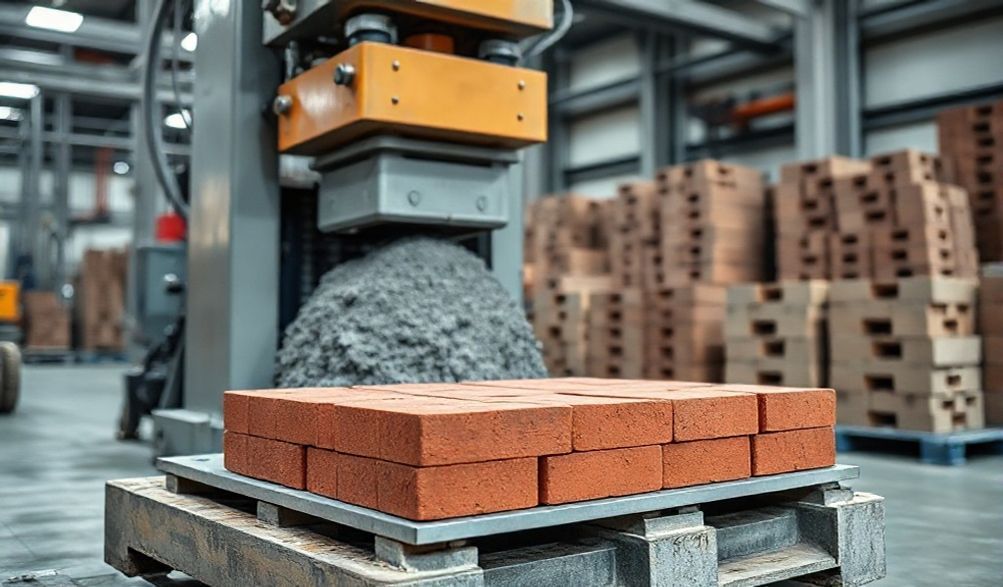
Panduan Utama Mesin Pembuat Blok Paving: Jenis, Biaya & Cara Memilih
Pengantar
Anda tidak hanya mencari mesin; Anda mencari mitra yang dapat diandalkan untuk membangun bisnis Anda. Baik Anda seorang kontraktor yang ingin memproduksi sendiri, seorang pengusaha yang meluncurkan pabrik pembuatan bata, atau perencana kota yang membutuhkan peralatan, dunia mesin pembuat blok perkerasan bisa menjadi kompleks dan dipenuhi klaim yang bertentangan. Panduan ini dirancang untuk menembus kebisingan tersebut.
Blok trotoar—mulai dari batu paving interlock yang elegan hingga batu tepi jalan yang kokoh—merupakan tulang punggung lanskap modern, jalan masuk, dan infrastruktur perkotaan. Mesin yang memproduksinya adalah penggerak dari operasi yang menguntungkan dan efisien. Namun, memilih mesin yang salah dapat menyebabkan downtime yang melumpuhkan, kualitas yang tidak konsisten, dan tekanan finansial.
Dibuat berdasarkan wawasan industri dan pengetahuan praktis, panduan komprehensif ini menjadi sumber terpercaya Anda. Kami akan melampaui brosur penjualan untuk menjelaskan fungsi inti, memecah biaya nyata, dan menyediakan kerangka kerja yang jelas untuk pengambilan keputusan. Tujuan kami adalah membekali Anda dengan keahlian yang diperlukan untuk membuat investasi yang percaya diri dan terinformasi, sesuai dengan tujuan produksi dan anggaran Anda.
Apa itu Mesin Pembuat Blok Paving? Fungsi Inti Dijelaskan
Inti dari mesin pembuat batu trotoar adalah alat yang mengubah campuran beton kering mentah menjadi balok padat berbentuk presisi melalui proses pemadatan dan getaran. Mesin ini mengotomatisasi dan menstandarisasi tugas manual yang padat karya dan tidak konsisten, memastikan setiap balok memenuhi toleransi kekuatan dan dimensi tertentu.
Prinsip Dasar Cara Kerja
Proses ini, meski canggih dalam pelaksanaannya, mengikuti urutan yang logis:
1. Pencampuran & Pemberian Pakan:Campuran pra-campur semen, agregat (pasir, pecahan batu), dan pigmen (jika berwarna) dimuat ke dalam corong mesin.
2. Pengukuran & Pencetakan:Sejumlah takaran campuran ini dimasukkan ke dalam rongga cetakan (berbentuk balok yang diinginkan) yang ditempatkan di atas palet baja yang kokoh.
3. Pemadatan & Getaran:Ini adalah fase kritis. Kepala mesin press hidrolik turun menekan campuran sementara getaran frekuensi tinggi diterapkan secara bersamaan. Aksi ganda ini memaksa kantong udara keluar dan memampatkan partikel, menciptakan balok yang padat dan kuat.
4. Pelepasan & Pengeluaran:Kepala hidrolik menarik mundur, dan cetakan naik, meninggalkan balok yang baru terbentuk di atas palet.
5. Menyembuhkan:Blok tersebut, yang masih berada di paletnya, dipindahkan ke area perawatan. Di sini, blok tersebut memperoleh kekuatan selama berhari-hari melalui pengendalian kelembapan dan suhu, sebuah proses yang terpisah dari mesin namun penting untuk kualitas akhir.
Komponen Utama dan Peran Mereka
Memahami anatomi mesin membantu dalam mengevaluasi kualitas dan pemecahan masalah.
* Hopper:Titik masuk untuk campuran bahan baku. Ukurannya menentukan seberapa sering perlu diisi ulang.
* Jamur:Jantung mesin yang dapat dipertukarkan. Ia menentukan bentuk, ukuran, dan pola permukaan balok (misalnya, batu bulat, batu tulis).
* Meja Getar:Platform yang menahan cetakan dan palet. Tempat ini menampung motor vibrator yang menyediakan energi pemadatan esensial.
* Sistem Hidrolik:Pusat tenaga. Ia menyediakan tekanan yang sangat besar untuk kepala pengepres dan mengendalikan pergerakan cetakan. Kualitas pompa, katup, dan silinder adalah yang terpenting.
* Panel Kontrol:Otak. Dalam model semi dan sepenuhnya otomatis, sistem berbasis PLC ini mengelola urutan siklus, waktu getaran, dan pengaturan tekanan untuk hasil yang konsisten.
Jenis Mesin Pembuat Blok Paving: Menemukan yang Tepat untuk Anda
Pilihan Anda di sini pada dasarnya menentukan skala produksi, model tenaga kerja, dan potensi bisnis Anda. Tidak ada tipe "terbaik", hanya yang paling cocok dengan situasi Anda saat ini.
Mesin Pembuat Blok Manual
Ini adalah mesin cetak paling dasar yang dioperasikan dengan tenaga manusia.
* Keluaran:Sangat rendah, biasanya 200-500 blok per shift 8 jam, tergantung pada stamina pekerja.
* Tenaga Kerja:Sangat padat karya. Membutuhkan 2-3 operator untuk pengisian, penekanan, dan pengambilan blok secara terus-menerus.
* Aplikasi & Ideal Untuk:Startup ultra-kecil dengan modal minimal, proyek komunitas, lokasi terpencil tanpa listrik, atau memproduksi blok khusus dengan volume rendah.
* Wawasan Utama:Murah untuk diperoleh, tetapi biaya per blok dalam hal tenaga kerja manusia adalah yang tertinggi. Mereka adalah batu loncatan, bukan solusi pertumbuhan jangka panjang.
Mesin Semi-Otomatis
Kategori ini menawarkan keseimbangan terbaik bagi sebagian besar usaha kecil dan menengah (UKM). Siklus pemadatan inti (pengisian, getaran, penekanan, pengangkatan cetakan) diotomatisasi, namun operator diperlukan untuk memulai siklus, mengambil palet yang telah terisi, dan seringkali memasok bahan baku.
* Keluaran: Significantly higher than manual, ranging from 800 to 2,500 blocks per 8-hour shift, depending on model and block size.
* Tenaga Kerja: Requires 1-2 attentive operators. Their role shifts from brute force to machine supervision and material handling.
* Aplikasi & Ideal Untuk: Growing block yards, contractors supplying local projects, and businesses with variable order sizes. They offer excellent flexibility.
* Wawasan Utama: The most common “sweet spot” for businesses serious about block manufacturing. They provide automation where it counts most (quality and consistency) while keeping the initial investment manageable.
Mesin Pembuat Blok Sepenuhnya Otomatis
These are production lines, not just machines. They integrate automatic raw material feeding, pallet circulation, block stacking, and sometimes curing.
* Keluaran: High-volume, from 4,000 to over 15,000 blocks per 8-hour shift.
* Tenaga Kerja: Minimal. Often just 1-2 operators for monitoring, quality checks, and managing the input/output flow.
* Aplikasi & Ideal Untuk: Large-scale commercial plants supplying city projects, distributors, and markets with constant, high demand.
* Wawasan Utama: The investment is substantial, not just in the machine but in the plant infrastructure (strong concrete foundation, material silos, large curing area). The ROI is based on massive, consistent volume.
Mesin Blok Stasioner vs. Bergerak
- Mesin Stasioner: The standard. They are installed on a solid foundation in a factory or yard. All semi- and fully-automatic machines are stationary. They offer higher stability, precision, and capacity.
- Mesin Bergerak: These are smaller, trailer-mounted units designed for on-site production. They eliminate transport costs for large projects (e.g., paving a remote parking lot) but sacrifice output and block variety. They are niche tools for specific contracting scenarios.
Faktor-Faktor Penting yang Perlu Dipertimbangkan Sebelum Membeli
Look beyond the glossy catalog. These factors determine your long-term satisfaction and profitability.
Kapasitas Produksi (Blok Per Jam/Hari)
Never buy based on the manufacturer’s peak theoretical output. Ask for the proven output for the specific block type you want to make. A machine may make 1,000 small pavers per hour but only 200 large curbstones.
* Penyesuaian dengan Tujuan: Calculate your current and projected market demand. A common mistake is overbuying—a massive, underutilized machine is a financial drain. It’s often wiser to start with a capacity you can reliably use and sell, then scale up.
Block Types, Sizes, and Designs
Versatility equals market agility.
* Sistem Cetakan: Investigate how easily molds are changed. A quick-change system allows you to switch from producing interlocking pavers to garden edging in under an hour, letting you fulfill diverse orders.
* Tekanan & Getaran: Ensure the machine has sufficient hydraulic pressure and vibration force (measured in kN and Hz) to produce thicker, heavier blocks like retaining wall units or solid concrete blocks, even if you start with pavers.
Kesesuaian Bahan Baku
The machine only compacts what you feed it. The mix design is 50% of the quality equation.
* Standard Mixes: Most machines are designed for conventional mixes of cement, sand, and 6-10mm aggregates.
* Alternative Materials: If you plan to use fly ash, slag, or even processed plastic waste, discuss this explicitly with the manufacturer. Some machines may require liners or modified hoppers to handle different material flow characteristics. The right vibration frequency is also crucial for non-standard mixes.
Kebutuhan Daya dan Biaya Operasional
The sticker price is just the beginning.
* Electrical Load: A semi-automatic machine may require a robust 3-phase connection (e.g., 15-25 HP). Verify your site’s power availability. Inconsistent power can damage electronic controls.
* Cost-Per-Block Analysis: Factor in electricity, wear parts (like mold liners and hydraulic oil), and labor. A slightly more expensive but energy-efficient and reliable machine will often have a lower operational cost per block, which is the true measure of efficiency.
After-Sales Support and Service
This is the most critical, yet most overlooked, factor. A machine is a long-term asset.
* Supplier Reputation: Research the manufacturer’s history. How long have they been in business? Look for client testimonials and, if possible, visit an existing installation.
* Ketersediaan Suku Cadang: Are common wear parts (hydraulic seals, vibrator motors, control relays) readily available locally or through quick shipping? Downtime waiting for a part flown in from overseas can bankrupt a project.
* Technical Training & Warranty: Does the purchase include comprehensive training for your operators on setup, daily operation, and basic troubleshooting? What does the warranty actually cover, and for how long?
Understanding the Investment: Pavement Block Machine Price Range
Prices vary wildly based on automation level, build quality, brand, and region. The figures below are broad, illustrative brackets. Always get multiple, detailed quotations.
Cost Breakdown by Machine Type
| Machine Type | Approximate Price Range (USD) | Key Determinants of Price |
| :— | :— | :— |
| Manual | $1,000 – $4,000 | Build quality, material (steel grade), and press mechanism. |
| Semi-Otomatis | $15,000 – $50,000+ | Capacity, level of automation (e.g., auto feeder), hydraulic system brand, control panel sophistication. |
| Sepenuhnya Otomatis | $60,000 – $250,000+ | Degree of integration (pallet return, robotic stacker), output speed, and brand prestige. |
Crucial Caveat: A $20,000 machine from an unknown supplier is not equivalent to a $25,000 machine from an established brand with local support. The latter is almost always the wiser investment.
Beyond the Sticker Price: Hidden and Recurring Costs
- Initial Hidden Costs: Molds ($500-$2,000 each), spare pallets ($100-$300 each), raw material handling equipment (concrete mixer, loader), installation, and foundation work.
- Recurring Costs: Electricity, regular maintenance supplies (grease, oil), wear parts, and labor.
Calculating Your Return on Investment (ROI)
Use this simplified framework:
1. Total Investment: Machine price + initial hidden costs.
2. Monthly Operating Cost: (Electricity + Labor + Maintenance + Raw Materials) per month.
3. Monthly Revenue: (Number of blocks produced per month) x (Selling price per block in your market).
4. Monthly Gross Profit: Monthly Revenue – Monthly Operating Cost.
5. Simple Payback Period: Total Investment / Monthly Gross Profit.
Contoh: If your total investment is $30,000 and your monthly gross profit is $3,000, your payback period is approximately 10 months. This is a healthy target for the industry.
Best Practices for Operation and Maintenance
Treat your machine like a prized asset. Proper care prevents 90% of major breakdowns.
Daily and Weekly Maintenance Checklists
Daily (Before/After Shift):
* Lubricate all moving joints and guide rods as per manual.
* Check hydraulic oil level and look for leaks.
* Clean the mold, hopper, and press head of hardened concrete.
* Inspect electrical connections for tightness.
* Check pallets for warping or damage.
Mingguan:
* Thoroughly clean the entire machine, including under the vibration table.
* Check the tension of drive belts (if any).
* Inspect mold liners for excessive wear.
* Test safety interlocks and emergency stop functions.
Pemecahan Masalah Umum
- Block Breakage (Low Strength): Usually a raw material issue (too much water, poor sand quality, incorrect cement ratio) or insufficient compaction (check vibration motor function and vibration time setting).
- Poor Surface Finish/Sticking in Mold: Caused by a worn mold liner, insufficient mold release agent, or an overly wet mix. Polish or replace the mold liner.
- Slow or Erratic Cycling: Often related to the hydraulic system. Check oil temperature (overheating), filter clogs, or pressure settings. For electronic issues, consult the manual for error codes.
Protokol Keamanan untuk Operator
- Lockout/Tagout: Always disconnect power before performing any maintenance or clearing a jam.
- Perlengkapan Pelindung Diri (APD): Safety glasses, hearing protection (vibration is loud), steel-toe boots, and gloves are mandatory.
- Never Bypass Guards or Safety Interlocks. These are there for a reason.
- Keep Hands Clear: Never reach into the mold area or under the press head while the machine is powered on, even if it appears stopped.
The Future of Pavement Block Production
The industry is moving towards greater efficiency and sustainability.
Trends in Automation and Smart Controls
The next generation of machines features IoT (Internet of Things) sensors that monitor production data in real-time: blocks counted, cycle times, hydraulic pressure, and motor health. This data can be accessed via smartphone, allowing for predictive maintenance (fixing a problem before it causes downtime) and optimizing production flow from anywhere.
Sustainable Practices and Eco-Friendly Machines
The push for green construction is driving innovation:
* Water Recycling Systems: Closed-loop systems that recycle water used for curing and cleaning, drastically reducing consumption.
* Inovasi Material: Machines are being adapted to efficiently use high percentages of recycled aggregates, industrial by-products like fly ash, and even post-consumer plastic waste, creating eco-pavers.
* Efisiensi Energi: Variable-frequency drives (VFDs) on motors and pumps are becoming standard, reducing energy consumption by matching power to the actual load.
Bagian FAQ
Q1: What is the average lifespan of a pavement block making machine?
With proper maintenance and operation, a well-built machine from a reputable manufacturer can last 15-20 years. Key components like the hydraulic system and vibration table may require overhaul or replacement during this time.
Q2: Can one machine produce different block designs?
Absolutely. This is one of the key advantages. By changing the mold (the cavity that shapes the block), the same machine can produce hundreds of different paver patterns, curbstones, and landscaping blocks. Invest in a machine with a user-friendly mold change system.
Q3: How much space is required to install a semi-automatic machine?
As a general rule, you need a clear, covered area of at least 500-800 sq. ft. (approx. 50-75 sq. meters). This accommodates the machine itself, space for pallet movement, a raw material staging area, and a curing area for fresh blocks. Always consult the specific machine’s layout diagram.
Q4: What is the most common reason for block defects, and how can I fix it?
The most common culprit is an inconsistent or incorrect raw material mix. Too much water causes weakness and sticking; poor-quality sand leads to crumbling; incorrect cement ratio affects strength. The fix is to rigorously standardize your mix design and source quality materials. The machine can only compact what you give it.
Q5: Are there financing options available for these machines?
Yes, many established manufacturers and their dealers offer financing plans or can connect you with industrial equipment lenders. Banks may also provide business loans for capital equipment. Be prepared to present a solid business plan.
Q6: How do I find a reputable supplier or manufacturer?
* Industry References: Ask other block manufacturers in non-competing regions for their recommendations.
* Trade Shows: Visit construction equipment expos to see machines in action and talk to engineers.
* Due Diligence: Ask for a list of past clients and actually contact them. Inquire about after-sales service responsiveness. Search online for the company’s name alongside keywords like “reviews” or “complaints.”
* Avoid Red Flags: Extreme low-ball pricing, pressure to pay upfront, and vague warranty terms are major warnings.
Kesimpulan
Choosing the right pavement block making machine is a strategic decision that hinges on aligning technology with your business reality. Remember to match the machine type—manual, semi-automatic, or fully automatic—to your true production scale and growth trajectory. Look beyond the initial purchase price to the total cost of ownership, where factors like energy efficiency, maintenance needs, and operational cost-per-block define long-term profitability.
Above all, prioritize the intangible asset of supplier support. A reliable partner for training, spare parts, and technical advice is invaluable insurance for your investment. Use the framework and questions in this guide as your checklist when evaluating options. By investing in the right equipment and knowledge, you’re not just buying a machine; you’re laying the foundation for a durable and successful enterprise in the vital construction materials industry.
<