
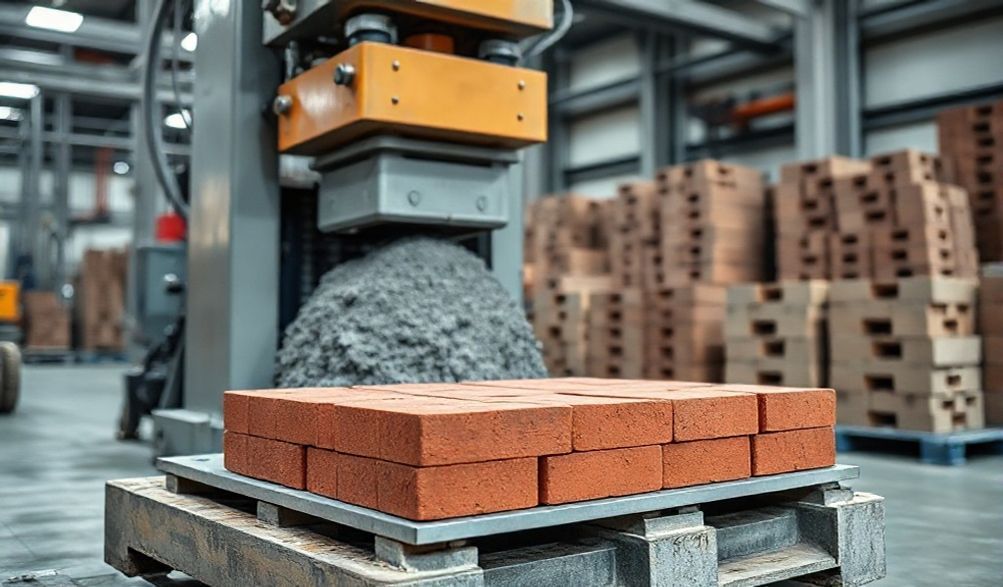
Pavement Block Making Mashinalarynyň Iň Soňky Gollanmasy: Görnüşleri, Bahalary we Nädip Saýlamaly
Giriş
Siz diňe bir maşyn gözleýärsiňiz däl, eýsem işiňizi gurmak üçin ygtybarly hyzmatdaş gözleýärsiňiz. Kontraktoryňyz bolup, öndürmäni öz içine almak maksady bilen, blok öndüriş meýdanyny açýan telekeçi bolup, ýa-da enjam çeşmesi edinýän municipal planlaşdyryjy bolsaňyz, asfalt blok ýasama maşynlarynyň dünýäsi çylşyrymly we çaknyşykly çaklamalar bilen doly bolup biler. Bu gollanma şol sesleri kesmek üçin düzüldi.
Piwement bloklar - näsip guralyşykly interlocking plitkalardan berkitilen kerpiçlere çenli - häzirki zaman peýzajlarynyň, ýol geçelgeleriniň we şäher infrastrukturasynyň esasy düýbüni düzýär. Olary öndürýän enjamlar peýdaly we netijeli işleýişiň motorlarydyr. Ýöne nädogry maşyny saýlamak, işiň togtamagyna, hiliniň durnuksyzlygyna we maliýe çökgünligine getirip biler.
Bu gollap berilen gollawçy, senagat düşünjeleri we amaly bilimler esasında düzüldi we size ygtyýarlykly çeşme bolup hyzmat eder. Biz satuw broşýuralaryndan daşary çykyp, esasy funksiýalary düşündirer, hakyky bahalary düşer we karar kabul etmek üçin açyk çarçywa hödürler. Biziň maksadymyz, önümçilik maksatlaryňyz we büdjetiňiz bilen gabat gelýän ygtybarly, habarly maýa goýumy amala aşyrmak üçin zerur bilim bilen üpjün etmekdir.
Pavement Block Making Machine näme? Esasy Funksiýasy Düşündirilýär
Onuň esasynda, plitka guralyş maşyny, gury beton garyndysyny gysma we titreme prosesi arkaly ýygy, takyk kesilýän bloka öwürýän enjamdyr. Ol, her bir blok belli bir güýç we ölçeg çäklerine laýyk gelýändigine göz ýetirip, işgüç talap edýän, üýtgeýän el işini awtomatlaşdyrýar we standartlaşdyrýar.
Esasy Işleýiş Prinsipi
Bu proses, icra edilende müräkkäp bolsa-da, yljy tertipde yzygiderliligi saklaýar:
1. Gatnaşdyrmak we Iýmek:Sement, agregatlar (gum, daş çybyk) we pigment (reňkli bolsa) öňünden garylan birleşdirilen goşundy maşynyň bunkerine ýüklenýär.
2. Ölçekleme we Kalyplyma:Bu goşundynyň ölçelenen mukdary berk polat palet ýerleşdirilen galybyň (isleýän blokuňyzyň görnüşi) boşlugyna berilýär.
3. Ыкмаламак & Титремек:Bu kritik fazadyr. Gidrawlik presiň başy garyndynyň üstüne düşýär we şol bir wagtyň özünde ýokary tezlikli titreme ulanylýar. Bu goşmaça hereket howa boşluklaryny çykaryp, bölejikleri gysýar we ýygy, güýçli blok döredýär.
4. Демонтаж жана чыгаруу:Gidrawlik başy çekilýär we galyby galýar, täze düzülen blok paletde galýar.
5. Gowulama:Блок, һаман палетада болуп, күйдүрме аймагына алып барылады. Бул жерде, ал күндер бою контролленген ным жана температура арқылы күш алады, бул процесс машинадан айырмашылығы бар, бирок акыркы сапат үчін зарыл.
Esasy Bölümleri we Olaryň Roluny
Maşynyň anatomijasyny düşünmek, hilini bahalandyrmakda we meseleleri çözmekde kömek edýär:
* Хоппер:Hammanyň garyndysy üçin giriş noktasy. Onuň ölçegi, ony nädip ýygy-ýygydan doldurmak zerurlygyny kesgitleýär.
* Küf:Машинаныň çalşyrylyp bolýan ýüregi. Ol bloklaryň görnüşini, ululygyny we ýüzüniň nusgasyny (mysal üçin, daş ýol, şifer) kesgitleýär.
* Titreşim Masası:Kalyp we palet saklaýan platforma. Ol gerekli gysma energiýasyny üpjün edýän wibrator motoryny öz içine alýar.
* Gidrawlik ulgam:Гидравлик система. Ол пресс башында uly басым дöретйәр ве калыпьн херекетини долундайар. Насослар, клапанлар ве цилиндрлер халатлыгы енч ыһмиятлыдыр.
* Kontrol paneli:Maga. Ýarym awtomatiki we doly awtomatiki modellerde, bu PLC esasly ulgamyň kömegi bilen sikliň tertibi, titreme wagty we basyş sazlamalary üpjün edilýär, netijede yzygiderli önüm çykyşy gazanylýar.
Types of Pavement Block Making Machines: Finding Your Perfect Fit
Your choice here fundamentally dictates your production scale, labor model, and business potential. There is no “best” type, only the best fit for your current situation.
Golýazma Blok Ýasama Maşynlary
بۇлар iň ýönekeý, adam güýji bilen işleýän preslerdir.
* Çykyş: Very low, typically 200-500 blocks per 8-hour shift, depending on worker stamina.
* Emegeý Highly labor-intensive. Requires 2-3 operators for constant filling, pressing, and block removal.
* Applications & Ideal For: Ultra-small startups with minimal capital, community projects, remote locations with no power, or producing specialty, low-volume blocks.
* Esasy Gözegçilik: While cheap to acquire, the cost-per-block in terms of human labor is the highest. They are a stepping stone, not a long-term growth solution.
Ýary-awtomatik Maşynlar
This category offers the best balance for most small to medium-sized enterprises (SMEs). The core compaction cycle (feed, vibrate, press, lift mold) is automated, but an operator is needed to initiate the cycle, retrieve the filled pallet, and often feed raw material.
* Çykyş: Significantly higher than manual, ranging from 800 to 2,500 blocks per 8-hour shift, depending on model and block size.
* Emegeý Requires 1-2 attentive operators. Their role shifts from brute force to machine supervision and material handling.
* Applications & Ideal For: Growing block yards, contractors supplying local projects, and businesses with variable order sizes. They offer excellent flexibility.
* Esasy Gözegçilik: The most common “sweet spot” for businesses serious about block manufacturing. They provide automation where it counts most (quality and consistency) while keeping the initial investment manageable.
Doly awtomatik blok ýasama maşynlary
These are production lines, not just machines. They integrate automatic raw material feeding, pallet circulation, block stacking, and sometimes curing.
* Çykyş: High-volume, from 4,000 to over 15,000 blocks per 8-hour shift.
* Emegeý Minimal. Often just 1-2 operators for monitoring, quality checks, and managing the input/output flow.
* Applications & Ideal For: Large-scale commercial plants supplying city projects, distributors, and markets with constant, high demand.
* Esasy Gözegçilik: The investment is substantial, not just in the machine but in the plant infrastructure (strong concrete foundation, material silos, large curing area). The ROI is based on massive, consistent volume.
Stationary vs. Mobile Block Machines
- Стационар машиналар: The standard. They are installed on a solid foundation in a factory or yard. All semi- and fully-automatic machines are stationary. They offer higher stability, precision, and capacity.
- Mobil Maşynlar: These are smaller, trailer-mounted units designed for on-site production. They eliminate transport costs for large projects (e.g., paving a remote parking lot) but sacrifice output and block variety. They are niche tools for specific contracting scenarios.
Satyn almakdan öň göz öňünde tutmaly ähmiýetli amiller
Look beyond the glossy catalog. These factors determine your long-term satisfaction and profitability.
Önümçilik Kuwwaty (Sagatda/Günde Bloklar)
Never buy based on the manufacturer’s peak theoretical output. Ask for the proven output for the specific block type you want to make. A machine may make 1,000 small pavers per hour but only 200 large curbstones.
* Matching to Goals: Calculate your current and projected market demand. A common mistake is overbuying—a massive, underutilized machine is a financial drain. It’s often wiser to start with a capacity you can reliably use and sell, then scale up.
Block Types, Sizes, and Designs
Versatility equals market agility.
* Galyba Ulgamy: Investigate how easily molds are changed. A quick-change system allows you to switch from producing interlocking pavers to garden edging in under an hour, letting you fulfill diverse orders.
* Pressure & Vibration: Ensure the machine has sufficient hydraulic pressure and vibration force (measured in kN and Hz) to produce thicker, heavier blocks like retaining wall units or solid concrete blocks, even if you start with pavers.
Çygmalaryň Uýgunlygy
The machine only compacts what you feed it. The mix design is 50% of the quality equation.
* Standard Mixes: Most machines are designed for conventional mixes of cement, sand, and 6-10mm aggregates.
* Alternative Materials: If you plan to use fly ash, slag, or even processed plastic waste, discuss this explicitly with the manufacturer. Some machines may require liners or modified hoppers to handle different material flow characteristics. The right vibration frequency is also crucial for non-standard mixes.
Power Requirements and Operational Costs
The sticker price is just the beginning.
* Electrical Load: A semi-automatic machine may require a robust 3-phase connection (e.g., 15-25 HP). Verify your site’s power availability. Inconsistent power can damage electronic controls.
* Cost-Per-Block Analysis: Factor in electricity, wear parts (like mold liners and hydraulic oil), and labor. A slightly more expensive but energy-efficient and reliable machine will often have a lower operational cost per block, which is the true measure of efficiency.
After-Sales Support and Service
This is the most critical, yet most overlooked, factor. A machine is a long-term asset.
* Supplier Reputation: Research the manufacturer’s history. How long have they been in business? Look for client testimonials and, if possible, visit an existing installation.
* Ätiýaçlyk bölekleriniň bardygy: Are common wear parts (hydraulic seals, vibrator motors, control relays) readily available locally or through quick shipping? Downtime waiting for a part flown in from overseas can bankrupt a project.
* Technical Training & Warranty: Does the purchase include comprehensive training for your operators on setup, daily operation, and basic troubleshooting? What does the warranty actually cover, and for how long?
Understanding the Investment: Pavement Block Machine Price Range
Prices vary wildly based on automation level, build quality, brand, and region. The figures below are broad, illustrative brackets. Always get multiple, detailed quotations.
Cost Breakdown by Machine Type
| Machine Type | Approximate Price Range (USD) | Key Determinants of Price |
| :— | :— | :— |
| El kitaby | $1,000 – $4,000 | Build quality, material (steel grade), and press mechanism. |
| Ýary-awtomatik | $15,000 – $50,000+ | Capacity, level of automation (e.g., auto feeder), hydraulic system brand, control panel sophistication. |
| Doly Awtomatik | $60,000 – $250,000+ | Degree of integration (pallet return, robotic stacker), output speed, and brand prestige. |
Crucial Caveat: A $20,000 machine from an unknown supplier is not equivalent to a $25,000 machine from an established brand with local support. The latter is almost always the wiser investment.
Beyond the Sticker Price: Hidden and Recurring Costs
- Initial Hidden Costs: Molds ($500-$2,000 each), spare pallets ($100-$300 each), raw material handling equipment (concrete mixer, loader), installation, and foundation work.
- Recurring Costs: Electricity, regular maintenance supplies (grease, oil), wear parts, and labor.
Calculating Your Return on Investment (ROI)
Use this simplified framework:
1. Total Investment: Machine price + initial hidden costs.
2. Monthly Operating Cost: (Electricity + Labor + Maintenance + Raw Materials) per month.
3. Monthly Revenue: (Number of blocks produced per month) x (Selling price per block in your market).
4. Monthly Gross Profit: Monthly Revenue – Monthly Operating Cost.
5. Simple Payback Period: Total Investment / Monthly Gross Profit.
Mysal: If your total investment is $30,000 and your monthly gross profit is $3,000, your payback period is approximately 10 months. This is a healthy target for the industry.
Best Practices for Operation and Maintenance
Treat your machine like a prized asset. Proper care prevents 90% of major breakdowns.
Daily and Weekly Maintenance Checklists
Daily (Before/After Shift):
* Lubricate all moving joints and guide rods as per manual.
* Check hydraulic oil level and look for leaks.
* Clean the mold, hopper, and press head of hardened concrete.
* Inspect electrical connections for tightness.
* Check pallets for warping or damage.
Weekly:
* Thoroughly clean the entire machine, including under the vibration table.
* Check the tension of drive belts (if any).
* Inspect mold liners for excessive wear.
* Test safety interlocks and emergency stop functions.
Troubleshooting Common Issues
- Block Breakage (Low Strength): Usually a raw material issue (too much water, poor sand quality, incorrect cement ratio) or insufficient compaction (check vibration motor function and vibration time setting).
- Poor Surface Finish/Sticking in Mold: Caused by a worn mold liner, insufficient mold release agent, or an overly wet mix. Polish or replace the mold liner.
- Slow or Erratic Cycling: Often related to the hydraulic system. Check oil temperature (overheating), filter clogs, or pressure settings. For electronic issues, consult the manual for error codes.
Safety Protocols for Operators
- Lockout/Tagout: Always disconnect power before performing any maintenance or clearing a jam.
- Şahsy gorag enjamlary (ŞGE): Safety glasses, hearing protection (vibration is loud), steel-toe boots, and gloves are mandatory.
- Never Bypass Guards or Safety Interlocks. These are there for a reason.
- Keep Hands Clear: Never reach into the mold area or under the press head while the machine is powered on, even if it appears stopped.
The Future of Pavement Block Production
The industry is moving towards greater efficiency and sustainability.
Trends in Automation and Smart Controls
The next generation of machines features IoT (Internet of Things) sensors that monitor production data in real-time: blocks counted, cycle times, hydraulic pressure, and motor health. This data can be accessed via smartphone, allowing for predictive maintenance (fixing a problem before it causes downtime) and optimizing production flow from anywhere.
Sustainable Practices and Eco-Friendly Machines
The push for green construction is driving innovation:
* Water Recycling Systems: Closed-loop systems that recycle water used for curing and cleaning, drastically reducing consumption.
* Material täzelikleri Machines are being adapted to efficiently use high percentages of recycled aggregates, industrial by-products like fly ash, and even post-consumer plastic waste, creating eco-pavers.
* Energetika samsady: Variable-frequency drives (VFDs) on motors and pumps are becoming standard, reducing energy consumption by matching power to the actual load.
FAQ Section
Q1: What is the average lifespan of a pavement block making machine?
With proper maintenance and operation, a well-built machine from a reputable manufacturer can last 15-20 years. Key components like the hydraulic system and vibration table may require overhaul or replacement during this time.
Q2: Can one machine produce different block designs?
Absolutely. This is one of the key advantages. By changing the mold (the cavity that shapes the block), the same machine can produce hundreds of different paver patterns, curbstones, and landscaping blocks. Invest in a machine with a user-friendly mold change system.
Q3: How much space is required to install a semi-automatic machine?
As a general rule, you need a clear, covered area of at least 500-800 sq. ft. (approx. 50-75 sq. meters). This accommodates the machine itself, space for pallet movement, a raw material staging area, and a curing area for fresh blocks. Always consult the specific machine’s layout diagram.
Q4: What is the most common reason for block defects, and how can I fix it?
The most common culprit is an inconsistent or incorrect raw material mix. Too much water causes weakness and sticking; poor-quality sand leads to crumbling; incorrect cement ratio affects strength. The fix is to rigorously standardize your mix design and source quality materials. The machine can only compact what you give it.
Q5: Are there financing options available for these machines?
Yes, many established manufacturers and their dealers offer financing plans or can connect you with industrial equipment lenders. Banks may also provide business loans for capital equipment. Be prepared to present a solid business plan.
Q6: How do I find a reputable supplier or manufacturer?
* Industry References: Ask other block manufacturers in non-competing regions for their recommendations.
* Trade Shows: Visit construction equipment expos to see machines in action and talk to engineers.
* Due Diligence: Ask for a list of past clients and actually contact them. Inquire about after-sales service responsiveness. Search online for the company’s name alongside keywords like “reviews” or “complaints.”
* Avoid Red Flags: Extreme low-ball pricing, pressure to pay upfront, and vague warranty terms are major warnings.
Netije
Choosing the right pavement block making machine is a strategic decision that hinges on aligning technology with your business reality. Remember to match the machine type—manual, semi-automatic, or fully automatic—to your true production scale and growth trajectory. Look beyond the initial purchase price to the total cost of ownership, where factors like energy efficiency, maintenance needs, and operational cost-per-block define long-term profitability.
Above all, prioritize the intangible asset of supplier support. A reliable partner for training, spare parts, and technical advice is invaluable insurance for your investment. Use the framework and questions in this guide as your checklist when evaluating options. By investing in the right equipment and knowledge, you’re not just buying a machine; you’re laying the foundation for a durable and successful enterprise in the vital construction materials industry.
<