
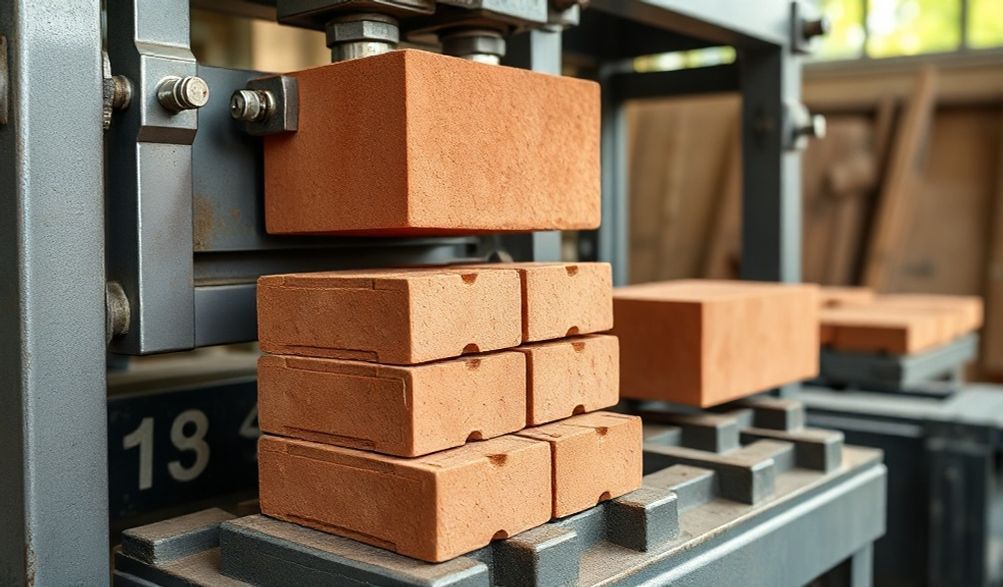
인터록킹 벽돌 제작 기계의 완벽한 가이드: 개념부터 시공까지
비싼 모르타르나 고도로 숙련된 석공 없이도 튼튼하고 아름다운 집을 지을 수 있다고 상상해 보세요. 마치 퍼즐 조각처럼 서로 맞물리는 벽돌로, 비용 효율적일 뿐만 아니라 놀라울 정도로 견고한 구조물을 만들 수 있다면 어떨까요? 이것은 미래적인 개념이 아닙니다. 바로 인터로킹 벽돌이 제공하는 현실로, 전 세계 건설 시장의 판도를 바꾸고 있는 혁신적인 건축 자재입니다.
이 혁신의 핵심에는 강력한 도구인 인터로킹 벽돌 제작기가 있습니다. 이 가이드는 여러분을 위한 포괄적인 로드맵입니다. 수익성 좋은 사업 기회를 눈여겨보는 기업가이든, 더 효율적인 방법을 찾는 건축업자이든, 자신만의 공간을 짓고 꿈꾸는 DIY 애호가이든, 이 기계를 이해하는 것이 첫 번째 중요한 단계입니다. 우리는 기계의 핵심 기능부터 완성된 벽까지 전 과정을 명확히 설명하며, 지속 가능한 건축의 잠재력을 깨우고 정보에 기반한 결정을 내릴 수 있는 지식을 제공할 것입니다.
인터록킹 벽돌 기계란 무엇인가요?
인터록킹 벽돌 제조기는 독특한 설계 특징, 즉 통합된 홈과 돌출부를 가진 건설용 벽돌을 생산하도록 설계된 전문 장비입니다. 이 벽돌은 접착을 위해 전적으로 모르타르에 의존하는 전통적인 벽돌과 달리, 서로 꼭 맞게 결합되어 안정적인 인터록킹 구조를 형성하도록 설계되었습니다.
핵심 기능과 원리
기본 원리는 압축입니다. 유압 시스템, 기계적 지레, 또는 인력으로 구동되는 이 기계는 특정 비율로 배합된 원자재에 엄청난 압력을 가합니다. 이 작용으로 흙, 모래, 그리고 소량의 시멘트가 밀집된 단단한 블록으로 다져집니다. 정밀한 몰드 내부에서 마법이 일어나는데, 이 몰드는 벽돌의 치수뿐만 아니라 상단, 하단, 측면의 정교한 인터록 패턴도 형성합니다. 이 공정은 일반적으로 "압축 토양 블록" 또는 "안정화 토양 블록" 제조라고 불립니다.
완제품: 인터록킹 브릭
생산된 벽돌은 이 제품의 핵심입니다. 이 벽돌의 가장 큰 특징은 LEGO® 블록처럼 인접한 벽돌과 단단히 결합할 수 있다는 점입니다. 이러한 설계로 인해 수직 이음매에 습식 모르타르가 필요하지 않아, 두 가지 주요 이점이 제공됩니다:
* 건설 속도벽은 잠금 장치가 정렬을 단순화하고 각 벽돌을 놓는 단계를 줄이면서 상당히 빨리 올라갑니다.
* 건설 단순성:이를 통해 노동 집약도가 낮은 건설 공정이 가능해져, 숙련도가 다소 낮은 노동력으로도 접근할 수 있습니다.
인터로킹 벽돌 기계의 종류
적절한 기계 선택은 전적으로 규모, 예산, 생산 목표에 달려 있습니다. 시장은 간단한 인력 프레스에서 완전 자동화된 산업 시스템에 이르기까지 다양한 스펙트럼을 제공합니다.
수동 인터록킹 벽돌 제작기
이것들은 인터로킹 벽돌 제작 세계로 들어가는 가장 접근하기 쉬운 입문점입니다.
* 작전:전적으로 인력에 의존하며, 일반적으로 지레나 유압 잭 시스템을 사용하여 압축력을 발생시킵니다.
* 출력:소규모 생산에 이상적이며, 작업자에 따라 하루에 200개에서 500개의 벽돌을 생산할 수 있습니다.
* 비용 및 사용 사례:이들은 가장 저렴한 옵션입니다. DIY 프로젝트, 지역사회 건설, 소규모 스타트업, 또는 단독 주택용 벽돌 생산에 완벽합니다. 그들의 낮은 비용과 휴대성은 가장 큰 장점입니다.
반자동 인터록킹 벽돌 기계
이 카테고리는 자동화와 비용 사이의 균형을 맞추며, 생산 효율성을 크게 향상시킵니다.
* 작전:이러한 기계들은 종종 전기 또는 디젤로 작동하는 유압 시스템을 갖추고 있어 압축 사이클을 자동화합니다. 원자재 적재와 완성된 벽돌 제거는 여전히 수작업으로 이루어질 수 있습니다.
* 출력: Can produce between 1,000 to 3,000 bricks per 8-hour shift, ensuring much greater consistency than manual models.
* 비용 및 사용 사례: A mid-range investment suited for small to medium businesses, construction companies, or social housing projects that require reliable, higher-volume output.
Fully Automatic Interlocking Brick Machines
These are the powerhouses of interlocking brick production, designed for maximum output with minimal manual intervention.
* 작전: Fully computerized systems that automate the entire process: feeding raw material, mixing (if integrated), compression, molding, and even stacking the finished bricks on pallets.
* 출력: Designed for large-scale commercial production, capable of producing 5,000 to 10,000+ bricks per day.
* 비용 및 사용 사례: Represents a major industrial investment. Ideal for established brick-making businesses, large construction firms, or entrepreneurs aiming to dominate a regional market with high-volume supply.
The Manufacturing Process: How These Machines Make Bricks
Producing high-quality interlocking bricks is a straightforward but precise process. Consistency at each stage is key to achieving strong, durable blocks.
원자재 준비
The foundation of a good brick is the right mix. Not all soil is suitable.
* The Ideal Mix: A blend of approximately 60-75% sandy soil or laterite, 20-30% sharp sand, and 5-10% cement (for stabilized blocks). The exact ratio requires local testing.
* Screening & Moisture: The soil must be sieved to remove stones, roots, and organic matter. The moisture content is critical—typically around 10-12%. A simple test: the mixture should hold its shape when squeezed in your fist but crumble when poked.
The Compression and Molding Stage
This is where the machine performs its core function.
1. The prepared mix is fed into the machine’s mold box.
2. A hydraulic ram or mechanical press exerts tremendous pressure (often measured in tons) onto the material.
3. This pressure compacts the particles, eliminating air voids and creating a dense matrix.
4. Simultaneously, the mold imparts the precise interlocking shape—the tongues and grooves—onto the brick.
5. The compressed brick is then ejected, ready for curing.
Curing and Quality Control
Freshly pressed bricks are strong but need time to reach their full potential.
* 치유: The bricks are stacked and kept damp for 7-14 days. This allows the cement (if used) to hydrate fully and develop strength. Sun-drying is common, but light water sprinkling improves the cure.
* Quality Tests:
* Drop Test: Drop a cured brick from waist height onto a hard surface. A good brick should not break.
* Compression Test: More formally, bricks can be tested in a lab to determine their load-bearing capacity, which often exceeds standard fired clay bricks.
인터로킹 벽돌 기계 사용의 주요 이점
The advantages extend far beyond the simple brick, impacting economics, structural integrity, and the environment.
경제적 이점
- Lower Construction Costs: Drastic reduction in mortar use (up to 70% less) and the need for highly skilled masons.
- 속도 Walls can be laid 3-5 times faster than conventional brickwork, reducing labor costs and project timelines.
- 높은 투자 수익률(ROI): For entrepreneurs, the low cost of raw materials (often locally sourced soil) versus the market value of finished bricks creates a healthy profit margin.
Structural and Environmental Benefits
- Earthquake Resistance: The interlocking design provides a degree of flexibility and mechanical bonding, allowing structures to better withstand seismic loads.
- 단열 The dense earth blocks have excellent thermal mass, keeping interiors cool in summer and warm in winter.
- 지속 가능성: The process uses local soil, minimizes cement consumption, and requires no firing—eliminating deforestation for firewood and reducing carbon emissions.
Entrepreneurial Opportunity
An interlocking brick machine can be a “business-in-a-box.” It empowers individuals to address the global need for affordable housing by producing low-cost, high-quality building materials locally. This creates jobs, stimulates local economies, and provides a tangible solution to housing deficits.
How to Choose the Right Machine for Your Needs
Selecting a machine is a crucial investment. Here’s a structured approach to making the right choice.
생산 목표 평가하기
Start by asking:
* What is the scale of my primary project? (A single house, a housing estate, a commercial supply business?)
* How many bricks do I need per day or month to meet demand?
* What is my available budget, including costs for power, space, and labor?
Critical Machine Specifications to Compare
When comparing models, scrutinize these specs:
* 압력 힘 (톤수) Higher tonnage (e.g., 20-ton vs. 10-ton) generally produces denser, stronger bricks.
* Brick Size/Type Capacity: Ensure the machine can produce the brick design and dimensions you intend to use.
* 전원 공급 장치 Electric (clean, consistent), Diesel (good for areas with unreliable grid power), or Manual.
* 사이클 타임: How many seconds/minutes to produce one brick? This directly determines your maximum output.
Supplier Evaluation for Trust
The supplier is as important as the machine itself.
* Reputation & Experience: Research the manufacturer’s history. Look for established companies with verifiable client testimonials.
* Warranty & Service: A strong warranty (1+ years on critical parts) is a sign of confidence. Crucially, ensure they offer reliable after-sales service and ready availability of spare parts.
* 투명성: A trustworthy supplier will be happy to provide detailed specifications, offer guidance on material mix, and may even provide basic operator training.
Common Challenges and Practical Solutions
Forewarned is forearmed. Here’s how to troubleshoot common issues.
Achieving Consistent Brick Quality
- Problem: Bricks are crumbly or weak.
- 해결책: Check moisture content (likely too low) and compression force (may be insufficient). Re-test your soil-sand-cement ratio.
- Problem: Bricks have poor interlock or are difficult to separate from the mold.
- 해결책: The mold faces may be worn or damaged and need replacement. Also, ensure the mix is not too wet.
Maintenance and Operational Tips
A little maintenance goes a long way.
* Daily: Clean all parts of residual material. Check hydraulic hoses for leaks.
* Weekly: Lubricate all moving parts as per the manual. Inspect the mold for wear.
* Safety: Always wear gloves and safety glasses. Never place hands in the compression area during operation.
Sourcing and Managing Raw Materials
Consistency in input equals consistency in output.
* Test Locally: Before committing to a large purchase, conduct compression tests on bricks made from your intended local soil source.
* Batch Preparation: Prepare raw material mixes in consistent, large batches to maintain uniform quality throughout production.
FAQ Section
Q: Can interlocking bricks be used for load-bearing walls?
A: Absolutely. When produced with the correct stabilized mix (containing cement or lime) and compressed to proper standards, interlocking bricks achieve compressive strengths that meet or exceed requirements for load-bearing walls in low-rise construction. Always consult or follow regional building codes.
Q: What is the typical cost range for an interlocking brick machine?
A: The range is vast. Manual presses can start from $500 – $2,000. Semi-automatic machines typically range from $3,000 – $15,000. Fully automatic production lines can cost from $20,000 to over $100,000, depending on capacity and automation level.
Q: Do I need special training to operate the machine?
A: While the operation is generally straightforward, basic training is essential for safety, maintenance, and ensuring brick quality. Any reputable supplier should provide operational training upon installation. The learning curve is much shorter than for traditional brick-making techniques.
Q: Are buildings made with interlocking bricks durable in all climates?
A: They are highly durable. In very wet or rainy climates, it is standard and recommended practice to apply a protective plaster, render, or exterior cladding. This shields the walls from direct, prolonged water erosion, ensuring centuries of longevity, much like any other earth-based construction.
Q: Is this a profitable business?
A: Yes, it can be highly profitable due to the low cost of raw materials and high global demand for affordable building solutions. Profitability depends on key factors: conducting thorough local market research, maintaining strict quality control, managing operational costs efficiently, and implementing sound business and marketing practices.
결론
Interlocking brick machine making represents more than just a piece of machinery; it embodies a smarter, more sustainable approach to construction. It democratizes the ability to build, turning local earth into durable shelters and entrepreneurial dreams into tangible businesses.
The journey to success rests on three pillars: understanding the different types of machines and where you fit in, mastering the simple yet precise manufacturing process, and making a careful, informed investment in the right equipment from a trusted partner. Use this guide as your foundational blueprint. Let it empower you to take the next step—to research further, connect with reputable experts, and ultimately, to build something lasting, both for yourself and your community.
<