
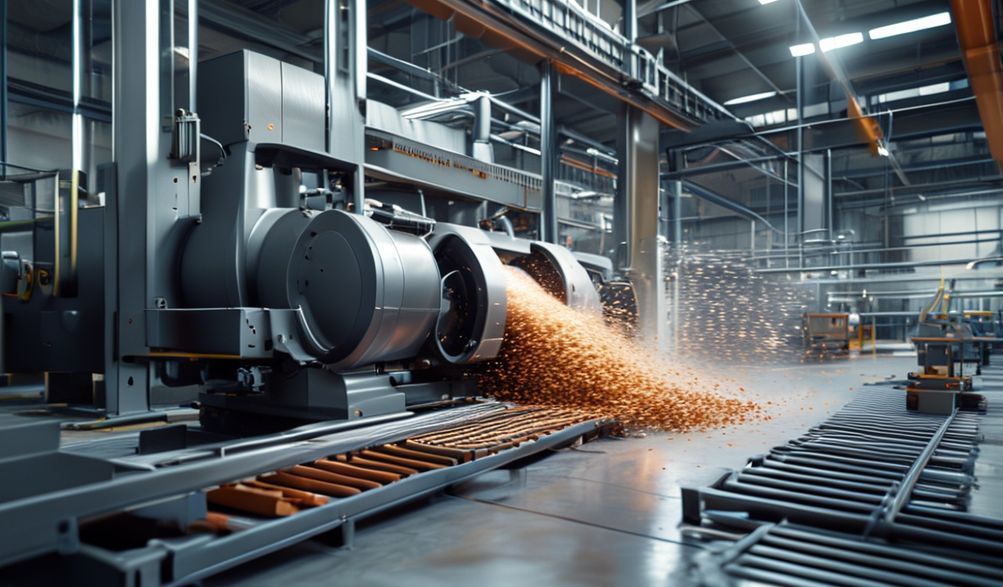
Panduan Utama untuk Mesin Bata Abu Terbang: Di Dalam Kilang Pembuatan Bata FUDA
Dalam landskap pembinaan hari ini, desakan untuk kelestarian bukan lagi satu trend khusus—ia adalah satu keperluan asas. Pembina, pemaju, dan usahawan secara aktif mencari bahan yang menawarkan kekuatan, kecekapan kos, dan jejak alam sekitar yang berkurangan. Bata abu terbang telah muncul ke barisan hadapan sebagai jawapan unggul kepada permintaan ini.
Walau bagaimanapun, potensi sebenar bata mesra alam ini tidak hanya terletak pada bahan mentah, tetapi juga pada ketepatan dan kuasa mesin yang membentuknya. Perbezaan antara operasi yang menguntungkan dan berkualiti tinggi dengan yang bergelut sering terletak pada pilihan peralatan.
Panduan komprehensif ini menawarkan pandangan eksklusif dan pakar ke dalam dunia pengeluar terkemuka:Kilang bata FUDAKami akan membedah merekamesin bata abu terbangmeneroka teknologi, proses, dan wawasan kritikal yang anda perlukan untuk membuat pelaburan yang menepati janji ketahanan, kelestarian, dan pulangan yang kukuh.
Apakah Bata Abu Terbang dan Mengapa Ia Penting?
Batu bata abu terbang mewakili anjakan paradigma dalam kerja batu. Ia adalah contoh utama ekonomi kitaran, mengubah hasil sampingan industri menjadi bahan binaan berprestasi tinggi. Memahami komposisi dan manfaatnya adalah langkah pertama dalam menghargai jentera yang menghasilkannya.
Komposisi dan Sains Di Sebalik Bata Abu Terbang
Bata abu terbang adalah produk kejuruteraan, bukan sekadar tanah bakar. Kekuatannya berasal daripada campuran tepat dan tindak balas kimia.
-
Komponen Teras:Campuran utama terdiri daripada:
- Abu Terbang (50-80%):Sisa halus dan berdebu yang ditangkap daripada gas serombong loji kuasa arang batu. Inilah bahan buangan utama yang sedang dikitar semula.
- Simen (5-15%):Bertindak sebagai agen pengikat utama.
- Pasir/Serbuk Batu (10-30%):Memberikan isian dan tubuh kepada campuran.
- Air:Memulakan tindak balas pengikatan.
-
Tindak Balas Pozzolanik:Inilah keajaiban di sebalik kekuatan. Abu terbang adalah "pozzolan"—bahan silika yang, dengan kehadiran air dan pengikat simen (seperti simen), membentuk sebatian simen yang stabil dan tidak larut. Tindak balas ini berterusan dari masa ke masa, membolehkan batu bata terus bertambah kuat lama selepas pengeluaran.
Kelebihan Utama Berbanding Bata Tanah Liat Tradisional
The shift to fly ash bricks is driven by tangible, multifaceted benefits.
-
Environmental Leadership:
- Pemanfaatan Sisa: Diverts millions of tons of fly ash from landfills and ash ponds, solving a major industrial waste problem.
- Pemuliharaan Sumber: Eliminates the need for topsoil quarrying, preserving fertile agricultural land.
- Jejak Karbon yang Lebih Rendah: Production consumes less energy than the firing process for clay bricks and utilizes a waste product.
-
Sifat Bahan yang Unggul:
- Kekuatan Mampatan Lebih Tinggi: Typically ranges from 7.5 MPa to 15 MPa and above, offering greater load-bearing capacity.
- Excellent Dimensional Consistency: Machine-made precision ensures uniform size and shape, reducing mortar use and speeding up construction.
- Penyerapan Air Rendah: Often below 15%, leading to fewer efflorescence problems and better resistance to frost damage.
- Penebatan Haba & Bunyi yang Dipertingkatkan The fine particles create a denser microstructure with better insulating properties.
-
Kecekapan Ekonomi:
- Penjimatan Kos Jangka Panjang: Greater durability and fewer repairs offset initial costs.
- Kelajuan Pembinaan: Uniform bricks allow for faster, more efficient laying.
- Potential Incentives: Many governments offer tax benefits or subsidies for using green building materials.
Inside the FUDA Brick Making Factory: A Model of Expertise
Choosing a machinery manufacturer is about partnering with a source of knowledge and reliability. FUDA has established itself as an authority in this specialized field.
Who is FUDA? A Legacy in Brick Making Machinery
FUDA is not just a supplier; it is a dedicated engineering firm focused on construction machinery. With a history built on innovation, their core mission revolves around providing robust, efficient, and sustainable solutions for brick and block production.
Their authority is cemented by:
* Pensijilan Industri: Adherence to international quality and safety standards.
* Global Footprint: A network of clients and successful plant installations across multiple continents.
* Fokus R&D: Continuous investment in improving machine automation, energy efficiency, and material versatility.
The FUDA Production Philosophy: Quality and Precision
At the FUDA factory, every machine is built with a clear philosophy: precision engineering ensures consistent output. Their manufacturing process emphasizes:
- Reka Bentuk Teguh: Use of high-grade steel and components to withstand the intense pressures of brick compaction.
- Protokol Kawalan Kualiti: Rigorous testing at every assembly stage, from hydraulic systems to control panels.
- Konsistensi Output: Machines are designed and calibrated to produce brick after brick with minimal dimensional variation, which is critical for customer trust and construction efficiency.
Demystifying the Fly Ash Bricks Machine: Core Components and Types
A fly ash brick plant is a symphony of interconnected equipment. Understanding the role of each component is key to understanding the investment.
Essential Machinery in a Fly Ash Brick Plant
A complete plant setup involves more than just the brick-making press.
-
Raw Material Processing:
- Silos & Feeders: For storage and controlled discharge of fly ash and cement.
- Conveyors: To transport raw materials between stages.
- Sistem Pencampuran: A high-efficiency pan mixer or compulsory mixer is crucial for achieving a homogeneous, consistent blend of all components.
-
The Heart of the Plant: The Brick Making Machine.
This is where the magic happens. Key subsystems include:- Sistem Hidraulik: The powerhouse. It applies immense, controlled pressure (often 100+ tons) to compact the raw mix into a high-density brick. The quality of the hydraulic pumps, cylinders, and valves directly determines brick strength and machine reliability.
- Moulds and Dies: These are the precision tools that define the brick’s shape. FUDA offers customizable moulds for solid bricks, hollow blocks, pavers, and interlocking blocks.
- Sistem Kawalan: Modern machines feature Programmable Logic Controller (PLC) systems. This allows for automated, repeatable operation, precise control over pressure and vibration cycles, and reduced manual error.
-
Peralatan Bantu:
- Brick Pallets: Steel plates on which fresh bricks are ejected and transported to the curing area.
- Transfer Carts & Stackers: For moving and organizing bricks for curing and storage.
Types of Machines Offered by FUDA
FUDA caters to different scales of operation with a range of machines:
- Fully Automatic Fly Ash Brick Making Machines: These are complete production lines. They feature automatic material feeding, brick pressing, pallet transfer, and stacking. Ideal for large-scale, high-volume production with minimal labor.
- Mesin Semi-Automatik: A popular choice for medium-scale businesses. The core pressing is automated, but tasks like feeding raw mix or removing finished bricks may involve manual intervention. Offers a great balance between cost and productivity.
- Mobile/Egg Laying Type Machines: These compact machines produce bricks directly on the ground or on a concrete floor. They are highly portable, require less infrastructure, and are perfect for on-site production or small-scale startups.
The Step-by-Step Manufacturing Process with a FUDA Machine
Let’s walk through the journey from raw powder to a cured, ready-to-use brick.
From Raw Material to Cured Brick: A Detailed Walkthrough
-
Perkadaran & Pencampuran: Precisely measured quantities of fly ash, cement, sand, and water are fed into the mixer. A consistent, semi-dry mix is critical—too wet, and bricks will deform; too dry, and they won’t bind properly.
-
Pemberian Makanan & Pemadatan: The mixed material is conveyed into the machine’s feed box. The hydraulic system then drives a ram that forces the material into the mould cavity under extreme pressure, often accompanied by vibration to remove air pockets and ensure perfect compaction.
-
Pengeluaran & Penuangan: The freshly pressed, green brick is gently ejected from the mould onto a waiting steel pallet. These pallets are then systematically moved to the curing area, usually via a transfer cart.
-
Penyembuhan: This is not mere drying; it’s a strength-development phase. For fly ash bricks, high-pressure steam curing in an autoclave is common, as it accelerates the pozzolanic reaction, achieving high strength in 24 hours. Water sprinkling and ambient curing over 14-28 days is also an option.
-
Testing & Storage: Sample bricks are tested for compressive strength, water absorption, and dimensional accuracy. Once approved, the cured bricks are stacked and stored for dispatch.
How to Choose the Right Fly Ash Bricks Machine: A Buyer’s Guide
Selecting equipment is a strategic decision. Here’s a framework to guide your choice.
Assessing Your Needs: Key Decision Factors
Tanyakan diri anda soalan-soalan ini:
* Kapasiti Pengeluaran: What is your target output per shift or per day (e.g., 10,000 bricks/day vs. 50,000 bricks/day)? This is the primary driver of machine size and automation level.
* Available Space & Layout: Do you have a large, covered shed for a full line, or is space limited? Plant layout must accommodate material flow, production, and curing areas.
* Automation vs. Labor: What is your capital budget versus your operating (labor) budget? Automatic lines require higher upfront investment but lower long-term labor costs.
* Portfolio Produk: Will you produce only standard bricks, or do you plan to offer pavers, hollow blocks, or other special shapes? Ensure the machine supplier can provide the necessary moulds.
Evaluating a Machine Supplier: Why FUDA Stands Out
The machine is just part of the package. The supplier’s support is what ensures long-term success.
- Comprehensive After-Sales Service: Does the supplier offer installation supervision, on-site training for your operators, and prompt maintenance support? FUDA typically provides this critical hands-on start-up assistance.
- Reliable Spare Parts Supply: Machine downtime is revenue lost. A trustworthy supplier guarantees the availability of genuine spare parts. Inquire about their parts inventory and delivery timelines.
- Clear Performance Guarantee & Warranty: Understand exactly what is covered under warranty, for how long, and the terms of any performance guarantees related to output or brick quality.
- Rekod Terbukti: Request client testimonials and visit existing plant installations if possible. Seeing a machine in operation is the best proof of its capability and the supplier’s credibility.
Soalan Lazim (FAQ)
Q1: What is the average cost of setting up a plant with a FUDA fly ash brick machine?
A: There is no single “average cost,” as it varies dramatically. A small, semi-automatic setup may start in the tens of thousands of dollars, while a large, fully automatic production line can be a significant six-figure investment. The most reliable approach is to share your production goals and site details with FUDA to receive a detailed, customized project quotation.
Q2: What is the typical payback period for this investment?
A: The payback period depends heavily on local market factors: selling price of bricks, cost and availability of raw materials (especially fly ash), production efficiency, and operational costs. In favorable markets with good demand, a well-run plant can see a return on investment within 1.5 to 3 years. A detailed business plan is essential.
Q3: Can FUDA machines use other raw materials, like slag or construction waste?
A: Yes, versatility is a key feature of modern machines. Many FUDA models can be adapted to process other pozzolanic materials such as granulated blast furnace slag or finely processed construction and demolition (C&D) waste. It is crucial to consult with their engineering team to adjust the mix design and machine parameters for optimal results with alternative materials.
Q4: How important is after-sales service, and what does FUDA offer?
A: After-sales service is not just important—it is critical. It directly impacts your plant’s uptime and profitability. A comprehensive service package, like the one from FUDA, should include expert installation supervision, thorough training for your machine operators and maintenance staff, access to remote technical support, and a dependable supply chain for genuine spare parts.
Kesimpulan
Investing in a fly ash bricks machine is a commitment to a smarter, more sustainable future in construction. It’s a decision that balances economic ambition with environmental responsibility. As we have explored, success in this venture hinges on the machinery at its core.
Manufacturers like the Kilang bata FUDA bring the necessary triad to the table: the engineering kepakaran to build reliable machines, the practical pengalaman demonstrated through global installations, and the berwibawa position earned by a commitment to quality and customer support.
Before finalizing any purchase, conduct thorough due diligence. Clearly define your needs, seek out suppliers with transparent processes, and prioritize those who offer a partnership, not just a product. By choosing the right equipment, you are doing more than manufacturing bricks—you are building a foundation for a profitable and eco-conscious enterprise.
Ready to explore your fly ash brick plant project? Contact a reputable supplier with a proven track record to discuss your specific requirements and get a detailed, professional consultation.
<