
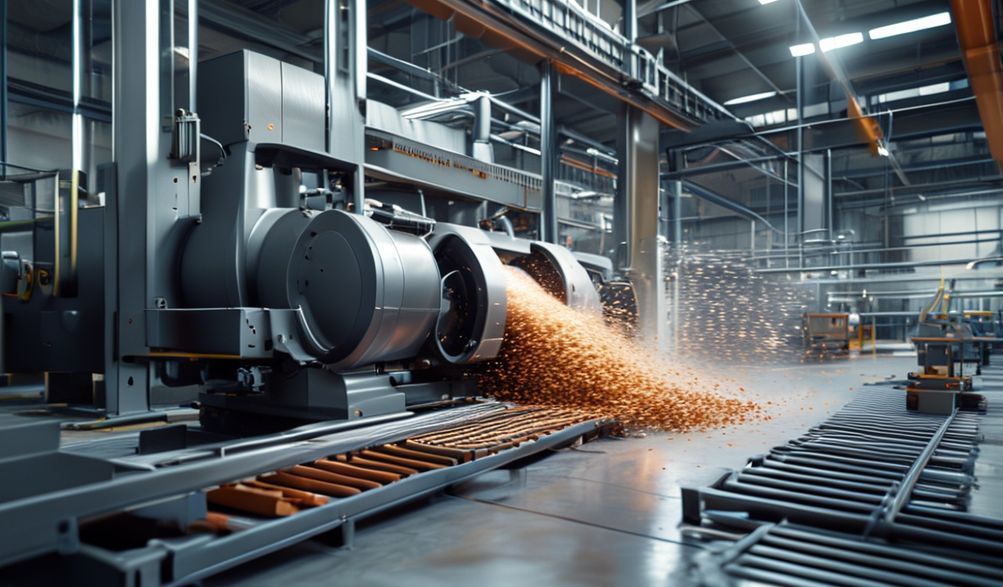
O Guia Definitivo para Máquinas de Tijolos de Cinzas Volantes: Dentro da Fábrica de Tijolos FUDA
Na paisagem da construção atual, a busca pela sustentabilidade não é mais uma tendência de nicho — é um requisito fundamental. Construtores, desenvolvedores e empreendedores buscam ativamente materiais que ofereçam resistência, custo-benefício e uma pegada ambiental reduzida. Os tijolos de cinza volante surgiram como uma resposta superior a essa demanda.
No entanto, o verdadeiro potencial desses tijolos ecológicos é desbloqueado não apenas pelas matérias-primas, mas pela precisão e potência da maquinaria que os molda. A diferença entre uma operação lucrativa e de alta qualidade e uma que enfrenta dificuldades muitas vezes reside na escolha do equipamento.
Este guia abrangente oferece um olhar exclusivo e especializado no interior do mundo de um fabricante líder: aFábrica de tijolos FUDAVamos dissecar a suamáquinas de tijolos de cinzas volantesexplorando a tecnologia, os processos e os insights críticos necessários para realizar um investimento que cumpra as promessas de durabilidade, sustentabilidade e retornos sólidos.
O que são tijolos de cinzas volantes e por que eles são importantes?
Os tijolos de cinzas volantes representam uma mudança de paradigma na alvenaria. Eles são um exemplo primordial da economia circular, transformando um subproduto industrial em um material de construção de alto desempenho. Compreender sua composição e benefícios é o primeiro passo para apreciar a maquinaria que os produz.
A Composição e a Ciência por Trás dos Tijolos de Cinzas Volantes
Os tijolos de cinzas volantes são produtos projetados, não simplesmente terra cozida. Sua resistência vem de uma mistura precisa e de uma reação química.
-
Componentes Principais:A mistura primária consiste em:
- Cinzas Volantes (50-80%):Um resíduo fino e pulverulento capturado dos gases de chaminé de usinas termelétricas a carvão. Este é o principal material de descarte que está sendo reaproveitado.
- Cimento (5-15%):Atua como o principal agente de ligação.
- Pó de Areia/Pedra (10-30%):Fornece enchimento e corpo à mistura.
- Água:Inicia a reação de ligação.
-
A Reação Pozolânica:Esta é a magia por trás da resistência. A cinza volante é um "pozolana" — um material silicioso que, na presença de água e de um aglutinante cimentício (como o cimento), forma compostos cimentícios estáveis e insolúveis. Essa reação continua ao longo do tempo, permitindo que os tijolos ganhem resistência muito tempo após a produção.
Principais Vantagens em Relação aos Tijolos de Argila Tradicionais
A mudança para tijolos de cinzas volantes é impulsionada por benefícios tangíveis e multifacetados.
-
Liderança Ambiental:
- Aproveitamento de Resíduos:Desvia milhões de toneladas de cinzas volantes de aterros sanitários e lagoas de cinzas, resolvendo um grande problema de resíduos industriais.
- Conservação de Recursos:Elimina a necessidade de extração de solo superficial, preservando terras agrícolas férteis.
- Pegada de Carbono Reduzida:A produção consome menos energia do que o processo de queima dos tijolos de argila e utiliza um produto residual.
-
Propriedades Superiores dos Materiais:
- Maior Resistência à Compressão:Geralmente varia de 7,5 MPa a 15 MPa e acima, oferecendo maior capacidade de carga.
- Excelente Consistência Dimensional:A precisão feita por máquina garante tamanho e forma uniformes, reduzindo o uso de argamassa e acelerando a construção.
- Baixa Absorção de Água:Frequentemente abaixo de 15%, resultando em menos problemas de eflorescência e melhor resistência a danos causados por geadas.
- Isolamento Térmico e Acústico Aprimorado:As partículas finas criam uma microestrutura mais densa com melhores propriedades isolantes.
-
Eficiência Econômica:
- Economia de Custos de Longo Prazo:Maior durabilidade e menos reparos compensam os custos iniciais.
- Velocidade de Construção:Tijolos uniformes permitem um assentamento mais rápido e eficiente.
- Possíveis Incentivos:Muitos governos oferecem benefícios fiscais ou subsídios para o uso de materiais de construção sustentáveis.
Dentro da Fábrica de Tijolos FUDA: Um Modelo de Expertise
Escolher um fabricante de máquinas é fazer parceria com uma fonte de conhecimento e confiabilidade. A FUDA se consolidou como uma autoridade nesse campo especializado.
Quem é a FUDA? Um Legado em Máquinas para Fabricação de Tijolos
A FUDA não é apenas uma fornecedora; é uma empresa de engenharia dedicada focada em máquinas de construção. Com uma história construída na inovação, sua missão central gira em torno de fornecer soluções robustas, eficientes e sustentáveis para a produção de tijolos e blocos.
A autoridade deles é consolidada por:
* Certificações da Indústria:Conformidade com os padrões internacionais de qualidade e segurança.
* Pegada GlobalUma rede de clientes e instalações bem-sucedidas de plantas em múltiplos continentes.
* Foco em P&D: Continuous investment in improving machine automation, energy efficiency, and material versatility.
The FUDA Production Philosophy: Quality and Precision
At the FUDA factory, every machine is built with a clear philosophy: precision engineering ensures consistent output. Their manufacturing process emphasizes:
- Design Robusto: Use of high-grade steel and components to withstand the intense pressures of brick compaction.
- Quality Control Protocols: Rigorous testing at every assembly stage, from hydraulic systems to control panels.
- Consistência da Saída: Machines are designed and calibrated to produce brick after brick with minimal dimensional variation, which is critical for customer trust and construction efficiency.
Demystifying the Fly Ash Bricks Machine: Core Components and Types
A fly ash brick plant is a symphony of interconnected equipment. Understanding the role of each component is key to understanding the investment.
Essential Machinery in a Fly Ash Brick Plant
A complete plant setup involves more than just the brick-making press.
-
Raw Material Processing:
- Silos & Feeders: For storage and controlled discharge of fly ash and cement.
- Esteiras transportadoras: To transport raw materials between stages.
- Sistema de Mistura: A high-efficiency pan mixer or compulsory mixer is crucial for achieving a homogeneous, consistent blend of all components.
-
The Heart of the Plant: The Brick Making Machine.
This is where the magic happens. Key subsystems include:- Sistema Hidráulico: The powerhouse. It applies immense, controlled pressure (often 100+ tons) to compact the raw mix into a high-density brick. The quality of the hydraulic pumps, cylinders, and valves directly determines brick strength and machine reliability.
- Moulds and Dies: These are the precision tools that define the brick’s shape. FUDA offers customizable moulds for solid bricks, hollow blocks, pavers, and interlocking blocks.
- Sistema de Controle: Modern machines feature Programmable Logic Controller (PLC) systems. This allows for automated, repeatable operation, precise control over pressure and vibration cycles, and reduced manual error.
-
Equipamento Auxiliar:
- Brick Pallets: Steel plates on which fresh bricks are ejected and transported to the curing area.
- Transfer Carts & Stackers: For moving and organizing bricks for curing and storage.
Types of Machines Offered by FUDA
FUDA caters to different scales of operation with a range of machines:
- Fully Automatic Fly Ash Brick Making Machines: These are complete production lines. They feature automatic material feeding, brick pressing, pallet transfer, and stacking. Ideal for large-scale, high-volume production with minimal labor.
- Máquinas Semiautomáticas: A popular choice for medium-scale businesses. The core pressing is automated, but tasks like feeding raw mix or removing finished bricks may involve manual intervention. Offers a great balance between cost and productivity.
- Mobile/Egg Laying Type Machines: These compact machines produce bricks directly on the ground or on a concrete floor. They are highly portable, require less infrastructure, and are perfect for on-site production or small-scale startups.
The Step-by-Step Manufacturing Process with a FUDA Machine
Let’s walk through the journey from raw powder to a cured, ready-to-use brick.
From Raw Material to Cured Brick: A Detailed Walkthrough
-
Dosagem e Mistura: Precisely measured quantities of fly ash, cement, sand, and water are fed into the mixer. A consistent, semi-dry mix is critical—too wet, and bricks will deform; too dry, and they won’t bind properly.
-
Alimentação e Compactação: The mixed material is conveyed into the machine’s feed box. The hydraulic system then drives a ram that forces the material into the mould cavity under extreme pressure, often accompanied by vibration to remove air pockets and ensure perfect compaction.
-
Ejeção e Paletização: The freshly pressed, green brick is gently ejected from the mould onto a waiting steel pallet. These pallets are then systematically moved to the curing area, usually via a transfer cart.
-
Cura: This is not mere drying; it’s a strength-development phase. For fly ash bricks, high-pressure steam curing in an autoclave is common, as it accelerates the pozzolanic reaction, achieving high strength in 24 hours. Water sprinkling and ambient curing over 14-28 days is also an option.
-
Testing & Storage: Sample bricks are tested for compressive strength, water absorption, and dimensional accuracy. Once approved, the cured bricks are stacked and stored for dispatch.
How to Choose the Right Fly Ash Bricks Machine: A Buyer’s Guide
Selecting equipment is a strategic decision. Here’s a framework to guide your choice.
Assessing Your Needs: Key Decision Factors
Faça a si mesmo estas perguntas:
* Capacidade de Produção: What is your target output per shift or per day (e.g., 10,000 bricks/day vs. 50,000 bricks/day)? This is the primary driver of machine size and automation level.
* Available Space & Layout: Do you have a large, covered shed for a full line, or is space limited? Plant layout must accommodate material flow, production, and curing areas.
* Automation vs. Labor: What is your capital budget versus your operating (labor) budget? Automatic lines require higher upfront investment but lower long-term labor costs.
* Portfólio de Produtos: Will you produce only standard bricks, or do you plan to offer pavers, hollow blocks, or other special shapes? Ensure the machine supplier can provide the necessary moulds.
Evaluating a Machine Supplier: Why FUDA Stands Out
The machine is just part of the package. The supplier’s support is what ensures long-term success.
- Comprehensive After-Sales Service: Does the supplier offer installation supervision, on-site training for your operators, and prompt maintenance support? FUDA typically provides this critical hands-on start-up assistance.
- Reliable Spare Parts Supply: Machine downtime is revenue lost. A trustworthy supplier guarantees the availability of genuine spare parts. Inquire about their parts inventory and delivery timelines.
- Clear Performance Guarantee & Warranty: Understand exactly what is covered under warranty, for how long, and the terms of any performance guarantees related to output or brick quality.
- Histórico Comprovado: Request client testimonials and visit existing plant installations if possible. Seeing a machine in operation is the best proof of its capability and the supplier’s credibility.
Perguntas Frequentes (FAQ)
Q1: What is the average cost of setting up a plant with a FUDA fly ash brick machine?
A: There is no single “average cost,” as it varies dramatically. A small, semi-automatic setup may start in the tens of thousands of dollars, while a large, fully automatic production line can be a significant six-figure investment. The most reliable approach is to share your production goals and site details with FUDA to receive a detailed, customized project quotation.
Q2: What is the typical payback period for this investment?
A: The payback period depends heavily on local market factors: selling price of bricks, cost and availability of raw materials (especially fly ash), production efficiency, and operational costs. In favorable markets with good demand, a well-run plant can see a return on investment within 1.5 to 3 years. A detailed business plan is essential.
Q3: Can FUDA machines use other raw materials, like slag or construction waste?
A: Yes, versatility is a key feature of modern machines. Many FUDA models can be adapted to process other pozzolanic materials such as granulated blast furnace slag or finely processed construction and demolition (C&D) waste. It is crucial to consult with their engineering team to adjust the mix design and machine parameters for optimal results with alternative materials.
Q4: How important is after-sales service, and what does FUDA offer?
A: After-sales service is not just important—it is critical. It directly impacts your plant’s uptime and profitability. A comprehensive service package, like the one from FUDA, should include expert installation supervision, thorough training for your machine operators and maintenance staff, access to remote technical support, and a dependable supply chain for genuine spare parts.
Conclusão
Investing in a fly ash bricks machine is a commitment to a smarter, more sustainable future in construction. It’s a decision that balances economic ambition with environmental responsibility. As we have explored, success in this venture hinges on the machinery at its core.
Manufacturers like the Fábrica de tijolos FUDA bring the necessary triad to the table: the engineering especialização to build reliable machines, the practical experiência demonstrated through global installations, and the autoritário position earned by a commitment to quality and customer support.
Before finalizing any purchase, conduct thorough due diligence. Clearly define your needs, seek out suppliers with transparent processes, and prioritize those who offer a partnership, not just a product. By choosing the right equipment, you are doing more than manufacturing bricks—you are building a foundation for a profitable and eco-conscious enterprise.
Ready to explore your fly ash brick plant project? Contact a reputable supplier with a proven track record to discuss your specific requirements and get a detailed, professional consultation.
<