
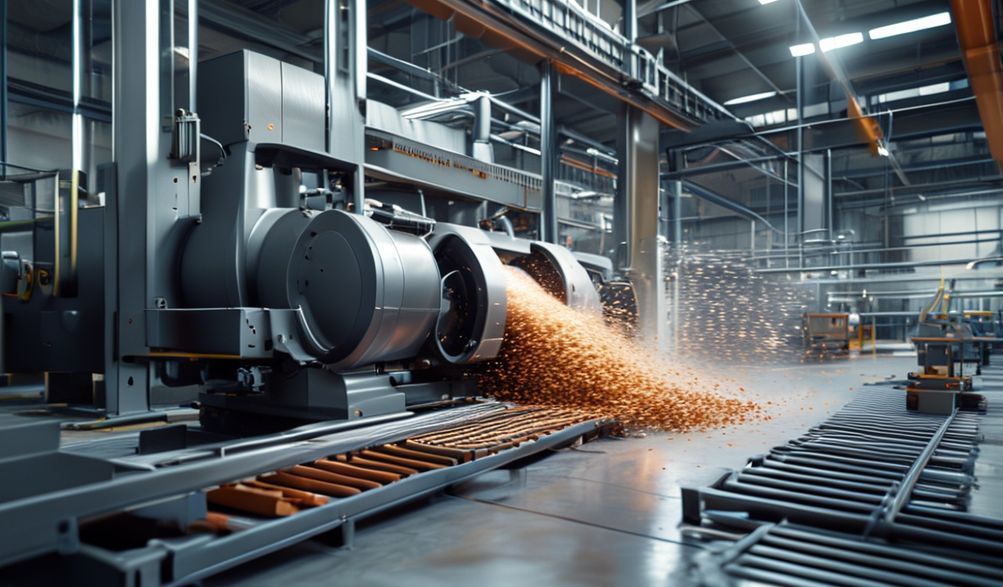
Hướng Dẫn Toàn Diện Về Máy Sản Xuất Gạch Tro Bay: Khám Phá Bên Trong Nhà Máy Gạch FUDA
Trong bối cảnh xây dựng ngày nay, xu hướng thúc đẩy tính bền vững không còn là một trào lưu thích hợp—mà đã trở thành một yêu cầu cơ bản. Các nhà thầu, chủ đầu tư và doanh nhân đang tích cực tìm kiếm vật liệu mang lại độ bền, hiệu quả chi phí và giảm thiểu dấu chân môi trường. Gạch tro bay đã nổi lên hàng đầu như một giải pháp ưu việt đáp ứng nhu cầu này.
Tuy nhiên, tiềm năng thực sự của những viên gạch thân thiện với môi trường này không chỉ nằm ở nguyên liệu thô, mà còn ở độ chính xác và sức mạnh của máy móc tạo hình chúng. Sự khác biệt giữa một hoạt động sản xuất chất lượng cao, có lợi nhuận và một hoạt động còn nhiều khó khăn thường nằm ở việc lựa chọn thiết bị.
Hướng dẫn toàn diện này mang đến cái nhìn chuyên sâu và độc quyền vào thế giới của một nhà sản xuất hàng đầu:Nhà máy sản xuất gạch FUDAChúng tôi sẽ mổ xẻ họmáy sản xuất gạch tro baykhám phá công nghệ, quy trình và những hiểu biết quan trọng bạn cần để thực hiện một khoản đầu tư đảm bảo tính bền vững, thân thiện với môi trường và mang lại lợi nhuận cao.
Gạch Tro Bay Là Gì và Tại Sao Chúng Quan Trọng?
Gạch tro bay đại diện cho một sự thay đổi mô hình trong ngành xây dựng. Chúng là ví dụ điển hình của nền kinh tế tuần hoàn, biến một sản phẩm phụ công nghiệp thành vật liệu xây dựng hiệu suất cao. Hiểu rõ thành phần và lợi ích của chúng là bước đầu tiên để đánh giá đúng máy móc sản xuất ra chúng.
Thành Phần và Khoa Học Đằng Sau Gạch Tro Bay
Gạch tro bay là sản phẩm được thiết kế kỹ thuật, không chỉ đơn thuần là đất nung. Độ bền của chúng đến từ sự pha trộn chính xác và một phản ứng hóa học.
-
Thành phần cốt lõiHỗn hợp chính bao gồm:
- Tro bay (50-80%):Một chất cặn mịn, dạng bột thu được từ khí thải của các nhà máy nhiệt điện than. Đây là vật liệu thải chính đang được tái sử dụng.
- Cement (5-15%):Đóng vai trò là chất kết dính chính.
- Sand/Stone Dust (10-30%): Provides filler and body to the mix.
- Nước: Initiates the binding reaction.
-
The Pozzolanic Reaction: This is the magic behind the strength. Fly ash is a “pozzolan”—a siliceous material that, in the presence of water and a cementitious binder (like cement), forms stable, insoluble cementitious compounds. This reaction continues over time, allowing the bricks to gain strength long after production.
Key Advantages Over Traditional Clay Bricks
The shift to fly ash bricks is driven by tangible, multifaceted benefits.
-
Environmental Leadership:
- Tận Dụng Chất Thải: Diverts millions of tons of fly ash from landfills and ash ponds, solving a major industrial waste problem.
- Bảo tồn Tài nguyên Eliminates the need for topsoil quarrying, preserving fertile agricultural land.
- Dấu Chân Carbon Thấp Hơn: Production consumes less energy than the firing process for clay bricks and utilizes a waste product.
-
Superior Material Properties:
- Cường độ nén cao hơn: Typically ranges from 7.5 MPa to 15 MPa and above, offering greater load-bearing capacity.
- Excellent Dimensional Consistency: Machine-made precision ensures uniform size and shape, reducing mortar use and speeding up construction.
- Khả năng hấp thụ nước thấp Often below 15%, leading to fewer efflorescence problems and better resistance to frost damage.
- Improved Thermal & Acoustic Insulation: The fine particles create a denser microstructure with better insulating properties.
-
Hiệu quả Kinh tế:
- Tiết kiệm Chi phí Lâu dài: Greater durability and fewer repairs offset initial costs.
- Tốc độ thi công Uniform bricks allow for faster, more efficient laying.
- Potential Incentives: Many governments offer tax benefits or subsidies for using green building materials.
Inside the FUDA Brick Making Factory: A Model of Expertise
Choosing a machinery manufacturer is about partnering with a source of knowledge and reliability. FUDA has established itself as an authority in this specialized field.
Who is FUDA? A Legacy in Brick Making Machinery
FUDA is not just a supplier; it is a dedicated engineering firm focused on construction machinery. With a history built on innovation, their core mission revolves around providing robust, efficient, and sustainable solutions for brick and block production.
Their authority is cemented by:
* Industry Certifications: Adherence to international quality and safety standards.
* Global Footprint: A network of clients and successful plant installations across multiple continents.
* Trọng tâm Nghiên cứu và Phát triển: Continuous investment in improving machine automation, energy efficiency, and material versatility.
The FUDA Production Philosophy: Quality and Precision
At the FUDA factory, every machine is built with a clear philosophy: precision engineering ensures consistent output. Their manufacturing process emphasizes:
- Robust Design: Use of high-grade steel and components to withstand the intense pressures of brick compaction.
- Giao thức Kiểm soát Chất lượng: Rigorous testing at every assembly stage, from hydraulic systems to control panels.
- Output Consistency: Machines are designed and calibrated to produce brick after brick with minimal dimensional variation, which is critical for customer trust and construction efficiency.
Demystifying the Fly Ash Bricks Machine: Core Components and Types
A fly ash brick plant is a symphony of interconnected equipment. Understanding the role of each component is key to understanding the investment.
Essential Machinery in a Fly Ash Brick Plant
A complete plant setup involves more than just the brick-making press.
-
Raw Material Processing:
- Silos & Feeders: For storage and controlled discharge of fly ash and cement.
- Conveyors: To transport raw materials between stages.
- Hệ thống Trộn A high-efficiency pan mixer or compulsory mixer is crucial for achieving a homogeneous, consistent blend of all components.
-
The Heart of the Plant: The Brick Making Machine.
This is where the magic happens. Key subsystems include:- Hệ thống thủy lực: The powerhouse. It applies immense, controlled pressure (often 100+ tons) to compact the raw mix into a high-density brick. The quality of the hydraulic pumps, cylinders, and valves directly determines brick strength and machine reliability.
- Moulds and Dies: These are the precision tools that define the brick’s shape. FUDA offers customizable moulds for solid bricks, hollow blocks, pavers, and interlocking blocks.
- Hệ Thống Điều Khiển: Modern machines feature Programmable Logic Controller (PLC) systems. This allows for automated, repeatable operation, precise control over pressure and vibration cycles, and reduced manual error.
-
Thiết bị phụ trợ:
- Brick Pallets: Steel plates on which fresh bricks are ejected and transported to the curing area.
- Transfer Carts & Stackers: For moving and organizing bricks for curing and storage.
Types of Machines Offered by FUDA
FUDA caters to different scales of operation with a range of machines:
- Fully Automatic Fly Ash Brick Making Machines: These are complete production lines. They feature automatic material feeding, brick pressing, pallet transfer, and stacking. Ideal for large-scale, high-volume production with minimal labor.
- Máy Bán Tự Động: A popular choice for medium-scale businesses. The core pressing is automated, but tasks like feeding raw mix or removing finished bricks may involve manual intervention. Offers a great balance between cost and productivity.
- Mobile/Egg Laying Type Machines: These compact machines produce bricks directly on the ground or on a concrete floor. They are highly portable, require less infrastructure, and are perfect for on-site production or small-scale startups.
The Step-by-Step Manufacturing Process with a FUDA Machine
Let’s walk through the journey from raw powder to a cured, ready-to-use brick.
From Raw Material to Cured Brick: A Detailed Walkthrough
-
Tỷ lệ & Trộn: Precisely measured quantities of fly ash, cement, sand, and water are fed into the mixer. A consistent, semi-dry mix is critical—too wet, and bricks will deform; too dry, and they won’t bind properly.
-
Cho ăn & Nén chặt: The mixed material is conveyed into the machine’s feed box. The hydraulic system then drives a ram that forces the material into the mould cavity under extreme pressure, often accompanied by vibration to remove air pockets and ensure perfect compaction.
-
Đẩy & Xếp Pallet The freshly pressed, green brick is gently ejected from the mould onto a waiting steel pallet. These pallets are then systematically moved to the curing area, usually via a transfer cart.
-
Chữa bệnh: This is not mere drying; it’s a strength-development phase. For fly ash bricks, high-pressure steam curing in an autoclave is common, as it accelerates the pozzolanic reaction, achieving high strength in 24 hours. Water sprinkling and ambient curing over 14-28 days is also an option.
-
Testing & Storage: Sample bricks are tested for compressive strength, water absorption, and dimensional accuracy. Once approved, the cured bricks are stacked and stored for dispatch.
How to Choose the Right Fly Ash Bricks Machine: A Buyer’s Guide
Selecting equipment is a strategic decision. Here’s a framework to guide your choice.
Assessing Your Needs: Key Decision Factors
Hãy tự hỏi bản thân những câu hỏi này:
* Năng lực sản xuất: What is your target output per shift or per day (e.g., 10,000 bricks/day vs. 50,000 bricks/day)? This is the primary driver of machine size and automation level.
* Available Space & Layout: Do you have a large, covered shed for a full line, or is space limited? Plant layout must accommodate material flow, production, and curing areas.
* Automation vs. Labor: What is your capital budget versus your operating (labor) budget? Automatic lines require higher upfront investment but lower long-term labor costs.
* Danh mục Sản phẩm: Will you produce only standard bricks, or do you plan to offer pavers, hollow blocks, or other special shapes? Ensure the machine supplier can provide the necessary moulds.
Evaluating a Machine Supplier: Why FUDA Stands Out
The machine is just part of the package. The supplier’s support is what ensures long-term success.
- Comprehensive After-Sales Service: Does the supplier offer installation supervision, on-site training for your operators, and prompt maintenance support? FUDA typically provides this critical hands-on start-up assistance.
- Reliable Spare Parts Supply: Machine downtime is revenue lost. A trustworthy supplier guarantees the availability of genuine spare parts. Inquire about their parts inventory and delivery timelines.
- Clear Performance Guarantee & Warranty: Understand exactly what is covered under warranty, for how long, and the terms of any performance guarantees related to output or brick quality.
- Hồ sơ thành tích đã được chứng minh: Request client testimonials and visit existing plant installations if possible. Seeing a machine in operation is the best proof of its capability and the supplier’s credibility.
Các Câu Hỏi Thường Gặp (FAQ)
Q1: What is the average cost of setting up a plant with a FUDA fly ash brick machine?
A: There is no single “average cost,” as it varies dramatically. A small, semi-automatic setup may start in the tens of thousands of dollars, while a large, fully automatic production line can be a significant six-figure investment. The most reliable approach is to share your production goals and site details with FUDA to receive a detailed, customized project quotation.
Q2: What is the typical payback period for this investment?
A: The payback period depends heavily on local market factors: selling price of bricks, cost and availability of raw materials (especially fly ash), production efficiency, and operational costs. In favorable markets with good demand, a well-run plant can see a return on investment within 1.5 đến 3 năm. A detailed business plan is essential.
Q3: Can FUDA machines use other raw materials, like slag or construction waste?
A: Yes, versatility is a key feature of modern machines. Many FUDA models can be adapted to process other pozzolanic materials such as granulated blast furnace slag or finely processed construction and demolition (C&D) waste. It is crucial to consult with their engineering team to adjust the mix design and machine parameters for optimal results with alternative materials.
Q4: How important is after-sales service, and what does FUDA offer?
A: After-sales service is not just important—it is critical. It directly impacts your plant’s uptime and profitability. A comprehensive service package, like the one from FUDA, should include expert installation supervision, thorough training for your machine operators and maintenance staff, access to remote technical support, and a dependable supply chain for genuine spare parts.
Conclusion
Investing in a fly ash bricks machine is a commitment to a smarter, more sustainable future in construction. It’s a decision that balances economic ambition with environmental responsibility. As we have explored, success in this venture hinges on the machinery at its core.
Manufacturers like the Nhà máy sản xuất gạch FUDA bring the necessary triad to the table: the engineering chuyên môn to build reliable machines, the practical kinh nghiệm demonstrated through global installations, and the có thẩm quyền position earned by a commitment to quality and customer support.
Before finalizing any purchase, conduct thorough due diligence. Clearly define your needs, seek out suppliers with transparent processes, and prioritize those who offer a partnership, not just a product. By choosing the right equipment, you are doing more than manufacturing bricks—you are building a foundation for a profitable and eco-conscious enterprise.
Ready to explore your fly ash brick plant project? Contact a reputable supplier with a proven track record to discuss your specific requirements and get a detailed, professional consultation.
<