
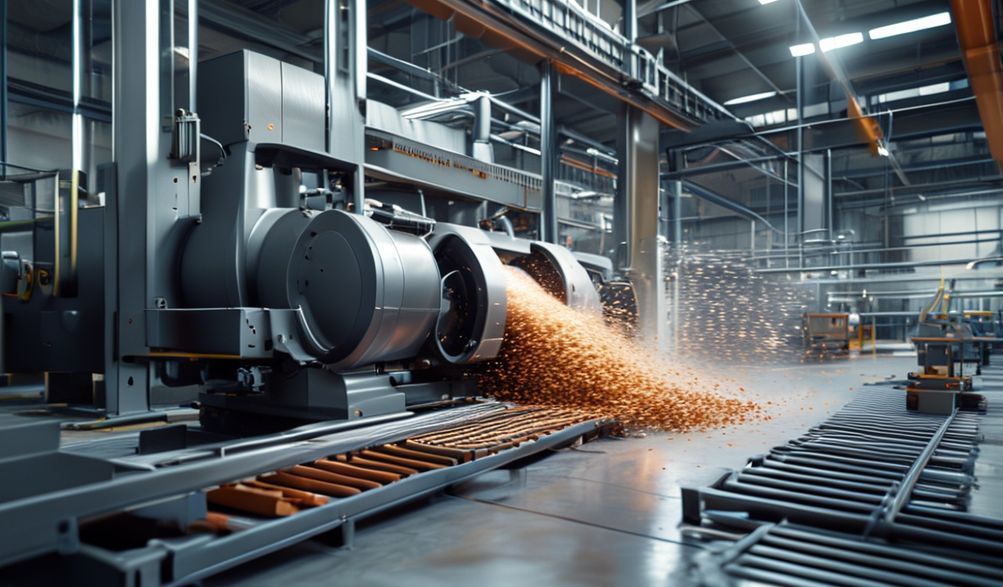
Остаточний посібник з машин для виробництва цегли з летючої золи: всередині цегляного заводу FUDA
У сучасному будівельному середовищі прагнення до стійкості вже не є нішевою тенденцією — це фундаментальна вимога. Будівельники, девелопери та підприємці активно шукають матеріали, які поєднують міцність, економічність та зменшений екологічний слід. Цегла з летючої золи вийшла на перший план як найкраща відповідь на цей запит.
Однак справжній потенціал цих екологічно чистих цеглин розкривається не лише сировиною, але й точністю та потужністю обладнання, що їх формує. Різниця між прибутковим, високоякісним виробництвом і збитковим часто полягає у виборі техніки.
Цей всеосяжний посібник пропонує ексклюзивний, експертний погляд у світ провідного виробника:Фабрика з виробництва цегли FUDAМи розберемо їхнюмашини для виробництва цегли з золи-уносудосліджуючи технології, процеси та ключові аспекти, необхідні для здійснення інвестицій, які гарантують довговічність, стійкість та високі доходи.
Що таке зольні цеглини і чому вони важливі?
Цеглини з летючої золи втілюють зміну парадигми в муруванні. Вони є яскравим прикладом циркулярної економіки, перетворюючи промисловий побічний продукт на високоефективний будівельний матеріал. Розуміння їх складу та переваг є першим кроком до оцінки обладнання, яке їх виробляє.
Склад та наука, що стоїть за зольними цеглинами
Цеглини з летючої золи є інженерними продуктами, а не просто випаленою землею. Їх міцність походить від точного змішування та хімічної реакції.
-
Основні компоненти:Основна суміш складається з:
- Зольна пил (50-80%):Дрібний, порошкоподібний осад, що уловлюється з димових газів вугільних електростанцій. Саме цей ключовий відхід отримує нове застосування.
- Цемент (5-15%):Виступає основним зв'язуючим агентом.
- Пісок/Пил кам’яний (10-30%):Надає об'єм та структуру суміші.
- Вода:Ініціює реакцію зв'язування.
-
Позоланічна реакція:Ось у чому магія міцності. Зольна пилюка є "пуцоланом" – кремнієвим матеріалом, який за наявності води та цементного зв'язуючого (наприклад, цементу) утворює стабільні, нерозчинні цементні сполуки. Ця реакція триває з часом, дозволяючи цеглинкам набувати міцності навіть через довгий час після виробництва.
Ключові переваги порівняно з традиційними глиняними цеглами
Перехід на цегляні блоки з золи-виносу обумовлений конкретними, багатоаспектними перевагами.
-
Екологічне лідерство:
- Утилізація відходів:Перенаправляє мільйони тонн летючої золи зі звалищ і золошлакових відстійників, вирішуючи серйозну проблему промислових відходів.
- Збереження ресурсів:Усуває необхідність видобутку верхнього шару ґрунту, зберігаючи родючі сільськогосподарські землі.
- Нижчий вуглецевий слід:Виробництво споживає менше енергії, ніж процес випалу глиняної цегли, і використовує відходи.
-
Відмінні матеріальні властивості:
- Вища міцність на стискання:Зазвичай коливається від 7,5 МПа до 15 МПа і вище, забезпечуючи більшу несучу здатність.
- Відмінна узгодженість розмірів:Машинна точність забезпечує однорідність розмірів та форми, зменшуючи використання розчину та прискорюючи будівництво.
- Низьке водопоглинання: Often below 15%, leading to fewer efflorescence problems and better resistance to frost damage.
- Покращена тепло- та звукоізоляція: The fine particles create a denser microstructure with better insulating properties.
-
Економічна ефективність:
- Довгострокова економія коштів: Greater durability and fewer repairs offset initial costs.
- Швидкість будівництва: Uniform bricks allow for faster, more efficient laying.
- Potential Incentives: Many governments offer tax benefits or subsidies for using green building materials.
Inside the FUDA Brick Making Factory: A Model of Expertise
Choosing a machinery manufacturer is about partnering with a source of knowledge and reliability. FUDA has established itself as an authority in this specialized field.
Who is FUDA? A Legacy in Brick Making Machinery
FUDA is not just a supplier; it is a dedicated engineering firm focused on construction machinery. With a history built on innovation, their core mission revolves around providing robust, efficient, and sustainable solutions for brick and block production.
Their authority is cemented by:
* Промислові сертифікати: Adherence to international quality and safety standards.
* Global Footprint: A network of clients and successful plant installations across multiple continents.
* Фокус на дослідження та розробки: Continuous investment in improving machine automation, energy efficiency, and material versatility.
The FUDA Production Philosophy: Quality and Precision
At the FUDA factory, every machine is built with a clear philosophy: precision engineering ensures consistent output. Their manufacturing process emphasizes:
- Robust Design: Use of high-grade steel and components to withstand the intense pressures of brick compaction.
- Quality Control Protocols: Rigorous testing at every assembly stage, from hydraulic systems to control panels.
- Узгодженість виводу: Machines are designed and calibrated to produce brick after brick with minimal dimensional variation, which is critical for customer trust and construction efficiency.
Demystifying the Fly Ash Bricks Machine: Core Components and Types
A fly ash brick plant is a symphony of interconnected equipment. Understanding the role of each component is key to understanding the investment.
Essential Machinery in a Fly Ash Brick Plant
A complete plant setup involves more than just the brick-making press.
-
Raw Material Processing:
- Silos & Feeders: For storage and controlled discharge of fly ash and cement.
- Conveyors: To transport raw materials between stages.
- Система змішування: A high-efficiency pan mixer or compulsory mixer is crucial for achieving a homogeneous, consistent blend of all components.
-
The Heart of the Plant: The Brick Making Machine.
This is where the magic happens. Key subsystems include:- Гідравлічна система: The powerhouse. It applies immense, controlled pressure (often 100+ tons) to compact the raw mix into a high-density brick. The quality of the hydraulic pumps, cylinders, and valves directly determines brick strength and machine reliability.
- Moulds and Dies: These are the precision tools that define the brick’s shape. FUDA offers customizable moulds for solid bricks, hollow blocks, pavers, and interlocking blocks.
- Система керування: Modern machines feature Programmable Logic Controller (PLC) systems. This allows for automated, repeatable operation, precise control over pressure and vibration cycles, and reduced manual error.
-
Допоміжне обладнання:
- Brick Pallets: Steel plates on which fresh bricks are ejected and transported to the curing area.
- Transfer Carts & Stackers: For moving and organizing bricks for curing and storage.
Types of Machines Offered by FUDA
FUDA caters to different scales of operation with a range of machines:
- Fully Automatic Fly Ash Brick Making Machines: These are complete production lines. They feature automatic material feeding, brick pressing, pallet transfer, and stacking. Ideal for large-scale, high-volume production with minimal labor.
- Напівавтоматичні верстати: A popular choice for medium-scale businesses. The core pressing is automated, but tasks like feeding raw mix or removing finished bricks may involve manual intervention. Offers a great balance between cost and productivity.
- Mobile/Egg Laying Type Machines: These compact machines produce bricks directly on the ground or on a concrete floor. They are highly portable, require less infrastructure, and are perfect for on-site production or small-scale startups.
The Step-by-Step Manufacturing Process with a FUDA Machine
Let’s walk through the journey from raw powder to a cured, ready-to-use brick.
From Raw Material to Cured Brick: A Detailed Walkthrough
-
Дозування та змішування: Precisely measured quantities of fly ash, cement, sand, and water are fed into the mixer. A consistent, semi-dry mix is critical—too wet, and bricks will deform; too dry, and they won’t bind properly.
-
Годування та ущільнення: The mixed material is conveyed into the machine’s feed box. The hydraulic system then drives a ram that forces the material into the mould cavity under extreme pressure, often accompanied by vibration to remove air pockets and ensure perfect compaction.
-
Викидання та палетування: The freshly pressed, green brick is gently ejected from the mould onto a waiting steel pallet. These pallets are then systematically moved to the curing area, usually via a transfer cart.
-
Лікування: This is not mere drying; it’s a strength-development phase. For fly ash bricks, high-pressure steam curing in an autoclave is common, as it accelerates the pozzolanic reaction, achieving high strength in 24 hours. Water sprinkling and ambient curing over 14-28 days is also an option.
-
Testing & Storage: Sample bricks are tested for compressive strength, water absorption, and dimensional accuracy. Once approved, the cured bricks are stacked and stored for dispatch.
How to Choose the Right Fly Ash Bricks Machine: A Buyer’s Guide
Selecting equipment is a strategic decision. Here’s a framework to guide your choice.
Assessing Your Needs: Key Decision Factors
Задайте собі ці питання:
* Виробнича потужність: What is your target output per shift or per day (e.g., 10,000 bricks/day vs. 50,000 bricks/day)? This is the primary driver of machine size and automation level.
* Available Space & Layout: Do you have a large, covered shed for a full line, or is space limited? Plant layout must accommodate material flow, production, and curing areas.
* Automation vs. Labor: What is your capital budget versus your operating (labor) budget? Automatic lines require higher upfront investment but lower long-term labor costs.
* Портфель продуктів: Will you produce only standard bricks, or do you plan to offer pavers, hollow blocks, or other special shapes? Ensure the machine supplier can provide the necessary moulds.
Evaluating a Machine Supplier: Why FUDA Stands Out
The machine is just part of the package. The supplier’s support is what ensures long-term success.
- Comprehensive After-Sales Service: Does the supplier offer installation supervision, on-site training for your operators, and prompt maintenance support? FUDA typically provides this critical hands-on start-up assistance.
- Reliable Spare Parts Supply: Machine downtime is revenue lost. A trustworthy supplier guarantees the availability of genuine spare parts. Inquire about their parts inventory and delivery timelines.
- Clear Performance Guarantee & Warranty: Understand exactly what is covered under warranty, for how long, and the terms of any performance guarantees related to output or brick quality.
- Перевірена репутація: Request client testimonials and visit existing plant installations if possible. Seeing a machine in operation is the best proof of its capability and the supplier’s credibility.
Часті питання (FAQ)
Q1: What is the average cost of setting up a plant with a FUDA fly ash brick machine?
А: There is no single “average cost,” as it varies dramatically. A small, semi-automatic setup may start in the tens of thousands of dollars, while a large, fully automatic production line can be a significant six-figure investment. The most reliable approach is to share your production goals and site details with FUDA to receive a detailed, customized project quotation.
Q2: What is the typical payback period for this investment?
А: The payback period depends heavily on local market factors: selling price of bricks, cost and availability of raw materials (especially fly ash), production efficiency, and operational costs. In favorable markets with good demand, a well-run plant can see a return on investment within 1.5 to 3 years. A detailed business plan is essential.
Q3: Can FUDA machines use other raw materials, like slag or construction waste?
А: Yes, versatility is a key feature of modern machines. Many FUDA models can be adapted to process other pozzolanic materials such as granulated blast furnace slag or finely processed construction and demolition (C&D) waste. It is crucial to consult with their engineering team to adjust the mix design and machine parameters for optimal results with alternative materials.
Q4: How important is after-sales service, and what does FUDA offer?
А: After-sales service is not just important—it is critical. It directly impacts your plant’s uptime and profitability. A comprehensive service package, like the one from FUDA, should include expert installation supervision, thorough training for your machine operators and maintenance staff, access to remote technical support, and a dependable supply chain for genuine spare parts.
Висновок
Інвестування вfly ash bricks machine is a commitment to a smarter, more sustainable future in construction. It’s a decision that balances economic ambition with environmental responsibility. As we have explored, success in this venture hinges on the machinery at its core.
Manufacturers like the Фабрика з виробництва цегли FUDA bring the necessary triad to the table: the engineering експертиза to build reliable machines, the practical досвід demonstrated through global installations, and the авторитетний position earned by a commitment to quality and customer support.
Before finalizing any purchase, conduct thorough due diligence. Clearly define your needs, seek out suppliers with transparent processes, and prioritize those who offer a partnership, not just a product. By choosing the right equipment, you are doing more than manufacturing bricks—you are building a foundation for a profitable and eco-conscious enterprise.
Ready to explore your fly ash brick plant project? Contact a reputable supplier with a proven track record to discuss your specific requirements and get a detailed, professional consultation.
<