
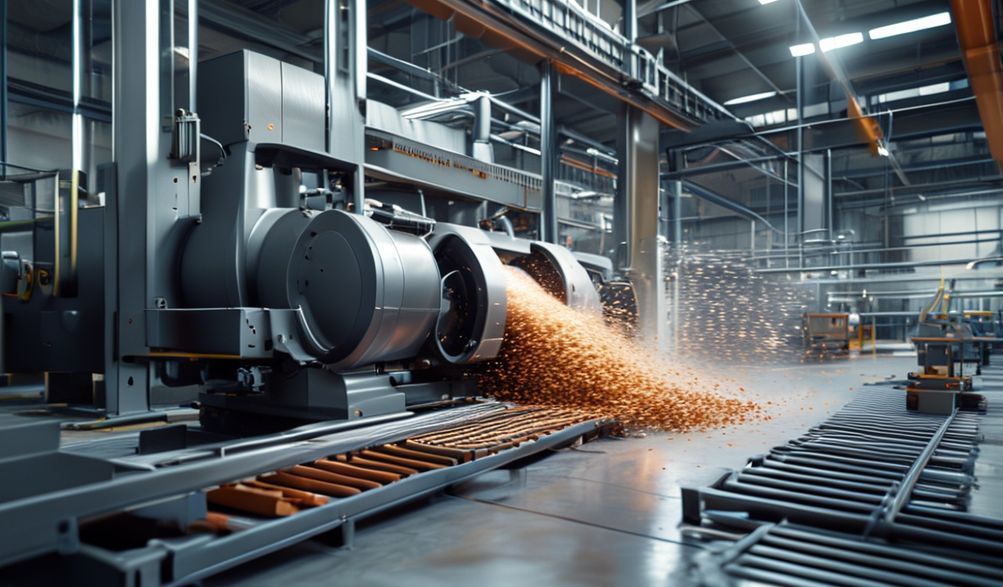
Полное руководство по машинам для производства кирпичей из золы-уноса: Внутри кирпичного завода FUDA
В современной строительной отрасли стремление к устойчивому развитию перестало быть узкой тенденцией — это стало фундаментальным требованием. Застройщики, девелоперы и предприниматели активно ищут материалы, которые обеспечивают прочность, экономическую эффективность и снижают воздействие на окружающую среду. Зольные кирпичи вышли на передний план как превосходное решение для удовлетворения этого спроса.
Однако истинный потенциал этих экологичных кирпичей раскрывается не только сырьем, но и точностью и мощностью оборудования, которое их формирует. Разница между прибыльным, высококачественным производством и проблемным часто заключается в выборе техники.
Это подробное руководство предлагает эксклюзивный, экспертный взгляд изнутри на мир ведущего производителя:Фабрика по производству кирпича FUDAМы разберем ихмашины для производства кирпича из золы-уносаизучение технологий, процессов и ключевых аспектов, необходимых для осуществления инвестиций, которые оправдают ожидания в отношении долговечности, устойчивости и высокой доходности.
Что такое зольные кирпичи и почему они важны?
Кирпичи из золы-уноса представляют собой смену парадигмы в каменной кладке. Они являются ярким примером циркулярной экономики, превращая промышленный побочный продукт в высокоэффективный строительный материал. Понимание их состава и преимуществ — это первый шаг к оценке оборудования, которое их производит.
Состав и научные принципы производства кирпичей из золы-уноса
Зольные кирпичи являются инженерными изделиями, а не просто обожженной глиной. Их прочность достигается за счет точной смеси и химической реакции.
-
Основные компоненты:Основная смесь состоит из:
- Зола-унос (50-80%):Мелкодисперсный порошкообразный осадок, улавливаемый из дымовых газов угольных электростанций. Это основной перерабатываемый отходный материал.
- Цемент (5-15%):Выступает в качестве основного связующего агента.
- Песок/Каменная пыль (10-30%):Придает смеси наполнитель и объем.
- Вода:Инициирует реакцию связывания.
-
Пуццолановая реакция:Вот в чем заключается секрет прочности. Зольная пыль является «пуццолановым» материалом — кремнистым веществом, которое в присутствии воды и вяжущего компонента (например, цемента) образует стабильные, нерастворимые цементирующие соединения. Эта реакция продолжается со временем, позволяя кирпичам набирать прочность еще долго после производства.
Ключевые преимущества по сравнению с традиционными глиняными кирпичами
Переход на зольные кирпичи обусловлен ощутимыми, многогранными преимуществами.
-
Экологическое лидерство:
- Утилизация отходов:Отводит миллионы тонн летучей золы от свалок и золоотвалов, решая серьезную проблему промышленных отходов.
- Сохранение ресурсов:Устраняет необходимость в добыче плодородного слоя почвы, сохраняя плодородные сельскохозяйственные угодья.
- Низкий углеродный след:Производство потребляет меньше энергии, чем процесс обжига глиняных кирпичей, и использует отходы.
-
Превосходные материальные свойства:
- Более высокая прочность на сжатие:Обычно составляет от 7,5 МПа до 15 МПа и выше, обеспечивая повышенную несущую способность.
- Отличная размерная согласованность:Машинная точность обеспечивает единообразие размеров и формы, сокращая расход раствора и ускоряя строительство.
- Низкое водопоглощение:Часто ниже 15%, что приводит к меньшему количеству проблем с высолами и лучшей устойчивости к морозным повреждениям.
- Улучшенная тепло- и звукоизоляция:Мелкие частицы создают более плотную микроструктуру с улучшенными изоляционными свойствами.
-
Экономическая эффективность:
- Долгосрочная экономия затрат:Большая долговечность и меньшее количество ремонтов компенсируют первоначальные затраты.
- Скорость строительства:Одинаковые кирпичи позволяют укладывать их быстрее и эффективнее.
- Potential Incentives: Many governments offer tax benefits or subsidies for using green building materials.
Inside the FUDA Brick Making Factory: A Model of Expertise
Choosing a machinery manufacturer is about partnering with a source of knowledge and reliability. FUDA has established itself as an authority in this specialized field.
Who is FUDA? A Legacy in Brick Making Machinery
FUDA is not just a supplier; it is a dedicated engineering firm focused on construction machinery. With a history built on innovation, their core mission revolves around providing robust, efficient, and sustainable solutions for brick and block production.
Their authority is cemented by:
* Отраслевые сертификаты: Adherence to international quality and safety standards.
* Global Footprint: A network of clients and successful plant installations across multiple continents.
* Фокус на исследованиях и разработках: Continuous investment in improving machine automation, energy efficiency, and material versatility.
The FUDA Production Philosophy: Quality and Precision
At the FUDA factory, every machine is built with a clear philosophy: precision engineering ensures consistent output. Their manufacturing process emphasizes:
- Робастный дизайн: Use of high-grade steel and components to withstand the intense pressures of brick compaction.
- Протоколы контроля качества: Rigorous testing at every assembly stage, from hydraulic systems to control panels.
- Согласованность вывода: Machines are designed and calibrated to produce brick after brick with minimal dimensional variation, which is critical for customer trust and construction efficiency.
Demystifying the Fly Ash Bricks Machine: Core Components and Types
A fly ash brick plant is a symphony of interconnected equipment. Understanding the role of each component is key to understanding the investment.
Essential Machinery in a Fly Ash Brick Plant
A complete plant setup involves more than just the brick-making press.
-
Raw Material Processing:
- Silos & Feeders: For storage and controlled discharge of fly ash and cement.
- Conveyors: To transport raw materials between stages.
- Система смешивания: A high-efficiency pan mixer or compulsory mixer is crucial for achieving a homogeneous, consistent blend of all components.
-
The Heart of the Plant: The Brick Making Machine.
This is where the magic happens. Key subsystems include:- Гидравлическая система: The powerhouse. It applies immense, controlled pressure (often 100+ tons) to compact the raw mix into a high-density brick. The quality of the hydraulic pumps, cylinders, and valves directly determines brick strength and machine reliability.
- Moulds and Dies: These are the precision tools that define the brick’s shape. FUDA offers customizable moulds for solid bricks, hollow blocks, pavers, and interlocking blocks.
- Система управления: Modern machines feature Programmable Logic Controller (PLC) systems. This allows for automated, repeatable operation, precise control over pressure and vibration cycles, and reduced manual error.
-
Вспомогательное оборудование:
- Brick Pallets: Steel plates on which fresh bricks are ejected and transported to the curing area.
- Transfer Carts & Stackers: For moving and organizing bricks for curing and storage.
Types of Machines Offered by FUDA
FUDA caters to different scales of operation with a range of machines:
- Fully Automatic Fly Ash Brick Making Machines: These are complete production lines. They feature automatic material feeding, brick pressing, pallet transfer, and stacking. Ideal for large-scale, high-volume production with minimal labor.
- Полуавтоматические станки: A popular choice for medium-scale businesses. The core pressing is automated, but tasks like feeding raw mix or removing finished bricks may involve manual intervention. Offers a great balance between cost and productivity.
- Mobile/Egg Laying Type Machines: These compact machines produce bricks directly on the ground or on a concrete floor. They are highly portable, require less infrastructure, and are perfect for on-site production or small-scale startups.
The Step-by-Step Manufacturing Process with a FUDA Machine
Let’s walk through the journey from raw powder to a cured, ready-to-use brick.
From Raw Material to Cured Brick: A Detailed Walkthrough
-
Дозирование и смешивание: Precisely measured quantities of fly ash, cement, sand, and water are fed into the mixer. A consistent, semi-dry mix is critical—too wet, and bricks will deform; too dry, and they won’t bind properly.
-
Кормление и уплотнение: The mixed material is conveyed into the machine’s feed box. The hydraulic system then drives a ram that forces the material into the mould cavity under extreme pressure, often accompanied by vibration to remove air pockets and ensure perfect compaction.
-
Выгрузка и паллетирование: The freshly pressed, green brick is gently ejected from the mould onto a waiting steel pallet. These pallets are then systematically moved to the curing area, usually via a transfer cart.
-
Курение: This is not mere drying; it’s a strength-development phase. For fly ash bricks, high-pressure steam curing in an autoclave is common, as it accelerates the pozzolanic reaction, achieving high strength in 24 hours. Water sprinkling and ambient curing over 14-28 days is also an option.
-
Testing & Storage: Sample bricks are tested for compressive strength, water absorption, and dimensional accuracy. Once approved, the cured bricks are stacked and stored for dispatch.
How to Choose the Right Fly Ash Bricks Machine: A Buyer’s Guide
Selecting equipment is a strategic decision. Here’s a framework to guide your choice.
Assessing Your Needs: Key Decision Factors
Задайте себе эти вопросы:
* Производственные мощности: What is your target output per shift or per day (e.g., 10,000 bricks/day vs. 50,000 bricks/day)? This is the primary driver of machine size and automation level.
* Available Space & Layout: Do you have a large, covered shed for a full line, or is space limited? Plant layout must accommodate material flow, production, and curing areas.
* Automation vs. Labor: What is your capital budget versus your operating (labor) budget? Automatic lines require higher upfront investment but lower long-term labor costs.
* Портфель продуктов: Will you produce only standard bricks, or do you plan to offer pavers, hollow blocks, or other special shapes? Ensure the machine supplier can provide the necessary moulds.
Evaluating a Machine Supplier: Why FUDA Stands Out
The machine is just part of the package. The supplier’s support is what ensures long-term success.
- Comprehensive After-Sales Service: Does the supplier offer installation supervision, on-site training for your operators, and prompt maintenance support? FUDA typically provides this critical hands-on start-up assistance.
- Reliable Spare Parts Supply: Machine downtime is revenue lost. A trustworthy supplier guarantees the availability of genuine spare parts. Inquire about their parts inventory and delivery timelines.
- Clear Performance Guarantee & Warranty: Understand exactly what is covered under warranty, for how long, and the terms of any performance guarantees related to output or brick quality.
- Проверенная репутация: Request client testimonials and visit existing plant installations if possible. Seeing a machine in operation is the best proof of its capability and the supplier’s credibility.
Frequently Asked Questions (FAQ)
Q1: What is the average cost of setting up a plant with a FUDA fly ash brick machine?
А: There is no single “average cost,” as it varies dramatically. A small, semi-automatic setup may start in the tens of thousands of dollars, while a large, fully automatic production line can be a significant six-figure investment. The most reliable approach is to share your production goals and site details with FUDA to receive a detailed, customized project quotation.
Q2: What is the typical payback period for this investment?
А: The payback period depends heavily on local market factors: selling price of bricks, cost and availability of raw materials (especially fly ash), production efficiency, and operational costs. In favorable markets with good demand, a well-run plant can see a return on investment within 1.5 to 3 years. A detailed business plan is essential.
Q3: Can FUDA machines use other raw materials, like slag or construction waste?
А: Yes, versatility is a key feature of modern machines. Many FUDA models can be adapted to process other pozzolanic materials such as granulated blast furnace slag or finely processed construction and demolition (C&D) waste. It is crucial to consult with their engineering team to adjust the mix design and machine parameters for optimal results with alternative materials.
Q4: How important is after-sales service, and what does FUDA offer?
А: After-sales service is not just important—it is critical. It directly impacts your plant’s uptime and profitability. A comprehensive service package, like the one from FUDA, should include expert installation supervision, thorough training for your machine operators and maintenance staff, access to remote technical support, and a dependable supply chain for genuine spare parts.
Заключение
Investing in a fly ash bricks machine is a commitment to a smarter, more sustainable future in construction. It’s a decision that balances economic ambition with environmental responsibility. As we have explored, success in this venture hinges on the machinery at its core.
Manufacturers like the Фабрика по производству кирпича FUDA bring the necessary triad to the table: the engineering экспертиза to build reliable machines, the practical опыт demonstrated through global installations, and the авторитетный position earned by a commitment to quality and customer support.
Before finalizing any purchase, conduct thorough due diligence. Clearly define your needs, seek out suppliers with transparent processes, and prioritize those who offer a partnership, not just a product. By choosing the right equipment, you are doing more than manufacturing bricks—you are building a foundation for a profitable and eco-conscious enterprise.
Ready to explore your fly ash brick plant project? Contact a reputable supplier with a proven track record to discuss your specific requirements and get a detailed, professional consultation.
<