
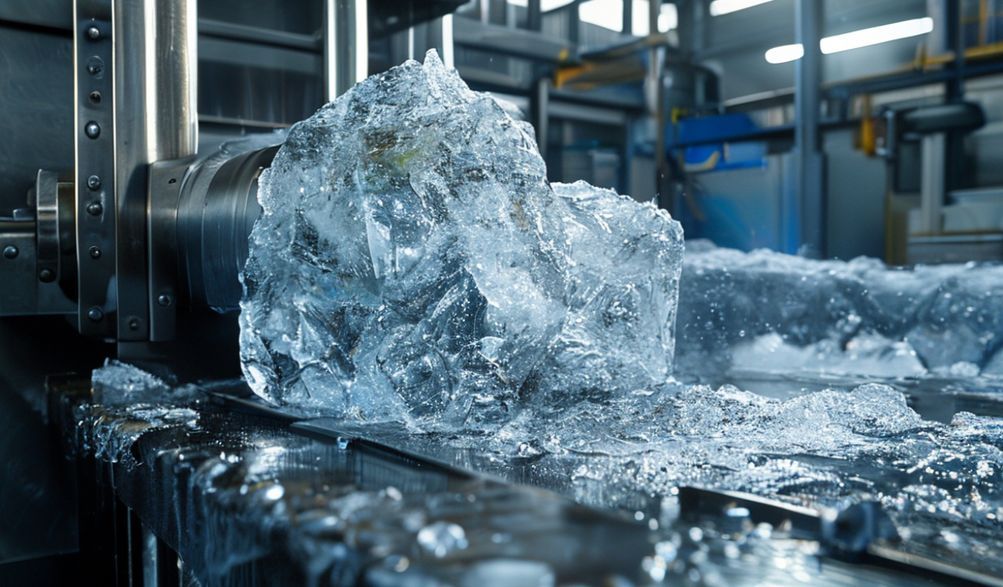
Harga Mesin Pembuat Blok Ais Kustom: Panduan Pembeli Lengkap 2026
Jika anda berada di sini mencari "harga mesin pembuat blok ais tersuai," kemungkinan besar anda adalah pemilik perniagaan, pengurus operasi, atau perancang projek yang sedang berhadapan dengan keputusan pelaburan modal yang kritikal. Anda memerlukan angka yang jelas untuk dimasukkan ke dalam belanjawan anda, dan anda mungkin berasa kecewa dengan angka samar-samar dan seragam yang anda temui setakat ini. Mari kita tangani perkara ini secara terus:Tiada harga tunggal.Mesin khas adalah seperti namanya—khas. Kos akhirnya adalah satu pemboleh ubah, bukan satu pemalar, yang dibentuk sepenuhnya oleh keperluan operasi unik anda.
Panduan ini direka untuk menghilangkan kekaburan. Kami bukan sekadar memberikan senarai harga; kami akan memberikan kerangka untuk memahami apa yang anda bayar. Dengan merujuk kepakaran industri, kami akan memecahkan pemacu kos teras, mendedahkan perbelanjaan yang sering tersembunyi, dan menyediakan julat harga realistik untuk tahun 2026 berdasarkan skala dan keupayaan mesin. Matlamat kami adalah untuk mengubah anda daripada pemeriksa harga pasif kepada pembeli yang berpengetahuan, dilengkapi untuk menilai sebut harga, menilai nilai jangka panjang, dan membuat pelaburan yakin untuk masa depan perniagaan anda. Mari kita mulakan dengan menerangkan konsep "khas" dalam industri ini.
Memahami "Kesuaian" dalam Mesin Blok Ais
Istilah "khas" adalah sebab utama penetapan harga menjadi kompleks. Ia bukan sekadar pengubahsuaian kecil pada model standard; ia adalah penyelesaian kejuruteraan yang dibina dari asas—atau diubah suai secara signifikan—untuk menyelesaikan masalah industri tertentu. Memahami skop penyesuaian adalah langkah pertama untuk memahami harganya.
Apakah Maksud Sebenar "Penyesuaian" Di Sini?
Penyesuaian boleh merangkumi setiap aspek reka bentuk dan fungsi mesin. Pemboleh ubah utama termasuk:
- Saiz & Berat Blok:Ini adalah faktor adat paling asas. Mesin untuk bot penangkapan ikan kecil mungkin menghasilkan blok 5kg untuk kemudahan pengendalian, manakala kilang konkrit industri memerlukan blok monolitik 100kg+ untuk penyejukan berpanjangan. Jentera yang diperlukan bagi setiap satunya adalah jauh berbeza.
- Kapasiti Pengeluaran:Diukur dalam tan setiap 24 jam, ini menentukan saiz dan kuasa mesin. Sebuah syarikat katering butik mungkin memerlukan 500kg/hari, manakala hab pemprosesan makanan laut utama di pelabuhan memerlukan 10+ tan/hari.
- Bentuk & Kejelasan BlokAdakah anda memerlukan blok segi empat tepat standard, atau bentuk khusus untuk pembungkusan? Adakah ais itu untuk sentuhan langsung dengan makanan, memerlukan ais jernih kristal dari sumber air yang disucikan, atau adakah ais industri yang keruh untuk menyejukkan konkrit boleh diterima sepenuhnya?
- Ciri-ciri Khas:Di sinilah kejuruteraan benar-benar berbeza. Ciri-ciri tersuai mungkin merangkumi:
- Tangki garam bersepadu untuk pembekuan lebih pantas.
- Sistem pelucutan acuan dan penumpukan sepenuhnya automatik.
- Sistem penyejukan maju, bebas CFC untuk kecekapan dan pematuhan alam sekitar.
- Siapkan pembinaan daripada keluli tahan karat gred makanan 304 atau 316 untuk aplikasi yang kritikal terhadap kebersihan.
Industri Biasa yang Memerlukan Mesin Khas
Mesin tersuai bukanlah satu kemewahan; ia adalah keperluan untuk sektor yang mempunyai keperluan pengurusan haba khusus.
- Perikanan Komersial & Pemprosesan Makanan Laut:Memerlukan ais yang cair perlahan, sering jernih, dan datang dalam saiz yang sesuai untuk mengisi kotak ikan. Kebersihan adalah paling penting.
- Pengeluaran Konkrit & Penyejukan Kimia:Memerlukan blok besar dan padat yang memberikan penyejukan berterusan untuk mengawal tindak balas kimia konkrit yang sedang mengeras atau proses perindustrian.
- Katering Acara & Hospitaliti Berskala Besar:Memerlukan penghasilan ais yang jernih dan bersih dalam kuantiti tinggi untuk minuman dan paparan makanan, selalunya dengan keperluan saiz tertentu untuk dispenser.
- Aplikasi Saintifik & Makmal:Mungkin memerlukan ais ultra tulen daripada air dinyahion atau kitaran pembekuan terkawal tepat untuk penyelidikan dan ujian.
Faktor Penentu Utama Harga Akhir
The price tag is a direct reflection of the engineering, materials, and capacity you select. Think of these factors as the building blocks of your final quote.
1. Core Machine Specifications & Technology
The heart of the machine dictates its performance, efficiency, and a significant portion of its cost.
- Refrigeration System: The compressor is the engine. Brands like BitzeratauCopeland command a premium for proven reliability and efficiency. The type of refrigerant (e.g., R404a, R507, or natural options like Ammonia) also affects cost and compliance.
- Evaporator Design: This is where the ice forms. A direct-contact evaporator is common, but a custom immersion system for extra-large blocks is more complex and expensive. Material (copper, stainless steel) matters for durability and hygiene.
- Tahap Automasi: A manual machine requiring an operator to demold and store ice is the entry point. A semi-automatic system mechanizes part of the process. A fully automatic machine with a PLC (Programmable Logic Controller), robotic arms, and automated storage can run with minimal oversight but adds substantial cost.
- Kecekapan Tenaga: A machine with a higher initial price but a superior energy efficiency rating (measured in kW per ton of ice) can save tens of thousands of dollars in electricity over its lifespan. This is a critical TCO (Total Cost of Ownership) consideration.
2. Production Capacity & Output Scale
Capacity and cost have a non-linear relationship. Doubling the output often more than doubles the price due to the need for larger compressors, heavier-duty components, and more sophisticated controls.
- Conceptual Price Correlation:
- Small-Scale (<1 ton/day): Lower base cost, but higher cost per ton of capacity due to fixed engineering overheads.
- Medium-Scale (1-5 tons/day): The “sweet spot” for many commercial applications, offering a better balance of cost and output.
- Large-Scale (5+ tons/day): Highest absolute price, but often the lowest cost per ton of ice produced due to economies of scale in the design.
3. Material Quality & Build Construction
The machine’s skeleton determines its lifespan and operating environment suitability.
- Housing & Contact Surfaces: Food-grade 304 or 316 stainless steel is required for any food-contact application and is highly corrosion-resistant but costly. Powder-coated carbon steel is a budget option for industrial settings but won’t last as long in harsh, wet environments.
- Kualiti Komponen: The grade of insulation, the thickness of piping, and the brand of electrical panels (e.g., Siemens, Schneider) all contribute to reliability. Cutting corners here leads to higher maintenance costs and downtime.
- Compliance Impact: Using certified materials and processes is necessary for approvals like FDA, CE, or UL, which adds to the manufacturing cost but is non-negotiable for market access.
4. Supplier & Manufacturer Variables
Who builds your machine is as important as what they build.
- Brand Reputation & Expertise: Established manufacturers with decades of experience charge more, but you’re paying for proven designs, refined processes, and engineering support.
- Manufacturing Model: A supplier with in-house manufacturing control typically ensures better quality control and more flexible customization than one that outsources assembly.
- After-Sales Package: A comprehensive warranty (e.g., 5 years on the compressor vs. 1 year), access to a responsive technical support team, and a global network of service agents provide immense long-term value and peace of mind, which is reflected in the price.
Realistic Price Ranges for Custom Machines (2026)
Penafian Penting: The figures below are anggaran for 2026, based on current market trends and projected material/engineering costs. They are ballpark ranges for budgeting. A formal, detailed quote from a manufacturer based on your exact specifications is the only way to get an accurate price. All figures are in USD.
Entry-Level / Small-Scale Custom Machines
- Typical Specs: Capacity of 500kg to 1 ton per day. Semi-automatic operation (manual de-molding). Basic construction, often with coated carbon steel frames and standard compressors. Suitable for non-food industrial use or very small food operations with strict cleaning protocols.
- Price Range: $15,000 – $35,000
- Sesuai Untuk: Small, independent fishing operations, boutique event catering companies, or small laboratory startups.
Mid-Range / Commercial-Grade Custom Machines
- Typical Specs: Capacity of 1 to 5 tons per day. Mostly automatic operation. Built with food-grade stainless steel in critical areas. Features more reputable compressor brands and better energy efficiency. Often includes basic PLC controls.
- Price Range: $35,000 – $80,000
- Sesuai Untuk: Regional seafood processors, medium-sized concrete batch plants, large hotel chains, and substantial event venues.
High-Capacity / Industrial Custom Machines
- Typical Specs: Capacity of 5+ tons per day, often reaching 20-50 tons. Fully automated with advanced PLC systems, automated brine circulation, and robotic handling. Heavy-duty, all-stainless construction. Features top-tier, high-efficiency compressors and custom evaporator designs.
- Price Range: $80,000 – $200,000+
- Sesuai Untuk: Major port fishing cooperatives, large industrial chemical plants, national concrete producers, and mega-resorts or cruise ships.
Di Sebalik Harga Stiker: Kos Pemilikan Keseluruhan (TCO)
The purchase price is just the first chapter in your cost story. A savvy buyer evaluates the Total Cost of Ownership over a 10-15 year horizon.
Upfront & Installation Costs
These are one-time costs that can surprise the unprepared buyer.
* Site Preparation: Reinforced flooring, drainage, and ventilation.
* Electrical Work: Most industrial machines require 3-phase power installation, which can be a significant expense if not already available.
* Ancillary Systems: Water filtration/purification systems (essential for clear ice and machine longevity) and water chillers to improve efficiency.
* Logistics: Shipping, insurance, customs duties, and import taxes for internationally sourced machines.
Operational & Energy Costs
This is where efficiency pays dividends.
* A machine producing 1 ton of ice might consume 70 kWh or 100 kWh, depending on its technology. At an industrial electricity rate, that difference can amount to thousands of dollars per year. Over a decade, an efficient machine can save more than its initial price premium.
Maintenance, Repair, & Downtime Costs
- Preventative Maintenance: Scheduled servicing (like compressor check-ups) has a cost but prevents catastrophic failure.
- Alat Ganti: The price and availability of parts (e.g., a custom evaporator coil) matter. Cheaper machines often use proprietary or hard-to-find components.
- Masa Henti: If your ice production stops, does your business stop? The reliability of your machine, backed by strong service support, is a direct financial safeguard.
How to Get an Accurate Quote & Evaluate Suppliers
Armed with knowledge, you can now engage suppliers effectively.
Information to Prepare for a Supplier
To get a meaningful quote, provide a detailed project specification sheet:
* Desired block dimensions (L x W x H) and weight.
* Required daily output in tons/24hrs.
* Available utilities: Water source/pressure, electrical voltage & phase, available space (L x W x H).
* Intended use (e.g., direct food contact, concrete cooling).
* Desired level of automation.
Red Flags vs. Green Flags in Suppliers
Red Flags:
* Providing a firm quote without asking detailed questions.
* Vague specifications on components (“high-quality compressor”).
* Pressure tactics to sign immediately.
* No verifiable customer references or case studies.
* Unwillingness to put warranty and service terms in clear writing.
Green Flags:
* Provides a detailed questionnaire or requests a site visit.
* Offers an engineering consultation to discuss your needs.
* Is transparent about the brands and models of key components.
* Provides a clear, comprehensive warranty document.
* Has a track record of installations in your industry or region.
The Value of After-Sales Support
The relationship doesn’t end at delivery. A supplier with a strong service network ensures:
* Faster response times if issues arise.
* Available spare parts inventory.
* Trained technicians who know your specific machine.
This support is a core part of the machine’s long-term value and should be a weighted factor in your decision, not an afterthought.
Soalan Lazim (FAQ)
Q: What is the cheapest custom ice block machine I can get?
A: While entry-level models may start around $15,000, the cheapest machine often carries the highest long-term cost through energy inefficiency, frequent repairs, and downtime. Focus on value and Total Cost of Ownership, not just the initial purchase price.
Q: How long does it take to get a custom machine built and delivered?
A: Lead times vary significantly based on complexity. Expect 8 to 20 weeks from order confirmation to delivery. This includes engineering, manufacturing, testing, and shipping. Always get a written timeline commitment.
Q: Can I modify a standard machine instead of buying fully custom?
A: Often, yes. Reputable manufacturers may have standard platforms that can be adapted (e.g., different mold sizes, added automation modules) at a lower cost than a ground-up custom design. Discuss your needs openly to explore this option.
Q: Are there financing options available for these machines?
A: Yes. Many manufacturers have partnerships with equipment financing firms. Options like leasing or equipment loans can help preserve capital and manage cash flow. Inquire with the supplier about available programs.
Q: What is the typical lifespan of a well-maintained custom ice block machine?
A: With proper preventative maintenance and quality components, a well-built custom machine can have an operational lifespan of 15 to 20 years. The investment in superior materials and construction directly translates to decades of service.
Kesimpulan
Navigating the “custom ice block making machine price” landscape is ultimately about understanding that you are investing in a core piece of your business’s operational infrastructure. The final number is a function of your specific requirements, the quality and technology you choose, and the long-term partnership you form with a supplier.
By moving beyond a simple price check to a thorough evaluation of your needs, the Total Cost of Ownership, and the credibility of your manufacturer, you transform this from a daunting purchase into a strategic investment. Use this guide as your framework. Define your specs meticulously, request detailed quotes from reputable suppliers, and weigh the complete value proposition—not just the sticker price.
Your goal isn’t just to buy a machine; it’s to secure a reliable, efficient solution that will support your business’s growth and productivity for years to come. Now, you have the knowledge to do just that.
<