
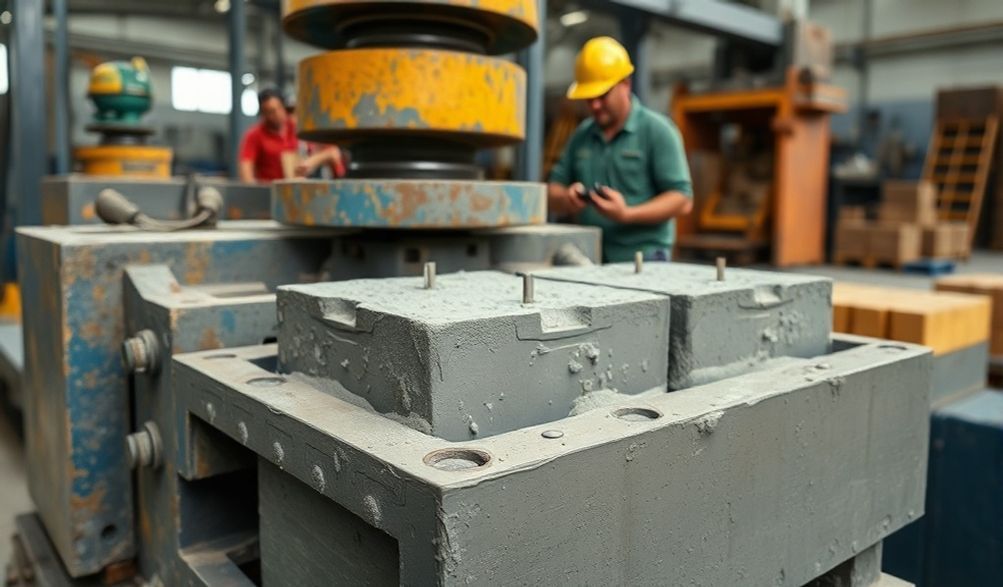
O Guia Definitivo da Máquina de Blocos 4-30A: Características, Vantagens e Operação
Introdução
No mundo da fabricação de blocos de concreto, eficiência e confiabilidade são a base da lucratividade. Para profissionais da construção, proprietários de pátios de blocos e empreendedores que buscam escalar sua produção, escolher a maquinaria certa é uma decisão crítica que impacta a produção, a qualidade do produto e o resultado final. Este guia abrangente foca em um cavalo de batalha da indústria: a4-30A máquina de blocos.
Com base em anos de expertise técnica e experiência de campo, esta publicação oferece uma análise clara, autoritativa e confiável. O 4-30A é mais do que apenas um equipamento; é uma solução semiautomática que preenche a lacuna entre as máquinas manuais, que exigem muita mão de obra, e as plantas totalmente automáticas, que demandam alto investimento de capital. Vamos detalhar suas especificações, fluxo operacional e valor econômico, capacitando você a tomar uma decisão de investimento totalmente informada para o seu negócio.
O que é uma Máquina de Blocos 4-30A? Especificações Principais e Projeto
O 4-30A é um modelo específico dentro de uma série amplamente reconhecida de máquinas para fabricação de blocos. Seu projeto prioriza construção robusta, produção consistente e simplicidade operacional, tornando-o um favorito para instalações de produção de pequena a média escala.
Tipo e Classificação de Máquina
O 4-30A é classificado como ummáquina semi-automática estacionária para fabricação de blocosIsso significa que ele automatiza o processo central de formação – vibração, compactação e moldagem – mas requer um operador para realizar certas tarefas em cada ciclo, como alimentar a matéria-prima e remover os blocos acabados. Essa classificação o posiciona perfeitamente para empresas que desejam aumentar a produção além das capacidades manuais, sem a complexidade e o custo de uma linha totalmente automatizada.
Decodificando o Número do Modelo
Os números de modelo em máquinas industriais raramente são arbitrários. Embora as especificações possam variar ligeiramente entre fabricantes, o "4-30A" normalmente indica:
- “4”O número de blocos de tamanho padrão (por exemplo, blocos vazados de 4 polegadas) que a máquina produz em um único ciclo.
- “30”O tempo de ciclo aproximado em segundos sob condições ideais.
- "A"Frequentemente denota a série do modelo ou uma versão atualizada, indicando melhorias em relação a um modelo base.
Essa convenção de nomenclatura oferece uma compreensão imediata e rápida da capacidade central da máquina: produzir 4 blocos aproximadamente a cada 30 segundos.
Principais Especificações Físicas e Técnicas
Embora os números exatos dependam do fabricante, uma máquina padrão de 4-30A geralmente apresenta:
- Dimensões:Aproximadamente 2500mm (C) x 1800mm (L) x 2200mm (A). Espaço adequado para equipamentos periféricos também é necessário.
- Peso:Geralmente entre 2.800 a 3.500 kg, indicando uma estrutura robusta e resistente a vibrações.
- Requisitos de Energia:Geralmente alimentado por um motor elétrico de 11-15 kW (15-20 HP) para o sistema de vibração e um motor separado para a unidade hidráulica de potência.
- Sistema de Controle:Operado por meio de um painel de Controlador Lógico Programável (CLP) para controle automatizado do ciclo.
- Sistema Hidráulico:Inclui uma unidade hidráulica de potência com tanque de óleo, bombas, válvulas e cilindros responsáveis pelo movimento vertical do molde e pela pressão da cabeça compactadora.
Principais Características e Componentes da Máquina 4-30A
A confiabilidade e a qualidade da saída do 4-30A derivam de seus componentes centrais bem projetados.
Sistema de Moldagem
Este é o coração da máquina, onde o concreto é transformado em um bloco preciso.
- Caixa de Moldagem:Uma estrutura de aço de alta resistência, soldada com precisão, que define as dimensões externas do bloco. É projetada para facilitar a troca rápida para produzir diferentes tipos de blocos.
- Núcleos de Hastes:Eles criam as cavidades ocas nos blocos. São montados em uma placa de núcleo e devem ser robustos para suportar vibração e pressão constantes.
- Cabeça de Manipulação:Também chamado de "cabeçote de pressão", ele desce na caixa de molde para aplicar pressão sobre o concreto durante a vibração, garantindo compactação da superfície superior e densidade uniforme.
Mecanismo de Vibração
A compactação superior é indispensável para blocos fortes e duráveis. A 4-30A utiliza umdual-vibration system:
- Table Vibration: The entire mold table vibrates at high frequency, ensuring compaction from the bottom up.
- Head Vibration: The tamper head also vibrates, compacting the concrete from the top down.
This synchronized action from both directions eliminates voids and achieves the high density required for load-bearing blocks and pavers.
Control System & Automation Level
The PLC-based control panel is the machine’s brain, offering:
- Automated Cycle Sequencing: The operator initiates a single cycle, and the PLC automatically controls the sequence: mold descent, material feed, vibration, head pressure, mold rise, and block ejection.
- Adjustable Parameters: Vibration time, pressure duration, and cycle delays can often be adjusted to fine-tune the process for different mix designs.
- Manual Override: Critical for setup, maintenance, and troubleshooting. Safety interlocks prevent operation during manual interventions.
- Fault Diagnostics: Basic models may have indicator lights, while advanced panels display error codes for quicker problem resolution.
Production Capacity and Output Expectations
Understanding real-world output is crucial for business planning. Theoretical maximums are often different from sustainable daily production.
Understanding Cycle Time and Daily Output
The “30” in 4-30A suggests a 30-second cycle time. In practice, a well-run machine with a skilled operator can achieve a cycle time of 35-45 seconds, accounting for material feeding and block removal.
Cálculo de Saída:
* Por Hora: (3600 seconds / 40-second cycle) * 4 blocks = ~360 blocks/hour.
* Por Turno de 8 Horas: 360 blocks/hour * 8 hours = ~2,880 blocks.
* Per 24-Hour Day (3 shifts): Up to ~8,640 blocks.
Important: This is a sustainable estimate. Output can be higher with perfect conditions or lower during mold changes, maintenance, or with slower material handling.
Compatible Block Types and Sizes
The 4-30A’s versatility is a key selling point. With the appropriate mold, it can produce:
* Blocos Vazados: 4″, 6″, 8″ thickness (most common).
* Solid Blocks.
* Pavimentos Intertravados (for landscaping and driveways).
* Meio-fio and other specialty products (may require specific mold kits).
Factors Influencing Production Rate
Maximizing output depends on more than just the machine:
* Consistência da Matéria-Prima: A well-proportioned, semi-dry concrete mix with consistent moisture content is essential. Wet or inconsistent mix causes sticking and delays.
* Pallet Quality & System: Worn or warped pallets cause block damage and machine jams. A manual or automated pallet return system drastically improves workflow.
* Operator Skill & Rhythm: An experienced, efficient operator is the most important factor in achieving target cycle times.
* Manutenção Preventiva: Unplanned downtime is the biggest killer of production targets. A disciplined maintenance schedule is non-negotiable.
Operational Workflow and Best Practices
Proper operation ensures safety, quality, and machine longevity.
Step-by-Step Operating Procedure
- Preparação: Ensure the machine is lubricated, the hydraulic oil level is correct, and the mold is clean and secured.
- Mix Loading: The operator places a pallet on the feeding table and shovels or uses a feeder to deposit the concrete mix into the mold box.
- Início do Ciclo: The operator presses the cycle start button on the PLC panel.
- Automated Cycle: The machine sequentially lowers the mold, activates dual vibration, lowers the tamper head for pressure, releases vibration, raises the mold, and ejects the block onto the pallet.
- Remoção de Bloco: The operator (or a helper) removes the pallet with the fresh block and transfers it to the curing area, replacing it with a new empty pallet.
- Repetição: The process repeats for the next cycle.
Essential Safety Protocols
- Mandatory PPE: Safety glasses, steel-toe boots, and hearing protection.
- Segurança de Máquinas: Never bypass safety guards or interlocks. Keep hands clear of the mold area during automatic cycles.
- Lockout/Tagout: Always disconnect power and lock out the control panel before performing any maintenance or clearing a jam.
Routine Maintenance Checklist
Diário:
* Clean the mold box, core rods, and tamper head thoroughly after production.
* Check hydraulic oil levels and for any leaks.
* Inspect electrical connections.
* Lubricate all guide rods and moving parts as per the manual.
Semanal:
* Check and tighten all bolts and nuts, especially on the vibration frame.
* Inspect hydraulic hoses for wear.
* Check the tension of drive belts (if applicable).
Mensalmente:
* Change hydraulic oil and filters as recommended.
* Inspect vibration motors and mounting bolts.
* Conduct a thorough inspection of the mold box for wear or damage.
Advantages and Considerations for Your Business
A balanced view helps assess if the 4-30A is the right fit.
Primary Benefits
- Custo-Efetividade: Offers a significantly higher output than manual machines at a fraction of the cost of a fully automatic plant.
- Redução da Dependência de Mão de Obra One skilled operator can run the machine, reducing labor costs per block compared to manual operations.
- Exceptional Durability: Built with heavy-duty steel and industrial components for a long service life in harsh environments.
- Qualidade Consistente do Produto: The automated vibration and pressing cycle produces blocks with uniform density, dimensions, and strength, enhancing your market reputation.
Investment and ROI Analysis
- Custo Inicial: The price for a new 4-30A machine typically ranges from $18,000 to $30,000, depending on the manufacturer, configuration, and region. This does not include the cost of a mixer, loader, or pallet system.
- Payback Period: For a business selling directly to the construction market, the payback period can often be achieved within 12-24 months based on local block prices and production volume.
- Vs. Fully Automatic: Fully automatic machines (like the 6-15 or 8-15 models) offer higher output with less labor but can cost 3-5 times more and require a more complex setup and higher skill level to maintain.
Potential Limitations & Solutions
- Need for Supporting Equipment: For optimal workflow, a concrete mixere umbucket loader or material feeder are highly recommended. A pallet return system (even a simple roller conveyor) dramatically increases efficiency.
- Space Requirements: You need a covered production shed with a strong, level concrete floor, plus space for raw materials, block curing, and storage.
- Treinamento de Operadores: Requires a dedicated, trainable operator. The machine’s efficiency is directly tied to the operator’s skill.
FAQ: Common Questions About the 4-30A Block Machine
Q1: What is the approximate price range for a new 4-30A block machine?
As noted, expect a range of $18,000 – $30,000 for the machine itself. Always request detailed quotations that include shipping, installation support, and initial spare parts.
Q2: Can one operator efficiently run this machine?
Yes, one skilled operator is sufficient to run the 4-30A cycle. However, a second person to handle pallet feeding and block removal can significantly boost overall production output by allowing the primary operator to focus solely on the machine cycle.
Q3: What concrete mix design is recommended for optimal results?
A semi-dry mix is crucial. A common starting ratio is 1 part cement, 3 parts sand, and 5 parts aggregate (1:3:5), with just enough water for cohesion (typically a water-cement ratio of 0.4-0.5). The mix should hold its shape when squeezed in your hand.
Q4: How does the 4-30A compare to a fully automatic block making machine?
The 4-30A is semi-automatic, requiring operator intervention per cycle. Fully automatic machines integrate material feeding, block ejection, and pallet handling into one continuous, computer-controlled process. They offer higher output (e.g., 6-10 blocks every 15 seconds) with minimal labor but at a much higher capital and operational complexity.
Q5: What are the most common spare parts I should keep in stock?
Always keep: vibration motor mounting bolts, hydraulic hose assemblies, O-rings and seals for the hydraulic cylinders, spare springs for the mold, and a set of replacement core rods. Your supplier can provide a recommended list.
Q6: What foundation and floor space are required for installation?
The machine must be bolted to a solid, level concrete foundation at least 300mm thick. The total floor space needed for comfortable operation, including material staging and block removal, is typically at least 10 meters in length and 6 meters in width.
Conclusion and Final Recommendations
A4-30A máquina de blocos stands as a testament to practical, efficient engineering. It is not the cheapest nor the most advanced option, but for a business aiming to graduate from manual production to a more scalable, quality-focused operation, it represents an outstanding balance of output, investment, and control.
Success with this machine hinges on three pillars: proper installation on a solid foundation, investment in operator training, and a religious adherence to preventive maintenance. Before finalizing any purchase, we strongly advise you to consult with multiple reputable manufacturers or suppliers. Request detailed specifications, visit a working installation if possible, and clearly understand the after-sales support, warranty terms, and availability of spare parts in your region. With due diligence, the 4-30A can become the reliable, profit-generating cornerstone of your block manufacturing business for years to come.
<