
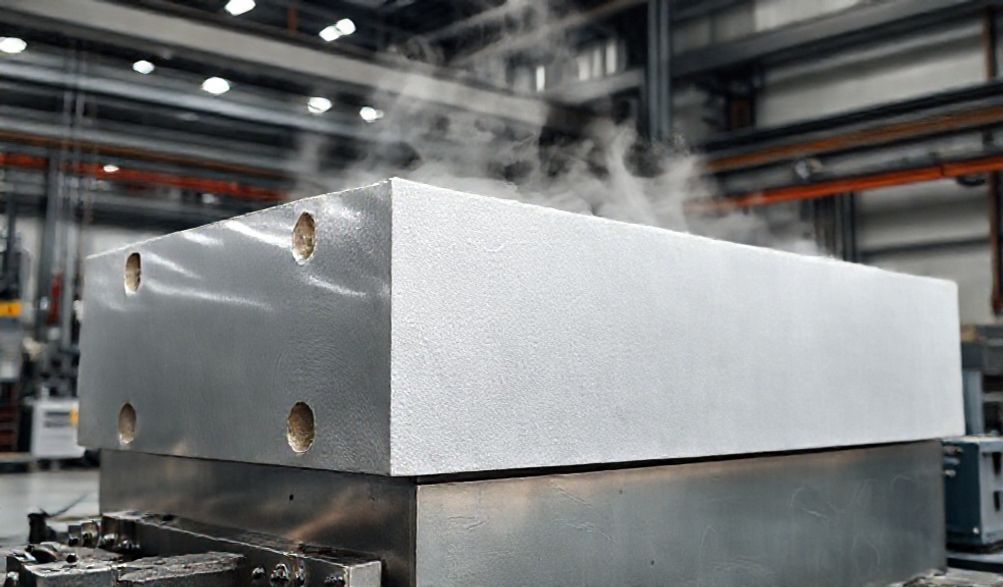
الدليل الشامل لآلات صناعة كتل الرغوة: من التصنيع إلى الإتقان
لأصحاب الأعمال ومديري المصانع في قطاعات العزل والتغليف والبناء، غالبًا ما يقود السعي نحو الكفاءة والربحية إلى قطعة واحدة حاسمة من المعدات: آلة صنع كتل الرغوة. سواء كنت تفكر في أول استثمار رأسمالي لك أو تتطلع إلى تحسين خط إنتاج موجود، فإن فهم هذه التكنولوجيا أمر بالغ الأهمية. كتل الرغوة المصنوعة من البوليسترين الممدد (EPS) والبوليسترين المبثوق (XPS) هي أكثر من مجرد مادة خفيفة الوزن؛ فهي المكونات الأساسية للمباني الموفرة للطاقة، وحلول التغليف الواقية، والتطبيقات المبتكرة عبر الصناعات.
هذا الدليل الشامل مصمم لتجاوز النشرات التسويقية وتقديم مورد واضح وموثوق وعملي. سنقوم بتفكيك التكنولوجيا الأساسية لإنتاج البلوك الرغوي، واستكشاف الأسواق عالية الطلب التي يخدمها، وتقديم إطار عمل مفصل وغير متحيز لاختيار وتشغيل وصيانة الماكينة. هدفنا هو تزويدك بالمعرفة الصناعية والرؤى التشغيلية اللازمة لاتخاذ قرارات مستنيرة، وتحسين إنتاجك، وبناء أساس موثوق لنمو أعمالك.
ما هي آلة صنع بلوكات الفوم؟ شرح التكنولوجيا الأساسية
في جوهره، آلة تصنيع كتل الرغوة هي نظام صناعي مصمم لتحويل المواد البوليمرية الخام - عادةً حبيبات البوليسترين القابل للتوسيع (EPS) أو راتنج XPS - إلى كتل كبيرة وصلبة من الرغوة. هذه ليست عملية بسيطة؛ فهي تعتمد على التحكم الدقيق في البخار والضغط ودرجة الحرارة لتحقيق إنتاج عالي الجودة ومتناسق. فهم هذه التقنية الأساسية هو الخطوة الأولى نحو الإتقان.
المبدأ الأساسي: التوسع المسبق والتوسع النهائي
تصنيع كتل البوليسترين الممدد هو عملية حرارية ذات مرحلتين. تبدأ بحبيبات صغيرة وصلبة من البوليسترين تحتوي على عامل نفخ (عادة البنتان).
- ما قبل التوسعتُغذى الخرزات الأولية في جهاز التمديد الأولي، حيث تتعرض للبخار. تتسبب الحرارة في تبخير عامل النفخ داخل كل خرزة، مما يؤدي إلى تمدد الخرزات إلى ما يصل إلى 50 ضعف حجمها الأصلي. وينتج عن ذلك مادة أولية منتفخة منخفضة الكثافة وسهلة التدفق.
- التوسيع النهائي (تشكيل الكتلة)يتم تعتيق النفخة الأولية لتثبيتها، ثم تُنفخ في قالب ألومنيوم كبير مثقب. يتم حقن البخار مرة أخرى، مما يتسبب في تمدد النفخة الأولية بشكل أكبر، والانصهار معًا عند حدودها، وأخذ الشكل الدقيق للقالب. بعد ذلك يتم تبريد الكتلة، غالبًا برذاذ الماء، لتثبيت شكلها قبل إخراجها.
المكونات الرئيسية ووظائفها
يتكون خط إنتاج قوالب الإيبس القياسي من عدة مكونات متكاملة:
- الموسع المسبق:نقطة البداية، حيث يتم توسيع الخرزات الخام أولاً إلى كثافة حجمية مستهدفة.
- غلاية البخار:قلب النظام. إنه يولد البخار المشبع المطلوب لكل مراحل التمدد. وتؤثر كفاءته بشكل مباشر على تكاليف التشغيل.
- قالب الكتلة:قالب ألومنيوم كبير مزدوج الجدران يحدد أبعاد البلوك (مثل 1200 × 600 × 3000 مم). ويتميز بفتحات بخار دقيقة للتوزيع المتساوي.
- غرفة/منطقة المعالجةبعد إزالة القوالب، تحتوي الكتل على حرارة ورطوبة متبقية. تتيح منطقة معالجة مخصصة (من 12 إلى 48 ساعة) التجفيف الكامل والتثبيت، مما يمنع الانكماش أو التشوه لاحقًا.
- نظام القطعتقطع أجهزة القطع بالسلك الساخن أو آلات التحكم الرقمي الحاسوبي (CNC) الكتل الرئيسية الكبيرة إلى ألواح أو ألواح أو أشكال مخصصة للاستخدام النهائي.
ماكينات إنتاج البلوك من مادة EPS مقابل XPS: فهم الفرق
بينما ينتج كلاهما عزلًا رغويًا صلبًا، فإن تقنيات EPS وXPS تختلفان عن بعضهما البعض:
- آلات تصنيع بلوكات الإي بي إسقابل للتوسيعخرزاتكما هو موصوف أعلاه، العملية متقطعة (تعتمد على الدُفعات). رغوة البوليسترين الممددة الناتجة تمتلك بنية خلوية مفتوحة قليلاً، وهي نفاذة للبخار، وتشتهر بمقاومتها الحرارية الممتازة على المدى الطويل وفعاليتها من حيث التكلفة.
- آلات بلوك إكس بي إس:استخدم البوليسترين الصلبراتنجمُدمَج مع عامل نفخ. يتم بثق الخليط باستمرار عبر قالب لتشكيل كتلة مستمرة، ثم تُبرَّد وتُقطع. يتميز البوليسترين المبثوق ببنية خلوية مغلقة، مما يؤدي إلى قوة ضغط أعلى، ومقاومة فطرية للرطوبة، وجلد أملس وكثيف. تكون الآلات عادةً أكثر كثافة في رأس المال وتعمل بشكل مستمر.
التطبيقات الرئيسية: لماذا الكتل الرغوية مطلوبة بشدة
تساهم تنوع كتل الرغوة في زيادة الطلب عبر الأسواق العالمية. الاستثمار في آلة كتل الرغوة يعني الانخراط في هذه القطاعات المرنة والمتنامية.
العزل الإنشائي والبناء (أكبر سوق)
هذا هو المحرك الأساسي لإنتاج كتل الرغوة. تعتبر مادتي EPS وXPS من مواد العزل الرائدة.
* قوالب الخرسانة المعزولة (ICFs):يتم قطع كتل الإي بي إس إلى أشكال متشابكة تعمل كقوالب دائمة للخرسانة المصبوبة، مما يخلق جدرانًا ذات كفاءة طاقة عالية بشكل لا يصدق.
* Structural Insulated Panels (SIPs): A foam core (EPS or XPS) is sandwiched between oriented strand board (OSB), creating high-strength, insulated wall and roof panels.
* Roof, Wall, and Floor Insulation: Blocks are sliced into boards for exterior insulation and finish systems (EIFS), cavity wall insulation, and under-slab applications.
Protective Packaging and Logistics
From delicate electronics to heavy industrial equipment, custom foam packaging ensures safe transit.
* Custom-Cut Packaging: CNC machines cut precise cavities from foam blocks to cradle products securely. This is ubiquitous for electronics, medical devices, pharmaceuticals, and automotive parts.
* Lightweight Void Fill & Blocking/Bracing: Loose fill (beads) or cut pieces are used to stabilize loads in shipping containers and pallets, replacing heavier, less efficient materials.
Specialized Uses: From Arts to Aquaponics
The utility of foam blocks extends into niche markets:
* Arts, Models, and Set Design: EPS blocks are easily carved and shaped for sculptures, architectural models, and theatrical or film sets.
* Geofoam: Ultra-lightweight EPS blocks are used in civil engineering for road embankments over soft ground, slope stabilization, and reducing lateral pressure on retaining walls.
* Floating Docks and Aquaponics: The buoyancy and rot-resistance of foam make it ideal for floating platforms in marinas and as a supportive medium in hydroponic systems.
Critical Factors When Choosing a Foam Blocks Machine
Selecting the right machine is a balance of technical specs, business strategy, and total cost. Objective evaluation here is key to a profitable investment.
Production Capacity: Matching Output to Your Business Goals
Capacity is not just about machine size; it’s about aligning with your market.
* وقت الدورة: This is the total time to produce one block (filling, steaming, cooling, ejection). Faster cycles mean higher output.
* Block Dimensions: Standard mold sizes exist, but you can customize. Consider the most common sheet sizes your target market requires to minimize cutting waste.
* الإنتاج اليومي: Calculate based on cycle time and operational hours. A machine with a 5-minute cycle can theoretically produce 288 blocks in a 24-hour period, but practical output will be lower due to curing and handling.
Automation Level: Manual, Semi-Automatic, and Fully Automatic
- دليل: Operators control each step (valves, filling, ejection). Lowest upfront cost but highest labor cost, variability, and physical demand.
- شبه آلي The core molding cycle (steam, water, air) is controlled by a Programmable Logic Controller (PLC). Operators handle loading and unloading. Offers the best balance of cost, control, and consistency for many businesses.
- أوتوماتيكي بالكامل: Integrated with automated pre-expander, silos, and robotic handling systems. Minimizes labor, maximizes consistency and output. Highest capital cost, justified by large-scale, continuous production.
Energy Efficiency: The Role of Steam Boilers and Control Systems
Steam generation is the largest operational expense. Modern machines focus on reducing steam consumption.
* Steam-to-Bead Ratio: A key performance metric (e.g., kg of steam per kg of beads). More efficient machines have lower ratios.
* أنظمة التحكم المتقدمة Precise PLCs manage steam injection timing and pressure, optimizing expansion and reducing waste.
* Boiler Type: Condensing boilers or efficient oil/gas-fired boilers can significantly cut energy costs compared to older models.
Total Cost of Ownership: Beyond the Initial Purchase Price
The machine price is just the entry ticket. A realistic budget must include:
1. Capital Costs: Machine, mold, boiler, cutting system, installation, and commissioning.
2. Utilities: Steam (fuel for boiler), electricity for motors and controls, and process water.
3. المواد الخام: Cost of EPS beads or XPS resin, which fluctuates with oil prices.
4. العمل Wages for operators, maintenance technicians, and material handlers.
5. Maintenance & Spares: Regular servicing and a budget for replacement parts (steam valves, seals, cutting wires).
Operational Best Practices and Maintenance
Owning the machine is one thing; operating it optimally is another. These practices separate profitable operations from problematic ones.
The Optimal Production Workflow: A Step-by-Step Overview
- معالجة المواد الخام: Store EPS beads in a dry, temperature-stable silo or container.
- قبل التوسع: Expand beads to the precise bulk density required for the final block (e.g., 10kg/m³, 15kg/m³, 20kg/m³).
- Aging: Allow pre-puff to stabilize in aerated bags or silos for 6-24 hours.
- صب القوالب Fill the mold, execute the automated steam cycle, cool with water, and eject the block.
- التداوي Move blocks to a flat, stable curing area for the recommended period. Do not skip this.
- Cutting & Finishing: Use calibrated hot-wire or CNC machines to cut blocks to customer specifications.
Common Operational Challenges and Troubleshooting
- Poor Fusion (Blocks Breaking Apart): Cause: Insufficient steam pressure/time, low bead pre-expansion density, or wet pre-puff. Solution: Check steam system, increase cycle parameters, ensure proper aging.
- Shrinkage or Warping After Cutting: Cause: Insufficient curing time, blocks cut while still warm/hot. Solution: Enforce strict minimum curing schedules.
- Uneven Density (Hard Spots or Soft Sections): Cause: Uneven steam distribution due to clogged mold holes, improper filling, or faulty steam valves. Solution: Perform regular mold cleaning and steam system maintenance.
- Surface Defects (Holes or Rough Skin): Cause: Bead size too large, condensation in mold, or incorrect vacuum cycle. Solution: Use appropriate bead grade, ensure mold is heated properly before filling.
Essential Maintenance Schedule for Longevity
- Daily: Visually inspect steam and water lines for leaks. Check hydraulic oil levels. Clean the area around the mold.
- Weekly: Clean mold steam holes with a dedicated cleaning brush or rod. Check tension on cutting wires. Inspect seals and gaskets.
- Monthly: Calibrate pressure and temperature sensors. Perform a thorough check of the boiler system (as per manufacturer’s guide). Lubricate all moving parts.
- Annually: Schedule a full professional service, including hydraulic system check, electrical panel inspection, and control system review.
Navigating the Market: Supplier Selection and Quality Checks
Your relationship with the machine manufacturer is a long-term partnership. Due diligence is non-negotiable.
Evaluating Machine Manufacturers: Red Flags and Green Flags
- Green Flags: Decades of industry presence, a portfolio of successful client references (ask for them!), in-house engineering and R&D, and transparency about component origins (e.g., brand of PLC, pumps).
- Red Flags: No physical factory address, inability to provide client contacts, pressure for immediate payment, use of generic or uncertified pressure vessels, and vague warranties.
The Importance of After-Sales Support and Training
The best machine is only as good as the support behind it. Prioritize suppliers who offer:
* On-site Installation & Commissioning: Supervised setup by factory engineers.
* تدريب شامل للمشغلين: Hands-on training for your team on operation, basic troubleshooting, and safety.
* قطع الغيار المتاحة بسهولة A clear parts catalog and a commitment to shipping critical spares quickly.
* الدعم الفني Access to remote or on-call technical assistance.
Key Questions to Ask Before You Buy
Go into discussions armed with these questions:
1. “What is the guaranteed steam-to-bead ratio for this model?”
2. “Can you provide contact information for 2-3 clients in my region who have run this model for over a year?”
3. “What is the structure of your warranty (e.g., 12 months on machine, 6 months on mold)? What is excluded?”
4. “What is included in your training and commissioning package? Is it on-site?”
5. “What is the lead time for critical spare parts, and do you keep a local inventory?”
Frequently Asked Questions (FAQ) About Foam Blocks Machines
What is the typical price range for a foam block making machine?
Prices vary dramatically based on size, automation, and region. A basic semi-automatic line can start around $50,000 – $100,000. A medium-capacity, well-equipped semi-auto system often falls in the $150,000 – $300,000 range. Large-scale, fully automatic production lines with integrated cutting can exceed $500,000. Always factor in shipping, installation, and boiler costs.
What is the minimum factory space required for a foam block production line?
You need space for the machine itself (approx. 10m x 5m), plus significant area for curing (blocks need space between them) and storage for raw beads and finished product. A realistic minimum for a small operation is 300 – 500 square meters, with good ceiling height and ventilation.
How many workers are needed to operate a semi-automatic machine?
For a single shift operating a semi-automatic machine, a team of 2-3 مشغلين is typical. One may focus on the pre-expander and material handling, while the other(s) manage the block mold, ejection, and moving blocks to the curing area.
Can one machine produce blocks of different densities and sizes?
Yes, but with conditions. Different densities are achieved by changing the pre-expansion parameters and using different bead grades. Different sizes require قوالب قابلة للتبديل. While changing a mold is a major task, a single machine can be adapted to produce various standard block dimensions by investing in multiple molds.
What are the main safety considerations when operating these machines?
* Steam & Pressure: High-temperature steam and pressurized vessels pose burn and explosion risks. Proper training, pressure relief valves, and regular inspections are critical.
* كهربائي The system involves high-voltage components. Lock-out/tag-out procedures must be followed for maintenance.
* ميكانيكي Moving parts like hydraulic presses and cutting systems require guarding.
* Fumes/Ventilation: During processing, small amounts of styrene vapor may be released. Adequate factory ventilation or extraction systems are essential for operator health.
خاتمة
Investing in a foam blocks machine represents a significant step toward securing your position in the robust insulation and packaging markets. Success, however, is not guaranteed by the purchase alone. It is achieved by meticulously aligning the right technology with your specific business goals, committing to sound operational practices, and forging a partnership with a reputable, supportive supplier.
This journey requires thorough due diligence. Use this guide as a framework for your evaluation. Visit factories, request live demonstrations, and speak directly to existing customers of your shortlisted suppliers. By combining informed decision-making with hands-on expertise, you can transform this capital investment into a reliable engine for sustainable growth and profitability.
<