
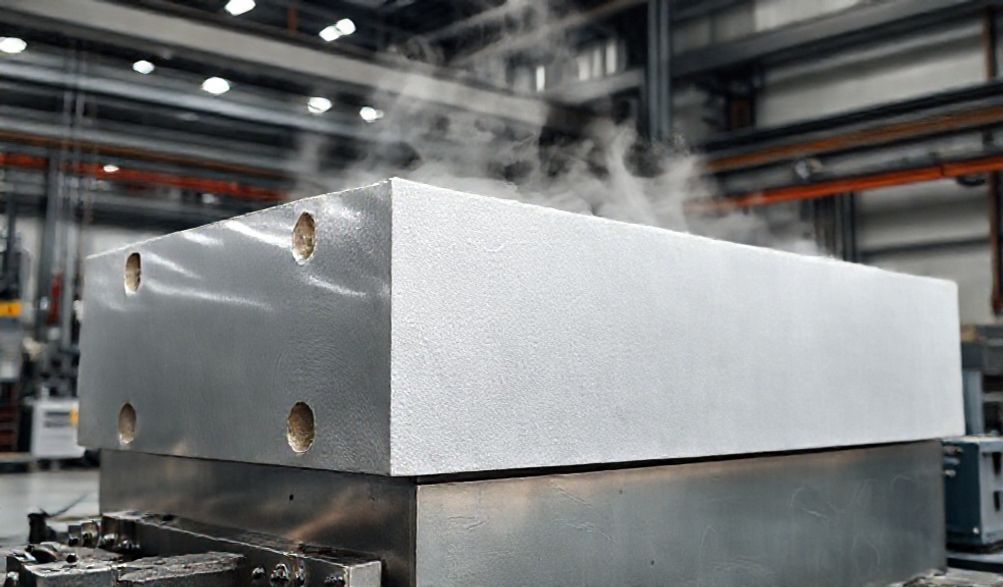
Le Guide Ultime des Machines à Blocs de Mousse : De la Fabrication à la Maîtrise
Pour les propriétaires d'entreprise et les directeurs d'usine dans les secteurs de l'isolation, de l'emballage et de la construction, la quête d'efficacité et de rentabilité mène souvent à une seule pièce d'équipement cruciale : la machine à blocs de mousse. Que vous envisagiez votre premier investissement en capital ou que vous cherchiez à optimiser une ligne existante, comprendre cette technologie est essentiel. Les blocs de mousse en polystyrène expansé (PSE) et en polystyrène extrudé (PSX) sont plus qu'un simple matériau léger ; ce sont les composants fondamentaux pour des bâtiments écoénergétiques, des solutions d'emballage protectrices et des applications innovantes dans toutes les industries.
Ce guide complet est conçu pour aller au-delà des brochures commerciales et offrir une ressource claire, faisant autorité et pratique. Nous allons disséquer la technologie centrale de la production de blocs de mousse, explorer les marchés à forte demande qu'elle dessert et proposer un cadre détaillé et impartial pour sélectionner, exploiter et entretenir une machine. Notre objectif est de vous doter des connaissances du secteur et des informations opérationnelles nécessaires pour prendre des décisions éclairées, optimiser votre production et jeter les bases solides de la croissance de votre entreprise.
Qu'est-ce qu'une machine à blocs de mousse? Explication de la technologie de base
À la base, une machine à blocs de mousse est un système industriel conçu pour transformer des matières polymères brutes—généralement des perles de polystyrène expansible (PSE) ou de la résine PSE-X—en de grands blocs solides de mousse. Ce n'est pas un processus simple ; il repose sur un contrôle précis de la vapeur, de la pression et de la température pour obtenir un produit de haute qualité et uniforme. Comprendre cette technologie fondamentale est la première étape vers la maîtrise.
Le principe de base : Pré-expansion et expansion finale
La fabrication de blocs de polystyrène expansé (PSE) est un processus thermique en deux étapes. Elle commence avec de minuscules billes dures de polystyrène contenant un agent gonflant (généralement du pentane).
- Pré-expansion :Les perles brutes sont introduites dans un pré-expanseur, où elles sont exposées à la vapeur. La chaleur provoque la vaporisation de l'agent gonflant à l'intérieur de chaque perle, ce qui les fait gonfler jusqu'à 50 fois leur volume initial. Cela crée un pré-gonflant de faible densité et à écoulement libre.
- Expansion finale (Moulage par blocs) :Le pré-gonflage est vieilli pour se stabiliser, puis soufflé dans un grand moule en bloc d'aluminium perforé. De la vapeur est injectée à nouveau, ce qui provoque l'expansion supplémentaire du pré-gonflage, la fusion de ses limites et la prise exacte de la forme du moule. Le bloc est ensuite refroidi, souvent par pulvérisation d'eau, pour fixer sa forme avant d'être éjecté.
Composants clés et leurs fonctions
Une ligne de production standard de blocs de PSE se compose de plusieurs composants intégrés :
- Pré-expansoire :Le point de départ, où les perles brutes sont initialement expansées pour atteindre une densité apparente cible.
- Chaudière à vapeur:Le cœur du système. Il génère la vapeur saturée nécessaire aux deux étapes d'expansion. Son efficacité a un impact direct sur les coûts d'exploitation.
- Moule de bloc :Un grand moule en aluminium à double paroi qui définit les dimensions du bloc (par exemple, 1200 x 600 x 3000 mm). Il comporte des trous de vapeur précis pour une distribution uniforme.
- Chambre de maturation / Zone de maturation :Après le démoulage, les blocs contiennent de la chaleur et de l'humidité résiduelles. Une zone de cure dédiée (de 12 à 48 heures) permet un séchage et une stabilisation complets, évitant ainsi un retrait ou une déformation ultérieurs.
- Système de coupe :Les découpeuses à fil chaud ou les machines à commande numérique par ordinateur (CNC) découpent les grands blocs maîtres en feuilles, en planches ou en formes personnalisées pour leur utilisation finale.
Machines à blocs EPS vs. XPS : Comprendre la différence
Bien que les deux produisent de l'isolant en mousse rigide, l'EPS et le XPS impliquent des technologies différentes.
- Machines à blocs EPS :Utiliser extensiblePerlesComme décrit ci-dessus, le processus est discontinu (par lots). La mousse de polystyrène expansé (EPS) obtenue présente une structure de cellules légèrement ouverte, est perméable à la vapeur et est reconnue pour son excellente résistance thermique à long terme et son rapport coût-efficacité.
- Machines à blocs XPS :Utiliser du polystyrène soliderésinecombiné à un agent gonflant. Le mélange est extrudé en continu à travers une filière pour former un bloc continu, qui est ensuite refroidi et coupé. Le XPS présente une structure à cellules fermées, ce qui se traduit par une résistance à la compression plus élevée, une résistance inhérente à l'humidité et une peau lisse et dense. La machinerie est généralement plus capitalistique et fonctionne en continu.
Applications clés : Pourquoi les blocs de mousse sont très demandés
La polyvalence des blocs de mousse stimule la demande sur les marchés mondiaux. Investir dans une machine à blocs de mousse, c'est s'engager dans ces secteurs résilients et en croissance.
Isolation des bâtiments et de la construction (le plus grand marché)
C'est le principal moteur de la production de blocs de mousse. Le polystyrène expansé (EPS) et le polystyrène extrudé (XPS) sont des matériaux d'isolation de premier ordre.
* Formes à béton isolantes (ICF) :Les blocs de PSE sont découpés en formes imbriquées qui servent de coffrage permanent pour le béton coulé, créant ainsi des murs extrêmement écoénergétiques.
* Structural Insulated Panels (SIPs): A foam core (EPS or XPS) is sandwiched between oriented strand board (OSB), creating high-strength, insulated wall and roof panels.
* Roof, Wall, and Floor Insulation: Blocks are sliced into boards for exterior insulation and finish systems (EIFS), cavity wall insulation, and under-slab applications.
Protective Packaging and Logistics
From delicate electronics to heavy industrial equipment, custom foam packaging ensures safe transit.
* Custom-Cut Packaging: CNC machines cut precise cavities from foam blocks to cradle products securely. This is ubiquitous for electronics, medical devices, pharmaceuticals, and automotive parts.
* Lightweight Void Fill & Blocking/Bracing: Loose fill (beads) or cut pieces are used to stabilize loads in shipping containers and pallets, replacing heavier, less efficient materials.
Specialized Uses: From Arts to Aquaponics
The utility of foam blocks extends into niche markets:
* Arts, Models, and Set Design: EPS blocks are easily carved and shaped for sculptures, architectural models, and theatrical or film sets.
* Geofoam: Ultra-lightweight EPS blocks are used in civil engineering for road embankments over soft ground, slope stabilization, and reducing lateral pressure on retaining walls.
* Floating Docks and Aquaponics: The buoyancy and rot-resistance of foam make it ideal for floating platforms in marinas and as a supportive medium in hydroponic systems.
Critical Factors When Choosing a Foam Blocks Machine
Selecting the right machine is a balance of technical specs, business strategy, and total cost. Objective evaluation here is key to a profitable investment.
Production Capacity: Matching Output to Your Business Goals
Capacity is not just about machine size; it’s about aligning with your market.
* Temps de cycle : This is the total time to produce one block (filling, steaming, cooling, ejection). Faster cycles mean higher output.
* Block Dimensions: Standard mold sizes exist, but you can customize. Consider the most common sheet sizes your target market requires to minimize cutting waste.
* Sortie quotidienne : Calculate based on cycle time and operational hours. A machine with a 5-minute cycle can theoretically produce 288 blocks in a 24-hour period, but practical output will be lower due to curing and handling.
Automation Level: Manual, Semi-Automatic, and Fully Automatic
- Manuel : Operators control each step (valves, filling, ejection). Lowest upfront cost but highest labor cost, variability, and physical demand.
- Semi-Automatique : The core molding cycle (steam, water, air) is controlled by a Programmable Logic Controller (PLC). Operators handle loading and unloading. Offers the best balance of cost, control, and consistency for many businesses.
- Entièrement Automatique : Integrated with automated pre-expander, silos, and robotic handling systems. Minimizes labor, maximizes consistency and output. Highest capital cost, justified by large-scale, continuous production.
Energy Efficiency: The Role of Steam Boilers and Control Systems
Steam generation is the largest operational expense. Modern machines focus on reducing steam consumption.
* Steam-to-Bead Ratio: A key performance metric (e.g., kg of steam per kg of beads). More efficient machines have lower ratios.
* Systèmes de commande avancés : Precise PLCs manage steam injection timing and pressure, optimizing expansion and reducing waste.
* Boiler Type: Condensing boilers or efficient oil/gas-fired boilers can significantly cut energy costs compared to older models.
Total Cost of Ownership: Beyond the Initial Purchase Price
The machine price is just the entry ticket. A realistic budget must include:
1. Capital Costs: Machine, mold, boiler, cutting system, installation, and commissioning.
2. Utilities: Steam (fuel for boiler), electricity for motors and controls, and process water.
3. Matériaux bruts : Cost of EPS beads or XPS resin, which fluctuates with oil prices.
4. Main-d'œuvre : Wages for operators, maintenance technicians, and material handlers.
5. Maintenance & Spares: Regular servicing and a budget for replacement parts (steam valves, seals, cutting wires).
Operational Best Practices and Maintenance
Owning the machine is one thing; operating it optimally is another. These practices separate profitable operations from problematic ones.
The Optimal Production Workflow: A Step-by-Step Overview
- Manutention des matières premières Store EPS beads in a dry, temperature-stable silo or container.
- Pré-expansion : Expand beads to the precise bulk density required for the final block (e.g., 10kg/m³, 15kg/m³, 20kg/m³).
- Aging: Allow pre-puff to stabilize in aerated bags or silos for 6-24 hours.
- Moulage de blocs : Fill the mold, execute the automated steam cycle, cool with water, and eject the block.
- Guérison : Move blocks to a flat, stable curing area for the recommended period. Do not skip this.
- Cutting & Finishing: Use calibrated hot-wire or CNC machines to cut blocks to customer specifications.
Common Operational Challenges and Troubleshooting
- Poor Fusion (Blocks Breaking Apart): Cause: Insufficient steam pressure/time, low bead pre-expansion density, or wet pre-puff. Solution : Check steam system, increase cycle parameters, ensure proper aging.
- Shrinkage or Warping After Cutting: Cause: Insufficient curing time, blocks cut while still warm/hot. Solution : Enforce strict minimum curing schedules.
- Uneven Density (Hard Spots or Soft Sections): Cause: Uneven steam distribution due to clogged mold holes, improper filling, or faulty steam valves. Solution : Perform regular mold cleaning and steam system maintenance.
- Surface Defects (Holes or Rough Skin): Cause: Bead size too large, condensation in mold, or incorrect vacuum cycle. Solution : Use appropriate bead grade, ensure mold is heated properly before filling.
Essential Maintenance Schedule for Longevity
- Daily: Visually inspect steam and water lines for leaks. Check hydraulic oil levels. Clean the area around the mold.
- Weekly: Clean mold steam holes with a dedicated cleaning brush or rod. Check tension on cutting wires. Inspect seals and gaskets.
- Monthly: Calibrate pressure and temperature sensors. Perform a thorough check of the boiler system (as per manufacturer’s guide). Lubricate all moving parts.
- Annually: Schedule a full professional service, including hydraulic system check, electrical panel inspection, and control system review.
Navigating the Market: Supplier Selection and Quality Checks
Your relationship with the machine manufacturer is a long-term partnership. Due diligence is non-negotiable.
Evaluating Machine Manufacturers: Red Flags and Green Flags
- Green Flags: Decades of industry presence, a portfolio of successful client references (ask for them!), in-house engineering and R&D, and transparency about component origins (e.g., brand of PLC, pumps).
- Red Flags: No physical factory address, inability to provide client contacts, pressure for immediate payment, use of generic or uncertified pressure vessels, and vague warranties.
The Importance of After-Sales Support and Training
The best machine is only as good as the support behind it. Prioritize suppliers who offer:
* On-site Installation & Commissioning: Supervised setup by factory engineers.
* Formation complète des opérateurs : Hands-on training for your team on operation, basic troubleshooting, and safety.
* Pièces de rechange facilement disponibles : A clear parts catalog and a commitment to shipping critical spares quickly.
* Support technique : Access to remote or on-call technical assistance.
Key Questions to Ask Before You Buy
Go into discussions armed with these questions:
1. “What is the guaranteed steam-to-bead ratio for this model?”
2. “Can you provide contact information for 2-3 clients in my region who have run this model for over a year?”
3. “What is the structure of your warranty (e.g., 12 months on machine, 6 months on mold)? What is excluded?”
4. “What is included in your training and commissioning package? Is it on-site?”
5. “What is the lead time for critical spare parts, and do you keep a local inventory?”
Frequently Asked Questions (FAQ) About Foam Blocks Machines
What is the typical price range for a foam block making machine?
Prices vary dramatically based on size, automation, and region. A basic semi-automatic line can start around 50 000 $ – 100 000 $. A medium-capacity, well-equipped semi-auto system often falls in the $150,000 – $300,000 range. Large-scale, fully automatic production lines with integrated cutting can exceed $500,000. Always factor in shipping, installation, and boiler costs.
What is the minimum factory space required for a foam block production line?
You need space for the machine itself (approx. 10m x 5m), plus significant area for curing (blocks need space between them) and storage for raw beads and finished product. A realistic minimum for a small operation is 300 – 500 square meters, with good ceiling height and ventilation.
How many workers are needed to operate a semi-automatic machine?
For a single shift operating a semi-automatic machine, a team of 2-3 opérateurs is typical. One may focus on the pre-expander and material handling, while the other(s) manage the block mold, ejection, and moving blocks to the curing area.
Can one machine produce blocks of different densities and sizes?
Yes, but with conditions. Different densities are achieved by changing the pre-expansion parameters and using different bead grades. Different sizes require interchangeable molds. While changing a mold is a major task, a single machine can be adapted to produce various standard block dimensions by investing in multiple molds.
What are the main safety considerations when operating these machines?
* Steam & Pressure: High-temperature steam and pressurized vessels pose burn and explosion risks. Proper training, pressure relief valves, and regular inspections are critical.
* Électrique : The system involves high-voltage components. Lock-out/tag-out procedures must be followed for maintenance.
* Mécanique : Moving parts like hydraulic presses and cutting systems require guarding.
* Fumes/Ventilation: During processing, small amounts of styrene vapor may be released. Adequate factory ventilation or extraction systems are essential for operator health.
Conclusion
Investing in a foam blocks machine represents a significant step toward securing your position in the robust insulation and packaging markets. Success, however, is not guaranteed by the purchase alone. It is achieved by meticulously aligning the right technology with your specific business goals, committing to sound operational practices, and forging a partnership with a reputable, supportive supplier.
This journey requires thorough due diligence. Use this guide as a framework for your evaluation. Visit factories, request live demonstrations, and speak directly to existing customers of your shortlisted suppliers. By combining informed decision-making with hands-on expertise, you can transform this capital investment into a reliable engine for sustainable growth and profitability.
<