
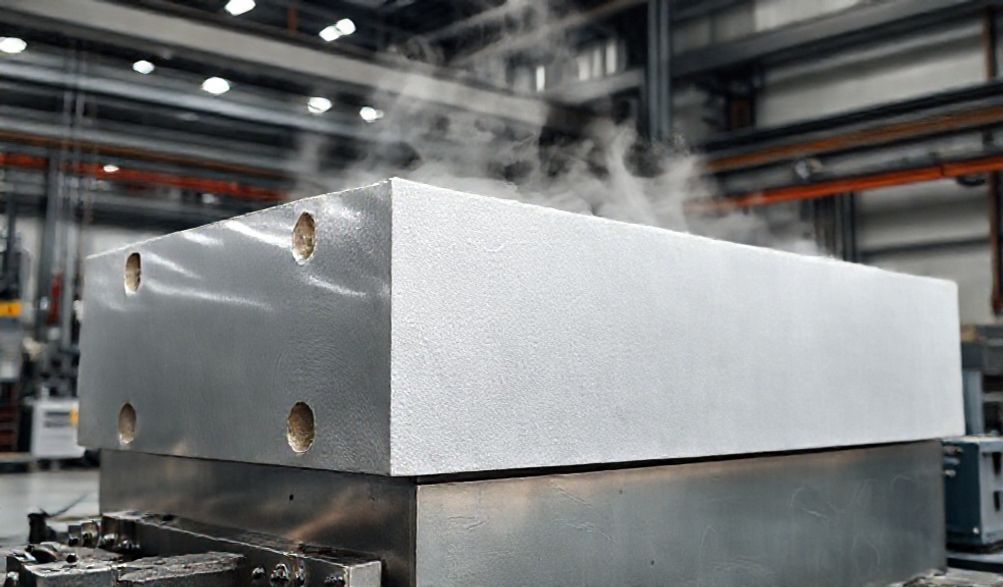
Gid Definitif pou Machin Blòk Mous: Soti nan Fabrikasyon rive nan Mètrizaj
Pou pwopriyetè biznis ak manadjè plant nan sektè izolasyon, anbalaj, ak konstriksyon, chèche efikasite ak pwofitabilite souvan mennen nan yon sèl ekipman kle: machin blòk mous. Kit w ap konsidere premye envestisman kapital ou oswa w ap chèche optimize yon liy ki deja egziste, konprann teknoloji sa a esansyèl. Blòk mous EPS (Polistirèn Ekspanse) ak XPS (Polistirèn Ekstride) se plis pase yon materyèl lejè; yo se eleman fondamantal pou bilding ki gen efikasite enèjik, solisyon anbalaj pwoteksyon, ak aplikasyon inovatif atravè divès endistri yo.
Gid konplè sa a fèt pou depase ti liv vant epi ofri yon resous klè, otorize, ak pratik. Nou pral diseke teknoloji debaz pou pwodiksyon blòk mous, eksplore mache ki gen gwo demann li sèvi, epi ofri yon kad detaye ak enpasyal pou chwazi, opere, ak kenbe yon machin. Objektif nou se pou ba ou konesans endistri ak apèsi operasyonèl nesesè pou pran desizyon ki byen enfòme, optimize pwodiksyon ou, epi bati yon fondasyon serye pou devlopman biznis ou.
Kisa yon Machin Blòk Fom? Teknoloji Debaz Eksplike
Nan fond li, yon machin blòk mous se yon sistèm endistriyèl ki fèt pou transfòme materyèl polymè anvan tout trete—tipikman pèl EPS (polystyrèn ekspansib) oswa rezèn XPS—an gwo blòk solid mous. Sa se pa yon pwosesis senp; li depann de kontwòl presi nan vapè, presyon, ak tanperati pou reyalize yon pwodiksyon ki konstan ak bon jan kalite. Konprann teknoloji debaz sa a se premye etap pou vin pwofesyonèl.
Prensip Debaz: Pre-Ekspansyon ak Ekspansyon Final
Pwodiksyon blòk EPS se yon pwosesis tèmik ki gen de etap. Li kòmanse ak ti grenn polistirèn ki difisil ki gen yon ajan gonfle (souvan pentàn).
- Avèk ekspansyon an:Gren premye yo antre nan yon ekspansè preliminè, kote yo ekspoze a vapè. Chalè a lakòz ajan anfle andedan chak gren vapore, sa ki fè gren yo elaji jiska 50 fwa volim orijinal yo. Sa kreye yon pre-gonfle ki gen dansite ba epi ki koule lib.
- Ekspansyon Final (Moulaj Blòk):Pre-puff la vin aje pou li estabilize, answit yo soufle l nan yon gwo mwazi an aliminyòm ki gen twou. Yo enjekte vapè ankò, sa ki fè pre-puff la vin elaji pi plis, kole ansanm nan limit yo, epi pran fòm egzak mwazi a. Apre sa, yo refwadi blòk la, souvan ak dlo ki gaye, pou li pran fòm li anvan yo retire l.
Eleman Kle ak Fonksyon Yo
Yon liy pwodiksyon blòk EPS estanda konpoze de plizyè eleman entegre:
- Pre-ekspansyon:Pwen depa a, kote grenn anvan yo premye elaji yo nan yon dansite mas sib.
- Chodyè Vapè:Kè sistèm nan. Li jenere vapè saturasyon ki nesesè pou tou de etap ekspansyon yo. Efikasite li dirèkteman afekte depans operasyon yo.
- Mòl Blòk:Yon gwo moul aliminyòm ak de parèy ki defini dimansyon blòk la (pa egzanp, 1200 x 600 x 3000 mm). Li genyen twou vapè presi pou distribisyon egal.
- Chanm/ Zòn KirezonApre yo fin retire blòk yo nan mwazi yo, yo gen chalè ak imidite ki rete. Yon zòn espesyal pou trete yo (soti nan 12 a 48 èdtan) pèmèt yo fin seche nèt ak estabilize, sa ki anpeche yo retresi oswa defòme pita.
- Sistèm Koupe:Machin koupe fil cho oswa machin kontwòl nimerik konpitè (CNC) koupe gwo blòs mèt yo an fèy, planch, oswa fòm espesyal pou itilizasyon final.
Machin Blòk EPS kont XPS: Konprann Diferans lan
Pandan ke tou de pwodui izolasyon mous ki rijid, EPS ak XPS enplike diferan teknoloji:
- Machin Blòk EPS:ouvripèlKòm dekri pi wo a. Pwosesis la se diskontinyèl (ki baze sou lòt). Mous EPS ki rezilta a gen yon estrikti selil yon ti kras ouvè, li pèmeyab nan vapè, epi li konnen pou rezistans tèmik ekselan li a sou long tèm ak efikasite pri li.
- Machin Blòk XPS:Sèvi ak polistirèn solidresin combined with a blowing agent. The mixture is continuously extruded through a die to form a continuous block, which is then cooled and cut. XPS has a closed-cell structure, resulting in higher compressive strength, inherent moisture resistance, and a smooth, dense skin. The machinery is typically more capital-intensive and runs continuously.
Key Applications: Why Foam Blocks Are in High Demand
The versatility of foam blocks drives demand across global markets. Investing in a foam blocks machine means tapping into these resilient and growing sectors.
Construction and Building Insulation (The Largest Market)
This is the primary driver for foam block production. EPS and XPS are premier insulation materials.
* Insulated Concrete Forms (ICFs): EPS blocks are cut into interlocking shapes that serve as permanent formwork for poured concrete, creating incredibly energy-efficient walls.
* Structural Insulated Panels (SIPs): A foam core (EPS or XPS) is sandwiched between oriented strand board (OSB), creating high-strength, insulated wall and roof panels.
* Roof, Wall, and Floor Insulation: Blocks are sliced into boards for exterior insulation and finish systems (EIFS), cavity wall insulation, and under-slab applications.
Protective Packaging and Logistics
From delicate electronics to heavy industrial equipment, custom foam packaging ensures safe transit.
* Custom-Cut Packaging: CNC machines cut precise cavities from foam blocks to cradle products securely. This is ubiquitous for electronics, medical devices, pharmaceuticals, and automotive parts.
* Lightweight Void Fill & Blocking/Bracing: Loose fill (beads) or cut pieces are used to stabilize loads in shipping containers and pallets, replacing heavier, less efficient materials.
Specialized Uses: From Arts to Aquaponics
The utility of foam blocks extends into niche markets:
* Arts, Models, and Set Design: EPS blocks are easily carved and shaped for sculptures, architectural models, and theatrical or film sets.
* Geofoam: Ultra-lightweight EPS blocks are used in civil engineering for road embankments over soft ground, slope stabilization, and reducing lateral pressure on retaining walls.
* Floating Docks and Aquaponics: The buoyancy and rot-resistance of foam make it ideal for floating platforms in marinas and as a supportive medium in hydroponic systems.
Critical Factors When Choosing a Foam Blocks Machine
Selecting the right machine is a balance of technical specs, business strategy, and total cost. Objective evaluation here is key to a profitable investment.
Production Capacity: Matching Output to Your Business Goals
Capacity is not just about machine size; it’s about aligning with your market.
* Tan Sik This is the total time to produce one block (filling, steaming, cooling, ejection). Faster cycles mean higher output.
* Block Dimensions: Standard mold sizes exist, but you can customize. Consider the most common sheet sizes your target market requires to minimize cutting waste.
* Daily Output: Calculate based on cycle time and operational hours. A machine with a 5-minute cycle can theoretically produce 288 blocks in a 24-hour period, but practical output will be lower due to curing and handling.
Automation Level: Manual, Semi-Automatic, and Fully Automatic
- Manyèl: Operators control each step (valves, filling, ejection). Lowest upfront cost but highest labor cost, variability, and physical demand.
- Semi-Otomatik: The core molding cycle (steam, water, air) is controlled by a Programmable Logic Controller (PLC). Operators handle loading and unloading. Offers the best balance of cost, control, and consistency for many businesses.
- Otomatik Konplè: Integrated with automated pre-expander, silos, and robotic handling systems. Minimizes labor, maximizes consistency and output. Highest capital cost, justified by large-scale, continuous production.
Energy Efficiency: The Role of Steam Boilers and Control Systems
Steam generation is the largest operational expense. Modern machines focus on reducing steam consumption.
* Steam-to-Bead Ratio: A key performance metric (e.g., kg of steam per kg of beads). More efficient machines have lower ratios.
* Sistèm Kontwòl Avanse: Precise PLCs manage steam injection timing and pressure, optimizing expansion and reducing waste.
* Boiler Type: Condensing boilers or efficient oil/gas-fired boilers can significantly cut energy costs compared to older models.
Total Cost of Ownership: Beyond the Initial Purchase Price
The machine price is just the entry ticket. A realistic budget must include:
1. Capital Costs: Machine, mold, boiler, cutting system, installation, and commissioning.
2. Utilities: Steam (fuel for boiler), electricity for motors and controls, and process water.
3. Matyè Premye: Cost of EPS beads or XPS resin, which fluctuates with oil prices.
4. Travay Wages for operators, maintenance technicians, and material handlers.
5. Maintenance & Spares: Regular servicing and a budget for replacement parts (steam valves, seals, cutting wires).
Operational Best Practices and Maintenance
Owning the machine is one thing; operating it optimally is another. These practices separate profitable operations from problematic ones.
The Optimal Production Workflow: A Step-by-Step Overview
- Raw Material Handling: Store EPS beads in a dry, temperature-stable silo or container.
- Pre-ekspansyon: Expand beads to the precise bulk density required for the final block (e.g., 10kg/m³, 15kg/m³, 20kg/m³).
- Aging: Allow pre-puff to stabilize in aerated bags or silos for 6-24 hours.
- Moulaj Blòk: Fill the mold, execute the automated steam cycle, cool with water, and eject the block.
- Gerizon: Move blocks to a flat, stable curing area for the recommended period. Do not skip this.
- Cutting & Finishing: Use calibrated hot-wire or CNC machines to cut blocks to customer specifications.
Common Operational Challenges and Troubleshooting
- Poor Fusion (Blocks Breaking Apart): Cause: Insufficient steam pressure/time, low bead pre-expansion density, or wet pre-puff. Solution: Check steam system, increase cycle parameters, ensure proper aging.
- Shrinkage or Warping After Cutting: Cause: Insufficient curing time, blocks cut while still warm/hot. Solution: Enforce strict minimum curing schedules.
- Uneven Density (Hard Spots or Soft Sections): Cause: Uneven steam distribution due to clogged mold holes, improper filling, or faulty steam valves. Solution: Perform regular mold cleaning and steam system maintenance.
- Surface Defects (Holes or Rough Skin): Cause: Bead size too large, condensation in mold, or incorrect vacuum cycle. Solution: Use appropriate bead grade, ensure mold is heated properly before filling.
Essential Maintenance Schedule for Longevity
- Daily: Visually inspect steam and water lines for leaks. Check hydraulic oil levels. Clean the area around the mold.
- Weekly: Clean mold steam holes with a dedicated cleaning brush or rod. Check tension on cutting wires. Inspect seals and gaskets.
- Monthly: Calibrate pressure and temperature sensors. Perform a thorough check of the boiler system (as per manufacturer’s guide). Lubricate all moving parts.
- Annually: Schedule a full professional service, including hydraulic system check, electrical panel inspection, and control system review.
Navigating the Market: Supplier Selection and Quality Checks
Your relationship with the machine manufacturer is a long-term partnership. Due diligence is non-negotiable.
Evaluating Machine Manufacturers: Red Flags and Green Flags
- Drapo Vèt: Decades of industry presence, a portfolio of successful client references (ask for them!), in-house engineering and R&D, and transparency about component origins (e.g., brand of PLC, pumps).
- Drapo Wouj: No physical factory address, inability to provide client contacts, pressure for immediate payment, use of generic or uncertified pressure vessels, and vague warranties.
The Importance of After-Sales Support and Training
The best machine is only as good as the support behind it. Prioritize suppliers who offer:
* On-site Installation & Commissioning: Supervised setup by factory engineers.
* Fòmasyon Konplè pou Operatè: Hands-on training for your team on operation, basic troubleshooting, and safety.
* Pye De Rechany Ki Fasilman Disponib A clear parts catalog and a commitment to shipping critical spares quickly.
* Sipò Teknik: Access to remote or on-call technical assistance.
Key Questions to Ask Before You Buy
Go into discussions armed with these questions:
1. “What is the guaranteed steam-to-bead ratio for this model?”
2. “Can you provide contact information for 2-3 clients in my region who have run this model for over a year?”
3. “What is the structure of your warranty (e.g., 12 months on machine, 6 months on mold)? What is excluded?”
4. “What is included in your training and commissioning package? Is it on-site?”
5. “What is the lead time for critical spare parts, and do you keep a local inventory?”
Frequently Asked Questions (FAQ) About Foam Blocks Machines
What is the typical price range for a foam block making machine?
Prices vary dramatically based on size, automation, and region. A basic semi-automatic line can start around $50,000 – $100,000. A medium-capacity, well-equipped semi-auto system often falls in the $150,000 – $300,000 range. Large-scale, fully automatic production lines with integrated cutting can exceed $500,000. Always factor in shipping, installation, and boiler costs.
What is the minimum factory space required for a foam block production line?
You need space for the machine itself (approx. 10m x 5m), plus significant area for curing (blocks need space between them) and storage for raw beads and finished product. A realistic minimum for a small operation is 300 – 500 square meters, with good ceiling height and ventilation.
How many workers are needed to operate a semi-automatic machine?
For a single shift operating a semi-automatic machine, a team of 2-3 operators is typical. One may focus on the pre-expander and material handling, while the other(s) manage the block mold, ejection, and moving blocks to the curing area.
Can one machine produce blocks of different densities and sizes?
Yes, but with conditions. Different densities are achieved by changing the pre-expansion parameters and using different bead grades. Different sizes require interchangeable molds. While changing a mold is a major task, a single machine can be adapted to produce various standard block dimensions by investing in multiple molds.
What are the main safety considerations when operating these machines?
* Steam & Pressure: High-temperature steam and pressurized vessels pose burn and explosion risks. Proper training, pressure relief valves, and regular inspections are critical.
* Elektrik: The system involves high-voltage components. Lock-out/tag-out procedures must be followed for maintenance.
* Mechanical: Moving parts like hydraulic presses and cutting systems require guarding.
* Fumes/Ventilation: During processing, small amounts of styrene vapor may be released. Adequate factory ventilation or extraction systems are essential for operator health.
Konklizyon
Investing in a foam blocks machine represents a significant step toward securing your position in the robust insulation and packaging markets. Success, however, is not guaranteed by the purchase alone. It is achieved by meticulously aligning the right technology with your specific business goals, committing to sound operational practices, and forging a partnership with a reputable, supportive supplier.
This journey requires thorough due diligence. Use this guide as a framework for your evaluation. Visit factories, request live demonstrations, and speak directly to existing customers of your shortlisted suppliers. By combining informed decision-making with hands-on expertise, you can transform this capital investment into a reliable engine for sustainable growth and profitability.
<