
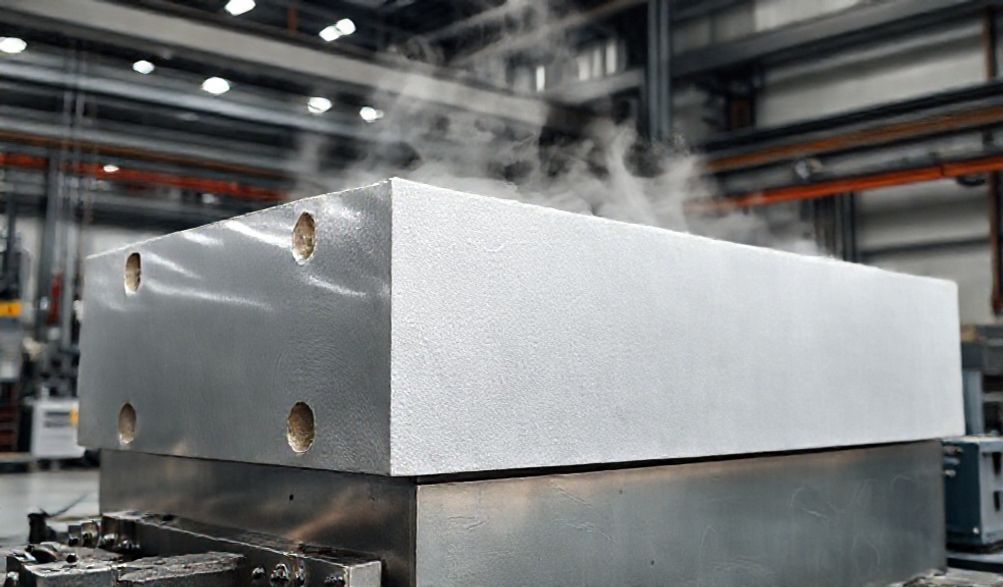
Дастури олии мошинҳои блокҳои кӯфӣ: аз истеҳсолот то омӯзиши комил
Барои соҳибкорон ва мудирони сармоягузорӣ дар соҳаҳои изолятсия, бастабандӣ ва сохтмон, ҷустуҷӯи самаранокӣ ва фоидаоварӣ аксар вақт ба як таҷҳизоти асосӣ меорад: мошини блокҳои кӯфӣ. Ҳарчанд шумо аввалин сармоягузории худро дар назар доред ё мехоҳед занҷири мавҷударо беҳтар кунед, фаҳмидани ин технология муҳим аст. Блокҳои кӯфии полистирени васеъшуда (EPS) ва полистирени экструдировани (XPS) танҳо материалҳои сабук нестанд; онҳо компонентҳои асосии биноҳои самараноки энергетикӣ, ҳаллиҳои бастабандии муҳофизатӣ ва барномаҳои инноватсионӣ дар саноатҳои гуногун мебошанд.
Ин дастури муфассал барои гузаштан аз барномаҳои фурӯш ва таҳияи манбаи равшан, муътамад ва амалӣ тарҳрезӣ шудааст. Мо технологияи асосии истеҳсоли блокҳои кӯфакро таҳлил мекунем, бозорҳои пурталаби онро меомӯзем ва чорчӯбаи муфассал ва бегараро барои интихоб, коркард ва нигоҳдории дастгоҳ пешниҳод мекунем. Ҳадафи мо ин аст, ки шуморо бо дониши соҳа ва фаҳмиши амалиётӣ барои қабули қарорҳои огоҳона, беҳтар кардани истеҳсоли худ ва бунёди асоси боварии инкишофи тиҷорати худ таҷҳиз кунем.
Машинаи блокҳои кӯфта чист? Фанноварии асосӣ шарҳ дода шуд
Дар асоси он, мошинаи блокҳои кӯфтак як системаи саноатӣ мебошад, ки барои табдил додани маводҳои полимерии хом - одатан зарраҳои полистироли васеъшаванда (EPS) ё смолаи XPS - ба блокҳои калони сахти кӯфтак таҳия шудааст. Ин раванди сода нест; он ба назорати дақиқи буғ, фишор ва ҳарорат такя мекунад, то натиҷаи муқаррарӣ ва сифати баланд ба даст орад. Фаҳмидани ин технологияи асосӣ аввалин қадам ба сӯи омӯзиш мебошад.
Принсипи Асосӣ: Пешгустариш ва Густариши Ниҳоӣ
Истеҳсоли блокҳои EPS як раванди ду марҳилаи гармӣ мебошад. Ин раванд аз донаҳои хурду сахти полистирол оғоз меёбад, ки дорои агенти фукундагӣ (одатан пентан) мебошанд.
- Пеш аз васеъшавӣ:Гулӯлаҳои хом ба пешгустаришгар дохил карда мешаванд, ки дар онҳо буғ ба кор бурда мешавад. Ҳарорат ба агенти варамкунанда дар дохили ҳар як гулӯла таъсир расонида, онро ба ҳаҷми то 50 баробари ҳаҷми аслиаш васеъ мекунад. Ин пешгустариши зичии паст ва озод ҷараёншавандаро ба вуҷуд меорад.
- Васеъшавии ниҳоӣ (Қолибсозии блок):Пешакӣ, маводи пешакӣ барои устуворӣ дар муҳити муайян кардашуда мерасад, сипас ба қолиби алюминии калон ва сӯрохдор дамида мешавад. Бӯғи об бори дигар ворид карда мешавад, ки боиши васеъшавии бештари маводи пешакӣ, пайвастшавии онҳо дар марзҳо ва гирифтани шакли дақиқи қолиб мегардад. Баъд аз он, блок бо обпошӣ хунук карда мешавад, то шакли он мустаҳкам гардад, пеш аз он ки аз қолиб берун ояд.
Қисмҳои асосӣ ва вазифаҳои онҳо
Хати стандартии истеҳсоли блокҳои EPS аз як қатор компонентҳои интегралӣ иборат аст:
- Пеш аз васеъкунӣ:Нуқтаи оғоз, ки дар он зарраҳои хом аввал ба зичии ҳаҷмии мақсаднок васеъ карда мешаванд.
- Кӯлиҳои буғМаркази система. Он бухори бароҳатгирифтаро барои ҳарду марҳилаи васеъшавӣ тавлид мекунад. Самаранокии он бевосита ба хароҷоти амалиётӣ таъсир мерасонад.
- Блоки қолибӣ:Як қолиби калон, дудевораи алюминӣ, ки андозаҳои блокро муайян мекунад (масалан, 1200 x 600 x 3000 мм). Он дорои сӯрохиҳои дақиқи буғ барои тақсимоти баробар мебошад.
- Ҳуҷра/Минтақаи шифобахшӣ:Пас аз қолаббардорӣ, блокҳо гармиву намӣ боқимонда доранд. Минтақаи махсуси пуррашавӣ (аз 12 то 48 соат) имкони хушкидани комил ва устуворшавиро фароҳам меорад, ки аз хурдшавӣ ё деформатсия дар оянда пешгирӣ мекунад.
- Системаи буридан:Буридаҳои симӣ ё мошинҳои рақамии компютерӣ (CNC) блокҳои асосии калонро ба таври варақаҳо, тахтаҳо ё шаклҳои фармоишӣ барои истифодаи ниҳоӣ мебуранд.
Машинаҳои блокҳои EPS ва XPS: Фарқиятро дарк кунед
Дар ҳоле ки ҳарду навъи изолятсияи сахт ҳосил мекунанд, EPS ва XPS аз технологияҳои гуногун истифода мебаранд:
- Машинаҳои блоксозии EPS:кунҷандамондаҳоЧун ки дар боло зикр шуд, раванд ноаён (ба таври батчӣ) мебошад. Натиҷаи пӯсти EPS сохтори ҳуҷайраи андаке кушода дорад, ба буғ нафсдиҳанда аст ва барои муқовимати барқароршавии гармӣ ва самаранокии арзиши дарозмуддати он маълум аст.
- Машинаҳои блоксозии XPS:Истифодаи полистироли сахтresin combined with a blowing agent. The mixture is continuously extruded through a die to form a continuous block, which is then cooled and cut. XPS has a closed-cell structure, resulting in higher compressive strength, inherent moisture resistance, and a smooth, dense skin. The machinery is typically more capital-intensive and runs continuously.
Key Applications: Why Foam Blocks Are in High Demand
The versatility of foam blocks drives demand across global markets. Investing in a foam blocks machine means tapping into these resilient and growing sectors.
Construction and Building Insulation (The Largest Market)
This is the primary driver for foam block production. EPS and XPS are premier insulation materials.
* Insulated Concrete Forms (ICFs): EPS blocks are cut into interlocking shapes that serve as permanent formwork for poured concrete, creating incredibly energy-efficient walls.
* Structural Insulated Panels (SIPs): A foam core (EPS or XPS) is sandwiched between oriented strand board (OSB), creating high-strength, insulated wall and roof panels.
* Roof, Wall, and Floor Insulation: Blocks are sliced into boards for exterior insulation and finish systems (EIFS), cavity wall insulation, and under-slab applications.
Protective Packaging and Logistics
From delicate electronics to heavy industrial equipment, custom foam packaging ensures safe transit.
* Custom-Cut Packaging: CNC machines cut precise cavities from foam blocks to cradle products securely. This is ubiquitous for electronics, medical devices, pharmaceuticals, and automotive parts.
* Lightweight Void Fill & Blocking/Bracing: Loose fill (beads) or cut pieces are used to stabilize loads in shipping containers and pallets, replacing heavier, less efficient materials.
Specialized Uses: From Arts to Aquaponics
The utility of foam blocks extends into niche markets:
* Arts, Models, and Set Design: EPS blocks are easily carved and shaped for sculptures, architectural models, and theatrical or film sets.
* Geofoam: Ultra-lightweight EPS blocks are used in civil engineering for road embankments over soft ground, slope stabilization, and reducing lateral pressure on retaining walls.
* Floating Docks and Aquaponics: The buoyancy and rot-resistance of foam make it ideal for floating platforms in marinas and as a supportive medium in hydroponic systems.
Critical Factors When Choosing a Foam Blocks Machine
Selecting the right machine is a balance of technical specs, business strategy, and total cost. Objective evaluation here is key to a profitable investment.
Production Capacity: Matching Output to Your Business Goals
Capacity is not just about machine size; it’s about aligning with your market.
* Вақти даврӣ: This is the total time to produce one block (filling, steaming, cooling, ejection). Faster cycles mean higher output.
* Block Dimensions: Standard mold sizes exist, but you can customize. Consider the most common sheet sizes your target market requires to minimize cutting waste.
* Daily Output: Calculate based on cycle time and operational hours. A machine with a 5-minute cycle can theoretically produce 288 blocks in a 24-hour period, but practical output will be lower due to curing and handling.
Automation Level: Manual, Semi-Automatic, and Fully Automatic
- Дастур: Operators control each step (valves, filling, ejection). Lowest upfront cost but highest labor cost, variability, and physical demand.
- Ним-автоматӣ: The core molding cycle (steam, water, air) is controlled by a Programmable Logic Controller (PLC). Operators handle loading and unloading. Offers the best balance of cost, control, and consistency for many businesses.
- Пурра худкор: Integrated with automated pre-expander, silos, and robotic handling systems. Minimizes labor, maximizes consistency and output. Highest capital cost, justified by large-scale, continuous production.
Energy Efficiency: The Role of Steam Boilers and Control Systems
Steam generation is the largest operational expense. Modern machines focus on reducing steam consumption.
* Steam-to-Bead Ratio: A key performance metric (e.g., kg of steam per kg of beads). More efficient machines have lower ratios.
* Advanced Control Systems: Precise PLCs manage steam injection timing and pressure, optimizing expansion and reducing waste.
* Boiler Type: Condensing boilers or efficient oil/gas-fired boilers can significantly cut energy costs compared to older models.
Total Cost of Ownership: Beyond the Initial Purchase Price
The machine price is just the entry ticket. A realistic budget must include:
1. Capital Costs: Machine, mold, boiler, cutting system, installation, and commissioning.
2. Utilities: Steam (fuel for boiler), electricity for motors and controls, and process water.
3. Маводҳои хом: Cost of EPS beads or XPS resin, which fluctuates with oil prices.
4. Меҳнат: Wages for operators, maintenance technicians, and material handlers.
5. Maintenance & Spares: Regular servicing and a budget for replacement parts (steam valves, seals, cutting wires).
Operational Best Practices and Maintenance
Owning the machine is one thing; operating it optimally is another. These practices separate profitable operations from problematic ones.
The Optimal Production Workflow: A Step-by-Step Overview
- Raw Material Handling: Store EPS beads in a dry, temperature-stable silo or container.
- Пеш аз васеъшавӣ: Expand beads to the precise bulk density required for the final block (e.g., 10kg/m³, 15kg/m³, 20kg/m³).
- Aging: Allow pre-puff to stabilize in aerated bags or silos for 6-24 hours.
- Блокҳои қолибӣ: Fill the mold, execute the automated steam cycle, cool with water, and eject the block.
- Шифо додан: Move blocks to a flat, stable curing area for the recommended period. Do not skip this.
- Cutting & Finishing: Use calibrated hot-wire or CNC machines to cut blocks to customer specifications.
Common Operational Challenges and Troubleshooting
- Poor Fusion (Blocks Breaking Apart): Cause: Insufficient steam pressure/time, low bead pre-expansion density, or wet pre-puff. Solution: Check steam system, increase cycle parameters, ensure proper aging.
- Shrinkage or Warping After Cutting: Cause: Insufficient curing time, blocks cut while still warm/hot. Solution: Enforce strict minimum curing schedules.
- Uneven Density (Hard Spots or Soft Sections): Cause: Uneven steam distribution due to clogged mold holes, improper filling, or faulty steam valves. Solution: Perform regular mold cleaning and steam system maintenance.
- Surface Defects (Holes or Rough Skin): Cause: Bead size too large, condensation in mold, or incorrect vacuum cycle. Solution: Use appropriate bead grade, ensure mold is heated properly before filling.
Essential Maintenance Schedule for Longevity
- Daily: Visually inspect steam and water lines for leaks. Check hydraulic oil levels. Clean the area around the mold.
- Weekly: Clean mold steam holes with a dedicated cleaning brush or rod. Check tension on cutting wires. Inspect seals and gaskets.
- Monthly: Calibrate pressure and temperature sensors. Perform a thorough check of the boiler system (as per manufacturer’s guide). Lubricate all moving parts.
- Annually: Schedule a full professional service, including hydraulic system check, electrical panel inspection, and control system review.
Navigating the Market: Supplier Selection and Quality Checks
Your relationship with the machine manufacturer is a long-term partnership. Due diligence is non-negotiable.
Evaluating Machine Manufacturers: Red Flags and Green Flags
- Green Flags: Decades of industry presence, a portfolio of successful client references (ask for them!), in-house engineering and R&D, and transparency about component origins (e.g., brand of PLC, pumps).
- Red Flags: No physical factory address, inability to provide client contacts, pressure for immediate payment, use of generic or uncertified pressure vessels, and vague warranties.
The Importance of After-Sales Support and Training
The best machine is only as good as the support behind it. Prioritize suppliers who offer:
* On-site Installation & Commissioning: Supervised setup by factory engineers.
* Омӯзиши ҳамаҷонибаи операторӣ: Hands-on training for your team on operation, basic troubleshooting, and safety.
* Қисмҳои ивазшавандаи дастрас A clear parts catalog and a commitment to shipping critical spares quickly.
* Дастгирии техникӣ: Access to remote or on-call technical assistance.
Key Questions to Ask Before You Buy
Go into discussions armed with these questions:
1. “What is the guaranteed steam-to-bead ratio for this model?”
2. “Can you provide contact information for 2-3 clients in my region who have run this model for over a year?”
3. “What is the structure of your warranty (e.g., 12 months on machine, 6 months on mold)? What is excluded?”
4. “What is included in your training and commissioning package? Is it on-site?”
5. “What is the lead time for critical spare parts, and do you keep a local inventory?”
Frequently Asked Questions (FAQ) About Foam Blocks Machines
What is the typical price range for a foam block making machine?
Prices vary dramatically based on size, automation, and region. A basic semi-automatic line can start around $50,000 – $100,000. A medium-capacity, well-equipped semi-auto system often falls in the $150,000 – $300,000 range. Large-scale, fully automatic production lines with integrated cutting can exceed $500,000. Always factor in shipping, installation, and boiler costs.
What is the minimum factory space required for a foam block production line?
You need space for the machine itself (approx. 10m x 5m), plus significant area for curing (blocks need space between them) and storage for raw beads and finished product. A realistic minimum for a small operation is 300 – 500 square meters, with good ceiling height and ventilation.
How many workers are needed to operate a semi-automatic machine?
For a single shift operating a semi-automatic machine, a team of 2-3 operators is typical. One may focus on the pre-expander and material handling, while the other(s) manage the block mold, ejection, and moving blocks to the curing area.
Can one machine produce blocks of different densities and sizes?
Yes, but with conditions. Different densities are achieved by changing the pre-expansion parameters and using different bead grades. Different sizes require interchangeable molds. While changing a mold is a major task, a single machine can be adapted to produce various standard block dimensions by investing in multiple molds.
What are the main safety considerations when operating these machines?
* Steam & Pressure: High-temperature steam and pressurized vessels pose burn and explosion risks. Proper training, pressure relief valves, and regular inspections are critical.
* Electrical: The system involves high-voltage components. Lock-out/tag-out procedures must be followed for maintenance.
* Mechanical: Moving parts like hydraulic presses and cutting systems require guarding.
* Fumes/Ventilation: During processing, small amounts of styrene vapor may be released. Adequate factory ventilation or extraction systems are essential for operator health.
Conclusion
Investing in a foam blocks machine represents a significant step toward securing your position in the robust insulation and packaging markets. Success, however, is not guaranteed by the purchase alone. It is achieved by meticulously aligning the right technology with your specific business goals, committing to sound operational practices, and forging a partnership with a reputable, supportive supplier.
This journey requires thorough due diligence. Use this guide as a framework for your evaluation. Visit factories, request live demonstrations, and speak directly to existing customers of your shortlisted suppliers. By combining informed decision-making with hands-on expertise, you can transform this capital investment into a reliable engine for sustainable growth and profitability.
<