
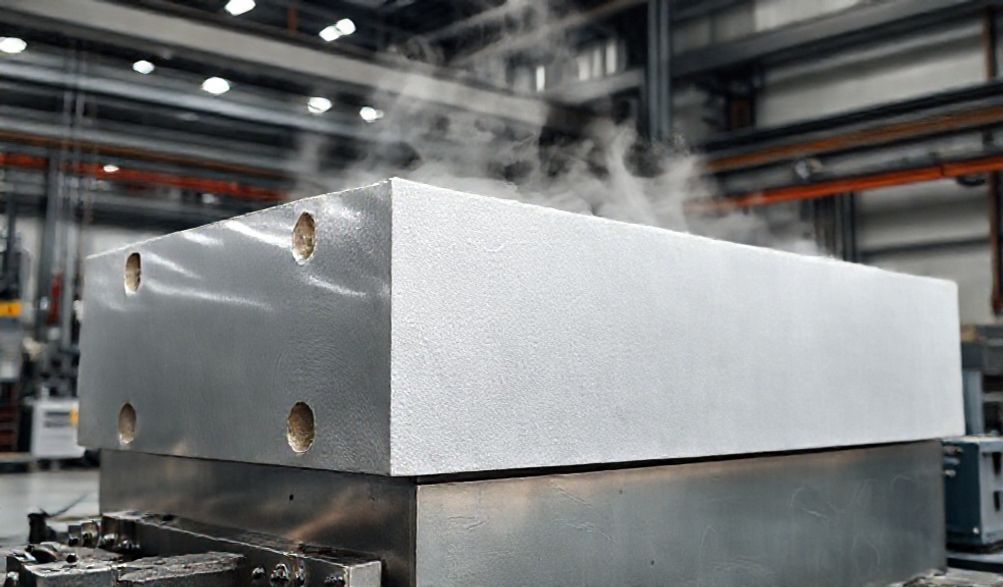
Полное руководство по машинам для производства пеноблоков: от изготовления до мастерства
Для владельцев бизнеса и руководителей предприятий в сферах теплоизоляции, упаковки и строительства поиск эффективности и прибыльности часто сводится к одному ключевому оборудованию: машине для производства пеноблоков. Независимо от того, рассматриваете ли вы первую капитальную инвестицию или стремитесь оптимизировать существующую линию, понимание этой технологии крайне важно. Блоки из вспененного полистирола (EPS) и экструдированного полистирола (XPS) — это не просто легкий материал; они являются основополагающими компонентами для энергоэффективных зданий, защитных упаковочных решений и инновационных применений в различных отраслях.
Это всеобъемлющее руководство создано, чтобы выйти за рамки рекламных брошюр и предложить ясный, авторитетный и практический ресурс. Мы разберем основную технологию производства пеноблоков, исследуем рынки с высоким спросом, которые она обслуживает, и предоставим детальную, беспристрастную схему для выбора, эксплуатации и обслуживания оборудования. Наша цель — вооружить вас отраслевыми знаниями и практическими инсайтами, необходимыми для принятия обоснованных решений, оптимизации производства и создания надежной основы для роста вашего бизнеса.
Что такое машина для производства пеноблоков? Объяснение ключевых технологий
По своей сути, машина для производства пеноблоков — это промышленная система, предназначенная для преобразования сырых полимерных материалов, обычно гранул вспенивающегося полистирола (EPS) или смолы XPS, в крупные твердые блоки пены. Это не простой процесс; он основан на точном контроле пара, давления и температуры для достижения стабильного высококачественного результата. Понимание этой базовой технологии — первый шаг к овладению мастерством.
Основной принцип: предварительное расширение и окончательное расширение
Производство блоков из пенополистирола представляет собой двухэтапный термический процесс. Он начинается с крошечных твёрдых гранул полистирола, содержащих вспенивающий агент (обычно пентан).
- Предварительное расширение:Сырые гранулы подаются в предварительный вспениватель, где на них воздействуют паром. Тепло заставляет вспенивающий агент внутри каждой гранулы испаряться, увеличивая их объем до 50 раз по сравнению с исходным. В результате образуется легковесный, сыпучий предварительно вспененный материал.
- Финальное расширение (Формование блоков):Предварительно вспененная масса выдерживается для стабилизации, затем вдувается в большую перфорированную алюминиевую форму-блок. Пар подается снова, заставляя массу дополнительно расширяться, сливаться на границах и принимать точную форму формы. Затем блок охлаждают, часто с помощью водяного распыления, чтобы зафиксировать его форму перед извлечением.
Ключевые компоненты и их функции
Стандартная линия по производству блоков из пенополистирола состоит из нескольких интегрированных компонентов:
- Предварительный расширитель:Начальная точка, где сырые гранулы первоначально расширяются до целевой насыпной плотности.
- Паровой котёл:Сердце системы. Оно производит насыщенный пар, необходимый для обеих стадий расширения. Его эффективность напрямую влияет на эксплуатационные расходы.
- Блочная форма:Большая двухстенная алюминиевая форма, задающая размеры блока (например, 1200 x 600 x 3000 мм). Она оснащена точными паровыми отверстиями для равномерного распределения.
- Камера/зона отверждения:После извлечения из форм блоки сохраняют остаточное тепло и влагу. Специальная зона отверждения (от 12 до 48 часов) обеспечивает полную просушку и стабилизацию, предотвращая последующую усадку или деформацию.
- Система резки:Горячеструйные резаки или станки с числовым программным управлением (ЧПУ) разрезают большие исходные блоки на листы, плиты или детали нестандартной формы для конечного использования.
Машины для производства блоков из EPS и XPS: понимание различий
Хотя и EPS, и XPS производят жесткий пенопластовый утеплитель, они основаны на разных технологиях:
- Машины для производства пенополистирола (EPS):Используйте расширяемыйбисерКак было описано выше, процесс является периодическим (порционным). Получаемый пенополистирол (EPS) имеет слегка открытую ячеистую структуру, является паропроницаемым и известен своей превосходной долговременной теплоизоляционной способностью и экономической эффективностью.
- Машины для производства блоков XPS:Используйте твердый полистиролсмолав сочетании с вспенивающим агентом. Смесь непрерывно экструдируется через фильеру для формирования сплошного блока, который затем охлаждается и нарезается. XPS имеет закрытоячеистую структуру, что обеспечивает более высокую прочность на сжатие, естественную влагостойкость и гладкую, плотную поверхность. Оборудование, как правило, более капиталоемкое и работает непрерывно.
Ключевые области применения: почему пеноблоки пользуются высоким спросом
Универсальность пеноблоков стимулирует спрос на мировых рынках. Инвестиции в оборудование для производства пеноблоков означают выход на эти устойчивые и растущие секторы.
Строительство и теплоизоляция зданий (крупнейший рынок)
Это основной фактор для производства пеноблоков. EPS и XPS являются ведущими теплоизоляционными материалами.
* Insulated Concrete Forms (ICFs): EPS blocks are cut into interlocking shapes that serve as permanent formwork for poured concrete, creating incredibly energy-efficient walls.
* Structural Insulated Panels (SIPs): A foam core (EPS or XPS) is sandwiched between oriented strand board (OSB), creating high-strength, insulated wall and roof panels.
* Roof, Wall, and Floor Insulation: Blocks are sliced into boards for exterior insulation and finish systems (EIFS), cavity wall insulation, and under-slab applications.
Protective Packaging and Logistics
From delicate electronics to heavy industrial equipment, custom foam packaging ensures safe transit.
* Custom-Cut Packaging: CNC machines cut precise cavities from foam blocks to cradle products securely. This is ubiquitous for electronics, medical devices, pharmaceuticals, and automotive parts.
* Lightweight Void Fill & Blocking/Bracing: Loose fill (beads) or cut pieces are used to stabilize loads in shipping containers and pallets, replacing heavier, less efficient materials.
Specialized Uses: From Arts to Aquaponics
The utility of foam blocks extends into niche markets:
* Arts, Models, and Set Design: EPS blocks are easily carved and shaped for sculptures, architectural models, and theatrical or film sets.
* Geofoam: Ultra-lightweight EPS blocks are used in civil engineering for road embankments over soft ground, slope stabilization, and reducing lateral pressure on retaining walls.
* Floating Docks and Aquaponics: The buoyancy and rot-resistance of foam make it ideal for floating platforms in marinas and as a supportive medium in hydroponic systems.
Critical Factors When Choosing a Foam Blocks Machine
Selecting the right machine is a balance of technical specs, business strategy, and total cost. Objective evaluation here is key to a profitable investment.
Production Capacity: Matching Output to Your Business Goals
Capacity is not just about machine size; it’s about aligning with your market.
* Время цикла: This is the total time to produce one block (filling, steaming, cooling, ejection). Faster cycles mean higher output.
* Block Dimensions: Standard mold sizes exist, but you can customize. Consider the most common sheet sizes your target market requires to minimize cutting waste.
* Daily Output: Calculate based on cycle time and operational hours. A machine with a 5-minute cycle can theoretically produce 288 blocks in a 24-hour period, but practical output will be lower due to curing and handling.
Automation Level: Manual, Semi-Automatic, and Fully Automatic
- Инструкция: Operators control each step (valves, filling, ejection). Lowest upfront cost but highest labor cost, variability, and physical demand.
- Полуавтоматический: The core molding cycle (steam, water, air) is controlled by a Programmable Logic Controller (PLC). Operators handle loading and unloading. Offers the best balance of cost, control, and consistency for many businesses.
- Полностью автоматический: Integrated with automated pre-expander, silos, and robotic handling systems. Minimizes labor, maximizes consistency and output. Highest capital cost, justified by large-scale, continuous production.
Energy Efficiency: The Role of Steam Boilers and Control Systems
Steam generation is the largest operational expense. Modern machines focus on reducing steam consumption.
* Steam-to-Bead Ratio: A key performance metric (e.g., kg of steam per kg of beads). More efficient machines have lower ratios.
* Продвинутые системы управления: Precise PLCs manage steam injection timing and pressure, optimizing expansion and reducing waste.
* Boiler Type: Condensing boilers or efficient oil/gas-fired boilers can significantly cut energy costs compared to older models.
Total Cost of Ownership: Beyond the Initial Purchase Price
The machine price is just the entry ticket. A realistic budget must include:
1. Капитальные затраты: Machine, mold, boiler, cutting system, installation, and commissioning.
2. Utilities: Steam (fuel for boiler), electricity for motors and controls, and process water.
3. Сырье: Cost of EPS beads or XPS resin, which fluctuates with oil prices.
4. Труд: Wages for operators, maintenance technicians, and material handlers.
5. Maintenance & Spares: Regular servicing and a budget for replacement parts (steam valves, seals, cutting wires).
Operational Best Practices and Maintenance
Owning the machine is one thing; operating it optimally is another. These practices separate profitable operations from problematic ones.
The Optimal Production Workflow: A Step-by-Step Overview
- Raw Material Handling: Store EPS beads in a dry, temperature-stable silo or container.
- Предэкспансия: Expand beads to the precise bulk density required for the final block (e.g., 10kg/m³, 15kg/m³, 20kg/m³).
- Aging: Allow pre-puff to stabilize in aerated bags or silos for 6-24 hours.
- Блочное формование: Fill the mold, execute the automated steam cycle, cool with water, and eject the block.
- Курение: Move blocks to a flat, stable curing area for the recommended period. Do not skip this.
- Cutting & Finishing: Use calibrated hot-wire or CNC machines to cut blocks to customer specifications.
Common Operational Challenges and Troubleshooting
- Poor Fusion (Blocks Breaking Apart): Cause: Insufficient steam pressure/time, low bead pre-expansion density, or wet pre-puff. Solution: Check steam system, increase cycle parameters, ensure proper aging.
- Shrinkage or Warping After Cutting: Cause: Insufficient curing time, blocks cut while still warm/hot. Solution: Enforce strict minimum curing schedules.
- Uneven Density (Hard Spots or Soft Sections): Cause: Uneven steam distribution due to clogged mold holes, improper filling, or faulty steam valves. Solution: Perform regular mold cleaning and steam system maintenance.
- Surface Defects (Holes or Rough Skin): Cause: Bead size too large, condensation in mold, or incorrect vacuum cycle. Solution: Use appropriate bead grade, ensure mold is heated properly before filling.
Essential Maintenance Schedule for Longevity
- Ежедневно: Visually inspect steam and water lines for leaks. Check hydraulic oil levels. Clean the area around the mold.
- Weekly: Clean mold steam holes with a dedicated cleaning brush or rod. Check tension on cutting wires. Inspect seals and gaskets.
- Monthly: Calibrate pressure and temperature sensors. Perform a thorough check of the boiler system (as per manufacturer’s guide). Lubricate all moving parts.
- Ежегодно: Schedule a full professional service, including hydraulic system check, electrical panel inspection, and control system review.
Navigating the Market: Supplier Selection and Quality Checks
Your relationship with the machine manufacturer is a long-term partnership. Due diligence is non-negotiable.
Evaluating Machine Manufacturers: Red Flags and Green Flags
- Green Flags: Decades of industry presence, a portfolio of successful client references (ask for them!), in-house engineering and R&D, and transparency about component origins (e.g., brand of PLC, pumps).
- Red Flags: No physical factory address, inability to provide client contacts, pressure for immediate payment, use of generic or uncertified pressure vessels, and vague warranties.
The Importance of After-Sales Support and Training
The best machine is only as good as the support behind it. Prioritize suppliers who offer:
* On-site Installation & Commissioning: Supervised setup by factory engineers.
* Комплексное обучение операторов: Hands-on training for your team on operation, basic troubleshooting, and safety.
* Легкодоступные запасные части: A clear parts catalog and a commitment to shipping critical spares quickly.
* Техническая поддержка Access to remote or on-call technical assistance.
Key Questions to Ask Before You Buy
Go into discussions armed with these questions:
1. “What is the guaranteed steam-to-bead ratio for this model?”
2. “Can you provide contact information for 2-3 clients in my region who have run this model for over a year?”
3. “What is the structure of your warranty (e.g., 12 months on machine, 6 months on mold)? What is excluded?”
4. “What is included in your training and commissioning package? Is it on-site?”
5. “What is the lead time for critical spare parts, and do you keep a local inventory?”
Frequently Asked Questions (FAQ) About Foam Blocks Machines
What is the typical price range for a foam block making machine?
Prices vary dramatically based on size, automation, and region. A basic semi-automatic line can start around 50 000 – 100 000 долларов США. A medium-capacity, well-equipped semi-auto system often falls in the $150,000 – $300,000 range. Large-scale, fully automatic production lines with integrated cutting can exceed $500,000. Always factor in shipping, installation, and boiler costs.
What is the minimum factory space required for a foam block production line?
You need space for the machine itself (approx. 10m x 5m), plus significant area for curing (blocks need space between them) and storage for raw beads and finished product. A realistic minimum for a small operation is 300 – 500 square meters, with good ceiling height and ventilation.
How many workers are needed to operate a semi-automatic machine?
For a single shift operating a semi-automatic machine, a team of 2-3 operators is typical. One may focus on the pre-expander and material handling, while the other(s) manage the block mold, ejection, and moving blocks to the curing area.
Can one machine produce blocks of different densities and sizes?
Yes, but with conditions. Different densities are achieved by changing the pre-expansion parameters and using different bead grades. Different sizes require interchangeable molds. While changing a mold is a major task, a single machine can be adapted to produce various standard block dimensions by investing in multiple molds.
What are the main safety considerations when operating these machines?
* Steam & Pressure: High-temperature steam and pressurized vessels pose burn and explosion risks. Proper training, pressure relief valves, and regular inspections are critical.
* Электричество: The system involves high-voltage components. Lock-out/tag-out procedures must be followed for maintenance.
* Mechanical: Moving parts like hydraulic presses and cutting systems require guarding.
* Fumes/Ventilation: During processing, small amounts of styrene vapor may be released. Adequate factory ventilation or extraction systems are essential for operator health.
Заключение
Investing in a foam blocks machine represents a significant step toward securing your position in the robust insulation and packaging markets. Success, however, is not guaranteed by the purchase alone. It is achieved by meticulously aligning the right technology with your specific business goals, committing to sound operational practices, and forging a partnership with a reputable, supportive supplier.
This journey requires thorough due diligence. Use this guide as a framework for your evaluation. Visit factories, request live demonstrations, and speak directly to existing customers of your shortlisted suppliers. By combining informed decision-making with hands-on expertise, you can transform this capital investment into a reliable engine for sustainable growth and profitability.
<