
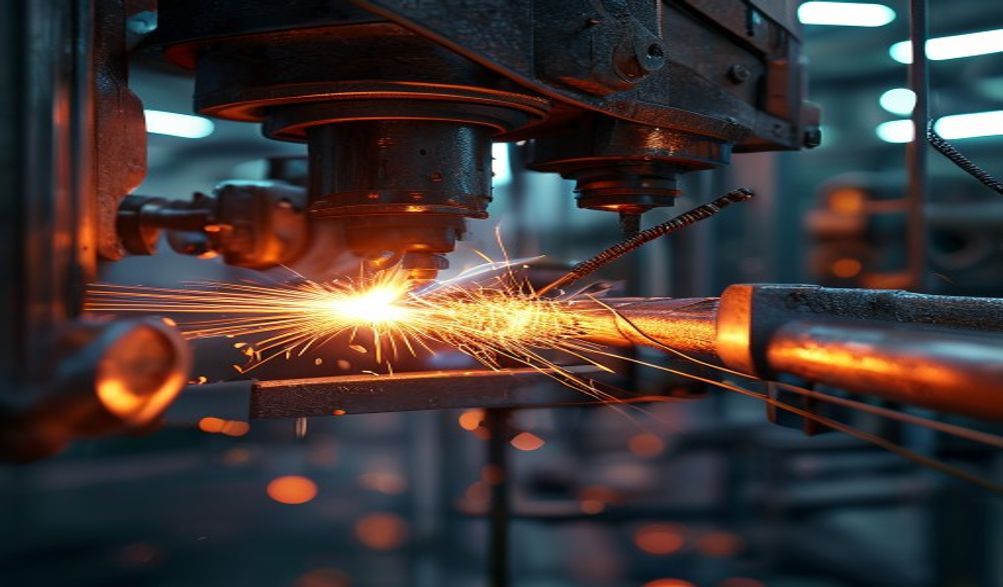
Cómo Elegir una Máquina para Hacer Fuerza de Ladrillo: Guía de Compra para Expertos 2024
Introducción
En el mundo de la construcción moderna, la integridad de un muro de ladrillo depende de lo que hay en su interior. El refuerzo para mampostería, o malla de alambre soldado, es el héroe invisible de la albañilería: una capa de refuerzo crítica que combate las grietas, distribuye el estrés y garantiza la estabilidad estructural a largo plazo. Para los fabricantes de materiales de construcción, los gerentes de planta y los contratistas astutos, invertir en una máquina para fabricar refuerzo para mampostería no es solo una compra; es una decisión estratégica que define su capacidad de producción, la calidad del producto y, en última instancia, su rentabilidad.
Sin embargo, navegar por el mercado de esta maquinaria especializada está lleno de riesgos. Seleccionar la máquina incorrecta puede atrapar a tu negocio en un ciclo de fallas mecánicas, producción inconsistente, costos de mantenimiento exorbitantes y peligros operativos peligrosos. Las apuestas son altas y la jerga técnica puede ser abrumadora.
Esta guía integral está diseñada para desentrañar la complejidad. Te transformaremos de un comprador curioso a un tomador de decisiones informado, analizando los factores técnicos, operativos y comerciales esenciales que debes evaluar. Sintetizando estándares de la industria, especificaciones de ingeniería y experiencia operativa ganada con esfuerzo, este recurso ofrece consejos confiables y prácticos para dueños de fábricas de materiales de construcción, oficiales de adquisiciones y emprendedores listos para invertir en su futuro productivo.
Comprendiendo la Fuerza del Ladrillo y los Fundamentos de su Producción
Antes de evaluar las máquinas, debes comprender el producto que están diseñadas para crear. Este conocimiento fundamental es clave para realizar una compra inteligente.
¿Qué es Brick Force (Malla de Alambre Soldado)?
La fuerza de ladrillo es una malla de alambres de acero soldados en sus intersecciones. Se incrusta en el lecho de mortero entre las hiladas de ladrillos, creando una estructura compuesta reforzada que mejora significativamente la resistencia a la tracción del muro.
- Aplicaciones Principales:Su uso principal es en la construcción de muros de cavidad y refuerzo de mampostería, donde une las capas interna y externa, previene la propagación de grietas y mejora la resistencia a fuerzas laterales.
- Especificaciones Estándar:Generalmente se fabrica con alambre de acero dulce, a menudo galvanizado para resistencia a la corrosión. Los diámetros comunes del alambre varían de 2.5 mm a 4 mm, con tamaños de malla (la distancia entre alambres) típicamente de 50 mm x 50 mm, 75 mm x 75 mm, o 100 mm x 100 mm.
Cómo Funciona una Máquina para Hacer Fuerza de Ladrillo
En esencia, una máquina de fabricación de malla electrosoldada automatiza la transformación de alambre en rollo en paneles o rollos de malla terminados. El proceso es una maravilla de la ingeniería de precisión:
- Alimentación y Estirado de Alambre:Las bobinas de alambre se cargan y se alimentan a la máquina.
- Alisado:El alambre pasa por una serie de rodillos para eliminar cualquier curvatura.
- Posicionamiento y Soldadura:Los alambres longitudinales están espaciados y los alambres transversales se alimentan a intervalos precisos. En cada intersección, una soldadora por resistencia eléctrica suministra una corriente rápida y potente, fusionando los alambres entre sí.
- Corte:La malla continua se corta a la longitud requerida.
- Apilamiento/Enrollamiento:Los paneles de malla terminados se apilan automáticamente, o la malla se enrolla para la producción en rollos.
El valor definitivo de la máquina radica en realizar estos pasos automáticamente, con alta velocidad, repetibilidad y mínima intervención manual.
Especificaciones Clave de la Máquina y Evaluación Técnica (La Lista de Verificación Principal)
Este es el núcleo de tu comparación. Equípate con esta lista de verificación al revisar folletos y cotizaciones de proveedores.
Capacidad de Producción y Velocidad
La producción generalmente se mide en metros cuadrados por hora. Esta cifra no es estática; depende en gran medida de la mezcla de productos.
- La Compensación:Una máquina producirá malla con alambres más delgados (por ejemplo, 2.5 mm) y un espaciado de malla más grande mucho más rápido que una malla densa con alambres gruesos (por ejemplo, 4 mm).
- Coincidencia de la Demanda:Analiza críticamente tus pedidos actuales y proyectados. Una máquina sobredimensionada consume capital y opera de manera ineficiente con baja utilización. Una máquina subdimensionada se convierte en un cuello de botella en la producción, incapaz de satisfacer la demanda y frenando el crecimiento. Elige un modelo que se alinee con tu pronóstico empresarial realista a 3-5 años.
Diámetro del Alambre y Rango de Tamaño de Malla
La versatilidad es un activo clave. Tu máquina debe adaptarse a todo tu catálogo de productos planeado.
- Rango de Calibre del Cable:Una máquina podría manejar alambre de 2.0 mm a 5.0 mm. Asegúrate de que cubra todos los diámetros que planeas usar. Forzar una máquina hasta su límite mínimo o máximo absoluto puede afectar su rendimiento y desgaste.
- Ajustabilidad de la Malla:La máquina debe permitir un ajuste fácil tanto del espaciado del alambre longitudinal (ancho de la malla) como del espaciado del alambre transversal (largo de la malla). Verifique el mecanismo de ajuste: ¿es un proceso manual y lento, o un ajuste digital rápido mediante un PLC?
Tecnología de Soldadura y Energía
El punto de soldadura es el alma del producto. Una soldadura débil vuelve inútil la malla.
- Soldadura por Resistencia:Este es el estándar. Funciona al pasar una corriente alta a través de los cables en la intersección, generando calor mediante resistencia eléctrica y creando una soldadura por fusión.
- Potencia del Transformador (kVA):Un transformador más potente (por ejemplo, 150 kVA frente a 90 kVA) puede generar soldaduras más resistentes, manejar alambres más gruesos y potencialmente soldar más rápido. También afecta la carga eléctrica de tu fábrica. No solo compares números; solicita datos de prueba de resistencia al corte de la soldadura.
Nivel de Automatización y Sistema de Control
Esta es una diferencia clave entre las máquinas básicas y las avanzadas.
- Semiautomático vs. Automático Completo:Los modelos semiautomáticos pueden requerir alimentación manual del alambre o manejo de la salida. Las líneas completamente automáticas gestionan todo desde la carga de la bobina hasta el apilado con una intervención mínima del operador.
- La Ventaja del PLC: A Programmable Logic Controller (PLC) is the machine’s brain. It ensures precision, stores recipes for different mesh sizes, provides diagnostic fault codes, and simplifies operation.
- Interfaz Hombre-Máquina (HMI): The touchscreen should be intuitive, logically organized, and display clear information. A confusing interface leads to operator error and downtime.
Critical Factors Beyond the Spec Sheet
These experience-driven insights separate a good purchase from a great one. They determine your daily operational reality for the next decade.
Build Quality and Core Components
The spec sheet might list “welding transformer,” but not its brand or expected lifespan. Dig deeper.
- Marco y Construcción: The frame must be heavy-duty steel to withstand constant vibration. A flimsy frame will lead to alignment issues and poor weld quality.
- Componentes Críticos: Inquire about the brands of the core parts:
- Welding Transformer & Controller: Reputable brands ensure stability.
- Wire Straightening Blocks: High-quality, hardened steel blocks last longer and maintain precision.
- Motores de Servo: For feeding and cutting, precision servos are superior to standard stepper motors.
- Sistema de Corte: Are the blades durable and easy to replace?
Manufacturer Reputation and Support (A Pillar of Trustworthiness)
You are not just buying a machine; you are entering a long-term partnership with the supplier.
- Research: How long have they been in business? Can they provide a list of client references (preferably in your region)? Do they have a track record of successful installations?
- After-Sales Service (Non-Negotiable): This is your insurance policy. What does their service package include?
- On-site installation and commissioning?
- Comprehensive operator and maintenance training?
- Availability of a local service engineer or a guaranteed response time?
- A clear warranty (e.g., 1 year on the whole machine, 2 years on the transformer)?
- Refacciones: Is there a readily available spare parts inventory? What are the lead times and costs for common wear parts like electrodes and straightening dies?
Safety Features and Compliance
A safe machine is a well-designed machine. Never compromise here.
- Essential Features: Look for full perimeter safety guarding with interlocked gates (machine stops if a gate is opened), emergency stop buttons at multiple points, proper electrical enclosures, and clear safety signage.
- Certificaciones: For many markets, CE certification (or its local equivalent) is mandatory. It indicates the machine meets essential health, safety, and environmental protection requirements.
Financial and Operational Considerations
Ground your technical excitement in cold, hard business reality.
Total Cost of Ownership (TCO) Analysis
The purchase price is just the entry ticket. The real cost unfolds over years.
| Cost Factor | Details & Questions to Ask |
| :— | :— |
| Purchase Price | The initial invoice cost. |
| Installation & Commissioning | Is it included? If not, what are the estimated costs? |
| Training | Is operator and maintenance training provided on-site? |
| Consumo de Energía | What is the machine’s average power draw (kWh)? This is a major recurring cost. |
| Routine Maintenance | Cost of lubricants, cleaning supplies, and routine parts. |
| Spare Parts | Get a price list for high-wear items. |
| Potential Downtime | The hidden killer. A cheaper, unreliable machine can cost more in lost production than a premium model. |
Space, Power, and Utility Requirements
Ensure your facility is ready.
- Floor Space: Account for the machine’s footprint plus space for material handling (wire coil storage, finished mesh staging, and access for maintenance).
- Servicios públicos Confirm the required electrical supply (e.g., 380V, 3-phase, 50Hz). Many machines also require a clean, dry compressed air supply for pneumatic components. Verify the required pressure and flow rate.
The Supplier Selection and Procurement Process
Follow a disciplined process to mitigate risk.
- Research & Shortlist: Use this guide to identify your needs, then find 3-5 reputable suppliers that match your criteria.
- Request for Quotation (RFQ): Send a detailed RFQ specifying your required wire range, mesh sizes, desired automation level, and output targets.
- Evaluate Quotes: Compare not just price, but the completeness of the offering. Scrutinize the specifications and the included service package.
- Check References: Contact the provided clients. Ask about machine reliability, product quality, and the supplier’s support responsiveness.
- The Crucial Step: Request a Demonstration. Insist on a live video demo producing mesh with your specified wire diameter. Observe the changeover process, the finished product quality, and the machine’s operation.
- Negotiate: Finalize price, payment terms (e.g., 30% deposit, 70% before shipment), delivery timeline, and the exact scope of after-sales support.
Frequently Asked Questions (FAQ)
Q1: What is the average price range for a brick force making machine?
A: Prices vary dramatically based on automation and capacity. A basic semi-automatic machine may start around $20,000 – $30,000. A mid-range, fully automatic PLC-controlled model typically falls between $50,000 – $80,000. High-speed, heavy-duty production lines can exceed $100,000. Always base your budget on detailed quotes for your specific requirements.
Q2: Can one machine produce different sizes of mesh?
A: Yes, adjustability is a standard feature. However, the ease and speed of changeover differ. On advanced machines, changing the mesh size can be a matter of selecting a stored program on the PLC. On simpler models, it may require manual adjustment of spacing guides, which takes more time and skill.
Q3: How many operators are needed to run the machine?
A: For a fully automatic line, one primary operator is often sufficient to load wire coils, monitor the control panel, and manage the output stacker. Semi-automatic models may require 2-3 people for manual feeding and handling of the finished mesh.
Q4: What are the most common maintenance tasks?
A: Daily and weekly maintenance is crucial:
* Cleaning welding electrodes to remove oxide buildup.
* Checking and adjusting wire feeders and straighteners.
* Lubricating all moving parts as per the manual.
* Inspecting electrical connections for tightness.
* Keeping the machine free of dust and debris.
Q5: How do I ensure the machine meets my local quality standards?
A: First, the machine must be capable of processing the correct grade of wire (e.g., to meet BS EN 845-3 or ASTM A951). The most definitive step is to produce samples on your shortlisted machine during a demo and submit them to an accredited construction materials laboratory for tensile and shear strength testing.
Conclusión
Choosing the right brick force making machine is a multidimensional decision. It requires balancing hard technical specifications—like production capacity and wire range—with softer, yet vital, factors like build quality, manufacturer reputation, and the true total cost of ownership.
Our final, strongest recommendation is this: prioritize reliable after-sales service and proven machine durability over the absolute lowest purchase price. In production, downtime is your greatest enemy. A slightly higher initial investment in a robust machine from a supportive supplier will pay for itself many times over in consistent output, lower maintenance costs, and long-term peace of mind.
Use this guide as your definitive checklist. Your logical next step is to engage with shortlisted suppliers, request those detailed quotations, and—most importantly—schedule a demonstration. By investing time in this informed selection process, you are not just buying a machine; you are securing a profitable and reliable asset that will fortify your business for years to come.
<