
Cara Memilih Mesin Pembuat Brick Force: Panduan Pembeli Ahli 2024
Pengantar
Dalam dunia konstruksi modern, integritas dinding bata bergantung pada apa yang ada di dalamnya. Brick force, atau anyaman kawat las, adalah pahlawan tak terlihat dalam pekerjaan batu—lapisan penguat kritis yang melawan retakan, mendistribusikan tekanan, dan memastikan stabilitas struktural jangka panjang. Bagi produsen bahan konstruksi, manajer pabrik, dan kontraktor yang cerdas, berinvestasi dalam mesin pembuat brick force bukan sekadar pembelian; itu adalah keputusan strategis yang menentukan kapabilitas produksi, kualitas produk, dan pada akhirnya, profitabilitas Anda.
Namun, menavigasi pasar untuk mesin khusus ini penuh dengan risiko. Memilih mesin yang salah dapat menjebak bisnis Anda dalam siklus kerusakan mekanis, hasil produksi yang tidak konsisten, biaya perawatan yang sangat tinggi, dan bahaya operasional yang berbahaya. Taruhannya tinggi, dan istilah teknisnya bisa sangat membingungkan.
Panduan komprehensif ini dirancang untuk memotong kompleksitas. Kami akan mengubah Anda dari pembeli yang penasaran menjadi pengambil keputusan yang terinformasi dengan membedah faktor-faktor teknis, operasional, dan komersial penting yang harus Anda evaluasi. Dengan mensintesis standar industri, spesifikasi teknik, dan pengalaman operasional yang diperoleh dengan susah payah, sumber daya ini memberikan saran tepercaya dan dapat ditindaklanjuti bagi pemilik pabrik bahan konstruksi, petugas pengadaan, dan pengusaha yang siap berinvestasi untuk masa depan produksi mereka.
Memahami Gaya Bata dan Dasar-Dasar Produksinya
Sebelum mengevaluasi mesin, Anda harus memahami produk yang mereka buat. Pengetahuan dasar ini adalah kunci untuk melakukan pembelian yang cerdas.
Apa itu Brick Force (Kawat Las Mesh)?
Brick force adalah kisi-kisi kawat baja yang dilas pada persimpangannya. Ia tertanam di lapisan mortar antara lapisan bata, menciptakan struktur komposit bertulang yang secara signifikan meningkatkan kekuatan tarik dinding.
- Aplikasi Utama:Penggunaan utamanya adalah dalam konstruksi dinding rongga dan penguatan pasangan bata, di mana ia menghubungkan lapisan dalam dan luar bersama-sama, mencegah perambatan retak, serta meningkatkan ketahanan terhadap gaya lateral.
- Spesifikasi Standar:Biasanya terbuat dari kawat baja ringan, sering kali digalvanisasi untuk ketahanan korosi. Diameter kawat umumnya berkisar antara 2,5mm hingga 4mm, dengan ukuran mesh (jarak antar kawat) biasanya 50mm x 50mm, 75mm x 75mm, atau 100mm x 100mm.
Cara Kerja Mesin Pembuat Bata
Inti dari mesin bata paksa adalah mengotomatisasi transformasi kawat gulungan menjadi panel jaring jadi atau gulungan. Proses ini merupakan keajaiban teknik presisi:
- Pemberian dan Penarikan Kawat:Gulungan kawat dimuat dan dimasukkan ke dalam mesin.
- Meluruskan:Kawat melewati serangkaian rol untuk menghilangkan kelengkungan apa pun.
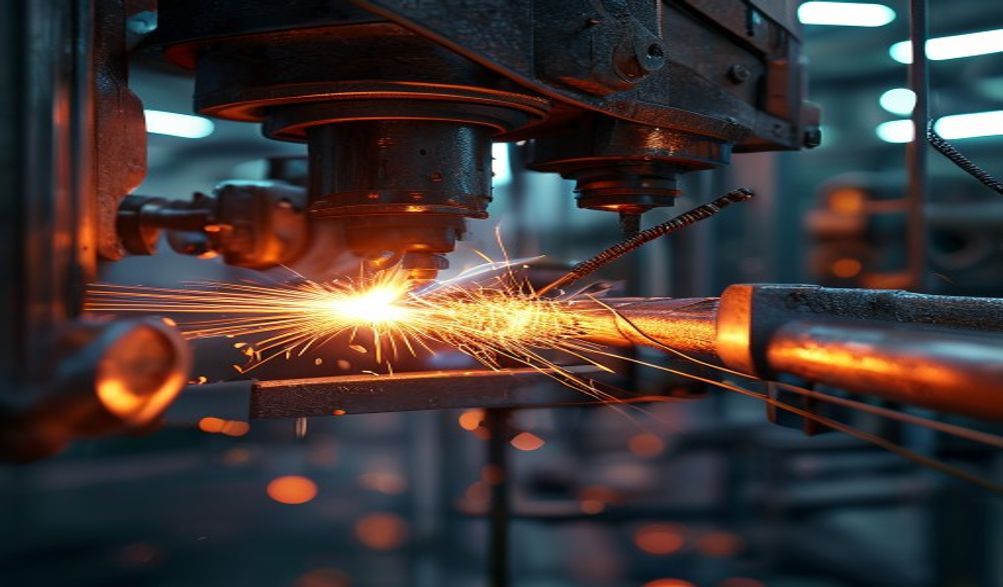
- Penempatan & Pengelasan:Kawat longitudinal ditempatkan dengan jarak tertentu, dan kawat transversal dimasukkan pada interval yang tepat. Pada setiap persimpangan, mesin las resistansi listrik mengalirkan arus yang cepat dan kuat, menyatukan kawat-kawat tersebut.
- Pemotongan:Jaring kontinu dipotong sesuai panjang yang dibutuhkan.
- Penumpukan/Pelilitan:Panel mesh yang telah selesai secara otomatis ditumpuk, atau mesh digulung untuk produksi roll.
Nilai utama mesin terletak pada kemampuannya untuk melakukan langkah-langkah ini secara otomatis, dengan kecepatan tinggi, keterulangan, dan intervensi manual yang minimal.
Spesifikasi Utama Mesin dan Evaluasi Teknis (Daftar Periksa Inti)
Ini adalah inti dari perbandingan Anda. Bekali diri dengan daftar periksa ini saat meninjau brosur dan penawaran dari pemasok.
Kapasitas Produksi & Kecepatan
Output biasanya diukur dalam meter persegi per jam. Angka ini tidak statis; sangat bergantung pada campuran produk Anda.
- Kompromi:Sebuah mesin akan menghasilkan jaring dengan kawat lebih kecil (misalnya, 2,5mm) dan jarak antar jaring yang lebih besar jauh lebih cepat daripada jaring padat dengan kawat tebal (misalnya, 4mm).
- Mencocokkan Permintaan:Analisis secara kritis pesanan saat ini dan yang diproyeksikan. Mesin yang terlalu besar menguras modal dan beroperasi tidak efisien pada tingkat utilisasi rendah. Mesin yang terlalu kecil menjadi hambatan produksi, gagal memenuhi permintaan, dan menghambat pertumbuhan. Pilih model yang selaras dengan perkiraan bisnis realistis Anda untuk 3-5 tahun ke depan.
Wire Diameter and Mesh Size Range
Versatility is a key asset. Your machine should accommodate your entire planned product catalog.
- Wire Gauge Range: A machine might handle 2.0mm – 5.0mm wire. Ensure it covers all the diameters you intend to use. Pushing a machine to its absolute minimum or maximum can affect performance and wear.
- Mesh Adjustability: The machine must allow easy adjustment of both the longitudinal wire spacing (mesh width) and the transverse wire spacing (mesh length). Check the adjustment mechanism—is it a manual, time-consuming process, or a quick digital adjustment via a PLC?
Welding Technology and Power
The weld point is the soul of the product. A weak weld renders the mesh useless.
- Resistance Welding: This is the standard. It works by passing a high current through the wires at the intersection, generating heat through electrical resistance and creating a fusion weld.
- Transformer Power (kVA): A more powerful transformer (e.g., 150 kVA vs. 90 kVA) can generate stronger welds, handle thicker wires, and potentially weld faster. It also impacts your factory’s electrical load. Don’t just compare numbers; ask for weld shear strength test data.
Automation Level and Control System
This is a major differentiator between basic and advanced machines.
- Semi-Otomatis vs. Otomatis Penuh: Semi-auto models may require manual wire feeding or output handling. Fully automatic lines manage everything from coil loading to stacking with minimal operator input.
- The PLC Advantage: A Programmable Logic Controller (PLC) is the machine’s brain. It ensures precision, stores recipes for different mesh sizes, provides diagnostic fault codes, and simplifies operation.
- Antarmuka Manusia-Mesin (HMI) The touchscreen should be intuitive, logically organized, and display clear information. A confusing interface leads to operator error and downtime.
Critical Factors Beyond the Spec Sheet
These experience-driven insights separate a good purchase from a great one. They determine your daily operational reality for the next decade.
Build Quality and Core Components
The spec sheet might list “welding transformer,” but not its brand or expected lifespan. Dig deeper.
- Bingkai & Konstruksi: The frame must be heavy-duty steel to withstand constant vibration. A flimsy frame will lead to alignment issues and poor weld quality.
- Komponen Kritis: Inquire about the brands of the core parts:
- Welding Transformer & Controller: Reputable brands ensure stability.
- Wire Straightening Blocks: High-quality, hardened steel blocks last longer and maintain precision.
- Motor Servo: For feeding and cutting, precision servos are superior to standard stepper motors.
- Sistem Pemotongan: Are the blades durable and easy to replace?
Manufacturer Reputation and Support (A Pillar of Trustworthiness)
You are not just buying a machine; you are entering a long-term partnership with the supplier.
- Research: How long have they been in business? Can they provide a list of client references (preferably in your region)? Do they have a track record of successful installations?
- After-Sales Service (Non-Negotiable): This is your insurance policy. What does their service package include?
- On-site installation and commissioning?
- Comprehensive operator and maintenance training?
- Availability of a local service engineer or a guaranteed response time?
- A clear warranty (e.g., 1 year on the whole machine, 2 years on the transformer)?
- Suku Cadang: Is there a readily available spare parts inventory? What are the lead times and costs for common wear parts like electrodes and straightening dies?
Safety Features and Compliance
A safe machine is a well-designed machine. Never compromise here.
- Essential Features: Look for full perimeter safety guarding with interlocked gates (machine stops if a gate is opened), emergency stop buttons at multiple points, proper electrical enclosures, and clear safety signage.
- Sertifikasi: For many markets, CE certification (or its local equivalent) is mandatory. It indicates the machine meets essential health, safety, and environmental protection requirements.
Financial and Operational Considerations
Ground your technical excitement in cold, hard business reality.
Total Cost of Ownership (TCO) Analysis
The purchase price is just the entry ticket. The real cost unfolds over years.
| Cost Factor | Details & Questions to Ask |
| :— | :— |
| Purchase Price | The initial invoice cost. |
| Installation & Commissioning | Is it included? If not, what are the estimated costs? |
| Training | Is operator and maintenance training provided on-site? |
| Energy Consumption | What is the machine’s average power draw (kWh)? This is a major recurring cost. |
| Routine Maintenance | Cost of lubricants, cleaning supplies, and routine parts. |
| Spare Parts | Get a price list for high-wear items. |
| Potential Downtime | The hidden killer. A cheaper, unreliable machine can cost more in lost production than a premium model. |
Space, Power, and Utility Requirements
Ensure your facility is ready.
- Floor Space: Account for the machine’s footprint plus space for material handling (wire coil storage, finished mesh staging, and access for maintenance).
- Utilities: Confirm the required electrical supply (e.g., 380V, 3-phase, 50Hz). Many machines also require a clean, dry compressed air supply for pneumatic components. Verify the required pressure and flow rate.
The Supplier Selection and Procurement Process
Follow a disciplined process to mitigate risk.
- Research & Shortlist: Use this guide to identify your needs, then find 3-5 reputable suppliers that match your criteria.
- Request for Quotation (RFQ): Send a detailed RFQ specifying your required wire range, mesh sizes, desired automation level, and output targets.
- Evaluate Quotes: Compare not just price, but the completeness of the offering. Scrutinize the specifications and the included service package.
- Check References: Contact the provided clients. Ask about machine reliability, product quality, and the supplier’s support responsiveness.
- The Crucial Step: Request a Demonstration. Insist on a live video demo producing mesh with your specified wire diameter. Observe the changeover process, the finished product quality, and the machine’s operation.
- Negotiate: Finalize price, payment terms (e.g., 30% deposit, 70% before shipment), delivery timeline, and the exact scope of after-sales support.
Pertanyaan yang Sering Diajukan (FAQ)
Q1: What is the average price range for a brick force making machine?
A: Prices vary dramatically based on automation and capacity. A basic semi-automatic machine may start around $20,000 – $30,000. A mid-range, fully automatic PLC-controlled model typically falls between $50,000 – $80,000. High-speed, heavy-duty production lines can exceed $100,000. Always base your budget on detailed quotes for your specific requirements.
Q2: Can one machine produce different sizes of mesh?
A: Yes, adjustability is a standard feature. However, the ease and speed of changeover differ. On advanced machines, changing the mesh size can be a matter of selecting a stored program on the PLC. On simpler models, it may require manual adjustment of spacing guides, which takes more time and skill.
Q3: How many operators are needed to run the machine?
A: For a fully automatic line, one primary operator is often sufficient to load wire coils, monitor the control panel, and manage the output stacker. Semi-automatic models may require 2-3 people for manual feeding and handling of the finished mesh.
Q4: What are the most common maintenance tasks?
A: Daily and weekly maintenance is crucial:
* Cleaning welding electrodes to remove oxide buildup.
* Checking and adjusting wire feeders and straighteners.
* Lubricating all moving parts as per the manual.
* Inspecting electrical connections for tightness.
* Keeping the machine free of dust and debris.
Q5: How do I ensure the machine meets my local quality standards?
A: First, the machine must be capable of processing the correct grade of wire (e.g., to meet BS EN 845-3 or ASTM A951). The most definitive step is to produce samples on your shortlisted machine during a demo and submit them to an accredited construction materials laboratory for tensile and shear strength testing.
Kesimpulan
Choosing the right brick force making machine is a multidimensional decision. It requires balancing hard technical specifications—like production capacity and wire range—with softer, yet vital, factors like build quality, manufacturer reputation, and the true total cost of ownership.
Our final, strongest recommendation is this: prioritize reliable after-sales service and proven machine durability over the absolute lowest purchase price. In production, downtime is your greatest enemy. A slightly higher initial investment in a robust machine from a supportive supplier will pay for itself many times over in consistent output, lower maintenance costs, and long-term peace of mind.
Use this guide as your definitive checklist. Your logical next step is to engage with shortlisted suppliers, request those detailed quotations, and—most importantly—schedule a demonstration. By investing time in this informed selection process, you are not just buying a machine; you are securing a profitable and reliable asset that will fortify your business for years to come.
<