
Como Escolher uma Máquina para Fabricar Vergalhões de Tijolo: Um Guia de Compra Especializado para 2024
Introdução
No mundo da construção moderna, a integridade de uma parede de tijolos depende do que está em seu interior. A armadura para alvenaria, ou tela soldada, é o herói invisível da alvenaria — uma camada crítica de reforço que combate rachaduras, distribui tensões e garante estabilidade estrutural a longo prazo. Para fabricantes de materiais de construção, gerentes de fábrica e empreiteiros experientes, investir em uma máquina de fazer armadura para alvenaria não é apenas uma compra; é uma decisão estratégica que define sua capacidade de produção, a qualidade do produto e, em última análise, sua lucratividade.
No entanto, navegar pelo mercado dessa maquinaria especializada está repleto de riscos. Escolher a máquina errada pode prender seu negócio em um ciclo de quebras mecânicas, produção inconsistente, custos de manutenção exorbitantes e perigos operacionais perigosos. As apostas são altas, e o jargão técnico pode ser avassalador.
Este guia abrangente foi projetado para simplificar a complexidade. Transformaremos você de um comprador curioso em um tomador de decisão informado, dissecando os fatores técnicos, operacionais e comerciais essenciais que você deve avaliar. Sintetizando padrões do setor, especificações de engenharia e experiência operacional duramente conquistada, este recurso oferece conselhos confiáveis e acionáveis para proprietários de fábricas de materiais de construção, agentes de compras e empreendedores prontos para investir em seu futuro produtivo.
Compreendendo a Força do Tijolo e Seus Fundamentos de Produção
Antes de avaliar as máquinas, você deve entender o produto que elas foram construídas para criar. Esse conhecimento fundamental é essencial para fazer uma compra inteligente.
O que é Brick Force (Malha de Arame Soldado)?
A armadura de alvenaria é uma grade de fios de aço soldados em suas interseções. Ela é embutida na camada de argamassa entre os cursos de tijolos, criando uma estrutura composta reforçada que aumenta significativamente a resistência à tração da parede.
- Aplicações Principais:Seu uso principal é na construção de paredes de alvenaria e reforço de alvenaria, onde une as camadas interna e externa, impede a propagação de fissuras e melhora a resistência a forças laterais.
- Especificações Padrão:É tipicamente fabricado a partir de arame de aço de baixo carbono, frequentemente galvanizado para resistência à corrosão. Os diâmetros comuns do arame variam de 2,5 mm a 4 mm, com tamanhos de malha (a distância entre os arames) sendo tipicamente 50 mm x 50 mm, 75 mm x 75 mm ou 100 mm x 100 mm.
Como uma Máquina de Fabricação de Força de Tijolos Funciona
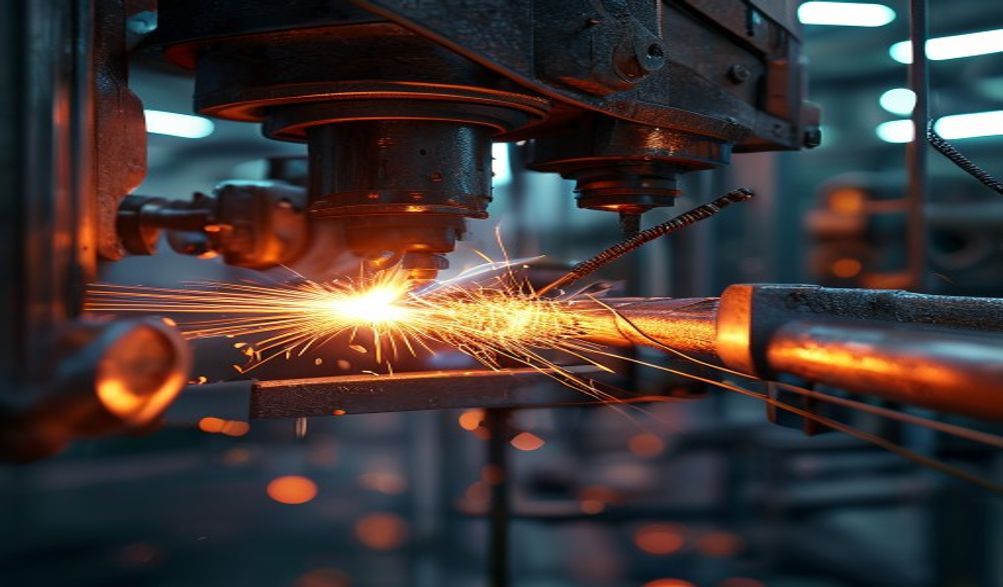
Em sua essência, uma máquina de força de tijolo automatiza a transformação de arame enrolado em painéis ou rolos de tela acabados. O processo é uma maravilha da engenharia de precisão:
- Alimentação e Estiramento de Fio:Bobinas de fio são carregadas e alimentadas na máquina.
- Alisamento:O fio passa por uma série de rolos para remover qualquer curvatura.
- Posicionamento & Soldagem:Os fios longitudinais são espaçados, e os fios transversais são alimentados em intervalos precisos. Em cada interseção, uma soldadora por resistência elétrica aplica uma corrente rápida e potente, fundindo os fios juntos.
- Corte:A malha contínua é cortada no comprimento necessário.
- Empilhamento/Enrolamento:As placas de malha acabadas são automaticamente empilhadas, ou a malha é enrolada para produção em rolos.
O valor definitivo da máquina reside em realizar essas etapas automaticamente, com alta velocidade, repetibilidade e intervenção manual mínima.
Especificações Principais da Máquina e Avaliação Técnica (A Lista de Verificação Essencial)
Este é o cerne da sua comparação. Equipe-se com esta lista de verificação ao analisar folhetos e orçamentos de fornecedores.
Capacidade de Produção e Velocidade
A produção geralmente é medida em metros quadrados por hora. Esse número não é estático; depende muito da sua mistura de produtos.
- A Troca:Uma máquina produzirá malha com arames menores (por exemplo, 2,5 mm) e espaçamento maior da malha muito mais rápido do que malha densa com arames grossos (por exemplo, 4 mm).
- Correspondência da Demanda:Analise criticamente seus pedidos atuais e projetados. Uma máquina superdimensionada drena capital e opera de forma ineficiente com baixa utilização. Uma máquina subdimensionada se torna um gargalo de produção, falhando em atender a demanda e limitando o crescimento. Escolha um modelo que esteja alinhado com sua previsão empresarial realista para os próximos 3 a 5 anos.
Diâmetro do Fio e Faixa de Tamanho da Malha
Versatilidade é um ativo fundamental. Sua máquina deve acomodar todo o catálogo de produtos planejado.
- Faixa de Bitola do Fio:Uma máquina pode suportar fio de 2,0mm a 5,0mm. Certifique-se de que ela abranja todos os diâmetros que você pretende usar. Forçar uma máquina ao seu limite mínimo ou máximo absoluto pode afetar o desempenho e o desgaste.
- Ajustabilidade da Malha:A máquina deve permitir o ajuste fácil tanto do espaçamento longitudinal dos fios (largura da malha) quanto do espaçamento transversal dos fios (comprimento da malha). Verifique o mecanismo de ajuste—é um processo manual e demorado, ou um ajuste digital rápido via CLP?
Tecnologia de Soldagem e Energia
The weld point is the soul of the product. A weak weld renders the mesh useless.
- Resistance Welding: This is the standard. It works by passing a high current through the wires at the intersection, generating heat through electrical resistance and creating a fusion weld.
- Transformer Power (kVA): A more powerful transformer (e.g., 150 kVA vs. 90 kVA) can generate stronger welds, handle thicker wires, and potentially weld faster. It also impacts your factory’s electrical load. Don’t just compare numbers; ask for weld shear strength test data.
Automation Level and Control System
This is a major differentiator between basic and advanced machines.
- Semi-Automático vs. Totalmente Automático: Semi-auto models may require manual wire feeding or output handling. Fully automatic lines manage everything from coil loading to stacking with minimal operator input.
- The PLC Advantage: A Programmable Logic Controller (PLC) is the machine’s brain. It ensures precision, stores recipes for different mesh sizes, provides diagnostic fault codes, and simplifies operation.
- Interface Homem-Máquina (IHM) The touchscreen should be intuitive, logically organized, and display clear information. A confusing interface leads to operator error and downtime.
Critical Factors Beyond the Spec Sheet
These experience-driven insights separate a good purchase from a great one. They determine your daily operational reality for the next decade.
Build Quality and Core Components
The spec sheet might list “welding transformer,” but not its brand or expected lifespan. Dig deeper.
- Estrutura e Construção: The frame must be heavy-duty steel to withstand constant vibration. A flimsy frame will lead to alignment issues and poor weld quality.
- Componentes Críticos: Inquire about the brands of the core parts:
- Welding Transformer & Controller: Reputable brands ensure stability.
- Wire Straightening Blocks: High-quality, hardened steel blocks last longer and maintain precision.
- Motores de Servo: For feeding and cutting, precision servos are superior to standard stepper motors.
- Sistema de Corte: Are the blades durable and easy to replace?
Manufacturer Reputation and Support (A Pillar of Trustworthiness)
You are not just buying a machine; you are entering a long-term partnership with the supplier.
- Research: How long have they been in business? Can they provide a list of client references (preferably in your region)? Do they have a track record of successful installations?
- After-Sales Service (Non-Negotiable): This is your insurance policy. What does their service package include?
- On-site installation and commissioning?
- Comprehensive operator and maintenance training?
- Availability of a local service engineer or a guaranteed response time?
- A clear warranty (e.g., 1 year on the whole machine, 2 years on the transformer)?
- Peças de Reposição: Is there a readily available spare parts inventory? What are the lead times and costs for common wear parts like electrodes and straightening dies?
Safety Features and Compliance
A safe machine is a well-designed machine. Never compromise here.
- Essential Features: Look for full perimeter safety guarding with interlocked gates (machine stops if a gate is opened), emergency stop buttons at multiple points, proper electrical enclosures, and clear safety signage.
- Certificações: For many markets, CE certification (or its local equivalent) is mandatory. It indicates the machine meets essential health, safety, and environmental protection requirements.
Financial and Operational Considerations
Ground your technical excitement in cold, hard business reality.
Total Cost of Ownership (TCO) Analysis
The purchase price is just the entry ticket. The real cost unfolds over years.
| Cost Factor | Details & Questions to Ask |
| :— | :— |
| Preço de Compra | The initial invoice cost. |
| Installation & Commissioning | Is it included? If not, what are the estimated costs? |
| Training | Is operator and maintenance training provided on-site? |
| Energy Consumption | What is the machine’s average power draw (kWh)? This is a major recurring cost. |
| Routine Maintenance | Cost of lubricants, cleaning supplies, and routine parts. |
| Spare Parts | Get a price list for high-wear items. |
| Potential Downtime | The hidden killer. A cheaper, unreliable machine can cost more in lost production than a premium model. |
Space, Power, and Utility Requirements
Ensure your facility is ready.
- Floor Space: Account for the machine’s footprint plus space for material handling (wire coil storage, finished mesh staging, and access for maintenance).
- Utilitários: Confirm the required electrical supply (e.g., 380V, 3-phase, 50Hz). Many machines also require a clean, dry compressed air supply for pneumatic components. Verify the required pressure and flow rate.
The Supplier Selection and Procurement Process
Follow a disciplined process to mitigate risk.
- Research & Shortlist: Use this guide to identify your needs, then find 3-5 reputable suppliers that match your criteria.
- Request for Quotation (RFQ): Send a detailed RFQ specifying your required wire range, mesh sizes, desired automation level, and output targets.
- Evaluate Quotes: Compare not just price, but the completeness of the offering. Scrutinize the specifications and the included service package.
- Check References: Contact the provided clients. Ask about machine reliability, product quality, and the supplier’s support responsiveness.
- The Crucial Step: Request a Demonstration. Insist on a live video demo producing mesh with your specified wire diameter. Observe the changeover process, the finished product quality, and the machine’s operation.
- Negotiate: Finalize price, payment terms (e.g., 30% deposit, 70% before shipment), delivery timeline, and the exact scope of after-sales support.
Perguntas Frequentes (FAQ)
Q1: What is the average price range for a brick force making machine?
A: Prices vary dramatically based on automation and capacity. A basic semi-automatic machine may start around $20,000 – $30,000. A mid-range, fully automatic PLC-controlled model typically falls between $50,000 – $80,000. High-speed, heavy-duty production lines can exceed $100,000. Always base your budget on detailed quotes for your specific requirements.
Q2: Can one machine produce different sizes of mesh?
A: Yes, adjustability is a standard feature. However, the ease and speed of changeover differ. On advanced machines, changing the mesh size can be a matter of selecting a stored program on the PLC. On simpler models, it may require manual adjustment of spacing guides, which takes more time and skill.
Q3: How many operators are needed to run the machine?
A: For a fully automatic line, one primary operator is often sufficient to load wire coils, monitor the control panel, and manage the output stacker. Semi-automatic models may require 2-3 people for manual feeding and handling of the finished mesh.
Q4: What are the most common maintenance tasks?
A: Daily and weekly maintenance is crucial:
* Cleaning welding electrodes to remove oxide buildup.
* Checking and adjusting wire feeders and straighteners.
* Lubricating all moving parts as per the manual.
* Inspecting electrical connections for tightness.
* Keeping the machine free of dust and debris.
Q5: How do I ensure the machine meets my local quality standards?
A: First, the machine must be capable of processing the correct grade of wire (e.g., to meet BS EN 845-3 or ASTM A951). The most definitive step is to produce samples on your shortlisted machine during a demo and submit them to an accredited construction materials laboratory for tensile and shear strength testing.
Conclusão
Choosing the right brick force making machine is a multidimensional decision. It requires balancing hard technical specifications—like production capacity and wire range—with softer, yet vital, factors like build quality, manufacturer reputation, and the true total cost of ownership.
Our final, strongest recommendation is this: prioritize reliable after-sales service and proven machine durability over the absolute lowest purchase price. In production, downtime is your greatest enemy. A slightly higher initial investment in a robust machine from a supportive supplier will pay for itself many times over in consistent output, lower maintenance costs, and long-term peace of mind.
Use this guide as your definitive checklist. Your logical next step is to engage with shortlisted suppliers, request those detailed quotations, and—most importantly—schedule a demonstration. By investing time in this informed selection process, you are not just buying a machine; you are securing a profitable and reliable asset that will fortify your business for years to come.
<