
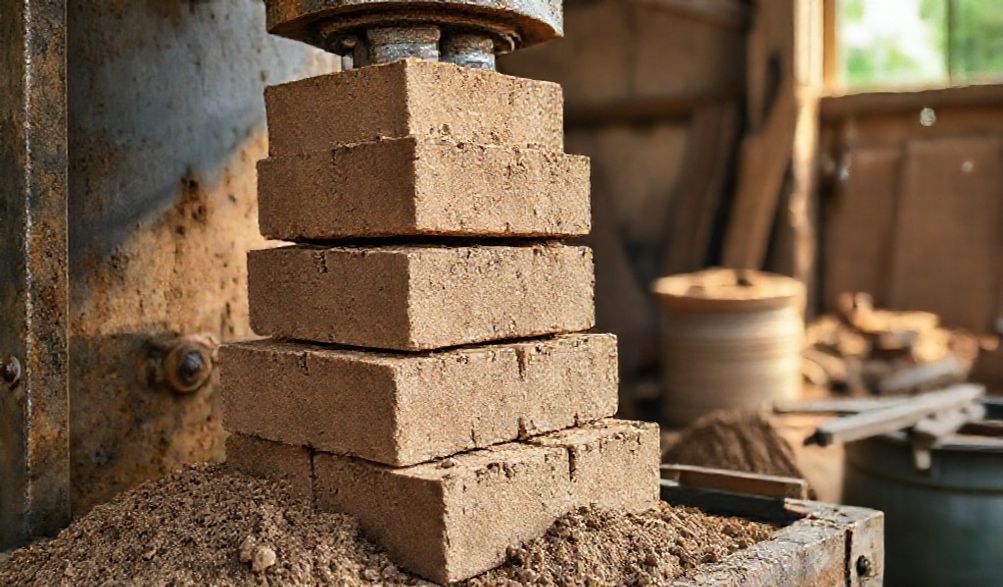
La Guía Definitiva sobre Máquinas para Hacer Ladrillos de Tierra: Construye de Forma Sostenible y Ahorra Costos
Imagina construir edificios duraderos y ecológicos utilizando la misma tierra bajo tus pies. Esto no es un regreso a métodos primitivos, sino un salto hacia un futuro más inteligente y responsable. Durante milenios, civilizaciones desde los romanos hasta el Valle del Indo han levantado estructuras perdurables con tierra. Hoy, la modernaMáquinas para hacer ladrillos de tierratransformar esta sabiduría ancestral en una solución escalable, asequible y eficiente para constructores, desarrolladores, agricultores y eco-emprendedores modernos.
Ya sea que tu objetivo sea reducir los costos de materiales de construcción hasta en un 50%, emprender un proyecto de construcción verdaderamente sostenible o iniciar un negocio viable de fabricación a pequeña escala, dominar esta tecnología es el primer paso crucial. Esta guía está diseñada para ser tu recurso integral. Sintetizamos décadas de principios de ingeniería, experiencia práctica en campo con diversas máquinas y las mejores prácticas probadas de la industria para ofrecerte información confiable y accionable. Iremos más allá del bombo publicitario y las afirmaciones de mercadotecnia para darte una comprensión clara y segura.
Esto es lo que cubriremos: cómo funcionan estas máquinas innovadoras, sus convincentes beneficios, los diferentes tipos disponibles para adaptarse a tu escala, los factores críticos para elegir el modelo correcto y un recorrido realista de todo el proceso operativo, desde la tierra hasta el muro terminado.
¿Qué es una Máquina para Hacer Ladrillos de Tierra y Cómo Funciona?
En esencia, una máquina para fabricar ladrillos de tierra es una herramienta de empoderamiento. Te permite transformar un recurso disponible localmente—la tierra—en un material de construcción estandarizado y de alta calidad.
Definición Central
Una máquina para fabricar ladrillos de tierra es un dispositivo diseñado para comprimir una mezcla específica de tierra (generalmente subsuelo), un pequeño porcentaje de un estabilizador como cemento o cal, y agua, formando ladrillos o bloques uniformes de alta densidad. La diferencia clave con la fabricación tradicional de ladrillos es que estos adquieren su resistencia mediante compactación y estabilización química.nomediante cocción en un horno de alto consumo energético. Los productos resultantes se conocen como Bloques de Tierra Comprimida Estabilizada (BTC) o Bloques de Suelo Estabilizado.
La Ciencia de la Estabilización
¿Por qué agregar cemento o cal? Esta es la ingeniería detrás de la simplicidad. El suelo solo, cuando se compacta, tiene cohesión pero puede erosionarse con el agua y perder resistencia. Un estabilizador (generalmente 5-10% de cemento Portland o 5-15% de cal) actúa como un agente aglutinante.
- Une químicamente las partículas del suelo.
- Reduce drásticamente la susceptibilidad del ladrillo al daño por agua.
- Proporciona una resistencia a la compresión consistente y confiable que cumple o supera a muchos materiales de construcción convencionales.
Este proceso de estabilización es lo que hace que los ladrillos sean lo suficientemente duraderos para estructuras permanentes y de carga en diversos climas.
El Proceso Mecánico – Paso a Paso
La operación, sin importar el tipo de máquina, sigue una secuencia lógica de cuatro etapas.
-
Preparación de Materiales:La base de un buen ladrillo. Primero se cierne la tierra para eliminar piedras, raíces y materia orgánica. Luego se mezcla con el porcentaje preciso de estabilizador y suficiente agua para alcanzar el contenido de humedad óptimo—generalmente húmeda, no empapada. La homogeneidad es crítica.
-
Compactación:Aquí es donde la máquina hace su magia. La mezcla preparada se introduce en una cámara de molde de acero. Luego, un émbolo o pistón aplica una presión inmensa—a menudo medida en toneladas—para comprimir la mezcla. Esta compactación a alta presión elimina las bolsas de aire y alinea las partículas, creando una matriz densa y resistente.
-
Eyección:Una vez comprimido, el ladrillo recién formado es expulsado del molde hacia una tarima o el suelo. Con máquinas manuales, esto implica levantar una palanca; con máquinas automáticas, es una parte fluida del ciclo.
-
Curado:La fase más paciente pero vital. Los ladrillos se apilan cuidadosamente, se mantienen húmedos (a menudo cubriéndolos con láminas de plástico) y se dejan curar durante un período, típicamente 28 días para la estabilización con cemento. Durante el curado, el estabilizador se hidrata y se une completamente, permitiendo que el ladrillo alcance su resistencia diseñada.
Principales Beneficios de Usar una Máquina para Hacer Ladrillos de Tierra
Adoptar la tecnología de ladrillos de tierra no se trata solo de fabricar ladrillos; se trata de adoptar un sistema con ventajas multifacéticas.
Excepcional Rentabilidad de Costos
El argumento económico es poderoso. Tu materia prima principal—la tierra—a menudo está disponible en el sitio o localmente a un costo mínimo. En comparación con los ladrillos de arcilla cocida o los bloques de concreto, eliminas los enormes costos energéticos de la cocción en horno y reduces la necesidad de materiales transportados.
- Reducción del Costo de Materiales:Ahorros de hasta 50-60% en materiales para muros son comunes.
- Bajo Costo Operativo: Machines, especially manual ones, have minimal energy requirements.
- High-Profit Potential: For entrepreneurs, the low input cost versus the market value of finished bricks creates an attractive business model.
Champion of Sustainability
This is where soil bricks truly shine, offering one of the lowest carbon footprints of any building material.
- Local & Natural: Utilizes locally sourced soil, drastically reducing transportation emissions.
- Baja Energía Incorporada: No high-temperature firing required.
- Minimal Waste: Production waste is near zero, and bricks are often biodegradable or reusable.
- Building Performance: Soil bricks have excellent thermal mass, naturally regulating indoor temperature by absorbing heat during the day and releasing it at night, reducing heating and cooling energy needs.
Durability and Performance
Don’t mistake “earth” for “weak.” Properly made CSEBs are robust construction materials.
- Alta Resistencia a la Compresión: Ranging from 5 to 10+ MPa, they are more than adequate for multi-story, load-bearing walls.
- Excelente Resistencia al Fuego: They are inherently non-combustible, offering superior fire safety.
- Moisture Buffering: They naturally absorb and release ambient humidity, contributing to healthier indoor air quality.
- Dimensional Stability: Precision machines produce uniform blocks that simplify and speed up construction.
Empowerment and Accessibility
The technology democratizes construction. It enables decentralized production, reducing dependency on large, centralized factories and long supply chains.
- Community Projects: Ideal for NGO-led housing, school, or clinic constructions.
- Local Entrepreneurship: Empowers individuals to start small manufacturing businesses.
- Self-Reliance: Allows landowners to build their own homes using resources from their own land.
Types of Soil Brick Making Machines: Choosing Your Workhorse
Selecting the right machine is pivotal. Your choice should be dictated by your project scale, budget, and labor availability.
Manual Press Machines (e.g., Cinva Ram style)
The entry point into the world of soil brick making.
- Mejor Para: Individual homeowners, small-scale DIY projects, NGOs with community labor, training workshops, and ultra-low-budget startups.
- Pros:
- Inversión inicial muy baja.
- No electricity required—fully human-powered.
- Highly portable and simple to maintain.
- Rugged and long-lasting with minimal moving parts.
- Contras:
- Labor-intensive; output depends heavily on operator stamina.
- Low production rate (typically 100-300 bricks per day).
- Brick quality can vary slightly with operator consistency.
Semi-Automatic / Electric Machines
The sweet spot for small to medium enterprises and dedicated construction projects.
- Mejor Para: Small brick-making businesses, medium-sized housing developments, farm building projects, and higher-volume production needs.
- Pros:
- Excellent balance between output, cost, and automation.
- Significantly reduces physical labor compared to manual presses.
- Produces highly consistent, quality bricks due to mechanical compression.
- Higher output (can range from 500 to 2,000+ bricks per day).
- Contras:
- Requires a reliable electricity connection or generator.
- Higher upfront cost than manual presses.
- More complex components require basic technical maintenance.
Fully Automatic Hydraulic Machines
The industrial-grade solution for maximum output.
- Mejor Para: Large-scale commercial brick production yards, industrial operations, and municipal projects requiring very high volumes.
- Pros:
- Very high, consistent output (thousands of bricks per day).
- Superior brick density and uniformity.
- Minimal manual labor required—often just feeding material and stacking bricks.
- Can integrate with automated mixers and conveyors.
- Contras:
- Alta inversión de capital.
- Requires robust, three-phase power supply.
- Complex machinery necessitates more sophisticated maintenance and technical support.
Mobile vs. Stationary Units
An additional consideration is mobility. Trailer-mounted machines are fantastic for on-site production, eliminating brick transportation costs entirely for large builds. Stationary units are for fixed factory or yard setups, optimized for continuous production in one location.
Factores Críticos a Considerar Antes de Comprar
Avoid costly mistakes by carefully evaluating these key areas before purchasing.
Soil Suitability Analysis
This is the non-negotiable first step. Not all soil is suitable. The ideal soil is a “loam” with a balanced mix of clay (15-30%), silt, and sand.
- Simple Field Test (The Jar Test): Fill a clear jar 1/3 with soil, add water, shake vigorously, and let it settle for 24 hours. The layers will show the approximate proportions of sand, silt, and clay.
- Professional Testing: For large projects, a lab test for particle size distribution and stabilizer compatibility is a wise investment.
Capacidad de Producción y Producción
Be realistic. Match the machine’s practical, sustained output (not the peak theoretical number) to your daily brick requirements. Consider curing space and stacking labor, which can become bottlenecks faster than the machine’s speed.
Brick Size and Design Flexibility
- Tamaños Estándar: Most machines offer molds for common sizes (e.g., 230x110x75 mm).
- Diseños Entrelazados: Many machines produce specially shaped bricks that lock together without mortar, speeding up construction and saving material.
- Moldes Personalizados: Check if the supplier can provide custom molds for unique architectural features.
Build Quality and After-Sales Support
The machine is a long-term asset. Inspect:
* Construcción del Bastidor: Heavy-duty steel is essential for withstanding constant pressure.
* Calidad del Molde: Hardened steel molds resist wear and ensure dimensional accuracy.
* Support: Does the supplier offer installation guidance, manuals, training videos, and—critically—access to spare parts?
Costo Total de Propiedad
Look beyond the machine’s price tag. Your full startup budget should include:
* Soil screening and mixing equipment.
* Pallets or boards for curing.
* Space for drying and storage.
* Labor costs.
* A contingency fund for maintenance and spare parts.
The Operational Workflow: From Soil to Finished Wall
Understanding the end-to-end process ensures smooth operations.
Phase 1: Site and Material Preparation
Success is built here. Source soil from beneath the topsoil layer. Conduct your soil test, then establish the correct stabilizer ratio through small test batches. Use a mechanical mixer (pan, rotary, or concrete mixer) to achieve a perfectly uniform blend. Consistency in the mix is consistency in the brick.
Phase 2: Brick Production & Quality Control
During production, maintain a steady workflow. Operate the machine according to its manual—consistent fill volume and pressure are key. Implement simple quality control:
* Periodically weigh a brick.
* Measure its dimensions.
* Perform a simple drop test (a well-made brick shouldn’t break when dropped from waist height onto a hard surface).
* Stack bricks neatly on pallets for easy moving to the curing area.
Phase 3: Curing and Construction
Curing is not drying. Bricks must be kept moist for the stabilizer to react fully. Spray them with water and cover with plastic for 14-28 days. When building:
* Use a strong, damp-proof course or plinth.
* Use a mortar compatible with the bricks (often a soil-cement slurry).
* Protect finished walls with a good overhanging roof and, if desired, a breathable plaster.
Frequently Asked Questions (FAQ)
Q: What is the typical compressive strength of a soil-cement brick?
A: With suitable soil and 5-10% cement content, compressive strengths of 5 to 10 MPa (approximately 700 to 1500 psi) are standard. This exceeds the strength of many traditional fired clay bricks and is perfectly suitable for constructing 2-3 story load-bearing buildings.
Q: Can I use pure soil without any stabilizer?
A: For durable, weather-resistant structural bricks in most climates, a stabilizer is essential. Unstabilized earth bricks (like adobe) are possible but require very arid climates and thick, protective plasters to survive rain. Stabilization is the key to modern, reliable earth construction.
Q: How does the cost compare to traditional clay bricks or concrete blocks?
A: Material costs are typically 30-50% lower. The total project savings depend on labor, scale, and local prices for conventional materials. The return on investment for the machine itself can be very quick for a production business, often within a few projects.
Q: Are buildings made with these bricks safe and legal?
A: Absolutely. Stabilized Soil Blocks are recognized in the building codes of many countries, including India, Kenya, and others. For any structural project, it is imperative to check your local building regulations and have plans approved by a qualified structural engineer familiar with earth construction.
Q: What is the maintenance like for the machine?
A: Maintenance is generally straightforward. It involves regular cleaning to prevent material buildup, lubrication of all moving parts, and periodic inspection of wear items like mold liners, piston seals, and, for hydraulic machines, fluid levels and hoses. Manual presses require almost no maintenance beyond keeping them clean and rust-free.
Conclusión
Soil brick making machines represent more than just a piece of equipment; they represent a paradigm shift towards economical, sustainable, and resilient construction. They empower you to transform the abundant resource underfoot into high-quality, durable building blocks.
Your path to success is clear: begin by understanding your soil, precisely define the scale and needs of your project, and then carefully match those needs to the appropriate type of machine. Let your requirements drive the decision, not just the initial price tag.
Embracing this technology is a step toward creating buildings that are not only cost-effective but also have a low environmental impact and promote local self-reliance. Ready to explore further? Your next step is to conduct a simple soil test on your site and begin researching reputable machine suppliers with strong testimonials and support. The foundation for your next project could literally come from the ground you stand on.
<