
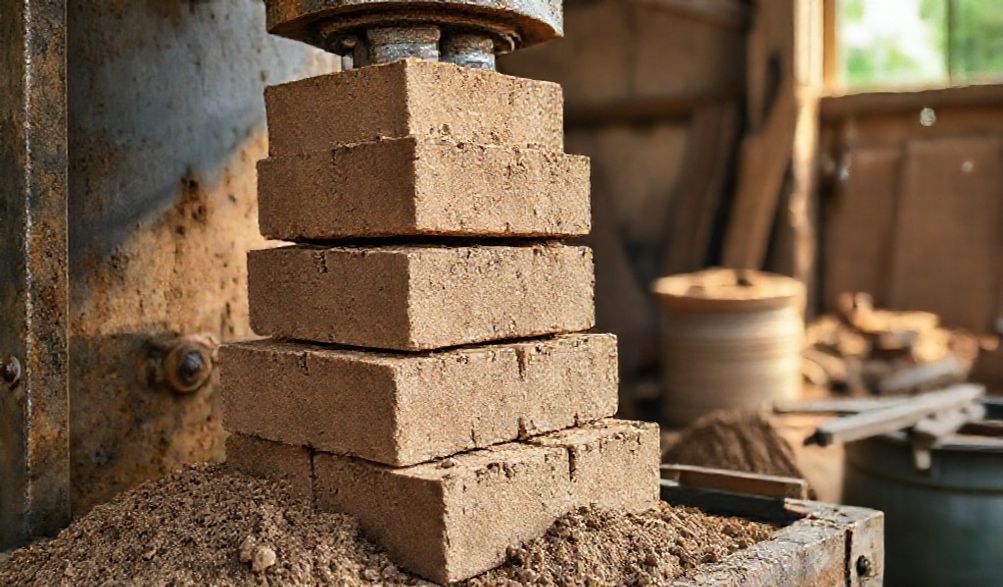
Остаточний посібник з машин для виробництва ґрунтової цегли: Будуйте стійко та економте витрати
Уявіть собі будівництво міцних, екологічно чистих будівель із землі, що під вашими ногами. Це не повернення до примітивних методів, а стрибок у розумніше та відповідальніше майбутнє. Протягом тисячоліть цивілізації — від римлян до жителів долини Інду — створювали довговічні споруди з ґрунту. Сьогодні сучаснімашини для виготовлення цегли з ґрунтуперетворити цю давню мудрість на масштабоване, доступне та ефективне рішення для сучасних будівельників, розробників, фермерів та еко-підприємців.
Незалежно від того, чи ваша мета — знизити вартість будівельних матеріалів до 50%, розпочати справді сталий будівельний проект або створити життєздатний бізнес з невеликого виробництва, оволодіння цією технологією є вирішальним першим кроком. Цей посібник створений як ваш всеосяжний ресурс. Ми поєднали десятиліття інженерних принципів, практичний досвід роботи з різними машинами та перевірені найкращі галузеві практики, щоб надати достовірну та дієву інформацію. Ми вийдемо за межі рекламних заяв і маркетингових гіпербол, щоб ви отримали чітке та впевнене розуміння.
Ось про що ми поговоримо: як працюють ці інноваційні машини, їхні переконливі переваги, різні типи, доступні для відповідності вашому масштабу, ключові фактори для вибору правильної моделі та реалістичний огляд всього операційного процесу від ґрунту до готової стіни.
Що таке машина для виготовлення ґрунтової цегли та як вона працює?
У своїй основі, машина для виробництва ґрунтових цеглин є інструментом для розширення можливостей. Вона дозволяє перетворити місцевий доступний ресурс — ґрунт — на стандартизований, високоякісний будівельний матеріал.
Основне визначення
Машина для виготовлення ґрунтової цегли — це пристрій, призначений для пресування певної суміші ґрунту (зазвичай підґрунтя), невеликого відсотка стабілізатора, такого як цемент або вапно, та води у високощільну, однорідну цеглу або блоки. Ключова відмінність від традиційного виробництва цегли полягає в тому, що ці цеглини набувають міцності завдяки ущільненню та хімічній стабілізації.нішляхом випалювання в енергоємній печі. Отримані продукти відомі як стиснуті стабілізовані земляні блоки (ССЗБ) або стабілізовані ґрунтові блоки.
Наука стабілізації
Чому додають цемент чи вапно? Ось інженерія за простотою. Ґрунт сам по собі, коли його ущільнюють, має зчеплення, але може розмиватися водою та втрачати міцність. Стабілізатор (зазвичай 5-10% портландцементу або 5-15% вапна) виконує роль зв'язувального агента.
- Він хімічно зв'язує частинки ґрунту між собою.
- Це значно зменшує схильність цегли до пошкодження водою.
- Він забезпечує стабільну, надійну міцність на стиск, яка відповідає або перевищує показники багатьох традиційних будівельних матеріалів.
Цей процес стабілізації робить цеглу достатньо міцною для постійних, несучих конструкцій у різноманітних кліматичних умовах.
Механічний процес – крок за кроком
Операція, незалежно від типу машини, дотримується логічної, чотириетапної послідовності:
-
Підготовка матеріалів:Основа гарної цеглини. Ґрунт спочатку просіюють, щоб видалити каміння, коріння та органічні речовини. Потім його змішують із точним відсотком стабілізатора та достатньою кількістю води, щоб досягти оптимального вмісту вологи — зазвичай він має бути вологим, але не мокрим. Однорідність суміші є критично важливою.
-
Ущільнення:Ось тут машина творить свою магію. Підготовлена суміш подається в сталеву формувальну камеру. Потім шток або поршень застосовує величезний тиск — часто вимірюваний тонами — для стиснення суміші. Це високоміцне ущільнення усуває повітряні кишені та вирівнює частинки, створюючи щільну та міцну структуру.
-
Викид: Once compressed, the newly formed brick is ejected from the mold onto a pallet or the ground. With manual machines, this involves lifting a lever; with automatic machines, it’s a seamless part of the cycle.
-
Лікування: The most patient yet vital phase. The bricks are carefully stacked, kept moist (often by covering with plastic sheeting), and left to cure for a period, typically 28 days for cement stabilization. During curing, the stabilizer fully hydrates and bonds, allowing the brick to reach its designed strength.
Key Benefits of Using a Soil Brick Machine
Adopting soil brick technology isn’t just about making bricks; it’s about embracing a system with multifaceted advantages.
Exceptional Cost-Efficiency
The economic argument is powerful. Your primary raw material—soil—is often available on-site or locally at minimal cost. When compared to fired clay bricks or concrete blocks, you eliminate the massive energy costs of kiln firing and reduce the need for transported materials.
- Material Cost Reduction: Up to 50-60% savings on walling materials are common.
- Низькі експлуатаційні витрати: Machines, especially manual ones, have minimal energy requirements.
- High-Profit Potential: For entrepreneurs, the low input cost versus the market value of finished bricks creates an attractive business model.
Champion of Sustainability
This is where soil bricks truly shine, offering one of the lowest carbon footprints of any building material.
- Local & Natural: Utilizes locally sourced soil, drastically reducing transportation emissions.
- Low Embodied Energy: No high-temperature firing required.
- Minimal Waste: Production waste is near zero, and bricks are often biodegradable or reusable.
- Building Performance: Soil bricks have excellent thermal mass, naturally regulating indoor temperature by absorbing heat during the day and releasing it at night, reducing heating and cooling energy needs.
Durability and Performance
Don’t mistake “earth” for “weak.” Properly made CSEBs are robust construction materials.
- Висока міцність на стиск: Ranging from 5 to 10+ MPa, they are more than adequate for multi-story, load-bearing walls.
- Відмінна вогнестійкість: They are inherently non-combustible, offering superior fire safety.
- Moisture Buffering: They naturally absorb and release ambient humidity, contributing to healthier indoor air quality.
- Dimensional Stability: Precision machines produce uniform blocks that simplify and speed up construction.
Empowerment and Accessibility
The technology democratizes construction. It enables decentralized production, reducing dependency on large, centralized factories and long supply chains.
- Community Projects: Ideal for NGO-led housing, school, or clinic constructions.
- Local Entrepreneurship: Empowers individuals to start small manufacturing businesses.
- Self-Reliance: Allows landowners to build their own homes using resources from their own land.
Types of Soil Brick Making Machines: Choosing Your Workhorse
Selecting the right machine is pivotal. Your choice should be dictated by your project scale, budget, and labor availability.
Manual Press Machines (e.g., Cinva Ram style)
The entry point into the world of soil brick making.
- Найкраще для: Individual homeowners, small-scale DIY projects, NGOs with community labor, training workshops, and ultra-low-budget startups.
- Переваги:
- Дуже низькі початкові інвестиції.
- No electricity required—fully human-powered.
- Highly portable and simple to maintain.
- Rugged and long-lasting with minimal moving parts.
- Недоліки:
- Labor-intensive; output depends heavily on operator stamina.
- Low production rate (typically 100-300 bricks per day).
- Brick quality can vary slightly with operator consistency.
Semi-Automatic / Electric Machines
The sweet spot for small to medium enterprises and dedicated construction projects.
- Найкраще для: Small brick-making businesses, medium-sized housing developments, farm building projects, and higher-volume production needs.
- Переваги:
- Excellent balance between output, cost, and automation.
- Significantly reduces physical labor compared to manual presses.
- Produces highly consistent, quality bricks due to mechanical compression.
- Higher output (can range from 500 to 2,000+ bricks per day).
- Недоліки:
- Requires a reliable electricity connection or generator.
- Higher upfront cost than manual presses.
- More complex components require basic technical maintenance.
Fully Automatic Hydraulic Machines
The industrial-grade solution for maximum output.
- Найкраще для: Large-scale commercial brick production yards, industrial operations, and municipal projects requiring very high volumes.
- Переваги:
- Very high, consistent output (thousands of bricks per day).
- Superior brick density and uniformity.
- Minimal manual labor required—often just feeding material and stacking bricks.
- Can integrate with automated mixers and conveyors.
- Недоліки:
- Високі капітальні інвестиції.
- Requires robust, three-phase power supply.
- Complex machinery necessitates more sophisticated maintenance and technical support.
Mobile vs. Stationary Units
An additional consideration is mobility. Trailer-mounted machines are fantastic for on-site production, eliminating brick transportation costs entirely for large builds. Stationary units are for fixed factory or yard setups, optimized for continuous production in one location.
Критичні фактори, які слід врахувати перед покупкою
Avoid costly mistakes by carefully evaluating these key areas before purchasing.
Soil Suitability Analysis
This is the non-negotiable first step. Not all soil is suitable. The ideal soil is a “loam” with a balanced mix of clay (15-30%), silt, and sand.
- Simple Field Test (The Jar Test): Fill a clear jar 1/3 with soil, add water, shake vigorously, and let it settle for 24 hours. The layers will show the approximate proportions of sand, silt, and clay.
- Professional Testing: For large projects, a lab test for particle size distribution and stabilizer compatibility is a wise investment.
Виробнича потужність та обсяг виробництва
Be realistic. Match the machine’s practical, sustained output (not the peak theoretical number) to your daily brick requirements. Consider curing space and stacking labor, which can become bottlenecks faster than the machine’s speed.
Brick Size and Design Flexibility
- Стандартні розміри: Most machines offer molds for common sizes (e.g., 230x110x75 mm).
- Interlocking Designs: Many machines produce specially shaped bricks that lock together without mortar, speeding up construction and saving material.
- Індивідуальні форми: Check if the supplier can provide custom molds for unique architectural features.
Build Quality and After-Sales Support
The machine is a long-term asset. Inspect:
* Конструкція рами: Heavy-duty steel is essential for withstanding constant pressure.
* Якість форми: Hardened steel molds resist wear and ensure dimensional accuracy.
* Support: Does the supplier offer installation guidance, manuals, training videos, and—critically—access to spare parts?
Загальна вартість володіння
Look beyond the machine’s price tag. Your full startup budget should include:
* Soil screening and mixing equipment.
* Pallets or boards for curing.
* Space for drying and storage.
* Labor costs.
* A contingency fund for maintenance and spare parts.
The Operational Workflow: From Soil to Finished Wall
Understanding the end-to-end process ensures smooth operations.
Phase 1: Site and Material Preparation
Success is built here. Source soil from beneath the topsoil layer. Conduct your soil test, then establish the correct stabilizer ratio through small test batches. Use a mechanical mixer (pan, rotary, or concrete mixer) to achieve a perfectly uniform blend. Consistency in the mix is consistency in the brick.
Phase 2: Brick Production & Quality Control
During production, maintain a steady workflow. Operate the machine according to its manual—consistent fill volume and pressure are key. Implement simple quality control:
* Periodically weigh a brick.
* Measure its dimensions.
* Perform a simple drop test (a well-made brick shouldn’t break when dropped from waist height onto a hard surface).
* Stack bricks neatly on pallets for easy moving to the curing area.
Phase 3: Curing and Construction
Curing is not drying. Bricks must be kept moist for the stabilizer to react fully. Spray them with water and cover with plastic for 14-28 days. When building:
* Use a strong, damp-proof course or plinth.
* Use a mortar compatible with the bricks (often a soil-cement slurry).
* Protect finished walls with a good overhanging roof and, if desired, a breathable plaster.
Часті питання (FAQ)
Q: What is the typical compressive strength of a soil-cement brick?
А: With suitable soil and 5-10% cement content, compressive strengths of 5 to 10 MPa (approximately 700 to 1500 psi) are standard. This exceeds the strength of many traditional fired clay bricks and is perfectly suitable for constructing 2-3 story load-bearing buildings.
Q: Can I use pure soil without any stabilizer?
А: For durable, weather-resistant structural bricks in most climates, a stabilizer is essential. Unstabilized earth bricks (like adobe) are possible but require very arid climates and thick, protective plasters to survive rain. Stabilization is the key to modern, reliable earth construction.
Q: How does the cost compare to traditional clay bricks or concrete blocks?
А: Material costs are typically 30-50% lower. The total project savings depend on labor, scale, and local prices for conventional materials. The return on investment for the machine itself can be very quick for a production business, often within a few projects.
Q: Are buildings made with these bricks safe and legal?
А: Absolutely. Stabilized Soil Blocks are recognized in the building codes of many countries, including India, Kenya, and others. For any structural project, it is imperative to check your local building regulations and have plans approved by a qualified structural engineer familiar with earth construction.
Q: What is the maintenance like for the machine?
А: Maintenance is generally straightforward. It involves regular cleaning to prevent material buildup, lubrication of all moving parts, and periodic inspection of wear items like mold liners, piston seals, and, for hydraulic machines, fluid levels and hoses. Manual presses require almost no maintenance beyond keeping them clean and rust-free.
Висновок
Soil brick making machines represent more than just a piece of equipment; they represent a paradigm shift towards economical, sustainable, and resilient construction. They empower you to transform the abundant resource underfoot into high-quality, durable building blocks.
Your path to success is clear: begin by understanding your soil, precisely define the scale and needs of your project, and then carefully match those needs to the appropriate type of machine. Let your requirements drive the decision, not just the initial price tag.
Embracing this technology is a step toward creating buildings that are not only cost-effective but also have a low environmental impact and promote local self-reliance. Ready to explore further? Your next step is to conduct a simple soil test on your site and begin researching reputable machine suppliers with strong testimonials and support. The foundation for your next project could literally come from the ground you stand on.
<