
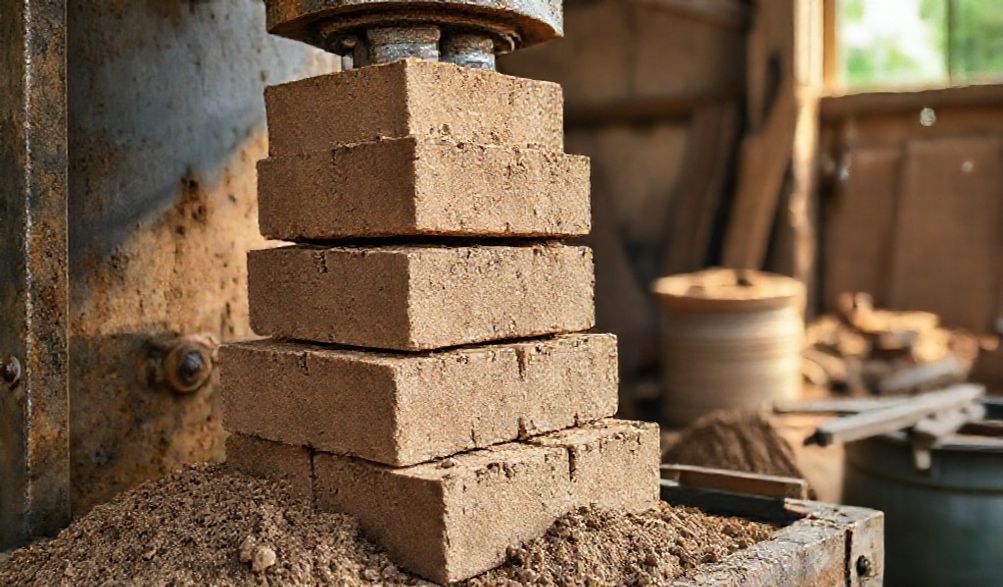
Toprak Kiremit Ýasama Maşynlarynyň Iň Soňky Gollanmasy: Töwekgelçilikli Gurluň we Çykdajylary Azalt
Özüňiziň aýagyňyzyň astyndaky toprak bilen berk, ekologik taýdan arassa binalary gurmagy gözüňiziň öňüne getiriň. Bu ilkinji usullaryň yzyna gaýdylmagy däl-de, akylly we jogapkärçilikli geljeklige sekirilendir. Müňlerçe ýyllap, Rimlilerden Hind derýasy jülgesine çenli medeniýetler toprak bilen dowamly gurluşlary gurdular. Bu gün bolsa, häzirki zaman...toprak kiremit ýasama maşynlaryбу эжеги акыл-эсепти häzirki zaman gurluşçylary, işläp düzmekçiler, daýhanlar we ekologik işewürler üçin ösdürilip bilinýän, elýeterli we netijeli çözgüde öwürmek.
Siz gurluş materiallarynyň bahasyny 50% çenli peseltmek, hakykatdan-da dowamly gurluş taslamasyna başlamak ýa-da amatly kiçi ölçegli öndüriş işini ýola goýmak maksadyňyz bolsun, bu tehnologiýany öwrenmek ähmiýetli birinji ädimdir. Bu gollanma siziň giňişleýin çeşme maglumatlaryňyz bolmak üçin düzüldi. Biz onlarça ýyllaryň inženerlik prinsiplaryny, dürli maşynlar bilen amaly meýdan tejribesini we subut edilen senagat iň gowy amallaryny birleşdirip, ygtybarly we hereketlendiriji maglumatlary hödürleýäris. Biz reklama we marketing çaklamalaryndan daşary çykyp, size açyk we ygtyýarly düşünje bereris.
Bu ýerde biz şu temalara degişeris: bu täze tehnologiýa maşynlarynyň nädip işleýändigi, olaryň çekiji peýdalary, ölçegiňize laýyk gelýän dürli görnüşleri, dogry modeli saýlamak üçin möhüm faktorlar we toprakdan gutarýan diwara çenli tutuş operasiýa prosesiniň realist gözden geçirilişi.
Toprak Kerpiç Ýasama Maşyny Nedir we Ol Nähili Işleýär?
Onuň esasynda, toprak kerpiç ýasama maşyny güýçlendirmek üçin bir guraldyr. Ol size ýerli elýeterli çeşme bolan topragy standartlaşdyrylan, ýokary hilli gurluş materialyna öwürmäge mümkinçilik berýär.
Esasy Düşündiriş
Toprak kiremit ýasama maşyny, topragyň (köplenç asta toprak), kiçi göterimde sement ýa-da aky ýaly berkidiji we suwyň belli bir goşundysyny ýokary dykyzlykly, birmeňzeş kiremitlere ýa-da bloklara gyşyrmak üçin niýetlenen enjamdyr. Geleneksional kiremit ýasamadan esasy tapawut, bu kiremitleriň güýjüni gyşyrmak we himiki durnuklylyk arkaly gazanýandygydyr.ýokenergiýa sarp edýän peçde ýakylan. Netijede Compressed Stabilized Earth Blocks (CSEBs) ýa-da Stabilized Soil Blocks diýilýän önümler alnyar.
Стабилизациялык илими
Näme üçin sement ýa-da aky ýer goşulýar? Bu, ýönekeýligiň arkasyndaky inženerlikdir. Diňe ýer, gysylanda, birleşdirijilik bolýar, ýöne suw bilen erozyýa bolup, güýjüni ýitirip biler. Durnuklaýjy (adaty 5-10% Portland sementi ýa-da 5-15% aky ýer) birleşdiriji agent hökmünde işleýär.
- Ол топрак бөлүкчөлерин химиялык жол менен бириктирип туташдырады.
- Ol, kerpiçiň suwa zyýan ýetirmek howpuny güýçli derejede peseldýär.
- Ол көпден-көп дәпдеп салынма материалдардан ыңгайлаштырылмалы же ашып түшүүчү туруктуу, ишенимдүү кысуу күчүн камсыз кылат.
Bu berkidiliş prosesi bolsa, kerpiçleri dürli howa şertlerinde ygtybarly, agram göterýän gurluşlar üçin berk we dowamly etmeklige mümkinçilik berýär.
Механикалық процес – Қадам-қадаммен
Her bir maşyn görnüşi üçin hem bolsa, amal dört etaply yzygiderli yzygiderlilik bilen amala aşyrylýar:
-
Material taýýarlamak:Gowy bir kerpiçiň esaslandyrylyşy. Toprak ilki bilen daşlar, kökler we organiki maddalar aýyrmak üçin elenýär. Soňra takyk göterimde stabilizator we ýeterlik suw goşulýar, köplenç nemli, ýöne suwly däl ýagdaýy gazanmak üçin. Birmeňzeşlik iň möhüm bolýar.
-
Gatnaşdyrma: This is where the machine does its magic. The prepared mixture is fed into a steel mold chamber. A ram or piston then applies immense pressure—often measured in tons—to compress the mixture. This high-pressure compaction eliminates air pockets and aligns the particles, creating a dense, strong matrix.
-
Чыгаруу: Once compressed, the newly formed brick is ejected from the mold onto a pallet or the ground. With manual machines, this involves lifting a lever; with automatic machines, it’s a seamless part of the cycle.
-
Gowulama: The most patient yet vital phase. The bricks are carefully stacked, kept moist (often by covering with plastic sheeting), and left to cure for a period, typically 28 days for cement stabilization. During curing, the stabilizer fully hydrates and bonds, allowing the brick to reach its designed strength.
Key Benefits of Using a Soil Brick Machine
Adopting soil brick technology isn’t just about making bricks; it’s about embracing a system with multifaceted advantages.
Exceptional Cost-Efficiency
The economic argument is powerful. Your primary raw material—soil—is often available on-site or locally at minimal cost. When compared to fired clay bricks or concrete blocks, you eliminate the massive energy costs of kiln firing and reduce the need for transported materials.
- Material Cost Reduction: Up to 50-60% savings on walling materials are common.
- Low Operational Cost: Machines, especially manual ones, have minimal energy requirements.
- High-Profit Potential: For entrepreneurs, the low input cost versus the market value of finished bricks creates an attractive business model.
Champion of Sustainability
This is where soil bricks truly shine, offering one of the lowest carbon footprints of any building material.
- Local & Natural: Utilizes locally sourced soil, drastically reducing transportation emissions.
- Low Embodied Energy: No high-temperature firing required.
- Minimal Waste: Production waste is near zero, and bricks are often biodegradable or reusable.
- Building Performance: Soil bricks have excellent thermal mass, naturally regulating indoor temperature by absorbing heat during the day and releasing it at night, reducing heating and cooling energy needs.
Durability and Performance
Don’t mistake “earth” for “weak.” Properly made CSEBs are robust construction materials.
- Ýokary Gysmaýylyk Güýji: Ranging from 5 to 10+ MPa, they are more than adequate for multi-story, load-bearing walls.
- Өте ýokary ot ýanyşlyk berkidiji. They are inherently non-combustible, offering superior fire safety.
- Moisture Buffering: They naturally absorb and release ambient humidity, contributing to healthier indoor air quality.
- Ölçegli Durnuklylyk: Precision machines produce uniform blocks that simplify and speed up construction.
Empowerment and Accessibility
The technology democratizes construction. It enables decentralized production, reducing dependency on large, centralized factories and long supply chains.
- Community Projects: Ideal for NGO-led housing, school, or clinic constructions.
- Local Entrepreneurship: Empowers individuals to start small manufacturing businesses.
- Self-Reliance: Allows landowners to build their own homes using resources from their own land.
Types of Soil Brick Making Machines: Choosing Your Workhorse
Selecting the right machine is pivotal. Your choice should be dictated by your project scale, budget, and labor availability.
Manual Press Machines (e.g., Cinva Ram style)
The entry point into the world of soil brick making.
- Iň Gowy: Individual homeowners, small-scale DIY projects, NGOs with community labor, training workshops, and ultra-low-budget startups.
- Artalary:
- Örän pes başlangyç goýum.
- No electricity required—fully human-powered.
- Highly portable and simple to maintain.
- Rugged and long-lasting with minimal moving parts.
- Kemçilikler:
- Labor-intensive; output depends heavily on operator stamina.
- Low production rate (typically 100-300 bricks per day).
- Brick quality can vary slightly with operator consistency.
Semi-Automatic / Electric Machines
The sweet spot for small to medium enterprises and dedicated construction projects.
- Iň Gowy: Small brick-making businesses, medium-sized housing developments, farm building projects, and higher-volume production needs.
- Artalary:
- Excellent balance between output, cost, and automation.
- Significantly reduces physical labor compared to manual presses.
- Produces highly consistent, quality bricks due to mechanical compression.
- Higher output (can range from 500 to 2,000+ bricks per day).
- Kemçilikler:
- Requires a reliable electricity connection or generator.
- Higher upfront cost than manual presses.
- More complex components require basic technical maintenance.
Fully Automatic Hydraulic Machines
The industrial-grade solution for maximum output.
- Iň Gowy: Large-scale commercial brick production yards, industrial operations, and municipal projects requiring very high volumes.
- Artalary:
- Very high, consistent output (thousands of bricks per day).
- Superior brick density and uniformity.
- Minimal manual labor required—often just feeding material and stacking bricks.
- Can integrate with automated mixers and conveyors.
- Kemçilikler:
- Ýokary serişde goýum.
- Requires robust, three-phase power supply.
- Complex machinery necessitates more sophisticated maintenance and technical support.
Mobile vs. Stationary Units
An additional consideration is mobility. Trailer-mounted machines are fantastic for on-site production, eliminating brick transportation costs entirely for large builds. Stationary units are for fixed factory or yard setups, optimized for continuous production in one location.
Satyn almakdan öň göz öňünde tutmaly ähmiýetli amiller
Avoid costly mistakes by carefully evaluating these key areas before purchasing.
Soil Suitability Analysis
This is the non-negotiable first step. Not all soil is suitable. The ideal soil is a “loam” with a balanced mix of clay (15-30%), silt, and sand.
- Simple Field Test (The Jar Test): Fill a clear jar 1/3 with soil, add water, shake vigorously, and let it settle for 24 hours. The layers will show the approximate proportions of sand, silt, and clay.
- Professional Testing: For large projects, a lab test for particle size distribution and stabilizer compatibility is a wise investment.
Önümçilik Kuwwaty we Önüm
Be realistic. Match the machine’s practical, sustained output (not the peak theoretical number) to your daily brick requirements. Consider curing space and stacking labor, which can become bottlenecks faster than the machine’s speed.
Brick Size and Design Flexibility
- Standart Ölçegler: Most machines offer molds for common sizes (e.g., 230x110x75 mm).
- Interlocking Designs: Many machines produce specially shaped bricks that lock together without mortar, speeding up construction and saving material.
- Ыхласаларын Гуймалары: Check if the supplier can provide custom molds for unique architectural features.
Build Quality and After-Sales Support
The machine is a long-term asset. Inspect:
* Каркаслык курулуш: Heavy-duty steel is essential for withstanding constant pressure.
* Kalıp Sıypaty: Hardened steel molds resist wear and ensure dimensional accuracy.
* Support: Does the supplier offer installation guidance, manuals, training videos, and—critically—access to spare parts?
Эээлдик ээликниң жалпы баасы
Look beyond the machine’s price tag. Your full startup budget should include:
* Soil screening and mixing equipment.
* Pallets or boards for curing.
* Space for drying and storage.
* Labor costs.
* A contingency fund for maintenance and spare parts.
The Operational Workflow: From Soil to Finished Wall
Understanding the end-to-end process ensures smooth operations.
Phase 1: Site and Material Preparation
Success is built here. Source soil from beneath the topsoil layer. Conduct your soil test, then establish the correct stabilizer ratio through small test batches. Use a mechanical mixer (pan, rotary, or concrete mixer) to achieve a perfectly uniform blend. Consistency in the mix is consistency in the brick.
Phase 2: Brick Production & Quality Control
During production, maintain a steady workflow. Operate the machine according to its manual—consistent fill volume and pressure are key. Implement simple quality control:
* Periodically weigh a brick.
* Measure its dimensions.
* Perform a simple drop test (a well-made brick shouldn’t break when dropped from waist height onto a hard surface).
* Stack bricks neatly on pallets for easy moving to the curing area.
Phase 3: Curing and Construction
Curing is not drying. Bricks must be kept moist for the stabilizer to react fully. Spray them with water and cover with plastic for 14-28 days. When building:
* Use a strong, damp-proof course or plinth.
* Use a mortar compatible with the bricks (often a soil-cement slurry).
* Protect finished walls with a good overhanging roof and, if desired, a breathable plaster.
Frequently Asked Questions (FAQ)
Q: What is the typical compressive strength of a soil-cement brick?
A: With suitable soil and 5-10% cement content, compressive strengths of 5 to 10 MPa (approximately 700 to 1500 psi) are standard. This exceeds the strength of many traditional fired clay bricks and is perfectly suitable for constructing 2-3 story load-bearing buildings.
Q: Can I use pure soil without any stabilizer?
A: For durable, weather-resistant structural bricks in most climates, a stabilizer is essential. Unstabilized earth bricks (like adobe) are possible but require very arid climates and thick, protective plasters to survive rain. Stabilization is the key to modern, reliable earth construction.
Q: How does the cost compare to traditional clay bricks or concrete blocks?
A: Material costs are typically 30-50% lower. The total project savings depend on labor, scale, and local prices for conventional materials. The return on investment for the machine itself can be very quick for a production business, often within a few projects.
Q: Are buildings made with these bricks safe and legal?
A: Absolutely. Stabilized Soil Blocks are recognized in the building codes of many countries, including India, Kenya, and others. For any structural project, it is imperative to check your local building regulations and have plans approved by a qualified structural engineer familiar with earth construction.
Q: What is the maintenance like for the machine?
A: Maintenance is generally straightforward. It involves regular cleaning to prevent material buildup, lubrication of all moving parts, and periodic inspection of wear items like mold liners, piston seals, and, for hydraulic machines, fluid levels and hoses. Manual presses require almost no maintenance beyond keeping them clean and rust-free.
Netije
Soil brick making machines represent more than just a piece of equipment; they represent a paradigm shift towards economical, sustainable, and resilient construction. They empower you to transform the abundant resource underfoot into high-quality, durable building blocks.
Your path to success is clear: begin by understanding your soil, precisely define the scale and needs of your project, and then carefully match those needs to the appropriate type of machine. Let your requirements drive the decision, not just the initial price tag.
Embracing this technology is a step toward creating buildings that are not only cost-effective but also have a low environmental impact and promote local self-reliance. Ready to explore further? Your next step is to conduct a simple soil test on your site and begin researching reputable machine suppliers with strong testimonials and support. The foundation for your next project could literally come from the ground you stand on.
<