
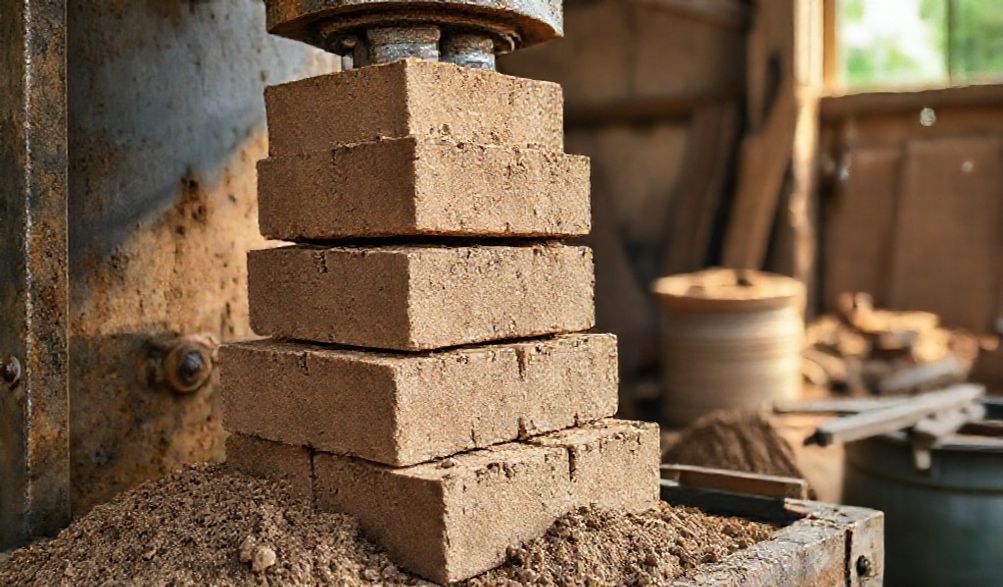
Gid Definitif pou Machin Fè Brik Tè: Bati nan Dirablite ak Ekonomize Pri
Imajine konstwi bilding ki dirab ak zanmitay anviwònman an, lè w sèvi ak tè ki anba pye w la. Sa a se pa yon retounen nan metòd primitif, men yon so nan yon avni ki pi entelijan ak pi responsab. Depi plizyè milenè, sivilizasyon soti nan Women rive nan Valè Endis la te konstwi estrikti ki dire lontan ak tè. Jodi a, modèn...machin pou fè brik tètransfòme sajès ansyen sa a nan yon solisyon ki ka adapte, ki abòdab, ak efikas pou bòs mason modèn, devlopè, kiltivatè, ak eko-antreprenè yo.
Si objektif ou se diminye depans materyèl konstriksyon yo jiska 50%, antre nan yon pwojè bilding reyèlman dirab, oswa kòmanse yon ti biznis fabrikasyon ki ka mache, mètize teknoloji sa a se premye etap kle a. Gid sa a fèt pou sèvi kòm resous konplè ou. Nou rasanble plizyè deseni prensip jeni, eksperyans pratik ak divès machin, ak pi bon pratik endistri ki pwouve pou ofri enfòmasyon serye ak aplikab. Nou pral depase diskou anpil ak pwomosyon pou ba ou yon konpreyansyon klè ak konfyans.
Men sa nou pral kouvri: kijan machin inovatè sa yo fonksyone, benefis konvenkan yo, divès kalite ki disponib pou adapte ak echèl ou, faktè kle pou chwazi bon modèl, ak yon eksplikasyon realist sou tout pwosesis operasyonèl la depi tè a rive nan mi fini.
Kisa yon Machin pou Fè Brik ak Tè ye epi Ki jan li Fonksyone?
Nan fond li, yon machin pou fè brik tè se yon zouti pou otorizasyon. Li pèmèt ou transfòme yon resous lokal ki disponib—tè a—nan yon materyèl konstriksyon estanda, ki gen bon jan kalite.
Definisyon Debaz
Yon machin pou fè brik tè se yon aparèy ki fèt pou konprese yon melanj espesifik tè (tipikman sòl anba sifas), yon ti pousantaj yon estabilize tankou siman oswa lacho, ak dlo pou fè brik oswa blòk ki gen gwo dansite epi ki inifòm. Prensipal diferans lan ak fason tradisyonèl pou fè brik se ke brik sa yo jwenn fòs yo atravè konpaksyon ak estabilizasyon chimik,panan yon fou ki konsome anpil enèji. Pwodwi ki soti yo rele blòk tè konprese estabilize oswa blòk tè estabilize.
Syans Stabilizasyon an
Poukisa ajoute siman oswa lacho? Sa se jeni ki kache dèyè senplisite a. Tè a pou kont li, lè yo konpakte li, gen koyezon men li ka ewode ak dlo epi pèdi fòs. Yon estabilize (nòmalman 5-10% siman Portland oswa 5-15% lacho) aji kòm yon ajan lian.
- Li kole patikil tè yo ansanm chimikman.
- Li diminye anpil sansiblite brik la pou domaj dlo.
- Li bay fòs konpresyon ki konstan ak serye ki satisfè oswa depase anpil materyèl konstriksyon konvansyonèl yo.
Pwosesis estabilizasyon sa a se sa ki fè brik yo dirab ase pou estrikti pèmanan ki ka sipòte chaj nan klima divès kalite yo.
Pwosesis Mekanik – Etap pa Etap
Operasyon an, kèlkeswa kalite machin lan, swiv yon sekans lojik nan kat etap.
-
Prepare Materyèl:Fondasyon yon bon brik. Premye bagay, yo tamize tè a pou retire wòch, rasin, ak matyè òganik yo. Apre sa, yo melanje l ak pousantaj egzak estabilizan ak ase dlo pou jwenn kontni imidite optimal—nòmalman li dwe imid, men pa mouye. Omojenetè se yon faktè enpòtan anpil.
-
Konpaksyon:Se la machin nan fè maji li. Melanj ki prepare a antre nan yon chanm moul an asye. Apre sa, yon piston aplike yon presyon imans—souvan mezire an tòn—pou konprese melanj lan. Konpresyon sa a nan gwo presyon elimine bul lè epi li aliyen patikil yo, kreye yon matris dans ak solid.
-
Ejeksyon: Once compressed, the newly formed brick is ejected from the mold onto a pallet or the ground. With manual machines, this involves lifting a lever; with automatic machines, it’s a seamless part of the cycle.
-
Gerizon: The most patient yet vital phase. The bricks are carefully stacked, kept moist (often by covering with plastic sheeting), and left to cure for a period, typically 28 days for cement stabilization. During curing, the stabilizer fully hydrates and bonds, allowing the brick to reach its designed strength.
Key Benefits of Using a Soil Brick Machine
Adopting soil brick technology isn’t just about making bricks; it’s about embracing a system with multifaceted advantages.
Exceptional Cost-Efficiency
The economic argument is powerful. Your primary raw material—soil—is often available on-site or locally at minimal cost. When compared to fired clay bricks or concrete blocks, you eliminate the massive energy costs of kiln firing and reduce the need for transported materials.
- Material Cost Reduction: Up to 50-60% savings on walling materials are common.
- Depense Fonksyònman Ba: Machines, especially manual ones, have minimal energy requirements.
- High-Profit Potential: For entrepreneurs, the low input cost versus the market value of finished bricks creates an attractive business model.
Champion of Sustainability
This is where soil bricks truly shine, offering one of the lowest carbon footprints of any building material.
- Local & Natural: Utilizes locally sourced soil, drastically reducing transportation emissions.
- Low Embodied Energy: No high-temperature firing required.
- Minimal Waste: Production waste is near zero, and bricks are often biodegradable or reusable.
- Building Performance: Soil bricks have excellent thermal mass, naturally regulating indoor temperature by absorbing heat during the day and releasing it at night, reducing heating and cooling energy needs.
Durability and Performance
Don’t mistake “earth” for “weak.” Properly made CSEBs are robust construction materials.
- Fòs Konpresif Segondè: Ranging from 5 to 10+ MPa, they are more than adequate for multi-story, load-bearing walls.
- Rezistans Ekselan kont Dife: They are inherently non-combustible, offering superior fire safety.
- Moisture Buffering: They naturally absorb and release ambient humidity, contributing to healthier indoor air quality.
- Dimensional Stability: Precision machines produce uniform blocks that simplify and speed up construction.
Empowerment and Accessibility
The technology democratizes construction. It enables decentralized production, reducing dependency on large, centralized factories and long supply chains.
- Community Projects: Ideal for NGO-led housing, school, or clinic constructions.
- Local Entrepreneurship: Empowers individuals to start small manufacturing businesses.
- Self-Reliance: Allows landowners to build their own homes using resources from their own land.
Types of Soil Brick Making Machines: Choosing Your Workhorse
Selecting the right machine is pivotal. Your choice should be dictated by your project scale, budget, and labor availability.
Manual Press Machines (e.g., Cinva Ram style)
The entry point into the world of soil brick making.
- Pi Bon Pou: Individual homeowners, small-scale DIY projects, NGOs with community labor, training workshops, and ultra-low-budget startups.
- Avantaj:
- Envestisman inisyal trè ba.
- No electricity required—fully human-powered.
- Highly portable and simple to maintain.
- Rugged and long-lasting with minimal moving parts.
- Desavantaj:
- Labor-intensive; output depends heavily on operator stamina.
- Low production rate (typically 100-300 bricks per day).
- Brick quality can vary slightly with operator consistency.
Semi-Automatic / Electric Machines
The sweet spot for small to medium enterprises and dedicated construction projects.
- Pi Bon Pou: Small brick-making businesses, medium-sized housing developments, farm building projects, and higher-volume production needs.
- Avantaj:
- Excellent balance between output, cost, and automation.
- Significantly reduces physical labor compared to manual presses.
- Produces highly consistent, quality bricks due to mechanical compression.
- Higher output (can range from 500 to 2,000+ bricks per day).
- Desavantaj:
- Requires a reliable electricity connection or generator.
- Higher upfront cost than manual presses.
- More complex components require basic technical maintenance.
Fully Automatic Hydraulic Machines
The industrial-grade solution for maximum output.
- Pi Bon Pou: Large-scale commercial brick production yards, industrial operations, and municipal projects requiring very high volumes.
- Avantaj:
- Very high, consistent output (thousands of bricks per day).
- Superior brick density and uniformity.
- Minimal manual labor required—often just feeding material and stacking bricks.
- Can integrate with automated mixers and conveyors.
- Desavantaj:
- Envestisman kapital wo.
- Requires robust, three-phase power supply.
- Complex machinery necessitates more sophisticated maintenance and technical support.
Mobile vs. Stationary Units
An additional consideration is mobility. Trailer-mounted machines are fantastic for on-site production, eliminating brick transportation costs entirely for large builds. Stationary units are for fixed factory or yard setups, optimized for continuous production in one location.
Faktè Enpòtan Pou Konsidere Anvan Ou Achte
Avoid costly mistakes by carefully evaluating these key areas before purchasing.
Soil Suitability Analysis
This is the non-negotiable first step. Not all soil is suitable. The ideal soil is a “loam” with a balanced mix of clay (15-30%), silt, and sand.
- Simple Field Test (The Jar Test): Fill a clear jar 1/3 with soil, add water, shake vigorously, and let it settle for 24 hours. The layers will show the approximate proportions of sand, silt, and clay.
- Professional Testing: For large projects, a lab test for particle size distribution and stabilizer compatibility is a wise investment.
Kapasite Pwodiksyon ak Pwodiksyon
Be realistic. Match the machine’s practical, sustained output (not the peak theoretical number) to your daily brick requirements. Consider curing space and stacking labor, which can become bottlenecks faster than the machine’s speed.
Brick Size and Design Flexibility
- Gwosè Estanda: Most machines offer molds for common sizes (e.g., 230x110x75 mm).
- Interlocking Designs: Many machines produce specially shaped bricks that lock together without mortar, speeding up construction and saving material.
- Moulaj Pèsonalize: Check if the supplier can provide custom molds for unique architectural features.
Build Quality and After-Sales Support
The machine is a long-term asset. Inspect:
* Konstriksyon Ankadreman Heavy-duty steel is essential for withstanding constant pressure.
* Kalite Mwazi: Hardened steel molds resist wear and ensure dimensional accuracy.
* Support: Does the supplier offer installation guidance, manuals, training videos, and—critically—access to spare parts?
Pri Total Posesyon
Look beyond the machine’s price tag. Your full startup budget should include:
* Soil screening and mixing equipment.
* Pallets or boards for curing.
* Space for drying and storage.
* Labor costs.
* A contingency fund for maintenance and spare parts.
The Operational Workflow: From Soil to Finished Wall
Understanding the end-to-end process ensures smooth operations.
Phase 1: Site and Material Preparation
Success is built here. Source soil from beneath the topsoil layer. Conduct your soil test, then establish the correct stabilizer ratio through small test batches. Use a mechanical mixer (pan, rotary, or concrete mixer) to achieve a perfectly uniform blend. Consistency in the mix is consistency in the brick.
Phase 2: Brick Production & Quality Control
During production, maintain a steady workflow. Operate the machine according to its manual—consistent fill volume and pressure are key. Implement simple quality control:
* Periodically weigh a brick.
* Measure its dimensions.
* Perform a simple drop test (a well-made brick shouldn’t break when dropped from waist height onto a hard surface).
* Stack bricks neatly on pallets for easy moving to the curing area.
Phase 3: Curing and Construction
Curing is not drying. Bricks must be kept moist for the stabilizer to react fully. Spray them with water and cover with plastic for 14-28 days. When building:
* Use a strong, damp-proof course or plinth.
* Use a mortar compatible with the bricks (often a soil-cement slurry).
* Protect finished walls with a good overhanging roof and, if desired, a breathable plaster.
Kesyon yo poze souvan (FAQ)
Q: What is the typical compressive strength of a soil-cement brick?
A: With suitable soil and 5-10% cement content, compressive strengths of 5 to 10 MPa (approximately 700 to 1500 psi) are standard. This exceeds the strength of many traditional fired clay bricks and is perfectly suitable for constructing 2-3 story load-bearing buildings.
Q: Can I use pure soil without any stabilizer?
A: For durable, weather-resistant structural bricks in most climates, a stabilizer is essential. Unstabilized earth bricks (like adobe) are possible but require very arid climates and thick, protective plasters to survive rain. Stabilization is the key to modern, reliable earth construction.
Q: How does the cost compare to traditional clay bricks or concrete blocks?
A: Material costs are typically 30-50% lower. The total project savings depend on labor, scale, and local prices for conventional materials. The return on investment for the machine itself can be very quick for a production business, often within a few projects.
Q: Are buildings made with these bricks safe and legal?
A: Absolutely. Stabilized Soil Blocks are recognized in the building codes of many countries, including India, Kenya, and others. For any structural project, it is imperative to check your local building regulations and have plans approved by a qualified structural engineer familiar with earth construction.
Q: What is the maintenance like for the machine?
A: Maintenance is generally straightforward. It involves regular cleaning to prevent material buildup, lubrication of all moving parts, and periodic inspection of wear items like mold liners, piston seals, and, for hydraulic machines, fluid levels and hoses. Manual presses require almost no maintenance beyond keeping them clean and rust-free.
Konklizyon
Soil brick making machines represent more than just a piece of equipment; they represent a paradigm shift towards economical, sustainable, and resilient construction. They empower you to transform the abundant resource underfoot into high-quality, durable building blocks.
Your path to success is clear: begin by understanding your soil, precisely define the scale and needs of your project, and then carefully match those needs to the appropriate type of machine. Let your requirements drive the decision, not just the initial price tag.
Embracing this technology is a step toward creating buildings that are not only cost-effective but also have a low environmental impact and promote local self-reliance. Ready to explore further? Your next step is to conduct a simple soil test on your site and begin researching reputable machine suppliers with strong testimonials and support. The foundation for your next project could literally come from the ground you stand on.
<