
Hagidda Ugu Wanaagsan ee Makiinadaha Dhisidda Lebi: Dhiso Si Waara & Badbaadi Kharashyada
Ka tasawiro dhismo adag, deegaan-dhawayn ah oo la adeegsado dhulka hoostada cagtaada. Tani ma aha noqoshada hababka hore, ee waa bood ilaa mustaqbal ka xariifsan, mas’uuliyad badan. Ilbaxnimadii kunyooyinka ka hor, ilbaxnimooyinka laga bilaabo Roomaanka ilaa Dooxada Indus waxay dhisteen dhismayaal waara oo dhulka lagu dhisay. Maanta, casriga ahmakiinad dhisme dhagax dhulkau qalinka qaniimada qadiimiga ah u beddel hab wax ku ool ah, iyo qiimo jaban, oo waxtar leh dhismayaasha casriga ah, horumariyayaasha, beeraha, iyo ganacsatada deegaanka.
Hadafkaaga uu yahay inaad ku dhimiso qiimaha qalabka dhismaha ilaa 50%, aad bilaabto mashruuc dhismo oo dhab ahaan waara, ama aad ku bilowdo ganacsi wax soo saar oo yar-yar oo suurtagal ah, bartida farsamadan waa tallaabada ugu muhiimsan ee hore. Hageegan waa loo qorsheeyay inuu noqdo ilo dhamaystiran oo aad ku xoojin doonto aqoontaada. Waxaan ku soo koobnay qawaaniin injineernimo oo dhowr sano jira, khibrad gooni ah oo la leeyahay mashiinnad kala duwan, iyo habab lagu dhaqmo suuga si aan kuu siino macluumaad lagu kalsoonaan karo oo la dhaqan geli karo. Waxaan ka sii dhaafi doonaa hadal fara badan iyo sheegasho ganacsi si aan kuu siino faham cad oo kalsooni leh.
Waxaan ka hadlaynaa: sida mashiinnadan cusub u shaqeeyaan, faa'iidooyinkooda xiiso leh, noocyada kala duwan ee la heli karo si ay u qancaan cabbirkaaga, mowduufada muhiimka ah ee loo xusho si loo doorto nooca saxda ah, iyo socodka dhabta ah ee habka shaqada oo dhan dhulka ilaa darbiga la dhameeyay.
Waa Maxay Mashiinka Sameynta Lebi Carrada iyo Sida ay U Shaqeyso?
Aasaalkeed, makiinada sameynta lebyo caro waa qalab siinaya awood. Waxay kuu ogolaanaysaa inaad ugu beddesho khayraadka deegaanka ah—carada—oo ahaado qalab dhismo heer sare ah oo caadi ah.
Qeexidda Aasaasiga ah
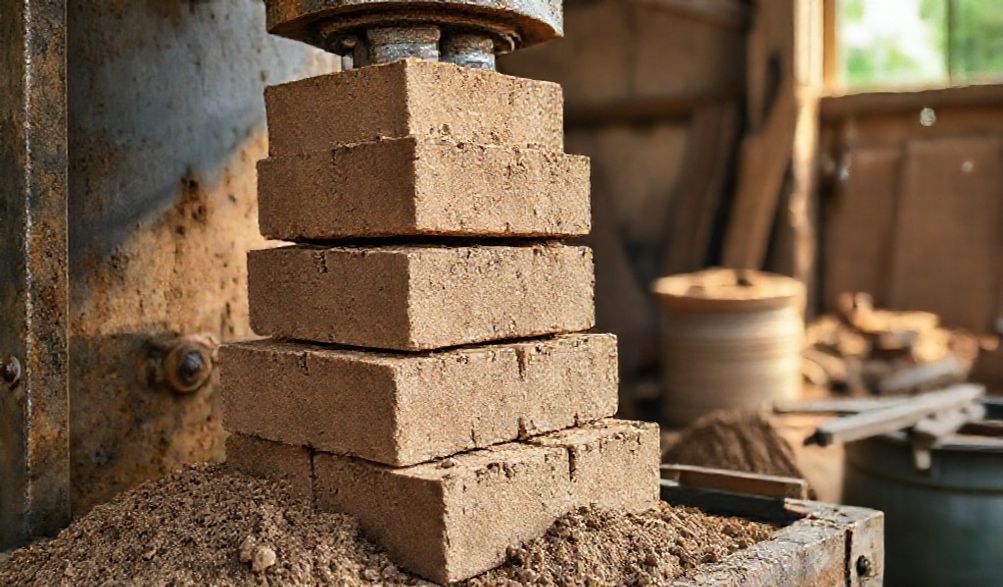
Makiinada dhismo lebbiska dhoobada waa qalab loogu talagalay in lagu khasbo isku dhis gaar ah oo ka kooban dhoobo (caadi ahaan dhoobo hoose), qiyaas yar oo dhegaysiye ah sida semento ama nuuri, iyo biyo si loogu sameeyo lebbiska ama bulookyo cufan oo isku mid ah. Farqiga ugu muhiimsan ee ka duwan dhismada lebbiska dhaqameedka ayaa ah in lebbisyadan ku kasbadaan xooggooda iyagoo lagu cufayo iyo dhegaysi kimiiko ah.ma ahaiyadoo lagu shido miin dhalaalaya tamar badan. Alaabta la soo saaro waxaa loo yaqaan 'Compressed Stabilized Earth Blocks (CSEBs)' ama 'Stabilized Soil Blocks'.
Cilmiga Xasilinta
Maxaa loogu daray siman ama nuuri? Tani waa injineernimada ku jirta fududaynta. Dhulka oo kaliya, marka la adkeeyo, wuxuu leeyahay isku-xidhnaan laakiin wuu dilaaci karaa marka biyo ku dhaco oo xooggiisu waydiin karaa. Dhegaystaha (caadi ahaan 5-10% siman Portland ama 5-15% nuuri) waxay u shaqeysaa sidii xidhiidh.
- Waxa ay ku xidhaa dhismaha kiimikada ee xoogga dhulka.
- It dramatically reduces the brick’s susceptibility to water damage.
- It provides consistent, reliable compressive strength that meets or exceeds many conventional building materials.
This stabilization process is what makes the bricks durable enough for permanent, load-bearing structures in diverse climates.
The Mechanical Process – Step by Step
The operation, regardless of machine type, follows a logical, four-stage sequence:
-
Diyaarinta Qalabka: The foundation of a good brick. Soil is first screened to remove stones, roots, and organic matter. It is then mixed with the precise percentage of stabilizer and enough water to achieve optimal moisture content—usually damp, not soggy. Homogeneity is critical.
-
Qabashada: This is where the machine does its magic. The prepared mixture is fed into a steel mold chamber. A ram or piston then applies immense pressure—often measured in tons—to compress the mixture. This high-pressure compaction eliminates air pockets and aligns the particles, creating a dense, strong matrix.
-
Ku bixid: Once compressed, the newly formed brick is ejected from the mold onto a pallet or the ground. With manual machines, this involves lifting a lever; with automatic machines, it’s a seamless part of the cycle.
-
Daweynta: The most patient yet vital phase. The bricks are carefully stacked, kept moist (often by covering with plastic sheeting), and left to cure for a period, typically 28 days for cement stabilization. During curing, the stabilizer fully hydrates and bonds, allowing the brick to reach its designed strength.
Key Benefits of Using a Soil Brick Machine
Adopting soil brick technology isn’t just about making bricks; it’s about embracing a system with multifaceted advantages.
Exceptional Cost-Efficiency
The economic argument is powerful. Your primary raw material—soil—is often available on-site or locally at minimal cost. When compared to fired clay bricks or concrete blocks, you eliminate the massive energy costs of kiln firing and reduce the need for transported materials.
- Material Cost Reduction: Up to 50-60% savings on walling materials are common.
- Low Operational Cost: Machines, especially manual ones, have minimal energy requirements.
- High-Profit Potential: For entrepreneurs, the low input cost versus the market value of finished bricks creates an attractive business model.
Champion of Sustainability
This is where soil bricks truly shine, offering one of the lowest carbon footprints of any building material.
- Local & Natural: Utilizes locally sourced soil, drastically reducing transportation emissions.
- Laakiinta Tamarta Jidhka ah ee Hoosaysa: No high-temperature firing required.
- Minimal Waste: Production waste is near zero, and bricks are often biodegradable or reusable.
- Building Performance: Soil bricks have excellent thermal mass, naturally regulating indoor temperature by absorbing heat during the day and releasing it at night, reducing heating and cooling energy needs.
Durability and Performance
Don’t mistake “earth” for “weak.” Properly made CSEBs are robust construction materials.
- Qodobka Xoogga Culeyska sare. Ranging from 5 to 10+ MPa, they are more than adequate for multi-story, load-bearing walls.
- Excellent Fire Resistance: They are inherently non-combustible, offering superior fire safety.
- Moisture Buffering: They naturally absorb and release ambient humidity, contributing to healthier indoor air quality.
- Xasiloonida Dhumucda Precision machines produce uniform blocks that simplify and speed up construction.
Empowerment and Accessibility
The technology democratizes construction. It enables decentralized production, reducing dependency on large, centralized factories and long supply chains.
- Community Projects: Ideal for NGO-led housing, school, or clinic constructions.
- Local Entrepreneurship: Empowers individuals to start small manufacturing businesses.
- Self-Reliance: Allows landowners to build their own homes using resources from their own land.
Types of Soil Brick Making Machines: Choosing Your Workhorse
Selecting the right machine is pivotal. Your choice should be dictated by your project scale, budget, and labor availability.
Manual Press Machines (e.g., Cinva Ram style)
The entry point into the world of soil brick making.
- Ugu Fiican: Individual homeowners, small-scale DIY projects, NGOs with community labor, training workshops, and ultra-low-budget startups.
- Faaiidooyinka:
- Wax yar oo lacag la geliyo bilowga.
- No electricity required—fully human-powered.
- Highly portable and simple to maintain.
- Rugged and long-lasting with minimal moving parts.
- Laba.
- Labor-intensive; output depends heavily on operator stamina.
- Low production rate (typically 100-300 bricks per day).
- Brick quality can vary slightly with operator consistency.
Semi-Automatic / Electric Machines
The sweet spot for small to medium enterprises and dedicated construction projects.
- Ugu Fiican: Small brick-making businesses, medium-sized housing developments, farm building projects, and higher-volume production needs.
- Faaiidooyinka:
- Excellent balance between output, cost, and automation.
- Significantly reduces physical labor compared to manual presses.
- Produces highly consistent, quality bricks due to mechanical compression.
- Higher output (can range from 500 to 2,000+ bricks per day).
- Laba.
- Requires a reliable electricity connection or generator.
- Higher upfront cost than manual presses.
- More complex components require basic technical maintenance.
Fully Automatic Hydraulic Machines
The industrial-grade solution for maximum output.
- Ugu Fiican: Large-scale commercial brick production yards, industrial operations, and municipal projects requiring very high volumes.
- Faaiidooyinka:
- Very high, consistent output (thousands of bricks per day).
- Superior brick density and uniformity.
- Minimal manual labor required—often just feeding material and stacking bricks.
- Can integrate with automated mixers and conveyors.
- Laba.
- Lacag badan oo la maalgaliyo.
- Requires robust, three-phase power supply.
- Complex machinery necessitates more sophisticated maintenance and technical support.
Mobile vs. Stationary Units
An additional consideration is mobility. Trailer-mounted machines are fantastic for on-site production, eliminating brick transportation costs entirely for large builds. Stationary units are for fixed factory or yard setups, optimized for continuous production in one location.
Faa'iidooyinka Muhiimka ah ee Loo Baahan Yahay Ka Hor Intaadan Iibsan
Avoid costly mistakes by carefully evaluating these key areas before purchasing.
Soil Suitability Analysis
This is the non-negotiable first step. Not all soil is suitable. The ideal soil is a “loam” with a balanced mix of clay (15-30%), silt, and sand.
- Simple Field Test (The Jar Test): Fill a clear jar 1/3 with soil, add water, shake vigorously, and let it settle for 24 hours. The layers will show the approximate proportions of sand, silt, and clay.
- Professional Testing: For large projects, a lab test for particle size distribution and stabilizer compatibility is a wise investment.
Qaybinta Wax-soo-saarka & Wax-soo-saarka
Be realistic. Match the machine’s practical, sustained output (not the peak theoretical number) to your daily brick requirements. Consider curing space and stacking labor, which can become bottlenecks faster than the machine’s speed.
Brick Size and Design Flexibility
- Cabbirka Caadiga ah: Most machines offer molds for common sizes (e.g., 230x110x75 mm).
- Interlocking Designs: Many machines produce specially shaped bricks that lock together without mortar, speeding up construction and saving material.
- Qalabka Gacanta ee Gaarka ah: Check if the supplier can provide custom molds for unique architectural features.
Build Quality and After-Sales Support
The machine is a long-term asset. Inspect:
* Qaab-dhiska Qaabka Heavy-duty steel is essential for withstanding constant pressure.
* Tayada Qalabka Hardened steel molds resist wear and ensure dimensional accuracy.
* Support: Does the supplier offer installation guidance, manuals, training videos, and—critically—access to spare parts?
Qiimaha Guud ee La Iska Leeyahay
Look beyond the machine’s price tag. Your full startup budget should include:
* Soil screening and mixing equipment.
* Pallets or boards for curing.
* Space for drying and storage.
* Labor costs.
* A contingency fund for maintenance and spare parts.
The Operational Workflow: From Soil to Finished Wall
Understanding the end-to-end process ensures smooth operations.
Phase 1: Site and Material Preparation
Success is built here. Source soil from beneath the topsoil layer. Conduct your soil test, then establish the correct stabilizer ratio through small test batches. Use a mechanical mixer (pan, rotary, or concrete mixer) to achieve a perfectly uniform blend. Consistency in the mix is consistency in the brick.
Phase 2: Brick Production & Quality Control
During production, maintain a steady workflow. Operate the machine according to its manual—consistent fill volume and pressure are key. Implement simple quality control:
* Periodically weigh a brick.
* Measure its dimensions.
* Perform a simple drop test (a well-made brick shouldn’t break when dropped from waist height onto a hard surface).
* Stack bricks neatly on pallets for easy moving to the curing area.
Phase 3: Curing and Construction
Curing is not drying. Bricks must be kept moist for the stabilizer to react fully. Spray them with water and cover with plastic for 14-28 days. When building:
* Use a strong, damp-proof course or plinth.
* Use a mortar compatible with the bricks (often a soil-cement slurry).
* Protect finished walls with a good overhanging roof and, if desired, a breathable plaster.
Su'aalaha Inta Badan La Is Weydiiyo (FAQ)
Q: What is the typical compressive strength of a soil-cement brick?
A: With suitable soil and 5-10% cement content, compressive strengths of 5 to 10 MPa (approximately 700 to 1500 psi) are standard. This exceeds the strength of many traditional fired clay bricks and is perfectly suitable for constructing 2-3 story load-bearing buildings.
Q: Can I use pure soil without any stabilizer?
A: For durable, weather-resistant structural bricks in most climates, a stabilizer is essential. Unstabilized earth bricks (like adobe) are possible but require very arid climates and thick, protective plasters to survive rain. Stabilization is the key to modern, reliable earth construction.
Q: How does the cost compare to traditional clay bricks or concrete blocks?
A: Material costs are typically 30-50% lower. The total project savings depend on labor, scale, and local prices for conventional materials. The return on investment for the machine itself can be very quick for a production business, often within a few projects.
Q: Are buildings made with these bricks safe and legal?
A: Absolutely. Stabilized Soil Blocks are recognized in the building codes of many countries, including India, Kenya, and others. For any structural project, it is imperative to check your local building regulations and have plans approved by a qualified structural engineer familiar with earth construction.
Q: What is the maintenance like for the machine?
A: Maintenance is generally straightforward. It involves regular cleaning to prevent material buildup, lubrication of all moving parts, and periodic inspection of wear items like mold liners, piston seals, and, for hydraulic machines, fluid levels and hoses. Manual presses require almost no maintenance beyond keeping them clean and rust-free.
Gabagabo
Soil brick making machines represent more than just a piece of equipment; they represent a paradigm shift towards economical, sustainable, and resilient construction. They empower you to transform the abundant resource underfoot into high-quality, durable building blocks.
Your path to success is clear: begin by understanding your soil, precisely define the scale and needs of your project, and then carefully match those needs to the appropriate type of machine. Let your requirements drive the decision, not just the initial price tag.
Embracing this technology is a step toward creating buildings that are not only cost-effective but also have a low environmental impact and promote local self-reliance. Ready to explore further? Your next step is to conduct a simple soil test on your site and begin researching reputable machine suppliers with strong testimonials and support. The foundation for your next project could literally come from the ground you stand on.
<