
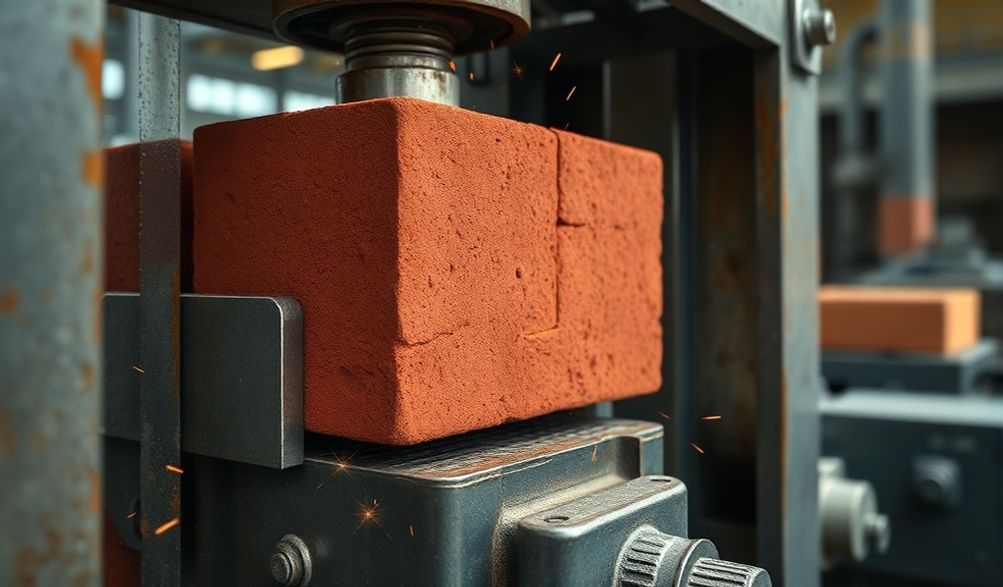
La Guía Definitiva de Prensas para Fabricar Ladrillos: Tipos, Usos y Cómo Elegir
Los ladrillos son los verdaderos pilares de la civilización. Desde antiguos hogares hasta modernos rascacielos, su resistencia perdurable forma la columna vertebral de nuestro mundo. Pero detrás de cada ladrillo consistente y duradero hay una pieza tecnológica crucial: la prensa para fabricar ladrillos. La demanda de eficiencia, resistencia y uniformidad en la construcción moderna ha hecho que esta máquina sea indispensable. Esta guía integral está diseñada para ser tu recurso experto, ya seas un gerente de construcción, un empresario manufacturero o un ingeniero. Desglosaremos los diferentes tipos de prensas para ladrillos, sus aplicaciones específicas y los factores cruciales para seleccionar la adecuada. Al final, tendrás un marco claro para tomar una decisión informada que se alinee con tus objetivos de producción, materias primas y presupuesto.
¿Qué es una Máquina Prensadora de Ladrillos? Función Principal y Evolución
En esencia, una máquina prensadora de ladrillos es un dispositivo que utiliza una fuerza inmensa para compactar material en polvo o semiseco en un ladrillo denso y con una forma precisa. Es la piedra angular de la fabricación moderna de ladrillos, transformando materiales sueltos como arcilla, cenizas volantes, concreto o suelo estabilizado en unidades de construcción uniformes y de alta resistencia.
El Principio Básico: De la Compresión Manual a la Mecánica
El proceso fundamental es la compresión. La materia prima se introduce en un molde (o matriz), y se aplica una fuerza de alta presión, ya sea mediante una palanca mecánica, una cabeza vibratoria o un pistón hidráulico. Esta presión elimina los huecos de aire, aumenta la cohesión de las partículas y forma una masa sólida que mantiene su forma al ser expulsada.
- Contexto Histórico:Durante siglos, este fue un proceso manual e intensivo en mano de obra que utilizaba moldes de madera y fuerza humana, lo que resultaba en una calidad variable y una producción baja.
- Evolución Moderna:Las máquinas actuales son maravillas de la ingeniería mecánica e hidráulica. Aplican presión controlada y repetible medida en toneladas o megapascales (MPa), garantizando que cada ladrillo cumpla con especificaciones exactas de dimensión y resistencia. Esta evolución del prensado manual al mecanizado es lo que permite la escala y consistencia requeridas para la infraestructura contemporánea.
Por Qué la Presión es Clave: Beneficios para la Calidad del Ladrillo
Aplicar alta presión controlada no solo se trata de dar forma; se trata de ingeniería para un producto superior. Los beneficios son fundamentales para la integridad estructural:
- Densidad y Resistencia Aumentadas:Una mayor compactación se traduce directamente en una mayor resistencia a la compresión, una métrica crítica que se mide en MPa. Esto significa que los muros de carga pueden soportar más peso.
- Durabilidad Mejorada:Los ladrillos densos tienen una menor absorción de agua, lo que los hace más resistentes al daño por heladas, a la intemperie y a la eflorescencia.
- Uniformidad Dimensional:Los moldes de precisión y la presión constante producen ladrillos con tolerancias ajustadas. Esto resulta en paredes más rectas, juntas de mortero más delgadas y una colocación de ladrillos más rápida y eficiente.
- Acabado Superficial Mejorado:Los ladrillos prensados suelen tener caras más lisas y bordes más definidos, lo cual es ideal para ladrillos de revestimiento o adoquines donde la estética es importante.
- Tiempo de Curado Reducido:Para ladrillos a base de cemento (como concreto o cenizas volantes), una compactación inicial alta puede reducir el tiempo necesario para el desarrollo de la resistencia final durante el curado.
Tipos de Máquinas Prensadoras de Ladrillos: Encontrando la Adecuada
Elegir el tipo de prensa correcta es tu decisión más crítica. La máquina adecuada se alinea con tu materia prima, el producto deseado y el volumen de producción.
Máquinas Prensas Hidráulicas: Potencia y Precisión
Las prensas hidráulicas para ladrillos utilizan energía de fluidos para generar una fuerza inmensa y aplicada de manera uniforme. Una bomba hidráulica acciona un émbolo que compacta el material en el molde. La presión es fácilmente ajustable y puede mantenerse durante un tiempo establecido (tiempo de permanencia), lo que permite una compresión óptima.
- Cómo Funcionan:El aceite hidráulico es presurizado por una bomba y dirigido a un cilindro. Este cilindro extiende un émbolo que aplica fuerza lineal directa al material en la cavidad del molde.
- Ventaja Clave:Presión inigualable y controlable. Esto los hace excepcionalmente versátiles para una amplia gama de densidades de material y resistencias de ladrillo.
- Aplicaciones de LSI:Ideal para producir alta resistencialadrillos de cenizas volantes, precision concrete pavers, complex ladrillos entrelazados, and solid clay bricks.
- Mejor Para: High-volume production plants, manufacturers requiring a diverse product range, and applications where ultimate brick strength is non-negotiable.
Mechanical (Vibration) Press Machines: Speed and Efficiency
Often called block-making machines, these units combine high-frequency vibration with a compaction force. The vibration fluidizes the concrete mix, allowing it to flow evenly into all corners of the mold before a descending head applies final compaction pressure.
- Cómo Funcionan: An eccentric weight creates vibrations transmitted to the mold table. Simultaneously, a mechanical or hydraulic press head descends to compact the material.
- Ventaja Clave: High production speed and excellent consistency for fluid concrete mixes.
- Aplicaciones de LSI: Primarily used for producing bloques huecos, bloques sólidos, and lightweight CLC (Cellular Lightweight Concrete) blocks.
- Mejor Para: Large-scale production of standard concrete blocks and pavers, where output speed is a primary driver.
Manual & Semi-Automatic Presses: For Startups and Special Projects
These are the entry point into brick pressing, requiring more operator involvement but with a significantly lower capital investment.
- Presiones Manuales de Palanca: Simple, human-powered machines. The operator fills a mold and uses a lever to apply pressure. Output is low but perfect for small-scale brick making, DIY projects, or community-led low-cost housing initiatives.
- Small Hydraulic Presses: Often semi-automatic, where the operator places the mold and initiates a hydraulic cycle. They offer a good balance between improved quality/output over manual presses and manageable cost.
- Role: Essential for prototyping, artisanal production, small batches of specialty bricks, or markets with very low labor costs.
Automatic vs. Semi-Automatic Brick Production Lines
This distinction refers to the level of automation in the entire production process, not just the pressing action.
- Líneas Semiautomáticas: The core pressing cycle is automated, but tasks like raw material feeding, mold changing, or brick stacking may require operator intervention. They offer a middle ground in terms of cost, output, and flexibility.
- Líneas Completamente Automáticas: Integrated systems where everything—from raw material conveying and mixing, to pressing, curing, stacking, and palletizing—is automated via PLC controls. They maximize output (bricks per hour) and minimize labor but require a major capital investment.
- The Trade-off: It’s a calculation of capital expenditure versus long-term operational (labor) costs and target output volume.
Critical Factors for Choosing a Brick Press Machine
Beyond the machine type, drill down into these specific criteria to find your perfect match.
Production Capacity & Output Targets
Your business plan should dictate the machine’s speed.
* Calculate BPMH: Determine your required Bricks Per Machine Hour. Consider your shift patterns and market demand.
* Understand Cycle Time: This is the total time for one complete pressing cycle (fill, press, eject). A machine with a 15-second cycle time is fundamentally different from one with a 45-second cycle time.
* Match to Goals: A startup might prioritize a lower-cost, slower semi-automatic press, while a supplier for a large development needs a high-speed automatic line.
Compatibilidad de Materias Primas
Not all presses work with all materials. This is a non-negotiable specification.
* Clay Brick Making: Requires a press capable of handling semi-dry or stiff-mud clay with significant abrasive wear resistance.
* Cement Brick Machine: Designed for no-slump concrete mixes, often paired with vibration.
* Fly Ash Brick Press: Must handle the specific mix of fly ash, sand, and lime/cement, often requiring high static pressure from a hydraulic system.
* Estabilización del Suelo: For compressed earth blocks (CEBs), the press must compact soil mixed with a small stabilizer (like cement or lime).
Brick Type, Size, and Shape Specifications
Your product catalog is defined by your machine’s mold capabilities.
* Versatilidad del Molde: Can the machine easily switch between molds for different products (e.g., from solid bricks to pavers)?
* Personalización: Will the manufacturer create custom molds for unique, proprietary shapes or sizes?
* Standard Offerings: Ensure the machine can produce the standard sizes relevant to your market (e.g., modular, queen, or engineer-sized bricks).
Fuente de Energía y Costos Operativos
Consider your facility’s infrastructure and long-term running expenses.
* Electric vs. Diesel: Electric motors are cleaner and quieter for indoor factories with stable grid power. Diesel engines provide mobility and are crucial for off-grid or remote site production.
* Consumo de Energía: Analyze the kW or horsepower rating. A more efficient machine has a lower cost-per-brick over its lifetime.
* Total ROI: Factor in not just the purchase price, but estimated energy, maintenance, and labor costs over 5-10 years.
Space Requirements and After-Sales Support
- Distribución de la Planta Account for the machine’s footprint, plus space for raw material storage, mixing, brick stacking, curing, and movement.
- The Trustworthiness Factor: Your relationship with the supplier is critical. Investigate:
- Supplier Reputation: How long have they been in business? Can they provide references?
- Garantía: What is covered and for how long?
- Refacciones: Is there a local depot or guaranteed supply chain for critical wear parts like hydraulic seals, molds, and vibration motors?
- Soporte Técnico: Do they offer installation, training, and troubleshooting support?
Mejores Prácticas Operativas y Mantenimiento
A machine is only as good as its operation and upkeep.
Safe Operation Procedures for Brick Presses
Safety must be the absolute priority.
* Capacitación de Operadores: No one should operate the machine without thorough training on its controls and hazards.
* Lockout-Tagout (LOTO): Strict procedures must be in place for any maintenance or clearing of jams to prevent accidental activation.
* Equipo de Protección Personal (EPP): Safety glasses, hearing protection (for vibration presses), and steel-toed boots are mandatory.
* Guarding: Ensure all moving parts, especially pinch points and the compression area, are properly guarded.
Routine Maintenance Checklist
Preventive maintenance prevents costly downtime.
* Diariamente Check hydraulic oil levels, inspect for leaks, clean the mold and press head, ensure safety devices are functional.
* Semanal Lubricate all moving parts per the manual, check belt tensions, inspect electrical connections.
* Monthly: Change hydraulic filters, check and tighten all bolts and fittings, perform a detailed inspection of the mold for wear or damage.
* Annually: Consider a full system check by a qualified technician, including hydraulic fluid analysis.
Troubleshooting Common Issues
- Low Brick Density/Strength: Often caused by insufficient pressure, incorrect raw material mix (too dry or poor grading), or a worn mold allowing material escape.
- Bricks Sticking in Mold: Can be due to a worn or damaged mold, insufficient release agent (if used), or overly wet material.
- Hydraulic Leaks: Inspect seals, hoses, and fittings. Address immediately to prevent system contamination and pressure loss.
- Uneven Compression: This may indicate an unlevel machine, a worn or misaligned press head, or uneven material feeding into the mold.
Frequently Asked Questions (FAQ)
Q1: What is the average cost of a brick press machine?
A: Costs vary dramatically. A small manual press can be a few thousand dollars. A robust semi-automatic hydraulic press may range from $15,000 to $50,000. High-capacity, fully automatic production lines can cost from $100,000 to over $500,000. Key cost factors are the type (hydraulic/mechanical), level of automation, production capacity, and the manufacturer’s brand and location.
Q2: Can one machine produce different types of bricks?
A: Yes, in most cases. This is achieved by changing the mold or die. The critical factor is the machine’s mold-changing system—how quick and easy it is. When evaluating a press, inquire about mold compatibility, changeover time, and the cost of additional molds.
Q3: What is the difference between a brick press and a brick extruder?
A: They use different forming principles. An extruder forces a plastic, wet clay mix through a shaped die to create a continuous column, which is then cut into bricks. A press compacts a drier mix into a discrete mold in a single, high-pressure stroke. Presses generally offer higher dimensional accuracy for products like pavers and are better suited for non-plastic materials like fly ash or concrete.
Q4: How important is the brick curing process after pressing?
A: It is absolutely critical. The press gives the brick its shape and initial green strength, but final structural strength is developed during curing. For cement-based bricks, this typically involves controlled moisture and temperature (often steam curing) for a set period. Proper curing is as vital as proper pressing for achieving the advertised MPa strength.
Q5: What are the key certifications or standards to look for in a machine?
A: Look for international certifications that indicate adherence to safety and quality manufacturing standards. Common ones include:
* Marcado CE:Indica conformidad con los estándares de salud, seguridad y protección ambiental para productos vendidos dentro del Espacio Económico Europeo.
* Certificación ISO: (e.g., ISO 9001 for quality management systems) shows the manufacturer follows standardized production processes.
* Local/National Standards: Depending on your country, there may be specific industrial equipment standards. Always request the machine’s compliance documentation.
Conclusión
Seleccionar el adecuadopress machine for brick production is a strategic investment that impacts your product quality, operational efficiency, and business profitability. The journey begins with a clear understanding of your raw materials, desired brick specifications, and production targets. From the immense, controllable force of a hydraulic press to the rapid efficiency of a vibration machine, the correct choice hinges on aligning technology with purpose.
As a final piece of expert guidance, we urge you to go beyond brochures. Conduct thorough due diligence: request to test your specific raw material mix on a supplier’s machine, ask for detailed performance data, and if possible, visit an existing plant to see the equipment in operation. The future of brick pressing points towards greater automation, energy efficiency, and versatility in using sustainable, recycled materials.
Ready to take the next step? Consult with reputable manufacturers, request detailed specification sheets tailored to your project, and leverage expert advice to make a confident investment in your brick-making future.
<