
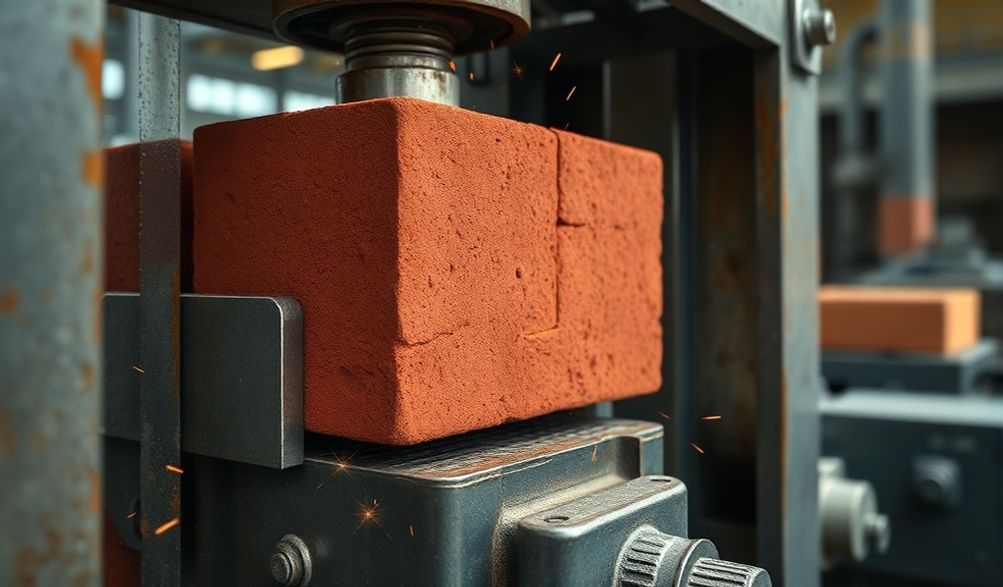
Кирпич ýasamak üçin пресслеýе машиналарыnyň Iň Ýokary Gollanmasy: Görnüşleri, Ulanylyşy we Nädip Saýlamaly
Kerpiçler medeniýetiň esas gurluş bloklarydyr. Gadymy ocaklardan başlap häzirki gökdelenlere çenli, olaryň berkligi dünýämiziň bel oguryny düzýär. Ýöne her bir yzygiderli we berk kerpiçiň yzysyra, kerpiç ýasamak üçin gerek bolan tehnologiýa: kerpiç sıkma maşyny bardyr. Häzirki gurluşyň netijelilik, berk we birlikde bolmagyna bolan islegi bu maşyny hökmany edýär. Bu doly gollanma, gurluş dolandyryjysy, önümçilik kärhanasy ýa-da inžiner bolsaňyz hem, size hünärment çeşme bolmak üçin düzüldi. Biz kerpiç sıkma maşynlarynyň dürli görnüşlerini, olaryň ýörite ulanylyşlary we dogry maşyny saýlamakdaky möhüm amallary aýdyňlaşdyrarys. Soňunda, önümçilik maksatlaryňyz, çig mal we büdjetiňiz bilen gabat gelýän bilimli karary kabul etmek üçin aýdyň çarçywanyňyz bolar.
Brick Press Machine nämädir? Esasy Funksiýasy we Ösüşi
Onuň esasynda, kerpiç presleýji maşyny, toz ýa-da ýary-gury çig materialy güýçli güýç bilen ýygy, takyk şekilli kerpiçe öwürmek üçin ulanylýan guraldyr. Ol häzirki zaman kerpiç öndürişiniň esasy düýbü bolup, laý, kül, beton ýa-da berkidilen toprak ýaly boş materiallary birmeňzeş, ýokary berkligiň gurluş birliklerine öwürýär.
Esasy Prensip: Gol Kompressiýadan Mekaniki Kompressiýa Geçiş
Esasy proses – bu gysma. Çig material galypa (ýa-da ştan) ýerleşdirilýär we ýokary basyş güýji ulanýlar, mehaniki lever, titräýän baş ýa-da gidrawliki ram arkaly. Bu basyş howa boşluklaryny aýyrýar, bölejikleriň birikmesini artdyrýar we çykarylanda öz görnüşini saklaýan berk massany emele getirýär.
- Taryhy Seret.Asyrlar dowamynda bu, agaç galyplar we adam güýji bilen amala aşyrylýan, el işi talap edýän we netijede hiliniň üýtgeýän we önümiň pes bolýan prosesi boldy.
- Häzirki Zaman Ewolýusiýasy:Häzirki döwürde maşynlar mehaniki we gidrawlik injenerligiň heýran galdyryjy netijeleridir. Olar tonna ýa-da megaPaskal (MPa) bilen ölçenýän dolandyrylyan, gaýtalanýan basyşy amala aşyrýar, her bir kerpiçiň ölçeg we güýç taýdan takyk standartlara laýyk gelýändigine kepil edýär. Bu ösüş, el bilen basmakdan mehanizirlenen basmaga geçiş, häzirki infrastruktura üçin zerur bolan ölçeg we yzygiderliligi üpjün etmäge mümkinçilik berýär.
Näme üçin Basyş Möhümdir: Kerpiç Hasiyetine Peýdalary
Ýokary, dolandyrylan basyş diňe görnüş bermek däl, eýsem öňdebaryjy önümi döretmekdir. Bu peýdalaryň esasy, gurluşyň berkligini üpjün etmekdir:
- Köpeltilen Dykyzlyk we Güýçlilik:Hasyllyk ýokarylygy gönüden-göni MPa-da ölçelýän möhüm görkezijisi bolan ýokary gysma berkligine getirýär. Bu ýük daýýan diwarlaryň has agyr ýükleri goldap biljekdigini aňladýar.
- Güýçlendirilen berkligi:Ыкма кышлары сувды аз сиңирýар, олары гатлама заýалына, howa şertlerine we effloresansiýa garşy has berk edýär.
- Ölçeg Birligi:Düzgün galyplar we yzygiderly basyş, ýakyn çäkler bilen kerpiçleri öndürýär. Bu bolsa dik hasaplara, inçe sement goşundylaryna we çalt, netijeli kerpiç gurmaga getirýär.
- Gowy görnüşi gowulandyryldy:Басылған кірпіштердің беті тегіз және жиектері өткір болады, бұл эстетикалық талаптарға ие болған жасалған кірпіштер немесе тротуар тақталары үшін өте қолайлы.
- Gysagtyň wagty gysgaldyldy.Sement esasly kiremitler (beton ýa-da kül ýaly) üçin, başlangyç ýokary gysylma, gurylanda soňky güýjüň ösmegi üçin zerur bolan wagty gysgaldyp biler.
Кирпич басыу машиналарының түрлери: Догры дүшүш табув
Choosing the correct type of press is your most critical decision. The right machine aligns with your raw material, desired product, and production volume.
Hydraulic Press Machines: Power and Precision
Hydraulic brick presses use fluid power to generate immense, smoothly applied force. A hydraulic pump drives a ram that compacts the material in the mold. The pressure is easily adjustable and can be held for a set duration (dwell time), allowing for optimal compression.
- Olar nähili işleýär: Hydraulic oil is pressurized by a pump and directed to a cylinder. This cylinder extends a ram that applies direct, linear force to the material in the mold cavity.
- Esasy Üstünlik: Unmatched, controllable pressure. This makes them exceptionally versatile for a wide range of material densities and brick strengths.
- LSI Applications: Ideal for producing high-strength fly ash bricks, precision concrete pavers, complex бир-бирлешик кирпичлер, and solid clay bricks.
- Iň Gowy: High-volume production plants, manufacturers requiring a diverse product range, and applications where ultimate brick strength is non-negotiable.
Mechanical (Vibration) Press Machines: Speed and Efficiency
Often called block-making machines, these units combine high-frequency vibration with a compaction force. The vibration fluidizes the concrete mix, allowing it to flow evenly into all corners of the mold before a descending head applies final compaction pressure.
- Olar nähili işleýär: An eccentric weight creates vibrations transmitted to the mold table. Simultaneously, a mechanical or hydraulic press head descends to compact the material.
- Esasy Üstünlik: High production speed and excellent consistency for fluid concrete mixes.
- LSI Applications: Primarily used for producing boş bloklar, gaty bloklar, and lightweight CLC (Cellular Lightweight Concrete) blocks.
- Iň Gowy: Large-scale production of standard concrete blocks and pavers, where output speed is a primary driver.
Manual & Semi-Automatic Presses: For Startups and Special Projects
These are the entry point into brick pressing, requiring more operator involvement but with a significantly lower capital investment.
- Manual Lever Presses: Simple, human-powered machines. The operator fills a mold and uses a lever to apply pressure. Output is low but perfect for small-scale brick making, DIY projects, or community-led low-cost housing initiatives.
- Small Hydraulic Presses: Often semi-automatic, where the operator places the mold and initiates a hydraulic cycle. They offer a good balance between improved quality/output over manual presses and manageable cost.
- Role: Essential for prototyping, artisanal production, small batches of specialty bricks, or markets with very low labor costs.
Automatic vs. Semi-Automatic Brick Production Lines
This distinction refers to the level of automation in the entire production process, not just the pressing action.
- Ярым-автомат сызықтар: The core pressing cycle is automated, but tasks like raw material feeding, mold changing, or brick stacking may require operator intervention. They offer a middle ground in terms of cost, output, and flexibility.
- Doly Awtomatik ýollary: Integrated systems where everything—from raw material conveying and mixing, to pressing, curing, stacking, and palletizing—is automated via PLC controls. They maximize output (bricks per hour) and minimize labor but require a major capital investment.
- The Trade-off: It’s a calculation of capital expenditure versus long-term operational (labor) costs and target output volume.
Critical Factors for Choosing a Brick Press Machine
Beyond the machine type, drill down into these specific criteria to find your perfect match.
Production Capacity & Output Targets
Your business plan should dictate the machine’s speed.
* Calculate BPMH: Determine your required Bricks Per Machine Hour. Consider your shift patterns and market demand.
* Understand Cycle Time: This is the total time for one complete pressing cycle (fill, press, eject). A machine with a 15-second cycle time is fundamentally different from one with a 45-second cycle time.
* Match to Goals: A startup might prioritize a lower-cost, slower semi-automatic press, while a supplier for a large development needs a high-speed automatic line.
Çygmalaryň Uýgunlygy
Not all presses work with all materials. This is a non-negotiable specification.
* Clay Brick Making: Requires a press capable of handling semi-dry or stiff-mud clay with significant abrasive wear resistance.
* Cement Brick Machine: Designed for no-slump concrete mixes, often paired with vibration.
* Fly Ash Brick Press: Must handle the specific mix of fly ash, sand, and lime/cement, often requiring high static pressure from a hydraulic system.
* Soil Stabilization: For compressed earth blocks (CEBs), the press must compact soil mixed with a small stabilizer (like cement or lime).
Brick Type, Size, and Shape Specifications
Your product catalog is defined by your machine’s mold capabilities.
* Kalyp Ýagdaýy: Can the machine easily switch between molds for different products (e.g., from solid bricks to pavers)?
* Özelleşdirme: Will the manufacturer create custom molds for unique, proprietary shapes or sizes?
* Standard Offerings: Ensure the machine can produce the standard sizes relevant to your market (e.g., modular, queen, or engineer-sized bricks).
Power Source and Operational Costs
Consider your facility’s infrastructure and long-term running expenses.
* Electric vs. Diesel: Electric motors are cleaner and quieter for indoor factories with stable grid power. Diesel engines provide mobility and are crucial for off-grid or remote site production.
* Energiýa sarp edişi: Analyze the kW or horsepower rating. A more efficient machine has a lower cost-per-brick over its lifetime.
* Total ROI: Factor in not just the purchase price, but estimated energy, maintenance, and labor costs over 5-10 years.
Space Requirements and After-Sales Support
- Factory Layout: Account for the machine’s footprint, plus space for raw material storage, mixing, brick stacking, curing, and movement.
- The Trustworthiness Factor: Your relationship with the supplier is critical. Investigate:
- Supplier Reputation: How long have they been in business? Can they provide references?
- Warranty: What is covered and for how long?
- Ehtiyat Bölümleri: Is there a local depot or guaranteed supply chain for critical wear parts like hydraulic seals, molds, and vibration motors?
- Техникалық қолдау Do they offer installation, training, and troubleshooting support?
Operational Best Practices and Maintenance
A machine is only as good as its operation and upkeep.
Safe Operation Procedures for Brick Presses
Safety must be the absolute priority.
* Operator Training: No one should operate the machine without thorough training on its controls and hazards.
* Lockout-Tagout (LOTO): Strict procedures must be in place for any maintenance or clearing of jams to prevent accidental activation.
* Şahsy gorag enjamlary (ŞGE): Safety glasses, hearing protection (for vibration presses), and steel-toed boots are mandatory.
* Guarding: Ensure all moving parts, especially pinch points and the compression area, are properly guarded.
Routine Maintenance Checklist
Preventive maintenance prevents costly downtime.
* Daily: Check hydraulic oil levels, inspect for leaks, clean the mold and press head, ensure safety devices are functional.
* Weekly: Lubricate all moving parts per the manual, check belt tensions, inspect electrical connections.
* Monthly: Change hydraulic filters, check and tighten all bolts and fittings, perform a detailed inspection of the mold for wear or damage.
* Annually: Consider a full system check by a qualified technician, including hydraulic fluid analysis.
Troubleshooting Common Issues
- Low Brick Density/Strength: Often caused by insufficient pressure, incorrect raw material mix (too dry or poor grading), or a worn mold allowing material escape.
- Bricks Sticking in Mold: Can be due to a worn or damaged mold, insufficient release agent (if used), or overly wet material.
- Hydraulic Leaks: Inspect seals, hoses, and fittings. Address immediately to prevent system contamination and pressure loss.
- Uneven Compression: This may indicate an unlevel machine, a worn or misaligned press head, or uneven material feeding into the mold.
Frequently Asked Questions (FAQ)
Q1: What is the average cost of a brick press machine?
A: Costs vary dramatically. A small manual press can be a few thousand dollars. A robust semi-automatic hydraulic press may range from $15,000 to $50,000. High-capacity, fully automatic production lines can cost from $100,000 to over $500,000. Key cost factors are the type (hydraulic/mechanical), level of automation, production capacity, and the manufacturer’s brand and location.
Q2: Can one machine produce different types of bricks?
A: Yes, in most cases. This is achieved by changing the mold or die. The critical factor is the machine’s mold-changing system—how quick and easy it is. When evaluating a press, inquire about mold compatibility, changeover time, and the cost of additional molds.
Q3: What is the difference between a brick press and a brick extruder?
A: They use different forming principles. An extruder forces a plastic, wet clay mix through a shaped die to create a continuous column, which is then cut into bricks. A press compacts a drier mix into a discrete mold in a single, high-pressure stroke. Presses generally offer higher dimensional accuracy for products like pavers and are better suited for non-plastic materials like fly ash or concrete.
Q4: How important is the brick curing process after pressing?
A: It is absolutely critical. The press gives the brick its shape and initial green strength, but final structural strength is developed during curing. For cement-based bricks, this typically involves controlled moisture and temperature (often steam curing) for a set period. Proper curing is as vital as proper pressing for achieving the advertised MPa strength.
Q5: What are the key certifications or standards to look for in a machine?
A: Look for international certifications that indicate adherence to safety and quality manufacturing standards. Common ones include:
* CE Белгиси:Ýewropa Ykdysady Giňişliginde satylýan önümleriň saglygy, howpsuzlygy we tebigaty goramak standartlaryna laýyklygyny görkezýär.
* ISO sertifikatlandyrmasy: (e.g., ISO 9001 for quality management systems) shows the manufacturer follows standardized production processes.
* Local/National Standards: Depending on your country, there may be specific industrial equipment standards. Always request the machine’s compliance documentation.
Netije
Dogry saýlamakpress machine for brick production is a strategic investment that impacts your product quality, operational efficiency, and business profitability. The journey begins with a clear understanding of your raw materials, desired brick specifications, and production targets. From the immense, controllable force of a hydraulic press to the rapid efficiency of a vibration machine, the correct choice hinges on aligning technology with purpose.
As a final piece of expert guidance, we urge you to go beyond brochures. Conduct thorough due diligence: request to test your specific raw material mix on a supplier’s machine, ask for detailed performance data, and if possible, visit an existing plant to see the equipment in operation. The future of brick pressing points towards greater automation, energy efficiency, and versatility in using sustainable, recycled materials.
Ready to take the next step? Consult with reputable manufacturers, request detailed specification sheets tailored to your project, and leverage expert advice to make a confident investment in your brick-making future.
<