
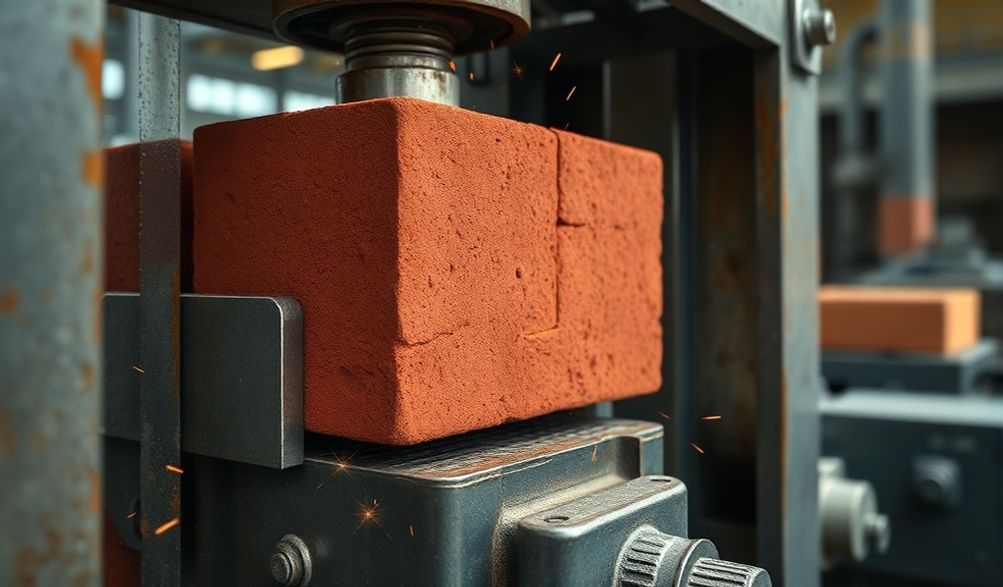
Le Guide Ultime des Presses à Briques : Types, Utilisations et Comment Choisir
Les briques sont littéralement les éléments de base de la civilisation. Des foyers anciens aux gratte-ciel modernes, leur force durable forme l'épine dorsale de notre monde. Mais derrière chaque brique uniforme et résistante se cache une technologie essentielle : la presse à briques. La demande de l'industrie de la construction moderne en matière d'efficacité, de solidité et d'uniformité a rendu cette machine indispensable. Ce guide complet est conçu pour être votre ressource experte, que vous soyez chef de chantier, entrepreneur en fabrication ou ingénieur. Nous allons démystifier les différents types de presses à briques, leurs applications spécifiques et les facteurs cruciaux pour choisir le bon modèle. À la fin, vous disposerez d'un cadre clair pour prendre une décision éclairée, en adéquation avec vos objectifs de production, vos matières premières et votre budget.
Qu'est-ce qu'une presse à briques ? Fonction principale et évolution
Au cœur de l'opération, une presse à briques est une machine qui utilise une force immense pour compacter de la matière première en poudre ou semi-sèche en une brique dense et de forme précise. C'est la pierre angulaire de la fabrication moderne de briques, transformant des matériaux meubles comme l'argile, les cendres volantes, le béton ou la terre stabilisée en unités de construction uniformes et à haute résistance.
Le principe de base : de la compression manuelle à la compression mécanique
Le processus fondamental est la compression. La matière première est introduite dans un moule (ou une filière), et une force à haute pression est appliquée, soit par un levier mécanique, une tête vibrante, ou un vérin hydraulique. Cette pression élimine les vides d'air, augmente la cohésion des particules et forme une masse solide qui conserve sa forme lors de l'éjection.
- Contexte historique :Pendant des siècles, ce fut un processus manuel et laborieux, utilisant des moules en bois et la force humaine, ce qui entraînait une qualité variable et une faible production.
- Évolution moderne :Les machines d’aujourd'hui sont des merveilles d’ingénierie mécanique et hydraulique. Elles appliquent une pression contrôlée et reproductible, mesurée en tonnes ou en mégapascals (MPa), garantissant que chaque brique répond à des spécifications précises de dimension et de résistance. Cette évolution, du pressage manuel au pressage mécanisé, est ce qui permet l’envergure et la cohérence nécessaires aux infrastructures contemporaines.
Pourquoi la pression est essentielle : avantages pour la qualité des briques
L'application d'une pression élevée et contrôlée ne se limite pas au façonnage ; il s'agit d'ingénierie d'un produit supérieur. Les avantages sont fondamentaux pour l'intégrité structurelle :
- Densité et résistance accrues :Une compaction plus élevée se traduit directement par une résistance à la compression plus élevée, une mesure critique exprimée en MPa. Cela signifie que les murs porteurs peuvent supporter plus de poids.
- Durabilité améliorée :Les briques denses ont une absorption d'eau plus faible, ce qui les rend plus résistantes aux dommages causés par le gel, aux intempéries et à l'efflorescence.
- Uniformité dimensionnelle :Les moules de précision et la pression constante produisent des briques aux tolérances serrées. Cela conduit à des murs plus droits, des joints de mortier plus minces et une pose de briques plus rapide et plus efficace.
- Finition de surface améliorée :Les briques pressées ont souvent des faces plus lisses et des arêtes plus nettes, ce qui est idéal pour les briques de parement ou les pavés où l'esthétique est importante.
- Temps de durcissement réduit :Pour les briques à base de ciment (comme le béton ou les cendres volantes), un compactage initial élevé peut réduire le temps nécessaire au développement de la résistance finale pendant la cure.
Types de presses à briques : Trouver le modèle adapté
Choisir le bon type de presse est votre décision la plus cruciale. La machine appropriée correspond à votre matière première, au produit souhaité et au volume de production.
Machines à presser hydrauliques : Puissance et Précision
Les presses à briques hydrauliques utilisent la puissance des fluides pour générer une force immense et appliquée en douceur. Une pompe hydraulique actionne un vérin qui compacte la matière dans le moule. La pression est facilement ajustable et peut être maintenue pendant une durée déterminée (temps de maintien), permettant une compression optimale.
- Comment ils fonctionnent :L'huile hydraulique est mise sous pression par une pompe et dirigée vers un vérin. Ce vérin déploie un piston qui applique une force linéaire directe sur la matière dans la cavité du moule.
- Avantage clé :Pression inégalée et contrôlable. Cela les rend exceptionnellement polyvalents pour une vaste gamme de densités de matériaux et de résistances de briques.
- Applications LSI :Idéal pour produire des pièces à haute résistancebriques de cendres volantes, precision concrete pavers, complex Briques imbriquées, and solid clay bricks.
- Idéal pour : High-volume production plants, manufacturers requiring a diverse product range, and applications where ultimate brick strength is non-negotiable.
Mechanical (Vibration) Press Machines: Speed and Efficiency
Often called block-making machines, these units combine high-frequency vibration with a compaction force. The vibration fluidizes the concrete mix, allowing it to flow evenly into all corners of the mold before a descending head applies final compaction pressure.
- Comment ils fonctionnent : An eccentric weight creates vibrations transmitted to the mold table. Simultaneously, a mechanical or hydraulic press head descends to compact the material.
- Avantage clé : High production speed and excellent consistency for fluid concrete mixes.
- Applications LSI : Primarily used for producing blocs creux, blocs solides, and lightweight CLC (Cellular Lightweight Concrete) blocks.
- Idéal pour : Large-scale production of standard concrete blocks and pavers, where output speed is a primary driver.
Manual & Semi-Automatic Presses: For Startups and Special Projects
These are the entry point into brick pressing, requiring more operator involvement but with a significantly lower capital investment.
- Pressions manuelles sur le levier : Simple, human-powered machines. The operator fills a mold and uses a lever to apply pressure. Output is low but perfect for fabrication de briques à petite échelle, DIY projects, or community-led low-cost housing initiatives.
- Small Hydraulic Presses: Often semi-automatic, where the operator places the mold and initiates a hydraulic cycle. They offer a good balance between improved quality/output over manual presses and manageable cost.
- Role: Essential for prototyping, artisanal production, small batches of specialty bricks, or markets with very low labor costs.
Automatic vs. Semi-Automatic Brick Production Lines
This distinction refers to the level of automation in the entire production process, not just the pressing action.
- Lignes Semi-Automatiques : The core pressing cycle is automated, but tasks like raw material feeding, mold changing, or brick stacking may require operator intervention. They offer a middle ground in terms of cost, output, and flexibility.
- Lignes entièrement automatiques : Integrated systems where everything—from raw material conveying and mixing, to pressing, curing, stacking, and palletizing—is automated via PLC controls. They maximize output (bricks per hour) and minimize labor but require a major capital investment.
- The Trade-off: It’s a calculation of capital expenditure versus long-term operational (labor) costs and target output volume.
Critical Factors for Choosing a Brick Press Machine
Beyond the machine type, drill down into these specific criteria to find your perfect match.
Production Capacity & Output Targets
Your business plan should dictate the machine’s speed.
* Calculate BPMH: Determine your required Bricks Per Machine Hour. Consider your shift patterns and market demand.
* Comprendre le temps de cycle This is the total time for one complete pressing cycle (fill, press, eject). A machine with a 15-second cycle time is fundamentally different from one with a 45-second cycle time.
* Match to Goals: A startup might prioritize a lower-cost, slower semi-automatic press, while a supplier for a large development needs a high-speed automatic line.
Compatibilité des matières premières
Not all presses work with all materials. This is a non-negotiable specification.
* Clay Brick Making: Requires a press capable of handling semi-dry or stiff-mud clay with significant abrasive wear resistance.
* Cement Brick Machine: Designed for no-slump concrete mixes, often paired with vibration.
* Fly Ash Brick Press: Must handle the specific mix of fly ash, sand, and lime/cement, often requiring high static pressure from a hydraulic system.
* Soil Stabilization: For compressed earth blocks (CEBs), the press must compact soil mixed with a small stabilizer (like cement or lime).
Brick Type, Size, and Shape Specifications
Your product catalog is defined by your machine’s mold capabilities.
* Polyvalence des moules : Can the machine easily switch between molds for different products (e.g., from solid bricks to pavers)?
* Personnalisation : Will the manufacturer create custom molds for unique, proprietary shapes or sizes?
* Standard Offerings: Ensure the machine can produce the standard sizes relevant to your market (e.g., modular, queen, or engineer-sized bricks).
Source d'alimentation et coûts opérationnels
Consider your facility’s infrastructure and long-term running expenses.
* Electric vs. Diesel: Electric motors are cleaner and quieter for indoor factories with stable grid power. Diesel engines provide mobility and are crucial for off-grid or remote site production.
* Consommation d'énergie : Analyze the kW or horsepower rating. A more efficient machine has a lower cost-per-brick over its lifetime.
* Total ROI: Factor in not just the purchase price, but estimated energy, maintenance, and labor costs over 5-10 years.
Space Requirements and After-Sales Support
- Factory Layout: Account for the machine’s footprint, plus space for raw material storage, mixing, brick stacking, curing, and movement.
- The Trustworthiness Factor: Your relationship with the supplier is critical. Investigate:
- Supplier Reputation: How long have they been in business? Can they provide references?
- Garantie : What is covered and for how long?
- Pièces de rechange : Is there a local depot or guaranteed supply chain for critical wear parts like hydraulic seals, molds, and vibration motors?
- Support technique : Do they offer installation, training, and troubleshooting support?
Operational Best Practices and Maintenance
A machine is only as good as its operation and upkeep.
Safe Operation Procedures for Brick Presses
Safety must be the absolute priority.
* Formation des opérateurs : No one should operate the machine without thorough training on its controls and hazards.
* Lockout-Tagout (LOTO): Strict procedures must be in place for any maintenance or clearing of jams to prevent accidental activation.
* Équipement de protection individuelle (EPI) : Safety glasses, hearing protection (for vibration presses), and steel-toed boots are mandatory.
* Guarding: Ensure all moving parts, especially pinch points and the compression area, are properly guarded.
Routine Maintenance Checklist
Preventive maintenance prevents costly downtime.
* Daily: Check hydraulic oil levels, inspect for leaks, clean the mold and press head, ensure safety devices are functional.
* Weekly: Lubricate all moving parts per the manual, check belt tensions, inspect electrical connections.
* Monthly: Change hydraulic filters, check and tighten all bolts and fittings, perform a detailed inspection of the mold for wear or damage.
* Annually: Consider a full system check by a qualified technician, including hydraulic fluid analysis.
Troubleshooting Common Issues
- Low Brick Density/Strength: Often caused by insufficient pressure, incorrect raw material mix (too dry or poor grading), or a worn mold allowing material escape.
- Bricks Sticking in Mold: Can be due to a worn or damaged mold, insufficient release agent (if used), or overly wet material.
- Hydraulic Leaks: Inspect seals, hoses, and fittings. Address immediately to prevent system contamination and pressure loss.
- Uneven Compression: This may indicate an unlevel machine, a worn or misaligned press head, or uneven material feeding into the mold.
Foire aux questions (FAQ)
Q1: What is the average cost of a brick press machine?
A : Costs vary dramatically. A small manual press can be a few thousand dollars. A robust semi-automatic hydraulic press may range from $15,000 to $50,000. High-capacity, fully automatic production lines can cost from $100,000 to over $500,000. Key cost factors are the type (hydraulic/mechanical), level of automation, production capacity, and the manufacturer’s brand and location.
Q2: Can one machine produce different types of bricks?
A : Yes, in most cases. This is achieved by changing the mold or die. The critical factor is the machine’s mold-changing system—how quick and easy it is. When evaluating a press, inquire about mold compatibility, changeover time, and the cost of additional molds.
Q3: What is the difference between a brick press and a brick extruder?
A : They use different forming principles. An extruder forces a plastic, wet clay mix through a shaped die to create a continuous column, which is then cut into bricks. A press compacts a drier mix into a discrete mold in a single, high-pressure stroke. Presses generally offer higher dimensional accuracy for products like pavers and are better suited for non-plastic materials like fly ash or concrete.
Q4: How important is the brick curing process after pressing?
A : It is absolutely critical. The press gives the brick its shape and initial green strength, but final structural strength is developed during curing. For cement-based bricks, this typically involves controlled moisture and temperature (often steam curing) for a set period. Proper curing is as vital as proper pressing for achieving the advertised MPa strength.
Q5: What are the key certifications or standards to look for in a machine?
A : Look for international certifications that indicate adherence to safety and quality manufacturing standards. Common ones include:
* Marquage CE :Indique la conformité aux normes de santé, de sécurité et de protection de l'environnement pour les produits vendus dans l'Espace économique européen.
* Certification ISO : (e.g., ISO 9001 for quality management systems) shows the manufacturer follows standardized production processes.
* Local/National Standards: Depending on your country, there may be specific industrial equipment standards. Always request the machine’s compliance documentation.
Conclusion
Choisir le bonpress machine for brick production is a strategic investment that impacts your product quality, operational efficiency, and business profitability. The journey begins with a clear understanding of your raw materials, desired brick specifications, and production targets. From the immense, controllable force of a hydraulic press to the rapid efficiency of a vibration machine, the correct choice hinges on aligning technology with purpose.
As a final piece of expert guidance, we urge you to go beyond brochures. Conduct thorough due diligence: request to test your specific raw material mix on a supplier’s machine, ask for detailed performance data, and if possible, visit an existing plant to see the equipment in operation. The future of brick pressing points towards greater automation, energy efficiency, and versatility in using sustainable, recycled materials.
Ready to take the next step? Consult with reputable manufacturers, request detailed specification sheets tailored to your project, and leverage expert advice to make a confident investment in your brick-making future.
<