
Ultima Ductoria ad Machinas Pressorias pro Lateribus Faciendis: Genera, Usus et Quomodo Eligere
Lateres sunt fundamenta ipsa civilizationis. Ab antiquis focis ad moderna caeliscalpia, eorum firma diuturnitas columen mundi nostri efficit. Sed post omnem laterem constantem ac durabilem latet technologiae pars praecipua: machina prensoria ad lateres faciendos. Postulatum aedificationis modernae efficacitatis, firmitatis et uniformitatis hanc machinam necessariam reddidit. Hoc manuale plenum comparatum est ut sit peritum subsidium tuum, sive procurator aedificationis sis, sive entrepreneur fabricationis, sive machinator. Disseremus varias machinarum prensoriarum laterum species, eorum applicationes specificas, et factores cruciales in eligenda apta. In fine, habebis compagem claram ad consilium informatum capiendum quod cum propositis productionis, materiis rudibus, et sumptu tuo congruat.
Quid est Machina Laterum Pressura? Munus Principale et Evolutio
In medulla sua, machina laterum prementis est machinamentum quod vi ingenti utitur ad materiam rudem pulveratam vel semi-siccam in laterem densum et accurate formatum comprimendam. Hoc est fundamentum fabricationis laterum hodiernae, materias laxsas sicut argillam, cinerem volaticum, concretum, vel solum stabilitatum in unitates aedificiorum uniformes et magnae firmitatis transformans.
Fundamentum: A Manuali Ad Mechanicam Compressionem
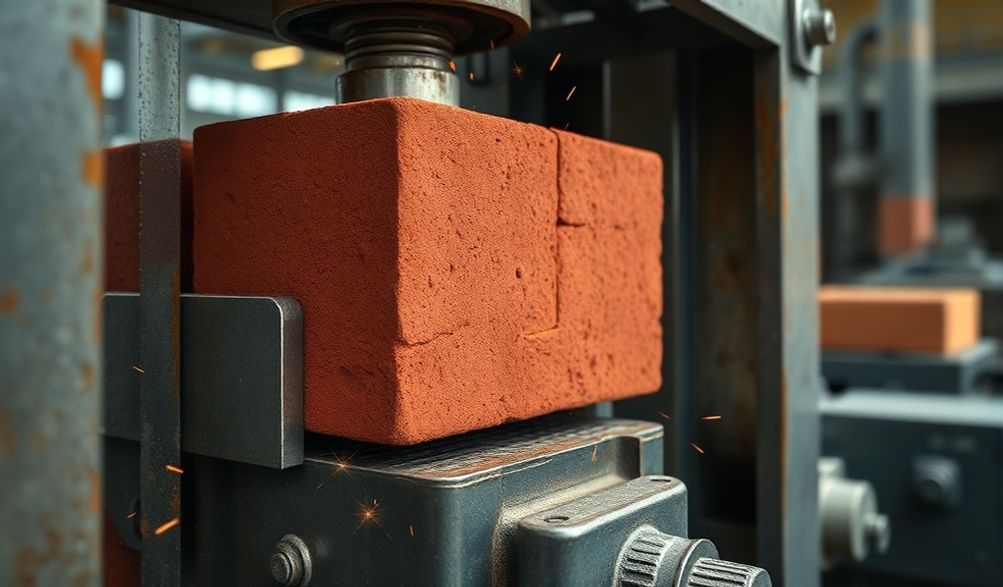
Processus fundamentalis est compressio. Materia cruda in formam (vel matricem) immittitur, visque altae pressionis applicatur, sive per vectem mechanicam, sive per caput vibrantem, sive per arietem hydraulicum. Haec pressio inanes aëris excludit, cohaesionem particularum auget, massamque solidam format, quae figuram suam servat cum eiecta est.
- Contextus Historicus:Per saecula, hic processus manualis erat, laboris intensivus, formis ligneis et viribus humanis utens, qualitate variabili et fructu exiguo effectus.
- Evolutio Hodierna:Machinae hodiernae sunt mirabilia artis mechanicae et hydraulicae. Vim moderatam et repetendam adhibent, quae in tonnis vel megaPascalibus (MPa) mensuratur, efficientes ut omnis laterculus certas dimensionis et firmitatis normas adaequet. Haec evolutio a pressione manuali ad mechanicam id efficit, ut amplitudo et constantia requirantur pro infrastructura nostra aetatis.
Cur Pressura Clavis Sit: Commoda ad Qualitatem Laterum
Alta moderataque pressura non modo ad formandum adhibetur, sed etiam ad opus praestantius fabricandum. Huius beneficia fundamenta sunt integritatis structurae:
- Augmentata Densitas et Firmitas:Maior densitas directe ad maiorem vim compressionis ducit, mensura critica in MPa computata. Hoc significat parietes onera ferentes plus ponderis sustinere posse.
- Firmitas aucta:Lateres densi minorem aquae absorptionem habent, quod eos magis resistentes reddit contra damnum pruinae, tempestatem, et efflorescentiam.
- Uniformitas DimensionisFormae accuratae et pressura constans lateres cum angustiis arctis efficiunt. Hoc ad parietes rectiores, commissuras tenuiores, et structuram celeriorem ac efficaciorem ducit.
- Emendata Superficies Politio:Lateres pressi saepe facies leviores et margines acutiores habent, quod idoneum est lateribus frontariis vel pavimentis ubi species refert.
- Tempus Curationis MinutumLateribus e cemento (ut concretum vel cinis volaticus) factis, alta primaria compaction tempus ad finalem robur in curatione evolvendum redigere potest.
Genera Machinarum Laterum Pressorum: Aptum Ius Invenire
Choosing the correct type of press is your most critical decision. The right machine aligns with your raw material, desired product, and production volume.
Hydraulic Press Machines: Power and Precision
Hydraulic brick presses use fluid power to generate immense, smoothly applied force. A hydraulic pump drives a ram that compacts the material in the mold. The pressure is easily adjustable and can be held for a set duration (dwell time), allowing for optimal compression.
- Quomodo Operantur: Hydraulic oil is pressurized by a pump and directed to a cylinder. This cylinder extends a ram that applies direct, linear force to the material in the mold cavity.
- Praecipuum Commodum: Unmatched, controllable pressure. This makes them exceptionally versatile for a wide range of material densities and brick strengths.
- LSI Applications: Ideal for producing high-strength Lateres ex cinere volatico, precision concrete pavers, complex Lateres intertexti, and solid clay bricks.
- Optimum Pro: High-volume production plants, manufacturers requiring a diverse product range, and applications where ultimate brick strength is non-negotiable.
Mechanical (Vibration) Press Machines: Speed and Efficiency
Often called block-making machines, these units combine high-frequency vibration with a compaction force. The vibration fluidizes the concrete mix, allowing it to flow evenly into all corners of the mold before a descending head applies final compaction pressure.
- Quomodo Operantur: An eccentric weight creates vibrations transmitted to the mold table. Simultaneously, a mechanical or hydraulic press head descends to compact the material.
- Praecipuum Commodum: High production speed and excellent consistency for fluid concrete mixes.
- LSI Applications: Primarily used for producing caementa cava, solidi caudices, and lightweight CLC (Cellular Lightweight Concrete) blocks.
- Optimum Pro: Large-scale production of standard concrete blocks and pavers, where output speed is a primary driver.
Manual & Semi-Automatic Presses: For Startups and Special Projects
These are the entry point into brick pressing, requiring more operator involvement but with a significantly lower capital investment.
- Pressus Manualis Vectis Simple, human-powered machines. The operator fills a mold and uses a lever to apply pressure. Output is low but perfect for small-scale brick making, DIY projects, or community-led low-cost housing initiatives.
- Small Hydraulic Presses: Often semi-automatic, where the operator places the mold and initiates a hydraulic cycle. They offer a good balance between improved quality/output over manual presses and manageable cost.
- Role: Essential for prototyping, artisanal production, small batches of specialty bricks, or markets with very low labor costs.
Automatic vs. Semi-Automatic Brick Production Lines
This distinction refers to the level of automation in the entire production process, not just the pressing action.
- Semiautomaticae Lineae: The core pressing cycle is automated, but tasks like raw material feeding, mold changing, or brick stacking may require operator intervention. They offer a middle ground in terms of cost, output, and flexibility.
- Lineae Omnino Automatae Integrated systems where everything—from raw material conveying and mixing, to pressing, curing, stacking, and palletizing—is automated via PLC controls. They maximize output (bricks per hour) and minimize labor but require a major capital investment.
- The Trade-off: It’s a calculation of capital expenditure versus long-term operational (labor) costs and target output volume.
Critical Factors for Choosing a Brick Press Machine
Beyond the machine type, drill down into these specific criteria to find your perfect match.
Production Capacity & Output Targets
Your business plan should dictate the machine’s speed.
* Calculate BPMH: Determine your required Bricks Per Machine Hour. Consider your shift patterns and market demand.
* Tempus Cycli Cognosce. This is the total time for one complete pressing cycle (fill, press, eject). A machine with a 15-second cycle time is fundamentally different from one with a 45-second cycle time.
* Ad proposita apta. A startup might prioritize a lower-cost, slower semi-automatic press, while a supplier for a large development needs a high-speed automatic line.
Compatibilitas Materiae Crudae
Not all presses work with all materials. This is a non-negotiable specification.
* Clay Brick Making: Requires a press capable of handling semi-dry or stiff-mud clay with significant abrasive wear resistance.
* Machina Laterum Caementiciorum: Designed for no-slump concrete mixes, often paired with vibration.
* Fly Ash Brick Press: Must handle the specific mix of fly ash, sand, and lime/cement, often requiring high static pressure from a hydraulic system.
* Soil Stabilization: For compressed earth blocks (CEBs), the press must compact soil mixed with a small stabilizer (like cement or lime).
Brick Type, Size, and Shape Specifications
Your product catalog is defined by your machine’s mold capabilities.
* Moldis Versatilitas: Can the machine easily switch between molds for different products (e.g., from solid bricks to pavers)?
* Consuetudo: Will the manufacturer create custom molds for unique, proprietary shapes or sizes?
* Standard Offerings: Ensure the machine can produce the standard sizes relevant to your market (e.g., modular, queen, or engineer-sized bricks).
Power Source and Operational Costs
Consider your facility’s infrastructure and long-term running expenses.
* Electric vs. Diesel: Electric motors are cleaner and quieter for indoor factories with stable grid power. Diesel engines provide mobility and are crucial for off-grid or remote site production.
* Energiae Consumptio: Analyze the kW or horsepower rating. A more efficient machine has a lower cost-per-brick over its lifetime.
* Total ROI: Factor in not just the purchase price, but estimated energy, maintenance, and labor costs over 5-10 years.
Space Requirements and After-Sales Support
- Factory Layout: Account for the machine’s footprint, plus space for raw material storage, mixing, brick stacking, curing, and movement.
- The Trustworthiness Factor: Your relationship with the supplier is critical. Investigate:
- Supplier Reputation: How long have they been in business? Can they provide references?
- Cautio: What is covered and for how long?
- Partes Suppetiales: Is there a local depot or guaranteed supply chain for critical wear parts like hydraulic seals, molds, and vibration motors?
- Auxilium Technicum: Do they offer installation, training, and troubleshooting support?
Operational Best Practices and Maintenance
A machine is only as good as its operation and upkeep.
Safe Operation Procedures for Brick Presses
Safety must be the absolute priority.
* Exercitatio Operatoris: No one should operate the machine without thorough training on its controls and hazards.
* Lockout-Tagout (LOTO): Strict procedures must be in place for any maintenance or clearing of jams to prevent accidental activation.
* Instrumenta Praesidii Personalis (IPP) Safety glasses, hearing protection (for vibration presses), and steel-toed boots are mandatory.
* Guarding: Ensure all moving parts, especially pinch points and the compression area, are properly guarded.
Routine Maintenance Checklist
Preventive maintenance prevents costly downtime.
* Daily: Check hydraulic oil levels, inspect for leaks, clean the mold and press head, ensure safety devices are functional.
* Weekly: Lubricate all moving parts per the manual, check belt tensions, inspect electrical connections.
* Monthly: Change hydraulic filters, check and tighten all bolts and fittings, perform a detailed inspection of the mold for wear or damage.
* Annually: Consider a full system check by a qualified technician, including hydraulic fluid analysis.
Troubleshooting Common Issues
- Low Brick Density/Strength: Often caused by insufficient pressure, incorrect raw material mix (too dry or poor grading), or a worn mold allowing material escape.
- Bricks Sticking in Mold: Can be due to a worn or damaged mold, insufficient release agent (if used), or overly wet material.
- Hydraulic Leaks: Inspect seals, hoses, and fittings. Address immediately to prevent system contamination and pressure loss.
- Uneven Compression: This may indicate an unlevel machine, a worn or misaligned press head, or uneven material feeding into the mold.
Interrogationes Saepius Petitae (ISP)
Q1: What is the average cost of a brick press machine?
A: Costs vary dramatically. A small manual press can be a few thousand dollars. A robust semi-automatic hydraulic press may range from $15,000 to $50,000. High-capacity, fully automatic production lines can cost from $100,000 to over $500,000. Key cost factors are the type (hydraulic/mechanical), level of automation, production capacity, and the manufacturer’s brand and location.
Q2: Can one machine produce different types of bricks?
A: Yes, in most cases. This is achieved by changing the mold or die. The critical factor is the machine’s mold-changing system—how quick and easy it is. When evaluating a press, inquire about mold compatibility, changeover time, and the cost of additional molds.
Q3: What is the difference between a brick press and a brick extruder?
A: They use different forming principles. An extruder forces a plastic, wet clay mix through a shaped die to create a continuous column, which is then cut into bricks. A press compacts a drier mix into a discrete mold in a single, high-pressure stroke. Presses generally offer higher dimensional accuracy for products like pavers and are better suited for non-plastic materials like fly ash or concrete.
Q4: How important is the brick curing process after pressing?
A: It is absolutely critical. The press gives the brick its shape and initial green strength, but final structural strength is developed during curing. For cement-based bricks, this typically involves controlled moisture and temperature (often steam curing) for a set period. Proper curing is as vital as proper pressing for achieving the advertised MPa strength.
Q5: What are the key certifications or standards to look for in a machine?
A: Look for international certifications that indicate adherence to safety and quality manufacturing standards. Common ones include:
* CE Signum:Significat conformitatem cum normis salutis, securitatis, et tutelae environmentalis pro productis intra Spatium Oeconomicum Europaeum venditis.
* Certificatio ISO: (e.g., ISO 9001 for quality management systems) shows the manufacturer follows standardized production processes.
* Local/National Standards: Depending on your country, there may be specific industrial equipment standards. Always request the machine’s compliance documentation.
Conclusio.
Rectam eligenspress machine for brick production is a strategic investment that impacts your product quality, operational efficiency, and business profitability. The journey begins with a clear understanding of your raw materials, desired brick specifications, and production targets. From the immense, controllable force of a hydraulic press to the rapid efficiency of a vibration machine, the correct choice hinges on aligning technology with purpose.
As a final piece of expert guidance, we urge you to go beyond brochures. Conduct thorough due diligence: request to test your specific raw material mix on a supplier’s machine, ask for detailed performance data, and if possible, visit an existing plant to see the equipment in operation. The future of brick pressing points towards greater automation, energy efficiency, and versatility in using sustainable, recycled materials.
Ready to take the next step? Consult with reputable manufacturers, request detailed specification sheets tailored to your project, and leverage expert advice to make a confident investment in your brick-making future.
<