El sector de la construcción global está perpetuamente impulsado por la demanda de materiales de construcción confiables, eficientes y rentables. Central en esta industria es el humilde ladrillo, un componente fundamental cuyo método de producción ha sido revolucionado por maquinaria avanzada. Para los distribuidores, comerciantes y especialistas en adquisiciones, comprender las complejidades de este equipo no es solo un ejercicio técnico, sino un imperativo comercial crítico.
Un Examen Detallado de los Sistemas de Fabricación de Ladrillos
1.1 El Proceso Fundamental de Fabricación: Desde la Materia Prima hasta el Producto Terminado
La operación de un sistema de fabricación de ladrillos es una sinfonía de ingeniería de precisión y ciencia de materiales. Transforma materias primas básicas en unidades de construcción estandarizadas y de alta resistencia a través de un proceso meticulosamente orquestado.
- Preparación y Homogenización de Materiales de Precisión:El viaje comienza con la cuidadosa selección y dosificación de materias primas. La mezcla principal generalmente consiste en cemento, diversos áridos (como arena, polvo de piedra o cenizas volantes) y agua. La proporción de estos componentes es primordial, ya que determina la resistencia, textura y durabilidad del producto final. En sistemas avanzados, alimentadores automáticos de pesaje garantizan la uniformidad entre lotes. El proceso de mezcla no se trata simplemente de combinar ingredientes, sino de lograr una consistencia homogénea y semiseca donde cada partícula de cemento esté uniformemente recubierta con el árido y la humedad se distribuya equitativamente. Esta homogeneidad es el primer y más crucial paso hacia la producción de un ladrillo con propiedades estructurales consistentes.
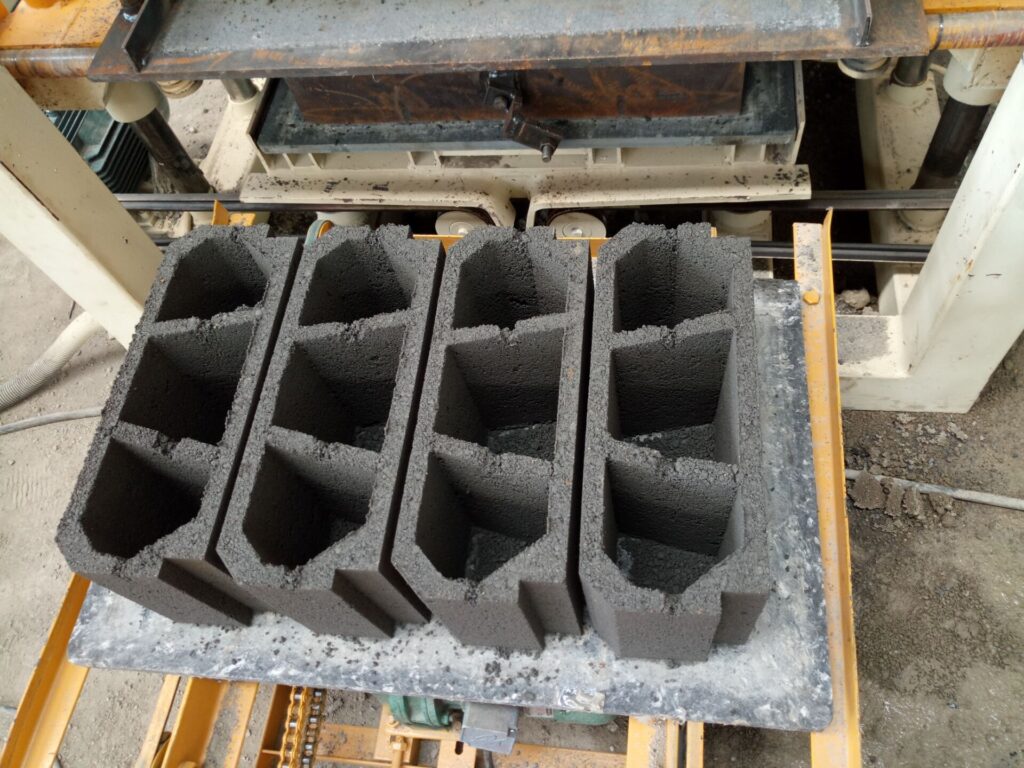
- La Fase Crítica del Llenado y Densificación del Molde.La mezcla preparada se transfiere luego a la cavidad del molde. El diseño y la precisión de este molde son los que definen la forma final del ladrillo, ya sea un bloque rectangular estándar, un diseño de núcleo hueco para aislamiento o una losa de pavimento con patrones intrincados. En aparatos sofisticados, el mecanismo de llenado garantiza una distribución uniforme del material por todo el molde, evitando inconsistencias en la densidad. Tras el llenado, el sistema aplica una inmensa presión mecánica o hidráulica. Esta acción no es simplemente compresión; es un proceso de densificación que expulsa forzosamente el aire atrapado, alinea las partículas e inicia el proceso de unión inicial, resultando en un ladrillo "verde" con suficiente integridad para ser manipulado.
- Curado para el Desarrollo de la Máxima Resistencia y Procesamiento Final:Una vez expulsado del molde, el ladrillo verde posee su forma pero no su resistencia completa. El proceso de curado es donde adquiere su destreza estructural. Esto se puede lograr mediante dos métodos principales. El primero es el curado estático, donde los ladrillos se apilan y se cubren con láminas de curado o se colocan en una cámara donde se mantienen temperatura y humedad controladas durante un período específico, permitiendo la hidratación completa del cemento. El segundo, utilizado en algunos sistemas de alta producción, es el curado con vapor en autoclaves, que acelera significativamente la ganancia de resistencia. Después del curado, las unidades endurecidas se clasifican, cuentan y apilan automáticamente en palés mediante brazos robóticos o sistemas basados en cintas transportadoras, listas para ser envueltas, almacenadas y enviadas.
1.2 Una Taxonomía de los Sistemas de Producción: Adaptando la Tecnología a las Necesidades del Mercado
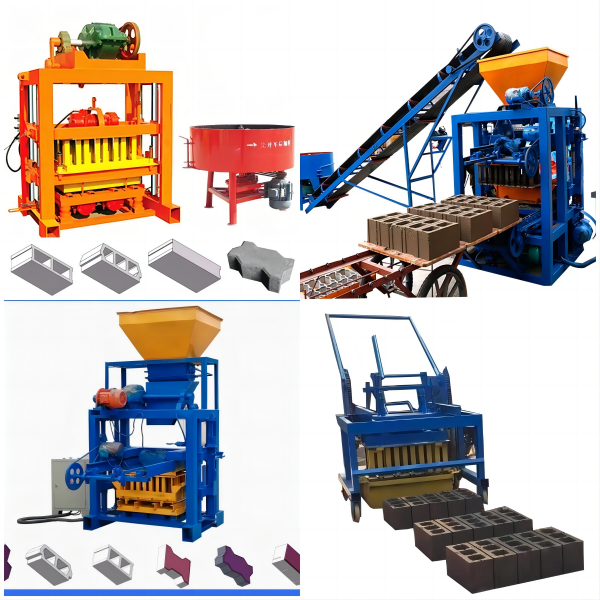
Los sistemas de producción de ladrillos se clasifican según su metodología operativa y grado de automatización, atendiendo cada uno a un segmento distinto del mercado.
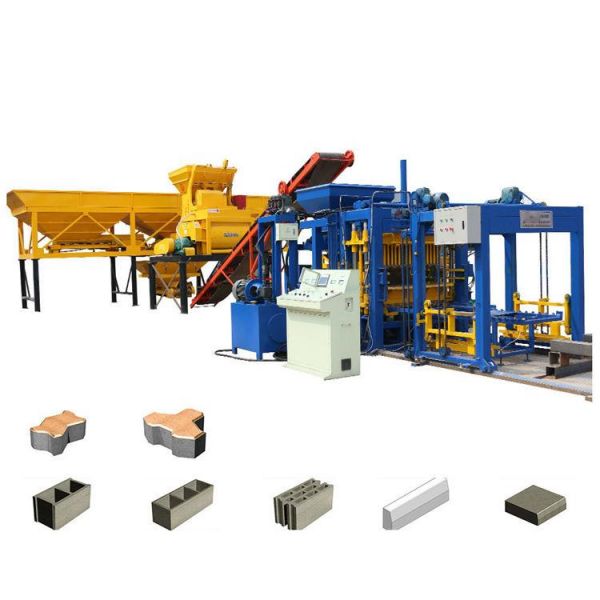
- Líneas de Producción Totalmente Integradas:Estos son los depredadores ápice de la fabricación de ladrillos, diseñados para una producción masiva e ininterrumpida. Se caracterizan por un proceso continuo y de circuito cerrado, donde la entrada de materia prima, la mezcla, el moldeado, el curado y el paletizado están interconectados y son gestionados por un sistema centralizado de control computarizado. La intervención humana se limita principalmente a la supervisión, el mantenimiento y la programación. Estas líneas son la opción óptima para abastecer proyectos de infraestructura a gran escala, distribuidores nacionales y mercados donde el volumen y la calidad constante son no negociables.
- Unidades de Producción Orientadas al Ciclo:Esta categoría representa un punto medio sólido, que ofrece una alta automatización en el proceso central de compactación, aunque requiere asistencia manual para tareas periféricas. La máquina en sí realiza los ciclos de prensado y moldeado de forma automática, pero puede necesitar operarios para alimentar la materia prima en la tolva o transferir los ladrillos recién moldeados a la zona de curado. Esta configuración ofrece un equilibrio excelente, proporcionando una alta capacidad de producción y una notable consistencia en la calidad, con una inversión de capital significativamente menor que una línea totalmente integrada, lo que la hace ideal para empresas en crecimiento y proveedores regionales.
- Sistemas de Compresión Manual.Estas son las unidades más accesibles y versátiles, a menudo caracterizadas por su portabilidad y simplicidad. La operación es fundamentalmente manual: un operario llena la caja del molde, acciona una palanca o una pequeña bomba hidráulica para aplicar presión, y luego libera el ladrillo formado directamente sobre el suelo o una paleta. Aunque su producción por hora es la más baja y dependen de la mano de obra, su bajo costo, mantenimiento mínimo y capacidad de ser desplegadas en el lugar con infraestructura mínima las convierten en una herramienta poderosa para pequeños emprendedores, proyectos comunitarios y series de producción especializadas de bajo volumen.
1.3 Más Allá de la Producción: Evaluación de Parámetros Clave de Rendimiento y Producto
Para un comprador comercial, la evaluación de una máquina va más allá de las especificaciones del folleto. Implica una visión integral de su rendimiento y la calidad del producto que genera.
- Capacidad de Producción y Ritmo Operativo:La cifra de ladrillos por hora debe entenderse en el contexto de todo el ciclo de producción, incluido el tiempo de curado. La capacidad real de una máquina es su producción sostenida durante un turno de 8 o 24 horas, no solo un número teórico máximo.
- Precisión Dimensional y Acabado Superficial:La precisión del molde y la consistencia de la aplicación de la presión impactan directamente en las tolerancias dimensionales y la calidad superficial del ladrillo. Los aparatos de alta calidad producen ladrillos con bordes afilados, superficies lisas y dimensiones uniformes, lo que simplifica la colocación y reduce el uso de mortero.
- Versatilidad en la Formulación de Materias Primas:Una ventaja significativa de los sistemas modernos es su capacidad para funcionar eficazmente con una amplia gama de mezclas de materias primas. Esto incluye la capacidad de incorporar subproductos industriales como la escoria o las cenizas volantes, lo que puede reducir los costos de materiales y mejorar el perfil ambiental del producto.
- Durabilidad y Funcionalidad del Aparato:La calidad de construcción de la máquina, el grado de acero utilizado en el bastidor y el molde, y la fiabilidad de sus sistemas hidráulicos y de control determinan su vida útil operativa y el coste total de propiedad. El fácil acceso para el mantenimiento y la amplia disponibilidad de repuestos comunes son consideraciones logísticas críticas.
1.4 El Caso de Negocio Estratégico para la Tecnología de Fabricación Avanzada
Invertir en un sistema moderno de producción de ladrillos es una decisión estratégica que confiere múltiples capas de ventaja competitiva.
- Eficiencia Económica y Escalabilidad Inigualables: Automation slashes the per-unit cost of production by maximizing output and minimizing direct labor. This creates a scalable business model where increasing volume does not necessitate a linear increase in operational costs, leading to higher profit margins.
- Guaranteed Product Consistency and Adherence to Standards: Machine-made bricks are uniform. This consistency is vital for builders, as it ensures predictable performance, simplifies construction processes, and guarantees compliance with national and international building codes, a key selling point for discerning clients.
- Empowerment through Product Diversification: With a library of interchangeable molds, a single investment can yield a diverse product catalog. A supplier can quickly switch from producing standard construction bricks to decorative pavers, retaining wall blocks, or specialized landscaping products, allowing them to capture multiple market segments and respond agilely to trends.
- Enhancement of Sustainability Credentials: The controlled production process significantly reduces material waste compared to traditional methods. Furthermore, the ability to use recycled aggregates and supplementary cementitious materials allows businesses to market a “greener” product, appealing to a growing segment of environmentally conscious contractors and developers.
1.5 A Procurement Framework for Commercial Stakeholders
Navigating the procurement process requires a disciplined, strategic approach focused on long-term value.
- Conducting a Comprehensive Market and Feasibility Analysis: Before selecting a machine, one must have a deep understanding of the local demand—preferred brick types, quality expectations, and price sensitivity. The chosen technology must be a precise fit for this market reality.
- Performing a Rigorous Total Cost of Ownership (TCO) Analysis: The purchase price is just the initial outlay. A prudent buyer will model all ongoing costs: energy consumption, labor, preventive maintenance, spare parts, and the cost of capital. This TCO model provides a true picture of the investment’s profitability.
- Vetting the Equipment Provider’s Support Ecosystem: The machine’s value is heavily dependent on the supplier’s support. Key questions must be asked: What is their lead time for critical spare parts? Do they offer comprehensive operator training? Is technical support readily accessible? A machine without reliable support is a liability.
- Validating Machine Performance and Compliance: Insist on seeing the machine in operation, preferably under conditions similar to your own. Request certification of compliance with relevant international safety and performance standards. This due diligence mitigates risk and ensures the equipment is fit for its intended purpose.
Conclusión
The technology behind brick manufacturing represents a mature yet continuously evolving field. For distributors and procurement experts, the selection of appropriate machinery is a cornerstone decision that directly impacts market relevance, operational efficiency, and long-term profitability. The spectrum of available systems—from highly automated production lines to versatile manual presses—ensures that there is a technological solution for every business model and market tier. Success in this arena is not merely about purchasing a machine; it is about strategically investing in a production capability that delivers consistent quality, enables product diversification, and builds a formidable reputation for reliability. In the competitive global construction supply chain, mastery over this technology is synonymous with a sustainable competitive edge.
Frequently Asked Questions (FAQ)
Q1: How does the final product from an automated system differ from one produced by a manual machine?
A: While both can produce structurally sound bricks, the key differences lie in consistency and finish. Automated systems produce bricks with exceptional dimensional uniformity, consistent density, and superior surface finish across thousands of units. Manual machines, while capable, may exhibit slight variations in size, density, and texture from one brick to the next due to the inherent variability in human-operated processes.
Q2: What is the typical lead time from procurement to full operational deployment for a semi-automatic system?
A: Lead times can vary significantly based on the complexity of the system and the manufacturer’s schedule. Generally, for a semi-automatic unit, expect a period of 4 to 8 weeks for manufacturing and shipping. On-site installation, foundation preparation, and operator training can add an additional 1 to 3 weeks before the system is fully operational and producing saleable bricks.
Q3: Can these systems be customized to produce unique or proprietary brick designs?
A: Absolutely. The primary method for defining a brick’s shape is the mold. Reputable equipment providers often offer custom mold design and fabrication services. This allows clients to produce unique, patented brick designs, specialty shapes for architectural projects, or products tailored to specific regional preferences.
Q4: What are the most common maintenance requirements, and what is their typical frequency?
A: Regular maintenance is crucial for longevity. Common tasks include:
- Daily: Cleaning of the mold and hopper, visual inspection for leaks or wear.
- Weekly: Checking and tightening of bolts and nuts, inspecting hydraulic hoses.
- Monthly: Changing hydraulic oil filters, checking and calibrating pressure sensors.
- Annually: A comprehensive inspection of the hydraulic system, electrical components, and structural frame.
Q5: How critical is the quality of raw materials to the machine’s performance and output quality?
A: It is fundamentally critical. The machine is designed to process specific types and sizes of aggregates. Using poorly graded sand, contaminated materials, or an incorrect water-cement ratio can lead to production issues like mold sticking, poor compaction, and low-strength bricks. Consistent, high-quality raw materials are a prerequisite for achieving the machine’s advertised performance and product quality.
Q6: What are the primary power requirements for operating a medium-capacity automated unit?
A: Most medium-to-large industrial units require a three-phase electrical power supply, typically at 380V-440V, with a significant power draw (e.g., 20-50 kW depending on the model). It is essential to have a stable power source and the necessary electrical infrastructure in place. Some systems can also be configured with optional diesel power units for locations with unreliable grid electricity.