Глобальний будівельний сектор постійно керується попитом на надійні, ефективні та економічно вигідні будівельні матеріали. Основою цієї галузі є звичайна цегла, фундаментальний компонент, метод виробництва якого був революціонізований завдяки сучасному обладнанню. Для дистриб'юторів, дилерів і фахівців із закупівель розуміння тонкощів цієї техніки є не лише технічним завданням, але й критично важливим бізнес-імперативом.
Детальний огляд систем виробництва цегли
1.1 Основний виробничий процес: від сировини до готової продукції
Робота системи виробництва цегли — це симфонія прецизійної інженерії та матеріалознавства. Вона перетворює базові сировинні матеріали на стандартизовані, високоміцні будівельні блоки за допомогою ретельно оркестрованого процесу.
- Точна підготовка та гомогенізація матеріалів:Подорож починається з ретельного відбору та дозування сировини. Основна суміш зазвичай складається з цементу, різних наповнювачів (таких як пісок, кам’яний пил або зола-вино) та води. Співвідношення цих компонентів має вирішальне значення, оскільки воно визначає міцність, текстуру та довговічність кінцевого продукту. У сучасних системах автоматизовані вагові дозатори забезпечують сталість від партії до партії. Процес змішування — це не просто поєднання інгредієнтів, а досягнення однорідної, напівсухої консистенції, де кожна частка цементу рівномірно покрита наповнювачем, а волога рівномірно розподілена. Ця однорідність є першим і найважливішим кроком у виробництві цеглини зі стабільними структурними властивостями.
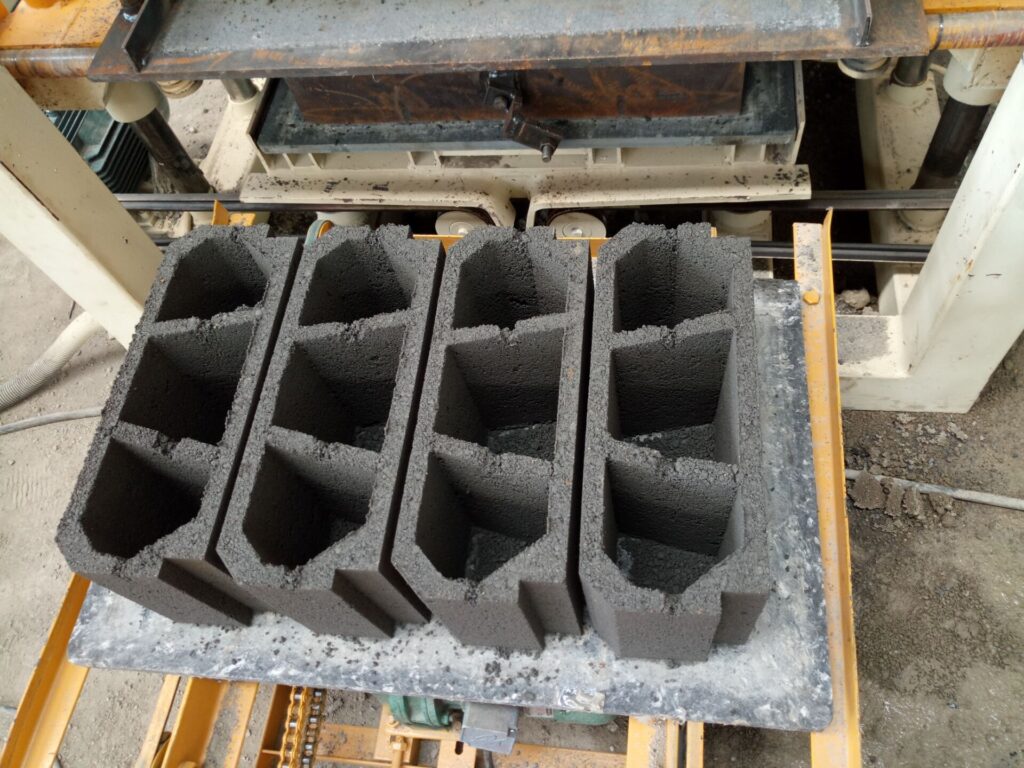
- Критична фаза заповнення та ущільнення формиПідготовлену суміш потім переміщують у порожнину форми. Конструкція та точність цієї форми визначають остаточну форму цеглини, будь то стандартний прямокутний блок, пустотіла конструкція для теплоізоляції або складний бруківний камінь із візерунком. У складних апаратах механізм наповнення забезпечує рівномірний розподіл матеріалу по всій формі, запобігаючи неоднорідності щільності. Після наповнення система застосовує величезний механічний або гідравлічний тиск. Ця дія не є просто стисненням; це процес ущільнення, який виштовхує захоплене повітря, вирівнює частинки матеріалу та ініціює початковий процес зв'язування, у результаті чого утворюється "сира" цегла з достатньою цілісністю для подальшого поводження.
- Догляд для досягнення максимальної міцності та фінальна обробка:Після вилучення з форми, сирцева цегла набуває своєї форми, але не повної міцності. Процес тверднення — це те, що надає їй структурної міцності. Цього можна досягти двома основними методами. Перший — це статичне тверднення, коли цеглу складають у штабелі та накривають захисними покривалами або поміщають у камеру, де підтримується контрольована температура та вологість протягом певного часу, що дозволяє повністю завершити гідратацію цементу. Другий метод, який використовується у деяких високопродуктивних системах, — це парове тверднення в автоклавах, що значно прискорює набір міцності. Після тверднення затверділі блоки автоматично сортується, підраховуються та складаються на палети за допомогою роботизованих маніпуляторів або конвеєрних систем, після чого вони готові до пакування, зберігання та відвантаження.
1.2 Таксономія виробничих систем: узгодження технології з потребами ринку
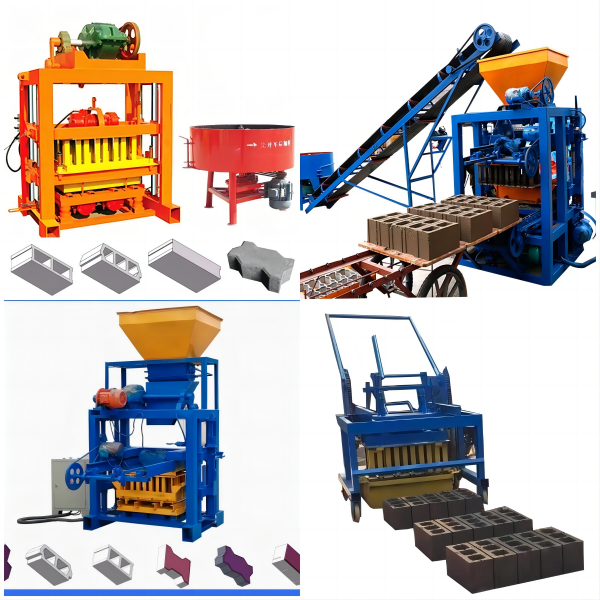
Системи виробництва цегли класифікуються за їх операційною методологією та ступенем автоматизації, кожна з яких обслуговує окремий сегмент ринку.
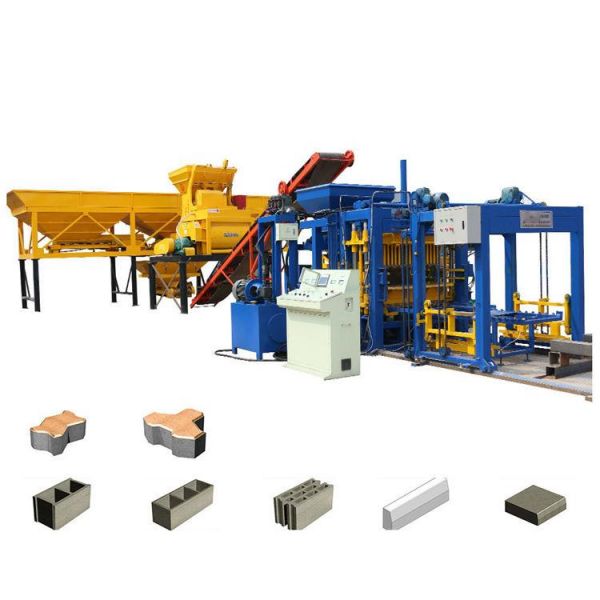
- Повністю інтегровані виробничі лінії:Це вершина харчового ланцюга у виробництві цегли, створені для масового, безперервного випуску продукції. Їхня характерна риса — безшовний, замкнутий процес, де подача сировини, змішування, формування, тверднення та палетування взаємопов’язані та керуються централізованою комп’ютеризованою системою контролю. Втручання людини обмежується переважно моніторингом, технічним обслуговуванням та програмуванням. Такі лінії є оптимальним вибором для забезпечення масштабних інфраструктурних проектів, національних дистриб’юторів та ринків, де обсяги та стабільна якість є безальтернативними вимогами.
- Цикло-орієнтовані виробничі одиниці:Ця категорія є надійним компромісом, пропонуючи високий рівень автоматизації основного процесу ущільнення, але вимагаючи ручної допомоги для допоміжних завдань. Сама машина автоматично виконує цикли пресування та формування, проте оператори можуть бути потрібні для завантаження сировини в бункер або перенесення свіжовиготовлених цеглин до зони твердіння. Така конфігурація забезпечує чудовий баланс, надаючи високу виробничу потужність та вражаючу стабільність якості за значно менших капітальних вкладень порівняно з повністю інтегрованою лінією, що робить її ідеальним варіантом для бізнесів на етапі розвитку та регіональних постачальників.
- Ручні системи стиснення:Це найдоступніші та найуніверсальніші агрегати, які часто відрізняються портативністю та простотою. Робота з ними є суттєво ручною: оператор заповнює формувальну камеру, за допомогою важеля або невеликого гідравлічного насоса створює тиск, а потім вивантажує сформовану цеглу безпосередньо на землю або на піддон. Хоча їх продуктивність за годину є найнижчою, і вони залежать від ручної праці, низька вартість, мінімальне технічне обслуговування та можливість розгортання на місці з мінімальною інфраструктурою роблять їх потужним інструментом для дрібних підприємців, громадських проектів та спеціалізованого виробництва невеликими партіями.
1.3 За межами виходу: оцінка ключових показників ефективності та параметрів продукту
Для комерційного покупця оцінка машини виходить за межі характеристик, зазначених у брошурі. Вона включає в себе цілісний погляд на її продуктивність та якість продукції, яку вона виробляє.
- Вихідна потужність та операційний ритм:Показник цеглин за годину слід розглядати в контексті повного виробничого циклу, включаючи час твердіння. Реальна потужність машини визначається її стабільним випуском протягом 8-годинної або 24-годинної зміни, а не лише піковим теоретичним значенням.
- Точність розмірів та якість поверхні: The precision of the mold and the consistency of the pressure application directly impact the brick’s dimensional tolerances and surface quality. High-quality apparatuses produce bricks with sharp edges, smooth surfaces, and uniform dimensions, which simplifies bricklaying and reduces mortar usage.
- Versatility in Raw Material Formulation: A significant advantage of modern systems is their ability to function effectively with a wide range of raw material mixes. This includes the ability to incorporate industrial by-products like slag or fly ash, which can reduce material costs and enhance the product’s environmental profile.
- Durability and Serviceability of the Apparatus: The machine’s construction quality, the grade of steel used in the frame and mold, and the reliability of its hydraulic and control systems determine its operational lifespan and total cost of ownership. Easy access for maintenance and the widespread availability of common spare parts are critical logistical considerations.
1.4 The Strategic Business Case for Advanced Manufacturing Technology
Investing in a modern brick production system is a strategic decision that confers multiple layers of competitive advantage.
- Unmatched Economic Efficiency and Scalability: Automation slashes the per-unit cost of production by maximizing output and minimizing direct labor. This creates a scalable business model where increasing volume does not necessitate a linear increase in operational costs, leading to higher profit margins.
- Guaranteed Product Consistency and Adherence to Standards: Machine-made bricks are uniform. This consistency is vital for builders, as it ensures predictable performance, simplifies construction processes, and guarantees compliance with national and international building codes, a key selling point for discerning clients.
- Empowerment through Product Diversification: With a library of interchangeable molds, a single investment can yield a diverse product catalog. A supplier can quickly switch from producing standard construction bricks to decorative pavers, retaining wall blocks, or specialized landscaping products, allowing them to capture multiple market segments and respond agilely to trends.
- Enhancement of Sustainability Credentials: The controlled production process significantly reduces material waste compared to traditional methods. Furthermore, the ability to use recycled aggregates and supplementary cementitious materials allows businesses to market a “greener” product, appealing to a growing segment of environmentally conscious contractors and developers.
1.5 A Procurement Framework for Commercial Stakeholders
Navigating the procurement process requires a disciplined, strategic approach focused on long-term value.
- Conducting a Comprehensive Market and Feasibility Analysis: Before selecting a machine, one must have a deep understanding of the local demand—preferred brick types, quality expectations, and price sensitivity. The chosen technology must be a precise fit for this market reality.
- Performing a Rigorous Total Cost of Ownership (TCO) Analysis: The purchase price is just the initial outlay. A prudent buyer will model all ongoing costs: energy consumption, labor, preventive maintenance, spare parts, and the cost of capital. This TCO model provides a true picture of the investment’s profitability.
- Vetting the Equipment Provider’s Support Ecosystem: The machine’s value is heavily dependent on the supplier’s support. Key questions must be asked: What is their lead time for critical spare parts? Do they offer comprehensive operator training? Is technical support readily accessible? A machine without reliable support is a liability.
- Validating Machine Performance and Compliance: Insist on seeing the machine in operation, preferably under conditions similar to your own. Request certification of compliance with relevant international safety and performance standards. This due diligence mitigates risk and ensures the equipment is fit for its intended purpose.
Висновок
The technology behind brick manufacturing represents a mature yet continuously evolving field. For distributors and procurement experts, the selection of appropriate machinery is a cornerstone decision that directly impacts market relevance, operational efficiency, and long-term profitability. The spectrum of available systems—from highly automated production lines to versatile manual presses—ensures that there is a technological solution for every business model and market tier. Success in this arena is not merely about purchasing a machine; it is about strategically investing in a production capability that delivers consistent quality, enables product diversification, and builds a formidable reputation for reliability. In the competitive global construction supply chain, mastery over this technology is synonymous with a sustainable competitive edge.
Часті питання (FAQ)
Q1: How does the final product from an automated system differ from one produced by a manual machine?
A: While both can produce structurally sound bricks, the key differences lie in consistency and finish. Automated systems produce bricks with exceptional dimensional uniformity, consistent density, and superior surface finish across thousands of units. Manual machines, while capable, may exhibit slight variations in size, density, and texture from one brick to the next due to the inherent variability in human-operated processes.
Q2: What is the typical lead time from procurement to full operational deployment for a semi-automatic system?
A: Lead times can vary significantly based on the complexity of the system and the manufacturer’s schedule. Generally, for a semi-automatic unit, expect a period of 4 to 8 weeks for manufacturing and shipping. On-site installation, foundation preparation, and operator training can add an additional 1 to 3 weeks before the system is fully operational and producing saleable bricks.
Q3: Can these systems be customized to produce unique or proprietary brick designs?
A: Absolutely. The primary method for defining a brick’s shape is the mold. Reputable equipment providers often offer custom mold design and fabrication services. This allows clients to produce unique, patented brick designs, specialty shapes for architectural projects, or products tailored to specific regional preferences.
Q4: What are the most common maintenance requirements, and what is their typical frequency?
A: Regular maintenance is crucial for longevity. Common tasks include:
- Daily: Cleaning of the mold and hopper, visual inspection for leaks or wear.
- Weekly: Checking and tightening of bolts and nuts, inspecting hydraulic hoses.
- Monthly: Changing hydraulic oil filters, checking and calibrating pressure sensors.
- Annually: A comprehensive inspection of the hydraulic system, electrical components, and structural frame.
Q5: How critical is the quality of raw materials to the machine’s performance and output quality?
A: It is fundamentally critical. The machine is designed to process specific types and sizes of aggregates. Using poorly graded sand, contaminated materials, or an incorrect water-cement ratio can lead to production issues like mold sticking, poor compaction, and low-strength bricks. Consistent, high-quality raw materials are a prerequisite for achieving the machine’s advertised performance and product quality.
Q6: What are the primary power requirements for operating a medium-capacity automated unit?
A: Most medium-to-large industrial units require a three-phase electrical power supply, typically at 380V-440V, with a significant power draw (e.g., 20-50 kW depending on the model). It is essential to have a stable power source and the necessary electrical infrastructure in place. Some systems can also be configured with optional diesel power units for locations with unreliable grid electricity.