글로벌 건설 부문은 신뢰성, 효율성, 비용 효율적인 건축 자재에 대한 수요에 의해 끊임없이 추진됩니다. 이 산업의 핵심은 기본 구성 요소인 벽돌로, 그 생산 방식은 첨단 기계에 의해 혁신되었습니다. 유통업자, 판매업체 및 조달 전문가에게 이 장비의 복잡성을 이해하는 것은 단순한 기술적 작업이 아닌 중요한 비즈니스 필수 요소입니다.
벽돌 제조 시스템에 대한 상세한 검토
1.1 기본 제조 공정: 원자재에서 완제품까지
벽돌 제조 시스템의 운영은 정밀 공학과 재료 과학의 교향곡과 같습니다. 이는 기본 원자재를 세심하게 조율된 공정을 통해 표준화되고 고강도의 건설 단위로 변환합니다.
- 정밀 재료 준비 및 균질화여정은 원료의 신중한 선별과 배합으로 시작됩니다. 주요 혼합물은 일반적으로 시멘트, 다양한 골재(모래, 석분, 플라이애시 등), 그리고 물로 구성됩니다. 이 구성 요소들의 비율은 최종 제품의 강도, 질감, 내구성을 결정하는 가장 중요한 요소입니다. 고급 시스템에서는 자동 계량 공급 장치가 배치 간 일관성을 보장합니다. 혼합 과정은 단순히 재료를 섞는 것이 아니라, 모든 시멘트 입자가 골재로 균일하게 코팅되고 수분이 고르게 분포된 균질한 반건조 상태를 달성하는 것입니다. 이러한 균질성은 일관된 구조적 특성을 가진 벽돌을 생산하기 위한 첫 번째이자 가장 중요한 단계입니다.
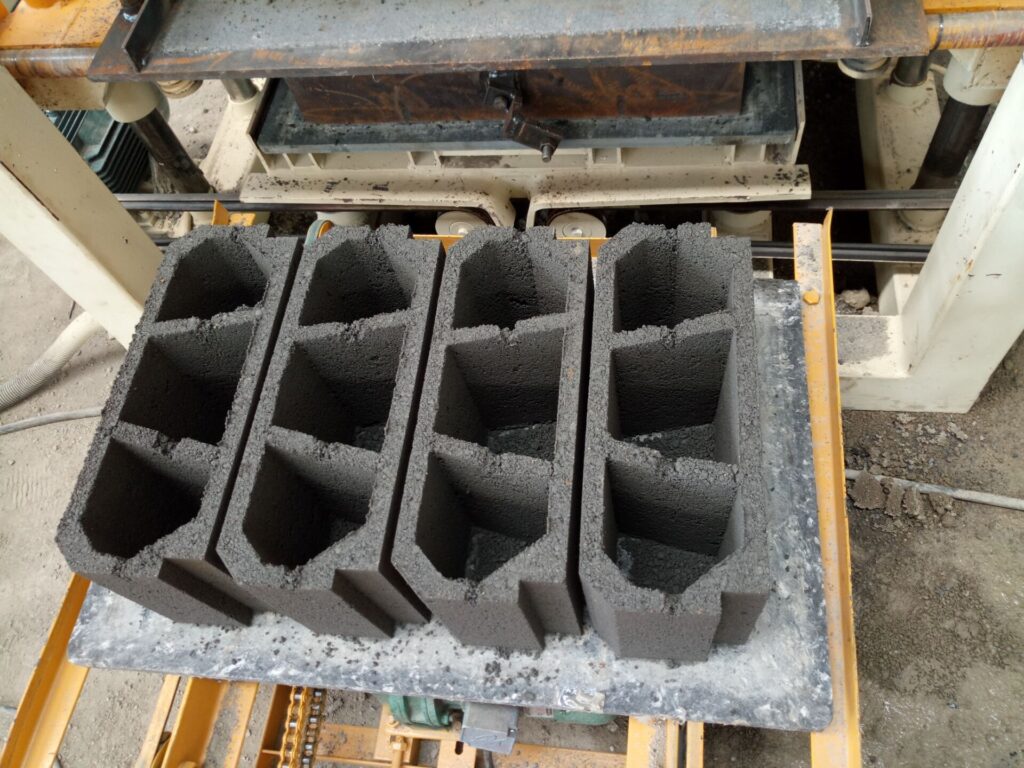
- 금형 충전 및 다짐의 결정적 단계준비된 혼합물은 그 후 몰드 캐비티로 옮겨집니다. 이 몰드의 설계와 정밀도가 벽돌의 최종 형태를 결정하며, 그것이 표준 직사각형 블록이든, 단열을 위한 중공 설계이든, 또는 복잡한 무늬의 포장석이든 상관없습니다. 정교한 장치에서는 충전 메커니즘이 몰드 전체에 재료가 고르게 분포되도록 하여 밀도의 불균일을 방지합니다. 충전 후 시스템은 엄청난 기계적 또는 유압 압력을 가합니다. 이 작용은 단순한 압축이 아닌, 공기를 강제로 배출하고 입자 물질을 정렬하며 초기 결합 과정을 시작하여 취급 가능한 충분한 강도를 가진 "생벽돌"을 만드는 고밀화 과정입니다.
- 궁극적 강도 개발 및 최종 처리를 위한 양생금형에서 배출된 생벽돌은 모양을 갖추지만 완전한 강도는 아직 부족합니다. 경화 과정에서 구조적 강도를 얻게 되는데, 주로 두 가지 방법으로 이루어집니다. 첫 번째는 정적 경화로, 벽돌을 쌓아 경화 시트로 덮거나 온도와 습도가 일정 기간 동안 제어되는 챔버에 두어 시멘트의 완전한 수화 작용을 가능하게 합니다. 두 번째는 일부 고생산 시스템에서 사용되는 오토클레이브 증기 경화로, 강도 발현 속도를 크게 가속시킵니다. 경화 후, 단단해진 벽돌은 로봇 팔이나 컨베이어 시스템을 통해 자동으로 분류, 계수되어 팔레트에 쌓이며, 포장, 보관 및 출하 준비를 마칩니다.
1.2 생산 시스템의 분류: 기술과 시장 요구의 조화
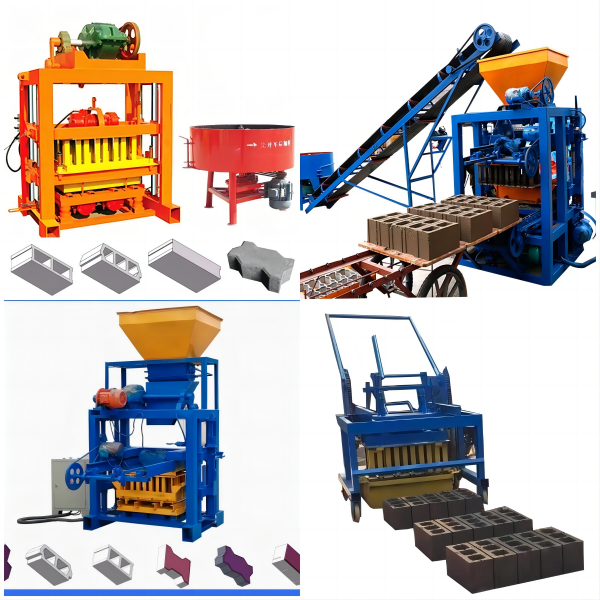
벽돌 생산 시스템은 운영 방법론과 자동화 정도에 따라 분류되며, 각각 시장의 서로 다른 부문에 맞춰져 있습니다.
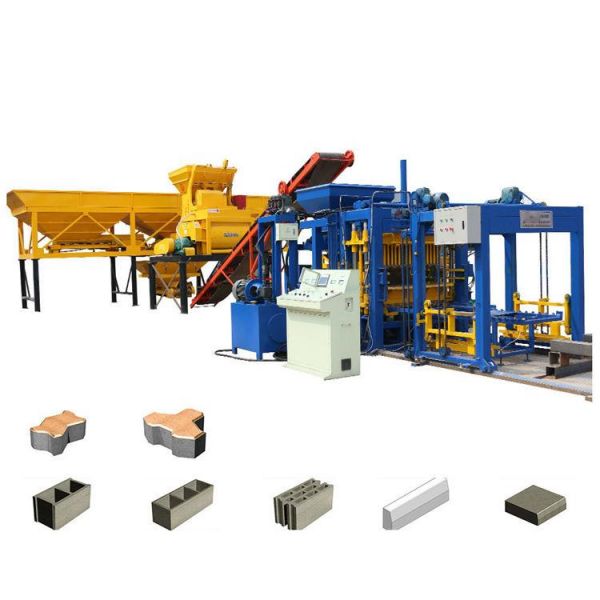
- 완전 통합 생산 라인:이들은 벽돌 제조의 최상위 포식자로, 거대하고 중단 없는 생산량을 위해 설계되었습니다. 특징은 원료 투입, 혼합, 성형, 양생, 그리고 팔레타이징이 모두 연결되고 중앙 컴퓨터 제어 시스템에 의해 관리되는 완벽한 폐쇄 루프 공정입니다. 인간의 개입은 주로 모니터링, 유지 보수, 그리고 프로그래밍으로 제한됩니다. 이러한 라인은 대규모 인프라 프로젝트, 국가 유통업체, 그리고 규모와 일관된 품질이 절대적인 시장에 공급하기 위한 최적의 선택입니다.
- 사이클 지향 생산 단위:이 카테고리는 견고한 중간 지점을 나타내며, 핵심 성형 공정에서는 높은 자동화를 제공하지만 주변 작업에서는 수동 지원이 필요합니다. 기계 자체는 압축 및 성형 사이클을 자동으로 수행하지만, 호퍼에 원료를 공급하거나 새로 성형된 벽돌을 양생 구역으로 이동시키기 위해 작업자가 필요할 수 있습니다. 이 구성은 완전 통합 라인보다 훨씬 낮은 자본 투자로 높은 생산 능력과 뛰어난 품질 일관성을 제공하는 탁월한 균형을 제공하여, 성장 중인 기업과 지역 공급업체에 이상적입니다.
- 수동 압축 시스템이들은 가장 접근성이 높고 다용도로 사용할 수 있는 장비로, 휴대성과 단순함이 특징입니다. 작동은 기본적으로 수동으로 이루어집니다: 작업자가 몰드 박스를 채우고, 레버나 소형 유압 펌프를 작동하여 압력을 가한 후, 성형된 벽돌을 직접 지면이나 팔레트 위에 내놓습니다. 시간당 생산량은 가장 낮고 노동력에 의존하지만, 낮은 비용, 최소한의 유지보수, 그리고 최소한의 기반 시설만으로 현장에 배치할 수 있는 능력 덕분에 소규모 기업가, 지역사회 기반 프로젝트, 그리고 특수한 소량 생산에 강력한 도구가 됩니다.
1.3 산출물을 넘어서: 핵심 성과 및 제품 매개변수 평가
상업적 구매자에게 있어 기계 평가는 브로셔에 명시된 사양을 넘어섭니다. 이는 기계의 성능과 그것이 생산하는 제품의 품질에 대한 종합적인 관점을 포함합니다.
- 출력 용량과 운영 리듬시간당 벽돌 생산량은 경화 시간을 포함한 전체 생산 사이클의 맥락에서 이해되어야 합니다. 기계의 진정한 능력은 단순한 이론적 최고치가 아니라 8시간 또는 24시간 교대 근무 동안 지속 가능한 생산량입니다.
- 치수 정밀도와 표면 마감 The precision of the mold and the consistency of the pressure application directly impact the brick’s dimensional tolerances and surface quality. High-quality apparatuses produce bricks with sharp edges, smooth surfaces, and uniform dimensions, which simplifies bricklaying and reduces mortar usage.
- Versatility in Raw Material Formulation: A significant advantage of modern systems is their ability to function effectively with a wide range of raw material mixes. This includes the ability to incorporate industrial by-products like slag or fly ash, which can reduce material costs and enhance the product’s environmental profile.
- Durability and Serviceability of the Apparatus: The machine’s construction quality, the grade of steel used in the frame and mold, and the reliability of its hydraulic and control systems determine its operational lifespan and total cost of ownership. Easy access for maintenance and the widespread availability of common spare parts are critical logistical considerations.
1.4 The Strategic Business Case for Advanced Manufacturing Technology
Investing in a modern brick production system is a strategic decision that confers multiple layers of competitive advantage.
- Unmatched Economic Efficiency and Scalability: Automation slashes the per-unit cost of production by maximizing output and minimizing direct labor. This creates a scalable business model where increasing volume does not necessitate a linear increase in operational costs, leading to higher profit margins.
- Guaranteed Product Consistency and Adherence to Standards: Machine-made bricks are uniform. This consistency is vital for builders, as it ensures predictable performance, simplifies construction processes, and guarantees compliance with national and international building codes, a key selling point for discerning clients.
- Empowerment through Product Diversification: With a library of interchangeable molds, a single investment can yield a diverse product catalog. A supplier can quickly switch from producing standard construction bricks to decorative pavers, retaining wall blocks, or specialized landscaping products, allowing them to capture multiple market segments and respond agilely to trends.
- Enhancement of Sustainability Credentials: The controlled production process significantly reduces material waste compared to traditional methods. Furthermore, the ability to use recycled aggregates and supplementary cementitious materials allows businesses to market a “greener” product, appealing to a growing segment of environmentally conscious contractors and developers.
1.5 A Procurement Framework for Commercial Stakeholders
Navigating the procurement process requires a disciplined, strategic approach focused on long-term value.
- Conducting a Comprehensive Market and Feasibility Analysis: Before selecting a machine, one must have a deep understanding of the local demand—preferred brick types, quality expectations, and price sensitivity. The chosen technology must be a precise fit for this market reality.
- Performing a Rigorous Total Cost of Ownership (TCO) Analysis: The purchase price is just the initial outlay. A prudent buyer will model all ongoing costs: energy consumption, labor, preventive maintenance, spare parts, and the cost of capital. This TCO model provides a true picture of the investment’s profitability.
- Vetting the Equipment Provider’s Support Ecosystem: The machine’s value is heavily dependent on the supplier’s support. Key questions must be asked: What is their lead time for critical spare parts? Do they offer comprehensive operator training? Is technical support readily accessible? A machine without reliable support is a liability.
- Validating Machine Performance and Compliance: Insist on seeing the machine in operation, preferably under conditions similar to your own. Request certification of compliance with relevant international safety and performance standards. This due diligence mitigates risk and ensures the equipment is fit for its intended purpose.
결론
The technology behind brick manufacturing represents a mature yet continuously evolving field. For distributors and procurement experts, the selection of appropriate machinery is a cornerstone decision that directly impacts market relevance, operational efficiency, and long-term profitability. The spectrum of available systems—from highly automated production lines to versatile manual presses—ensures that there is a technological solution for every business model and market tier. Success in this arena is not merely about purchasing a machine; it is about strategically investing in a production capability that delivers consistent quality, enables product diversification, and builds a formidable reputation for reliability. In the competitive global construction supply chain, mastery over this technology is synonymous with a sustainable competitive edge.
자주 묻는 질문 (FAQ)
Q1: How does the final product from an automated system differ from one produced by a manual machine?
A: While both can produce structurally sound bricks, the key differences lie in consistency and finish. Automated systems produce bricks with exceptional dimensional uniformity, consistent density, and superior surface finish across thousands of units. Manual machines, while capable, may exhibit slight variations in size, density, and texture from one brick to the next due to the inherent variability in human-operated processes.
Q2: What is the typical lead time from procurement to full operational deployment for a semi-automatic system?
A: Lead times can vary significantly based on the complexity of the system and the manufacturer’s schedule. Generally, for a semi-automatic unit, expect a period of 4 to 8 weeks for manufacturing and shipping. On-site installation, foundation preparation, and operator training can add an additional 1 to 3 weeks before the system is fully operational and producing saleable bricks.
Q3: Can these systems be customized to produce unique or proprietary brick designs?
A: Absolutely. The primary method for defining a brick’s shape is the mold. Reputable equipment providers often offer custom mold design and fabrication services. This allows clients to produce unique, patented brick designs, specialty shapes for architectural projects, or products tailored to specific regional preferences.
Q4: What are the most common maintenance requirements, and what is their typical frequency?
A: Regular maintenance is crucial for longevity. Common tasks include:
- Daily: Cleaning of the mold and hopper, visual inspection for leaks or wear.
- Weekly: Checking and tightening of bolts and nuts, inspecting hydraulic hoses.
- Monthly: Changing hydraulic oil filters, checking and calibrating pressure sensors.
- Annually: A comprehensive inspection of the hydraulic system, electrical components, and structural frame.
Q5: How critical is the quality of raw materials to the machine’s performance and output quality?
A: It is fundamentally critical. The machine is designed to process specific types and sizes of aggregates. Using poorly graded sand, contaminated materials, or an incorrect water-cement ratio can lead to production issues like mold sticking, poor compaction, and low-strength bricks. Consistent, high-quality raw materials are a prerequisite for achieving the machine’s advertised performance and product quality.
Q6: What are the primary power requirements for operating a medium-capacity automated unit?
A: Most medium-to-large industrial units require a three-phase electrical power supply, typically at 380V-440V, with a significant power draw (e.g., 20-50 kW depending on the model). It is essential to have a stable power source and the necessary electrical infrastructure in place. Some systems can also be configured with optional diesel power units for locations with unreliable grid electricity.