
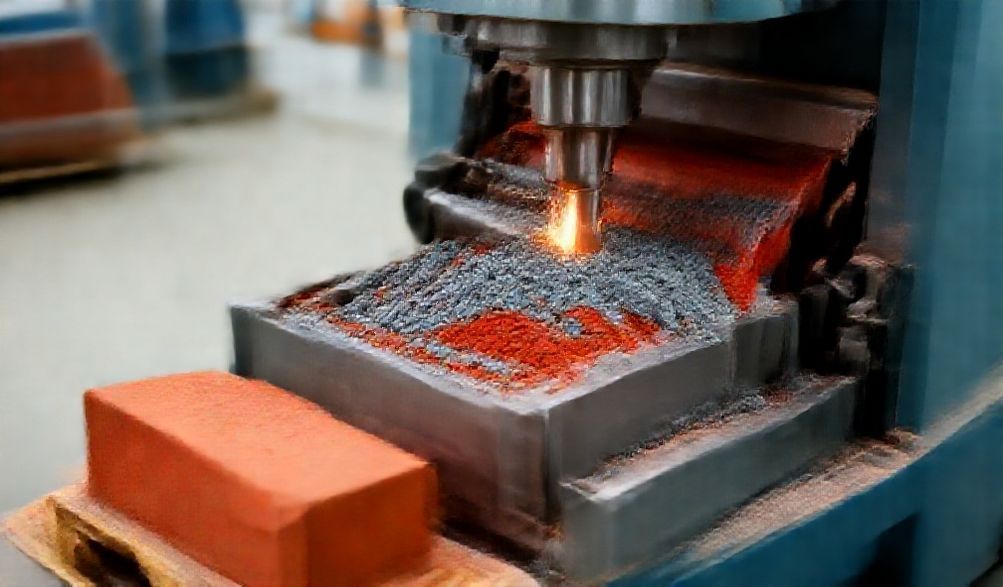
L'Avantage du Constructeur Moderne : Une Analyse Technique Approfondie des Machines à Fabriquer les Briques d'Argile et de Cendres Volantes
À une époque où les exigences de la construction entrent en conflit avec la responsabilité environnementale, l'industrie se trouve à un carrefour critique. La quête de matériaux de construction durables et abordables ne peut plus ignorer l'empreinte colossale de la fabrication traditionnelle. Voici une solution transformative : la machine à fabriquer des briques d'argile et de cendres volantes. Ce n'est pas simplement un autre équipement d'usine ; c'est un moteur d'alchimie sophistiqué qui transforme deux ressources abondantes — les déchets industriels et la terre — en la fondation même de notre environnement bâti.
Ce guide est né dans les tranchées des usines de fabrication et des ateliers d'ingénierie. Nous allons au-delà des brochures commerciales pour offrir un manuel pratique et techniquement fondé destiné aux entrepreneurs, aux ingénieurs civils et aux constructeurs visionnaires. Nous analyserons la technologie qui la rend possible, quantifierons ses avantages indéniables et fournirons un cadre lucide pour choisir la machine adaptée à votre projet. Considérez ceci comme votre plan directeur complet pour comprendre une innovation qui refaçonne la construction depuis ses fondations.
Comprendre les briques d'argile et de cendres volantes et leur fabrication
Que sont les briques d'argile et de cendres volantes ?
Les briques d'argile et de cendres volantes sont une alternative performante aux briques d'argile cuites classiques. Leur innovation fondamentale réside dans leur composition : une partie significative de l'argile (généralement 20 à 40 %) est remplacée par descendres volantesune fine poudre vitreuse capturée dans les cheminées des centrales thermiques au charbon. Cette cendre volante, lorsqu'elle est mélangée à de l'argile, de la chaux ou du ciment, et de l'eau, subit uneréaction pouzzolanique.
Ce procédé chimique crée des composants cimentaires stables, ce qui donne une brique qui n'est pas seulement un produit à base de déchets, mais souvent un produit supérieur. Les blocs qui en résultent se caractérisent par une résistance à la compression exceptionnelle, une uniformité dimensionnelle et des propriétés thermiques améliorées.
La technologie de base : fonctionnement de la machine
La magie de transformer un mélange de poudre et d'argile en un bloc de construction de précision est une merveille de génie mécanique et hydraulique. Le processus est une séquence rigoureusement contrôlée :
- Alimentation et Dosage :Tout commence par la régularité. Des doseurs pondéraux automatisés ou des trémies volumétriques distribuent méticuleusement les cendres volantes, l'argile, les liants (comme la chaux ou le ciment) et parfois le gypse. Cela garantit que la formulation du mélange — la recette de la résistance et de la qualité — est reproduite parfaitement pour chaque lot.
- Mélange et Homogénéisation :Les ingrédients secs sont introduits dans un mélangeur, souvent de type à cuve ou à pales, où l’on ajoute de l’eau. L’objectif est d’obtenir un mélange homogène et plastique avec une teneur en humidité optimale (généralement entre 8 et 12 %). Cette « maniabilité » est cruciale pour l’étape suivante.
- Compactage & Moulage :C'est le cœur de la machine. Le mélange préparé est introduit dans une boîte à moules (matrice). Ici, une pression immense est appliquée. Il existe des méthodes primaires :
- Pression hydraulique :Un vérin hydraulique applique une pression constante et élevée (allant de 80 à plus de 300 tonnes), comprimant le mélange en une forme dense et solide.
- Compactage par Vibration: High-frequency vibration, sometimes combined with lower pressure, consolidates the mix.
This stage determines the brick’s density, strength, and surface finish.
- Éjection et manutention : The newly formed “green brick” is gently ejected from the mold onto a conveyor belt or pallet. Advanced systems use robotic arms or stackers to organize bricks for curing, minimizing handling damage.
- Guérison : Unlike traditional bricks, these are not fired. Instead, they gain strength through curing:
- Steam Curing: Bricks are placed in a curing chamber and exposed to saturated steam (60-80°C) for 8-12 hours. This accelerates the pozzolanic reaction, yielding high early strength within days.
- Water/Air Curing: A slower process where bricks are sprinkled with water and covered for 2-3 weeks. Suitable for smaller operations.
Key Advantages of Using a Clay Fly Ash Brick Making Machine
Avantages environnementaux et de durabilité
The environmental case for this technology is compelling and multifaceted.
- Utilisation des déchets : Each brick produced consumes a substantial amount of fly ash, diverting this industrial byproduct from landfills and ash ponds, which are a significant source of air and water pollution.
- Efficacité énergétique : The process eliminates the need for fossil fuel-fired kilns, which operate at over 1000°C. The energy savings are dramatic, often exceeding 70-80% compared to traditional brick manufacturing.
- Conservation des ressources By reducing reliance on topsoil, it helps preserve fertile agricultural land and prevents topsoil degradation, a major ecological concern in many regions.
Economic and Performance Benefits
The sustainability benefits are powerfully complemented by strong economic and performance drivers.
- Rentabilité Fly ash is often a low-cost or even free raw material (with transport being the main cost). Combined with lower energy bills, this significantly reduces the cost per brick, boosting profit margins.
- Superior Brick Quality: These machines produce bricks that frequently outperform their fired counterparts.
- Higher compressive strength (often 10-15 MPa or more).
- Excellent dimensional consistency, reducing mortar use.
- Lower water absorption, leading to better damp resistance and durability.
- Improved thermal insulation, contributing to energy-efficient buildings.
- Efficacité de la production : Modern machines offer high levels of automation, enabling continuous, large-scale production with minimal manual labor. This leads to predictable output, consistent quality, and better scalability for growing businesses.
How to Choose the Right Clay Fly Ash Brick Making Machine
Évaluation de vos besoins de production
A misaligned machine is a costly mistake. Start by defining your needs:
- Capacité de sortie : Be realistic. Are you supplying a specific project or establishing a commercial plant? Calculate your needed Bricks Per Hour (BPH)ouBricks Per Day (BPD). Machines range from 1,000 to 50,000+ BPD.
- Type et taille de brique : Determine your market. Does it demand standard solid bricks, hollow blocks for insulation, or pavers? Ensure the machine’s mold and pressure system are designed for your desired product.
- Degré d'automatisation : Choose based on your labor availability and capital.
- Semi-Automatique : Manual feeding and brick handling, lower cost, suitable for startups.
- Entièrement Automatique : PLC-controlled with auto-feeders, conveyors, and stackers. Maximizes output and minimizes labor but requires higher investment.
Spécifications techniques critiques à évaluer
Look beyond the brochure. Scrutinize these technical details:
- Pressure Type & Capacity: Hydraulic pressure (in tons) is key for dense, strong bricks. For high-quality solid bricks, a minimum of 150-200 tons is often recommended. Understand the difference between static compaction and impact/vibratory presses.
- Exigences en matière d'alimentation électrique : Check the total connected load (in kW). Ensure your facility’s electrical infrastructure can support it, including any necessary three-phase power.
- Machine Build & Durability: Inspect the quality of the steel frame, the brand and specification of hydraulic pumps and cylinders, and the hardness of the mold liners and wear plates. A heavier frame generally indicates better vibration absorption and longevity.
- Support après-vente : This is non-negotiable. Confirm the availability of installation supervision, operator training, a readily available spare parts inventory, and a responsive service team. A machine is a long-term partner.
Cost Analysis and ROI Considerations
View the purchase as an investment. Build a simple financial model:
1. Total Initial Investment: Machine cost + installation + foundation + initial raw material stock.
2. Operational Cost Per Brick: (Raw materials + electricity + labor + maintenance) / brick output.
3. Market Price Per Brick: Your selling price.
4. Gross Margin: Subtract #2 from #3.
5. Période de récupération : Divide #1 by (Gross Margin x Monthly Brick Output).
A well-run plant with a good market can often see a payback period of 1.5 to 3 years.
Operational Best Practices and Maintenance
Setting Up for Optimal Production
A proper foundation is literal and figurative.
- Prepare a level, reinforced concrete foundation as per the manufacturer’s drawings to handle dynamic loads.
- Ensure reliable access to three-phase electricity and a clean water source.
- Implement raw material QC: sieve clay to remove stones, store fly ash under cover to prevent moisture variation, and test lime/cement for reactivity.
Routine Operation and Safety Protocols
Consistency and safety are paramount.
- Follow a strict startup sequence: check oil levels, warm up the hydraulic system, and test run without load.
- During operation, monitor pressure gauges, brick density, and the condition of ejected bricks.
- Enforce safety: use lock-out/tag-out during maintenance, ensure all guards are in place, and train operators on emergency stop procedures.
Preventive Maintenance Schedule
Preventative care prevents costly downtime.
- Daily: Check hydraulic oil level and for leaks, clean the mold and feed hopper, and tighten any visible loose bolts.
- Weekly: Lubricate all moving joints and bearings, inspect hydraulic hoses for wear, and clean oil filters.
- Monthly: Check and calibrate pressure settings, inspect the electrical panel for loose connections, and test safety interlocks.
Foire aux questions (FAQ)
Q1: What is the typical ratio of fly ash to clay in these bricks?
A : A common and effective mix is 55-60% fly ash, 25-30% clay, 8-10% lime, and 2-5% gypsum, with water added for plasticity. The exact “perfect” ratio must be determined through lab tests using your local materials to achieve target strength and workability.
Q2: Do clay fly ash bricks require firing in a kiln?
A : No, that’s a core advantage. They are non-fired bricks. Strength is developed through the pozzolanic reaction during curing (especially steam curing), which creates stable, cement-like bonds without the massive energy input of a kiln.
Q3: What is the production capacity range for these machines?
A : Capacity spans a vast spectrum. A small semi-automatic machine might produce 2,000-4,000 bricks per 8-hour shift. A mid-range fully automatic line can produce 15,000-25,000. Large industrial plants with multiple machines can exceed 100,000 bricks per day.
Q4: Are bricks made with this method durable and weather-resistant?
A : Absolutely. When produced with the correct mix design, compaction, and curing, they exhibit lower water absorptionethigher frost resistance than many traditional clay bricks. Their superior compressive strength also makes them excellent for load-bearing walls in multi-story constructions.
Q5: What are the major challenges in operating such a plant?
A : The primary challenges are sourcing consistent-quality fly ash, mastering the mix design for local materials, controlling the moisture content during mixing, and ensuring you have access to skilled technical support for machine maintenance and troubleshooting process hiccups.
Conclusion
Investing in a clay fly ash brick making machine is a strategic decision that aligns profitability with planetary stewardship. This technology masterfully solves a dual challenge: it provides an elegant outlet for industrial waste while manufacturing a construction material that is, by many metrics, superior to its centuries-old predecessor.
The journey from concept to production requires diligence. By leveraging the insights in this guide—from understanding the pozzolanic reaction to evaluating hydraulic tonnage—you are equipped to make an informed, confident investment. We urge you to take the next steps: conduct material tests with your local fly ash, visit operational plants to see machines in action, and engage with manufacturers who offer robust technical support. In doing so, you won’t just be buying a machine; you’ll be building a foundation for a more sustainable and resilient business in the new era of construction.
<