
Gagarumin Gina Na Zamani: Zurfafa Bincike na Fasaha a Kan Injin Yin Tubalin Clay Fly Ash
A zamanin da buƙatun gine-gine suka yi karo da alhakin muhalli, masana'antar ta tsaya a wani muhimmiyar mahada. Neman kayan gini masu ƙarfi, araha ba zai iya yin watsi da babban sawun masana'antar gargajiya ba. Ga mafita mai kawo sauyi: na'urar yin bulo mai amfani da toka mai yumbu. Wannan ba wani kayan masana'anta kawai bane; inji ne na fasaha mai zurfi wanda ke juyar da albarkatu biyu masu yawa—sharar masana'antu da ƙasa—zuwa ainihin tushen muhallin da muka gina.
Wannan jagora ta samo asali ne daga cikin gogewar masana'antu da wuraren aikin injiniya. Mun wuce takaddun tallace-tallace don ba da littafin aiki mai tushe na fasaha, mai amfani ga 'yan kasuwa, injiniyoyin gine-gine, da magina masu tunani. Za mu bincika fasahar da ke ba da damar yin hakan, mu ƙididdige fa'idodinta maras gardama, kuma mu ba da tsari mai haske don zaɓar injin da ya dace da kasuwancin ku. Yi la'akari da wannan a matsayin cikakken tsarin ku don fahimtar wani sabon abu da ke sake fasalin gine-gine tun daga tushe.
Fahimtar Briks na Clay Fly Ash da Kera Su
Menene Bulunan Laka da Toka?
Bricks na toka mai yumbu wani zaɓi ne mai inganci fiye da na gargajiya na yumbu da aka ƙone. Babban sabon abu a cikinsu ya ta'allaka ne da abubuwan da suka haɗa da su: babban yanki na yumbu (yawanci kashi 20-40%) ana maye gurbinsa daTozar ƙurawani mai kyau, foda mai kama da gilashi da ake kama daga bututun hayaƙin gidajen wutar lantarki masu amfani da kwal. Wannan tokar ƙura, idan aka haɗa ta da yumbu, lemun tsami/siminti, da ruwa, tareaction na pozzolanic.
Wannan tsarin sinadarai yana haifar da mahaɗan siminti masu ƙarfi, wanda ke haifar da bulo wanda ba kawai samfuri ne na sharar gida ba, amma galibi ya fi na al'ada. Bulunan da aka samu suna da siffa ta musamman na ƙarfin matsi, daidaiton girma, da ingantattun kaddarorin zafi.
Fasahar Cibiyar: Yadda Injin Ake Aiki
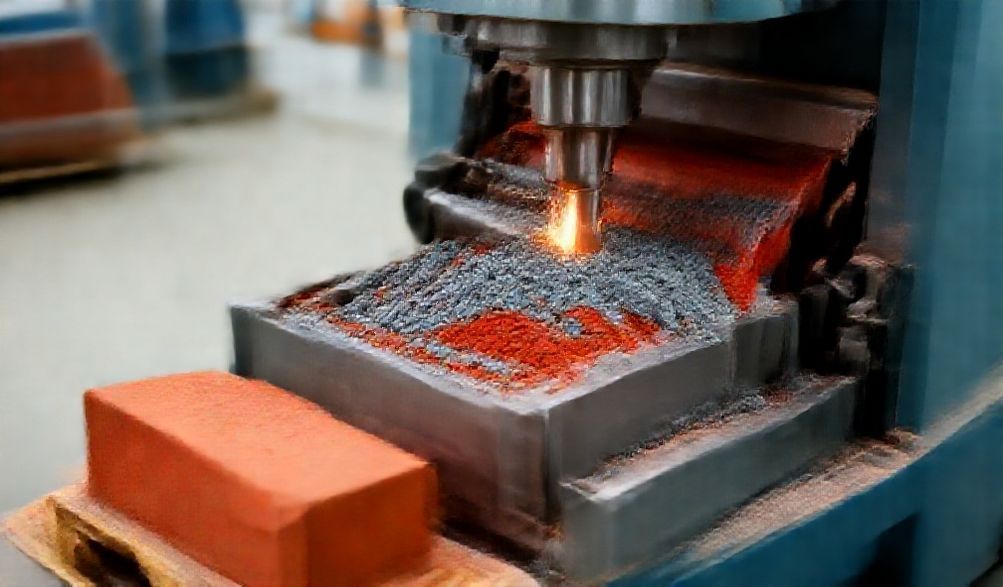
Sihirin da ke tattare da canza hadin foda da yumbu zuwa wani ingantaccen tubalin gini abin mamaki ne na injiniyanci na injina da na ruwa. Tsarin yana da matakai masu tsauri:
- Ciyarwa & Rarrabawa:Duk ya fara ne da daidaito. Ma'aunin nauyi mai sarrafa kansa ko kuma kwandon girma da girma yana fitar da tokar ƙura, yumbu, abubuwan haɗawa (kamar lemun tsami ko siminti), da kuma lokaci-lokaci gypsum. Wannan yana tabbatar da cewa tsarin haɗawa – girke-girken ƙarfi da inganci – ana maimaita shi daidai ga kowane tsari.
- Haɗawa & Daidaitawa:Abubuwan da ba su da ruwa ana ciyar da su cikin na'urar hadawa, sau da yawa irin na'urar kwano ko kuma na'urar tuƙi, inda ake ƙara ruwa. Manufar ita ce a sami cakuda mai kama da juna, mai sassauƙa tare da madaidaicin yanayin danshi (yawanci tsakanin 8-12%). Wannan "aiki" yana da mahimmanci ga mataki na gaba.
- Matsalawa & Ƙirƙira:Wannan shine zuciyar na'urar. Ana shigar da cakuda da aka shirya a cikin akwatin ƙirar (die). A nan, ana amfani da matsi mai yawa. Akwai hanyoyin farko:
- Matsin Ruwa:Ram na hydraulic yana amfani da matsi mai ƙarfi (daga tan 80 zuwa sama da 300), yana matsawa cakuda zuwa wani nau'i mai kauri da ƙarfi.
- Ƙarfafa Girgiza:Girgizar da ake yi akai-akai, wani lokacin tare da ƙarancin matsi, yana ƙarfafa cakuda.
Wannan mataki yana ƙayyade yawan ƙarfin bulo, ƙarfinsa, da kuma ƙarshen samansa.
- Fitowa da Sarrafawa:Sabon bulo na "koren bulo" ana fitar da shi a hankali daga mulu zuwa kan bel ɗin jigila ko pallet. Tsarin ci-gaba suna amfani da hannun injin robot ko naɗaɗɗen bulo don tsara bulo don bushewa, suna rage lalacewar hannu.
- Maganin Ciwon Ciki:Ba kamar tubalin gargajiya ba, waɗannan ba a gasa su ba. A maimakon haka, suna samun ƙarfi ta hanyar gyare-gyare:
- Kula da Tururi:An ajiye bulo a cikin ɗakin gyaran su kuma a fallasa su ga tururi mai cikakken zafi (60-80°C) na tsawon sa'o'i 8-12. Wannan yana haɓaka halayen pozzolanic, yana samar da ƙarfin farko cikin kwanaki.
- Ruwa/Iskar Gyaran Ganyen Taba:Tsari mai santsi inda ake yayyafa bulo da ruwa a rufe shi na tsawon makonni 2-3. Ya dace da ƙananan ayyuka.
Fahimman Amfani na Amfani da Na'urar Yin Bulo na Bulo da Toka
Fa'idodin Muhalli da Dorewa
Hujjar muhalli game da wannan fasaha tana da gagarumin girma da kuma bangarori daban-daban.
- Amfani da Sharar Gida:Kowane bulo da aka samar yana cinye adadi mai yawa na tokar ƙura, yana karkatar da wannan samfurin masana'antu daga wuraren zubar da ƙasa da tafkunan toka, waɗanda ke zama babban tushen gurɓataccen iska da ruwa.
- Ingantaccen Amfani da Makamashi:Tsarin yana kawar da buƙatar murhun da ake amfani da man fetur, waɗanda ke aiki sama da 1000°C. Ana samun raguwar makamashi sosai, sau da yawa ya wuce 70-80% idan aka kwatanta da hanyoyin gargajiya na kera bulo.
- Kiyaye Albarkatun:Ta hanyar rage dogaro ga saman ƙasa, yana taimakawa wajen kiyaye ƙasar noma mai albarka da kuma hana lalacewar saman ƙasa, wanda ke da matukar damuwa a fannin muhalli a yankuna da yawa.
Fa'idodin Tattalin Arƙi da Aiki
Fa'idodin dorewa suna samun ƙarfafawa sosai ta hanyar ƙaƙƙarfan abubuwan tattalin arziki da aiki.
- Tasiri Mai Tsada: Fly ash is often a low-cost or even free raw material (with transport being the main cost). Combined with lower energy bills, this significantly reduces the cost per brick, boosting profit margins.
- Superior Brick Quality: These machines produce bricks that frequently outperform their fired counterparts.
- Higher compressive strength (often 10-15 MPa or more).
- Excellent dimensional consistency, reducing mortar use.
- Lower water absorption, leading to better damp resistance and durability.
- Improved thermal insulation, contributing to energy-efficient buildings.
- Ingantacciyar Samarwa: Modern machines offer high levels of automation, enabling continuous, large-scale production with minimal manual labor. This leads to predictable output, consistent quality, and better scalability for growing businesses.
How to Choose the Right Clay Fly Ash Brick Making Machine
Ƙididdige Bukatun Samarwa
A misaligned machine is a costly mistake. Start by defining your needs:
- Ƙarfin Fitowa: Be realistic. Are you supplying a specific project or establishing a commercial plant? Calculate your needed Bricks Per Hour (BPH)koBricks Per Day (BPD). Machines range from 1,000 to 50,000+ BPD.
- Nau'in Bricki & Girma: Determine your market. Does it demand standard solid bricks, hollow blocks for insulation, or pavers? Ensure the machine’s mold and pressure system are designed for your desired product.
- Matsakaicin Sarrafa Kansa: Choose based on your labor availability and capital.
- Semi-otomatik: Manual feeding and brick handling, lower cost, suitable for startups.
- Gaba Daya Mai Sarrafa Kansa: PLC-controlled with auto-feeders, conveyors, and stackers. Maximizes output and minimizes labor but requires higher investment.
Mahimman Ƙayyadaddun Fasaha Don Bincika
Look beyond the brochure. Scrutinize these technical details:
- Pressure Type & Capacity: Hydraulic pressure (in tons) is key for dense, strong bricks. For high-quality solid bricks, a minimum of 150-200 tons is often recommended. Understand the difference between static compaction and impact/vibratory presses.
- Bukatar Wutar Lantarki: Check the total connected load (in kW). Ensure your facility’s electrical infrastructure can support it, including any necessary three-phase power.
- Machine Build & Durability: Inspect the quality of the steel frame, the brand and specification of hydraulic pumps and cylinders, and the hardness of the mold liners and wear plates. A heavier frame generally indicates better vibration absorption and longevity.
- Tallafin Bayan Siyarwa: This is non-negotiable. Confirm the availability of installation supervision, operator training, a readily available spare parts inventory, and a responsive service team. A machine is a long-term partner.
Cost Analysis and ROI Considerations
View the purchase as an investment. Build a simple financial model:
1. Total Initial Investment: Machine cost + installation + foundation + initial raw material stock.
2. Operational Cost Per Brick: (Raw materials + electricity + labor + maintenance) / brick output.
3. Market Price Per Brick: Your selling price.
4. Gross Margin: Subtract #2 from #3.
5. Payback Period: Divide #1 by (Gross Margin x Monthly Brick Output).
A well-run plant with a good market can often see a payback period of 1.5 to 3 years.
Mafi kyawun Ayyuka da Kulawa
Setting Up for Optimal Production
A proper foundation is literal and figurative.
- Prepare a level, reinforced concrete foundation as per the manufacturer’s drawings to handle dynamic loads.
- Ensure reliable access to three-phase electricity and a clean water source.
- Implement raw material QC: sieve clay to remove stones, store fly ash under cover to prevent moisture variation, and test lime/cement for reactivity.
Routine Operation and Safety Protocols
Consistency and safety are paramount.
- Follow a strict startup sequence: check oil levels, warm up the hydraulic system, and test run without load.
- During operation, monitor pressure gauges, brick density, and the condition of ejected bricks.
- Enforce safety: use lock-out/tag-out during maintenance, ensure all guards are in place, and train operators on emergency stop procedures.
Preventive Maintenance Schedule
Preventative care prevents costly downtime.
- Kullum: Check hydraulic oil level and for leaks, clean the mold and feed hopper, and tighten any visible loose bolts.
- Mako-mako: Lubricate all moving joints and bearings, inspect hydraulic hoses for wear, and clean oil filters.
- Kowane wata: Check and calibrate pressure settings, inspect the electrical panel for loose connections, and test safety interlocks.
Tambayoyin da ake yawan yi (FAQ)
Q1: What is the typical ratio of fly ash to clay in these bricks?
A: A common and effective mix is 55-60% fly ash, 25-30% clay, 8-10% lime, and 2-5% gypsum, with water added for plasticity. The exact “perfect” ratio must be determined through lab tests using your local materials to achieve target strength and workability.
Q2: Do clay fly ash bricks require firing in a kiln?
A: No, that’s a core advantage. They are non-fired bricks. Strength is developed through the pozzolanic reaction during curing (especially steam curing), which creates stable, cement-like bonds without the massive energy input of a kiln.
Q3: What is the production capacity range for these machines?
A: Capacity spans a vast spectrum. A small semi-automatic machine might produce 2,000-4,000 bricks per 8-hour shift. A mid-range fully automatic line can produce 15,000-25,000. Large industrial plants with multiple machines can exceed 100,000 bricks per day.
Q4: Are bricks made with this method durable and weather-resistant?
A: Absolutely. When produced with the correct mix design, compaction, and curing, they exhibit lower water absorptionkumahigher frost resistance than many traditional clay bricks. Their superior compressive strength also makes them excellent for load-bearing walls in multi-story constructions.
Q5: What are the major challenges in operating such a plant?
A: The primary challenges are sourcing consistent-quality fly ash, mastering the mix design for local materials, controlling the moisture content during mixing, and ensuring you have access to skilled technical support for machine maintenance and troubleshooting process hiccups.
Ƙarshe
Investing in a clay fly ash brick making machine is a strategic decision that aligns profitability with planetary stewardship. This technology masterfully solves a dual challenge: it provides an elegant outlet for industrial waste while manufacturing a construction material that is, by many metrics, superior to its centuries-old predecessor.
The journey from concept to production requires diligence. By leveraging the insights in this guide—from understanding the pozzolanic reaction to evaluating hydraulic tonnage—you are equipped to make an informed, confident investment. We urge you to take the next steps: conduct material tests with your local fly ash, visit operational plants to see machines in action, and engage with manufacturers who offer robust technical support. In doing so, you won’t just be buying a machine; you’ll be building a foundation for a more sustainable and resilient business in the new era of construction.
<