
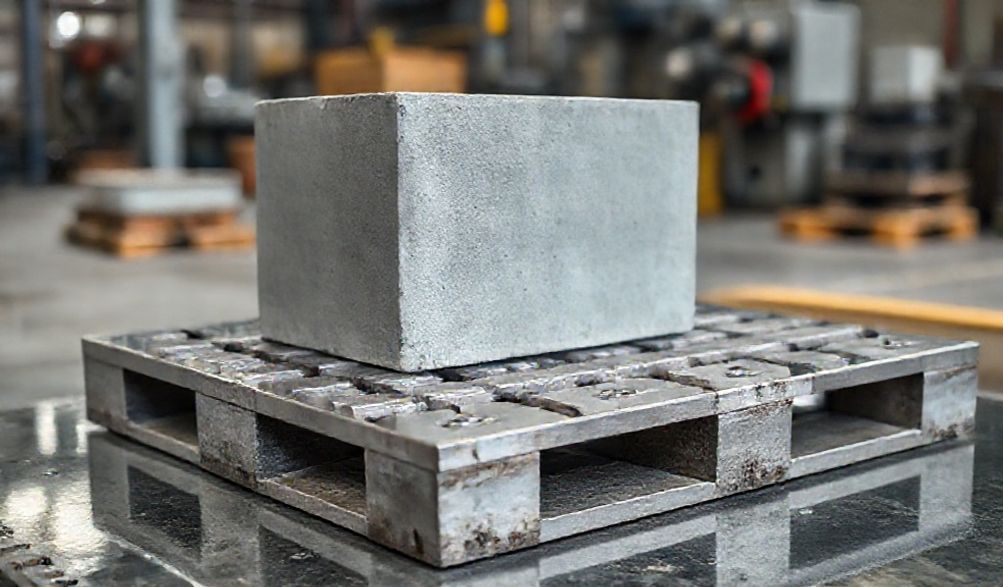
Le Guide Ultime des Palettes pour Machines à Fabriquer les Blocs : Sélection, Utilisation et Entretien
Introduction
Vous avez optimisé votre mélange de béton, calibré votre vibration et entretenu votre système hydraulique. Pourtant, vous êtes toujours confronté à des accrocs de production exaspérants : des blocs de hauteurs inégales, des imperfections de surface entraînant des rejets, ou une usure inattendue de votre moule. Avant d’incriminer la machine elle-même, regardez en bas. Le coupable est souvent la plateforme discrète qui se trouve sous chaque bloc que vous produisez — la palette.
Souvent considérée comme un simple consommable, la palette de machine à blocs est en réalité une composante de précision fondamentale. Ce guide est le fruit de décennies d'expérience collective dans l'industrie, intégrant des connaissances chèrement acquises auprès de fabricants de machines, d'opérateurs chevronnés et d'ingénieurs en matériaux. Nous sommes ici pour changer votre perspective.
Une palette de machine à blocs est la plaque d'acier mobile et critique sur laquelle le béton est moulé, compacté et initialement durci. Elle constitue la base même de votre produit, parcourant les cycles de remplissage, de compactage et d'éjection de la machine avant de transporter le bloc frais vers la zone de durcissement.
Choisir et maintenir la bonne palette n'est pas une tâche d'approvisionnement secondaire ; c'est un investissement direct dans la rentabilité de votre usine, la qualité des produits et la longévité des machines. Un mauvais choix de palette érode silencieusement les marges par le gaspillage, les temps d'arrêt et l'usure accélérée. Ce guide définitif fournit des conseils pratiques pour transformer vos palettes d'un centre de coût en un pilier de production fiable. Si vous êtes propriétaire d'une usine de blocs, responsable de production, superviseur de maintenance ou responsable des achats, les informations suivantes vous sont destinées.
Pourquoi le choix de votre palette pour machine à blocs est crucial pour la rentabilité
Ignorer vos palettes, c'est comme une équipe de Formule 1 qui ignorerait ses pneus. Elles sont le seul point de contact entre votre machine et votre produit, et leur état dicte la performance. Les spécifications de vos palettes ont des conséquences directes et mesurables sur votre rentabilité.
Impact sur la Qualité et la Cohérence du Produit
La qualité de vos blocs n'est que celle de la surface sur laquelle ils sont formés.
- Précision dimensionnelle :La planéité de la palette est primordiale. Une palette déformée ou bombée produira des blocs de hauteurs variables et aux dimensions hors tolérance. Cela entraîne des échecs aux contrôles qualité, des plaintes de clients concernant des difficultés de pose et du gaspillage de produit.
- Finition de surface et démoulage :La texture de surface de la palette (lisse moulée, légèrement texturée) affecte directement la propreté du démoulage du bloc après éjection. Une surface piquée ou rugueuse peut provoquer un collage, entraînant des dommages au bloc ou des imperfections de surface visibles sur le produit final.
- Prévenir les Défauts :Les fissures ou les imperfections peuvent en réalité provenir de la palette. Une surface sévèrement usée ou une accumulation de béton crée un support inégal pendant la phase de compactage à haute pression, induisant des points de stress qui se manifestent par des fissures.
Influence Directe sur la Santé des Machines et la Disponibilité Opérationnelle
Vos palettes protègent votre actif le plus précieux : la machine à blocs elle-même.
- Usure Accélérée:Une palette usée et inégale agit comme du papier de verre contre le fond du moule et la tête de presse. Elle provoque une usure prématurée de ces composants coûteux et de précision. Elle augmente également l'abrasion sur les chaînes et rouleaux de convoyeur.
- Désalignement et bourrages :Le gauchissement des palettes ou les dommages sur les bords sont une cause principale de bourrages dans le magasin de palettes, l'alimentateur ou les systèmes de transfert. Ces arrêts non planifiés interrompent toute votre ligne de production, entraînant des pertes de production significatives et des dépannages frénétiques.
Les Coûts Cachés du Mauvais Pallet (Note: In French, "pallet" is often translated as "palette" in logistics contexts, but "pallet" is also commonly used in business and industrial settings. The translation retains "pallet" as it is a widely recognized term, but "palette" could be used interchangeably depending on regional preferences.)
Les économies initiales réalisées sur une palette de qualité inférieure et moins chère s'évaporent rapidement sous l'effet d'un examen opérationnel minutieux.
- Augmentation des déchets :Les adhérences et les inexactitudes dimensionnelles se traduisent directement par des blocs cassés ou hors spécifications qui doivent être mis au rebut.
- Coûts d’entretien plus élevés.Le remplacement fréquent des moules, des têtes de presse et des pièces de convoyeur en raison d'une usure accélérée devient une dépense récurrente.
- Cycles de remplacement fréquents :Une palette qui s’use en 6 mois a un coût total bien plus élevé qu’une palette de qualité supérieure qui dure 3 ans, lorsque l’on tient compte des temps d’arrêt pour les changements et des frais généraux d’approvisionnement.
- Inefficacité énergétique :Dans les environnements de durcissement à la vapeur, une palette déformée présente un mauvais contact avec le lit de durcissement, ce qui réduit l'efficacité du transfert de chaleur et peut entraîner un durcissement inégal.
Types de palettes pour machines de fabrication de blocs : matériaux et caractéristiques
Not all steel plates are created equal. Understanding the material science behind pallet options allows you to specify the right tool for your job.
Standard Steel Pallets: The Workhorse
These are the most common pallets, made from durable, abrasion-resistant steel plate.
- Typical Specs: Made from grades like Hardox 400 or AR400, with thicknesses typically ranging from 6mm to 12mm, depending on machine size and block weight.
- Avantages : Excellent balance of durability and cost-effectiveness. They offer good impact resistance and heat transfer properties, making them suitable for high-volume production of standard blocks.
- Inconvénients : While abrasion-resistant, they are not immune to wear and will gradually lose flatness. They are also susceptible to corrosion if exposed to moisture and the alkaline environment of concrete without protection.
Hardened & Ground Steel Pallets: For Precision & Longevity
This is the premium choice for operations focused on minimal downtime and superior product finish.
- Le Processus : After being cut to size, these pallets undergo a heat treatment (hardening) process, followed by precision grinding on large surface grinders. This creates an exceptionally hard, flat, and smooth surface.
- Principaux avantages :
- Superior Wear Resistance: The hardened surface withstands abrasion far longer than standard steel, drastically extending service life.
- Exceptional Flatness Retention: They resist warping and dishing under cyclic loading, maintaining dimensional accuracy for your blocks over time.
- Smooth Block Release: The mirror-like ground finish provides an almost non-stick surface, reducing release agent needs and improving block bottom finish.
- Ideal Use: Essential for producing high-tolerance products like interlocking paving stones, architectural masonry, and any application where a perfect bottom finish is required.
Specialty & Coated Pallets
For specific environmental or production challenges, specialized pallets offer solutions.
- Galvanized or Painted Pallets: A zinc coating (galvanizing) or a robust industrial paint system provides a barrier against corrosion. This is crucial for plants in coastal/humid regions or those using accelerants or mix designs that are particularly corrosive.
- Non-Stick Coatings: Applied over steel, coatings like PTFE (Teflon) or specialized polymers create a surface to which concrete minimally adheres. These are valuable for intricate mold designs with deep ribs or for mixes that are prone to sticking, though they may wear over time and require re-coating.
Key Specifications to Specify When Ordering
Never just order a “steel plate.” Provide a detailed specification sheet to your supplier.
- Dimensions : Exact length, width, and thickness. Include permissible tolerances (e.g., ±0.2mm on thickness).
- Flatness Tolerance: The most critical spec. Usually expressed as a deviation over a length (e.g., “±0.5mm over any 1-meter span”).
- Finition de surface : Specify “Precision Ground,” “Milled,” or “As-rolled.” For ground pallets, you may specify a surface roughness (Ra) value.
- Hardness: Define the Brinell Hardness Number (BHN). For example, AR400 has a nominal hardness of 400 BHN.
- Edge Preparation: Require all edges to be deburred, beveled, or radiused. Sharp edges are a safety hazard, damage conveyor guides, and can chip easily.
How to Select the Right Pallet for Your Machine and Product Mix
Selecting a pallet is a three-part equation: your machine’s requirements, your product’s demands, and your plant’s environment.
Matching Pallet to Machine Model
This is non-negotiable. Your block machine is engineered for a specific pallet profile.
- Consult the Manual: The manufacturer’s manual provides the exact dimensions, thickness, and maximum weight specifications. Deviating from these can void warranties and cause mechanical failure.
- Weight Matters: The machine’s pallet feeder, elevator, and turnover systems are designed for a specific weight range. A pallet that is too heavy can overload drives and cause misalignment.
Matching Pallet to Your Block Products
Different products exert different stresses on a pallet.
- Blocs de béton standard creux : Create a concentrated wear pattern along the outer edges of the mold. A durable, abrasion-resistant steel is key.
- Dense Pavers or Solid Blocks: Apply pressure more evenly across the entire pallet surface. Flatness retention under full-area compression is the critical factor here.
- Abrasive Mixes: If your mix contains industrial by-products like slag or certain manufactured aggregates, the abrasiveness skyrockets. This is a strong case for investing in the hardest, most wear-resistant pallet you can justify.
Evaluating Your Production Environment
The atmosphere in your plant plays a role in pallet longevity.
- Humidity & Corrosion Risk: Assess your climate and indoor humidity. If rust is a frequent sight, prioritize coated or galvanized pallets, or commit to a rigorous protective maintenance routine.
- Cleaning Processes: Do you use high-pressure water jets for cleaning? This forceful, concentrated water can accelerate corrosion if pallets are not dried and treated afterward. It can also damage non-stick coatings.
Best Practices for Pallet Maintenance & Maximizing Lifespan
A premium pallet is an investment; proper maintenance is the insurance policy. A simple, consistent routine can double or triple a pallet’s service life.
Daily & Weekly Inspection Routines
Catch problems early, before they damage blocks or the machine.
- Visual Checklist: Each shift, operators should quickly look for:
- Warping/Bowing: Sight down the length of the pallet.
- Edge Damage: Dings, curls, or cracks on the edges.
- Surface Pitting: Signs of corrosion or impact damage.
- Concrete Buildup: Residual “packing” on the surface.
- The Straightedge Test: Weekly, use a precision straightedge and a feeler gauge to check flatness. Document any pallets exceeding your flatness tolerance (e.g., >1mm gap).
Proper Cleaning Techniques
Remove concrete residue without damaging the pallet.
- Immediate Removal: Scrape off wet concrete buildup promptly before it cures.
- For Cured Residue: Use a plastic or nylon scraper. Avoid aggressive steel wire brushes, which score the surface and create grooves that promote sticking.
- Chemical Cleaners: If needed, use a mild, acidic concrete dissolver, but ensure it is compatible with your pallet’s material/coating and rinse thoroughly.
Correct Handling & Storage
Most physical damage occurs off the machine.
- Never Drop or Drag: Use designated pallet carts. Dropping pallets onto concrete floors is a surefire way to cause warping and edge damage.
- Flat, Dry Storage: When not in use, store pallets in a clean, dry area. Stack them flat on a level surface with support across their full area to prevent sagging.
When to Repair vs. Replace
Knowing when to retire a pallet saves money in the long run.
- Signs for Replacement:
- Excessive warping that cannot be corrected in a press (>3mm deviation).
- Deep grooves or scoring that affects block release.
- Severe corrosion that has pitted through the material, compromising structural integrity.
- Consider Repair/Refurbishment: For high-quality hardened pallets that have lost flatness or surface finish but are not deeply worn, professional re-grinding by a specialized workshop can be a cost-effective way to restore them to like-new condition, extending their life significantly.
Frequently Asked Questions (FAQ) About Block Machine Pallets
Q1: How often should I replace my block machine pallets?
A: There is no universal timeline. Replacement should be driven by condition, not calendar. A well-maintained hardened pallet in a low-abrasion environment could last 5+ years. A standard pallet in high-volume, abrasive production might need replacement in 12-18 months. Let your weekly inspection and flatness tests dictate the schedule.
Q2: Can I use a thicker pallet than what my machine manual specifies?
A: It is strongly discouraged without explicit written approval from the machine manufacturer. A thicker pallet may not fit in the magazine, can overload the elevator and drive mechanisms, and critically, it can alter the compression stroke distance, leading to under-compacted blocks or machine damage.
Q3: Why are my blocks sticking to the pallet?
A: Sticking is a common symptom with multiple potential causes. Diagnose in this order:
1. Pallet Surface: Is it pitted, rough, or contaminated with old buildup? Refurbish or replace.
2. Conception du Mélange : Is the mix too wet or has a high fines content? Adjust the water-cement ratio.
3. Release Agent: Are you using one? Is it applied correctly and at the right dosage?
4. Machine Process: Is the vibration time and pressure sufficient for proper compaction and release?
Q4: Is it worth investing in more expensive hardened pallets?
A: Analyze it through Coût Total de Possession (CTP). While hardened pallets can cost 2-3x more upfront, consider:
* They last 3-5x longer than standard pallets.
* They drastically reduce downtime for pallet changes and machine wear.
* They improve product quality and reduce waste.
For high-volume or precision-focused plants, the math almost always favors hardened pallets in the long run.
Q5: How can I prevent my steel pallets from rusting?
A: A proactive approach is key:
1. Clean Thoroughly & Dry: After washing, ensure pallets are completely dry before storage.
2. Apply a Protective Film: During weekend shutdowns or extended inactivity, lightly spray or wipe pallet surfaces with a thin layer of a water-displacing, rust-inhibitive oil (ensure it’s compatible with concrete and won’t affect curing).
3. Control Storage Environment: Keep spare pallets in a dry, covered area off damp floors.
Conclusion
The pallet for your block making machine is far more than a simple slab of steel. It is a precision-engineered component that sits at the heart of your production quality, efficiency, and cost control. Treating it as a disposable commodity is one of the most common and costly oversights in block manufacturing.
The strategic choice is clear: prioritize quality, correct specifications, and a partnership with a reputable supplier who understands the demands of block production over the temptation of the lowest upfront cost. Your pallets should be an asset you manage, not an expense you dread.
Your Call to Action: This week, conduct a pallet audit. Pull 10-20 pallets from your line at random. Perform the straightedge test. Inspect for wear and damage. You may uncover the root cause of persistent production issues. For specific guidance, contact your machine’s OEM or consult with a trusted, specialized pallet manufacturer for a professional assessment of your needs.
By mastering the selection, use, and maintenance of your pallets, you pave the way for a smoother, more profitable, and sustainable block production operation for years to come.
<