
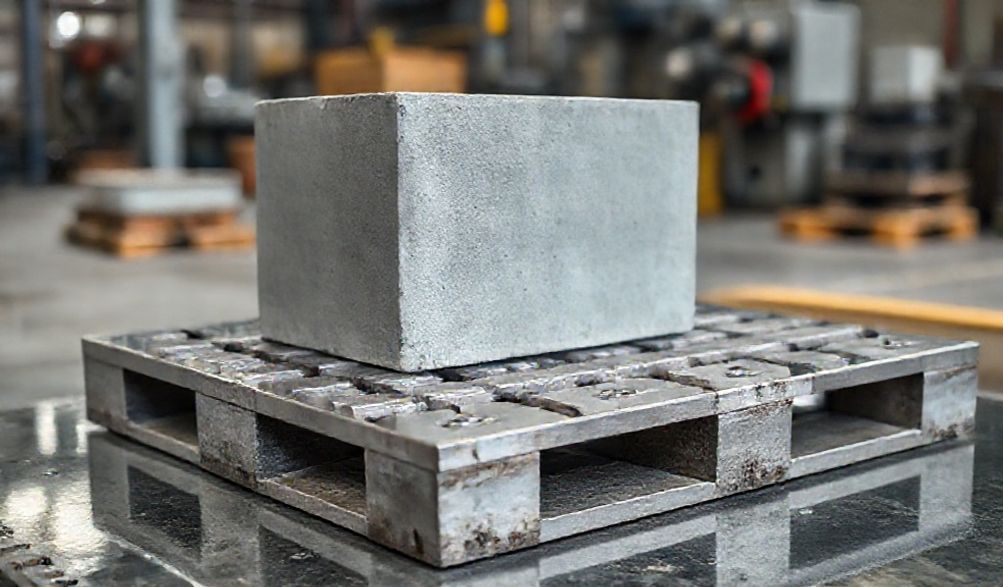
블록 제작 기계용 팔레트 최종 가이드: 선택, 사용 및 유지보수
소개
콘크리트 배합을 최적화하고, 진동을 교정하며, 유압 시스템을 정비했음에도 불구하고, 여전히 생산 과정에서 짜증 나는 문제들이 발생하고 있습니다: 일정하지 않은 블록 높이, 불량으로 이어지는 표면 결함, 예상치 못한 금형 마모 등이죠. 기계 자체를 탓하기 전에, 아래를 보세요. 모든 블록 아래에 깔려있는 평범해 보이는 플랫폼—즉, 팔레트가 바로 원인인 경우가 많습니다.
블록 제조기 팔레트는 종종 단순한 소모품으로 취급되지만, 실제로는 정밀함이 요구되는 기초 부품입니다. 본 가이드는 수십 년간의 업계 경험을 집약하여, 기계 제조업체, 생산 현장 베테랑, 재료 엔지니어로부터 얻은 소중한 지식을 담았습니다. 우리는 여러분의 시각을 전환하고자 합니다.
블록 머신 팔레트는 콘크리트가 성형, 다짐 및 초기 양생되는 중요한 이동식 강철판입니다. 이는 제품의 가장 기초를 형성하며, 머신의 충전, 다짐 및 배출 사이클을 거쳐 생 블록을 양생 구역으로 운반합니다.
올바른 팔레트를 선택하고 유지하는 것은 부수적인 구매 업무가 아닙니다. 이는 공장의 수익성, 제품 품질, 장비 수명에 대한 직접적인 투자입니다. 부적절한 팔레트 선택은 폐기물, 가동 중단, 가속화된 마모를 통해 수익을 조용히 갉아먹습니다. 이 확실한 가이드는 팔레트를 비용 중심에서 신뢰할 수 있는 생산의 기둥으로 전환하는 실행 가능한 통찰력을 제공합니다. 블록 공장 소유주, 생산 관리자, 유지보수 감독관 또는 구매 담당자라면, 다음 정보가 여러분을 위한 것입니다.
블록 머신 팔레트 선택이 수익성에 중요한 이유
당신의 팔레트를 무시하는 것은 F1 팀이 타이어를 무시하는 것과 같습니다. 팔레트는 기계와 제품 사이의 유일한 접촉점이며, 그 상태가 성능을 좌우합니다. 팔레트의 사양은 당신의 수익에 직접적이고 측정 가능한 영향을 미칩니다.
제품 품질 및 일관성에 미치는 영향
블록의 품질은 그것이 형성된 표면만큼 좋습니다.
- 치수 정밀도팔레트의 평탄도는 매우 중요합니다. 휘거나 오목해진 팔레트는 높이가 다양하고 규격을 벗어난 블록을 생산하게 됩니다. 이는 품질 검사 실패, 시공 난이도에 대한 고객 불만, 그리고 제품 낭비로 이어집니다.
- 표면 마감 및 이형팔레트의 표면 질감(매끄럽게 연마된 것, 약간의 질감이 있는 것)은 블록이 이젝션 후 얼마나 깨끗하게 분리되는지에 직접적인 영향을 미칩니다. 표면에 요철이 있거나 거칠면 블록이 달라붙어 손상되거나 최종 제품에서 보이는 표면 결함을 초래할 수 있습니다.
- 결함 예방:크랙이나 결함은 실제로 팔레트에서 비롯될 수 있습니다. 심하게 마모된 표면이나 쌓인 콘크리트 잔여물은 고압 압축 단계에서 고르지 않은 지지를 만들어 내며, 이는 균열로 나타나는 응력 지점을 유발합니다.
기계 건강 및 가동 시간에 대한 직접적 영향
당신의 팔레트는 가장 귀중한 자산인 블록 기계 자체를 보호합니다.
- 가속화된 마모낡고 고르지 않은 팔레트는 금형 바닥과 프레스 헤드에 대해 사포처럼 작용합니다. 이는 이러한 값비싼 정밀 부품의 조기 마모를 유발합니다. 또한 컨베이어 체인과 롤러의 마모를 증가시킵니다.
- 잘못 정렬 및 걸림팔레트 뒤틀림이나 가장자리 손상은 팔레트 매거진, 피더 또는 이송 시스템에서 잼이 발생하는 주요 원인입니다. 이러한 예기치 않은 정지는 전체 생산 라인을 멈추게 하여, 상당한 생산량 손실과 긴급한 문제 해결을 초래합니다.
잘못된 팔레트의 숨겨진 비용
값싸고 부적합한 팔레트로 인한 초기 절감액은 운영 검토 아래서 금방 사라진다.
- 폐기물 증가접착 및 치수 부정확성은 폐기해야 하는 파손되거나 규격에 맞지 않는 블록으로 직접 이어집니다.
- 유지보수 비용 증가:금형, 프레스 헤드 및 컨베이어 부품의 가속화된 마모로 인한 빈번한 교체는 반복적인 비용이 됩니다.
- 잦은 교체 주기6개월 만에 마모되는 팔레트는 교체를 위한 가동 중단 시간과 조달 간접 비용을 고려할 때, 3년 동안 지속되는 고급 팔레트보다 총비용이 훨씬 더 높습니다.
- 에너지 비효율증기 양생 환경에서 뒤틀린 팔레트는 양생 베드와의 접촉이 불량하여 열 전달 효율을 낮추고 불균일한 양생을 초래할 수 있습니다.
블록 제조 기계용 팔레트 종류: 재료 및 사양
모든 강판이 동일하게 만들어지는 것은 아닙니다. 팔레트 옵션의 재료 과학을 이해하면 작업에 적합한 도구를 지정할 수 있습니다.
표준 철제 팔레트: 작업용
이것들은 내구성이 뛰어나고 마모에 강한 강철 판으로 제작된 가장 일반적인 팔레트입니다.
- 일반 사양:경도가 Hardox 400 또는 AR400 등급으로 제작되며, 두께는 기계 크기와 블록 무게에 따라 일반적으로 6mm에서 12mm까지 다양합니다.
- 장점:내구성과 비용 효율성의 뛰어난 균형을 제공합니다. 충격 저항성과 열 전달 특성이 우수하여 표준 블록의 대량 생산에 적합합니다.
- 단점:내마모성이 뛰어나지만 마모에 완전히 영향을 받지 않는 것은 아니며 점차 평탄도를 잃게 됩니다. 또한 보호 없이 콘크리트의 수분 및 알칼리 환경에 노출되면 부식되기 쉽습니다.
경화 및 연마된 강철 팔레트: 정밀성과 장수명을 위한 제품
This is the premium choice for operations focused on minimal downtime and superior product finish.
- 과정: After being cut to size, these pallets undergo a heat treatment (hardening) process, followed by precision grinding on large surface grinders. This creates an exceptionally hard, flat, and smooth surface.
- 주요 장점:
- Superior Wear Resistance: The hardened surface withstands abrasion far longer than standard steel, drastically extending service life.
- Exceptional Flatness Retention: They resist warping and dishing under cyclic loading, maintaining dimensional accuracy for your blocks over time.
- Smooth Block Release: The mirror-like ground finish provides an almost non-stick surface, reducing release agent needs and improving block bottom finish.
- 이상적인 사용법: Essential for producing high-tolerance products like interlocking paving stones, architectural masonry, and any application where a perfect bottom finish is required.
Specialty & Coated Pallets
For specific environmental or production challenges, specialized pallets offer solutions.
- Galvanized or Painted Pallets: A zinc coating (galvanizing) or a robust industrial paint system provides a barrier against corrosion. This is crucial for plants in coastal/humid regions or those using accelerants or mix designs that are particularly corrosive.
- Non-Stick Coatings: Applied over steel, coatings like PTFE (Teflon) or specialized polymers create a surface to which concrete minimally adheres. These are valuable for intricate mold designs with deep ribs or for mixes that are prone to sticking, though they may wear over time and require re-coating.
Key Specifications to Specify When Ordering
Never just order a “steel plate.” Provide a detailed specification sheet to your supplier.
- 치수: Exact length, width, and thickness. Include permissible tolerances (e.g., ±0.2mm on thickness).
- Flatness Tolerance: The most critical spec. Usually expressed as a deviation over a length (e.g., “±0.5mm over any 1-meter span”).
- 표면 마감 Specify “Precision Ground,” “Milled,” or “As-rolled.” For ground pallets, you may specify a surface roughness (Ra) value.
- Hardness: Define the Brinell Hardness Number (BHN). For example, AR400 has a nominal hardness of 400 BHN.
- Edge Preparation: Require all edges to be deburred, beveled, or radiused. Sharp edges are a safety hazard, damage conveyor guides, and can chip easily.
How to Select the Right Pallet for Your Machine and Product Mix
Selecting a pallet is a three-part equation: your machine’s requirements, your product’s demands, and your plant’s environment.
Matching Pallet to Machine Model
This is non-negotiable. Your block machine is engineered for a specific pallet profile.
- Consult the Manual: The manufacturer’s manual provides the exact dimensions, thickness, and maximum weight specifications. Deviating from these can void warranties and cause mechanical failure.
- Weight Matters: The machine’s pallet feeder, elevator, and turnover systems are designed for a specific weight range. A pallet that is too heavy can overload drives and cause misalignment.
Matching Pallet to Your Block Products
Different products exert different stresses on a pallet.
- 표준 중공 블록 Create a concentrated wear pattern along the outer edges of the mold. A durable, abrasion-resistant steel is key.
- Dense Pavers or Solid Blocks: Apply pressure more evenly across the entire pallet surface. Flatness retention under full-area compression is the critical factor here.
- Abrasive Mixes: If your mix contains industrial by-products like slag or certain manufactured aggregates, the abrasiveness skyrockets. This is a strong case for investing in the hardest, most wear-resistant pallet you can justify.
Evaluating Your Production Environment
The atmosphere in your plant plays a role in pallet longevity.
- Humidity & Corrosion Risk: Assess your climate and indoor humidity. If rust is a frequent sight, prioritize coated or galvanized pallets, or commit to a rigorous protective maintenance routine.
- Cleaning Processes: Do you use high-pressure water jets for cleaning? This forceful, concentrated water can accelerate corrosion if pallets are not dried and treated afterward. It can also damage non-stick coatings.
Best Practices for Pallet Maintenance & Maximizing Lifespan
A premium pallet is an investment; proper maintenance is the insurance policy. A simple, consistent routine can double or triple a pallet’s service life.
Daily & Weekly Inspection Routines
Catch problems early, before they damage blocks or the machine.
- Visual Checklist: Each shift, operators should quickly look for:
- Warping/Bowing: Sight down the length of the pallet.
- Edge Damage: Dings, curls, or cracks on the edges.
- Surface Pitting: Signs of corrosion or impact damage.
- Concrete Buildup: Residual “packing” on the surface.
- The Straightedge Test: Weekly, use a precision straightedge and a feeler gauge to check flatness. Document any pallets exceeding your flatness tolerance (e.g., >1mm gap).
Proper Cleaning Techniques
Remove concrete residue without damaging the pallet.
- Immediate Removal: Scrape off wet concrete buildup promptly before it cures.
- For Cured Residue: Use a plastic or nylon scraper. Avoid aggressive steel wire brushes, which score the surface and create grooves that promote sticking.
- Chemical Cleaners: If needed, use a mild, acidic concrete dissolver, but ensure it is compatible with your pallet’s material/coating and rinse thoroughly.
Correct Handling & Storage
Most physical damage occurs off the machine.
- Never Drop or Drag: Use designated pallet carts. Dropping pallets onto concrete floors is a surefire way to cause warping and edge damage.
- Flat, Dry Storage: When not in use, store pallets in a clean, dry area. Stack them flat on a level surface with support across their full area to prevent sagging.
When to Repair vs. Replace
Knowing when to retire a pallet saves money in the long run.
- Signs for Replacement:
- Excessive warping that cannot be corrected in a press (>3mm deviation).
- Deep grooves or scoring that affects block release.
- Severe corrosion that has pitted through the material, compromising structural integrity.
- Consider Repair/Refurbishment: For high-quality hardened pallets that have lost flatness or surface finish but are not deeply worn, professional re-grinding by a specialized workshop can be a cost-effective way to restore them to like-new condition, extending their life significantly.
Frequently Asked Questions (FAQ) About Block Machine Pallets
Q1: How often should I replace my block machine pallets?
A: There is no universal timeline. Replacement should be driven by condition, not calendar. A well-maintained hardened pallet in a low-abrasion environment could last 5+ years. A standard pallet in high-volume, abrasive production might need replacement in 12-18 months. Let your weekly inspection and flatness tests dictate the schedule.
Q2: Can I use a thicker pallet than what my machine manual specifies?
A: It is strongly discouraged without explicit written approval from the machine manufacturer. A thicker pallet may not fit in the magazine, can overload the elevator and drive mechanisms, and critically, it can alter the compression stroke distance, leading to under-compacted blocks or machine damage.
Q3: Why are my blocks sticking to the pallet?
A: Sticking is a common symptom with multiple potential causes. Diagnose in this order:
1. Pallet Surface: Is it pitted, rough, or contaminated with old buildup? Refurbish or replace.
2. Mix Design: Is the mix too wet or has a high fines content? Adjust the water-cement ratio.
3. Release Agent: Are you using one? Is it applied correctly and at the right dosage?
4. Machine Process: Is the vibration time and pressure sufficient for proper compaction and release?
Q4: Is it worth investing in more expensive hardened pallets?
A: Analyze it through 총 소유 비용 (TCO). While hardened pallets can cost 2-3x more upfront, consider:
* They last 3-5x longer than standard pallets.
* They drastically reduce downtime for pallet changes and machine wear.
* They improve product quality and reduce waste.
For high-volume or precision-focused plants, the math almost always favors hardened pallets in the long run.
Q5: How can I prevent my steel pallets from rusting?
A: A proactive approach is key:
1. Clean Thoroughly & Dry: After washing, ensure pallets are completely dry before storage.
2. Apply a Protective Film: During weekend shutdowns or extended inactivity, lightly spray or wipe pallet surfaces with a thin layer of a water-displacing, rust-inhibitive oil (ensure it’s compatible with concrete and won’t affect curing).
3. Control Storage Environment: Keep spare pallets in a dry, covered area off damp floors.
결론
The pallet for your block making machine is far more than a simple slab of steel. It is a precision-engineered component that sits at the heart of your production quality, efficiency, and cost control. Treating it as a disposable commodity is one of the most common and costly oversights in block manufacturing.
The strategic choice is clear: prioritize quality, correct specifications, and a partnership with a reputable supplier who understands the demands of block production over the temptation of the lowest upfront cost. Your pallets should be an asset you manage, not an expense you dread.
Your Call to Action: This week, conduct a pallet audit. Pull 10-20 pallets from your line at random. Perform the straightedge test. Inspect for wear and damage. You may uncover the root cause of persistent production issues. For specific guidance, contact your machine’s OEM or consult with a trusted, specialized pallet manufacturer for a professional assessment of your needs.
By mastering the selection, use, and maintenance of your pallets, you pave the way for a smoother, more profitable, and sustainable block production operation for years to come.
<