
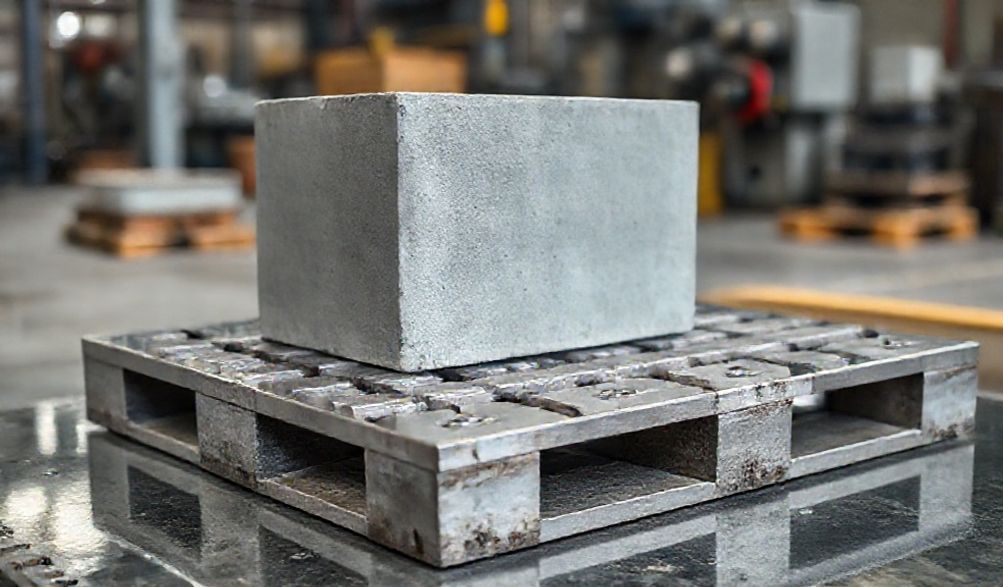
Блок ýasamak maşynlary üçin paletleriň Iň Ýokary Gollanmasy: Saýlama, Ulanyş we Serişde
Giriş
Sen beton garyndyny optimallaşdyrdyň, wibrasiýany kalibrlediň we gidrawlik ulgamyňyzy serwislediň. Emma, henizem döredijilik keselleri bilen ýüzbe-ýüz: düzgüne laýyk gelmeýän beýiklikdäki bloklar, ret edilmäge getirýän ýüzüň bozulmalary ýa-da galybyňyzyň garaşylmadyk şikesleri. Maşynyň özüne günä ýüklemekden ozal, aşaga serediň. Sebäbi köplenç her bir blok aşynda ýerleşýän gözden düşme platforma—palet bolup durýar.
Ýörite hökmünde ýönekeý sarp edilýän zat hökmünde kabul edilse-de, blok ýasama maşynyndaky palet, aslynda, esasy takyk agzadyr. Bu gollanma, onýyllyklaryň toplanan senagat tejribesinden, maşyn öndürijileriniň, önümçilik meýdançasy weteranlarynyň we material inženerleriniň gazanylan kyn bilimlerini öz içine alýar. Biz bu ýerde siziň garaýşyňyzy üýtgetmäge geldik.
Блок машинасының палети, бетонды қалыптау, тығыздау және алғашқы қатаю үшін қолданылатын маңызды, жылжымалы болат плитасы болып табылады. Ол өніміңіздің негізін құрайды, машинаның толтыру, тығыздау және шығару циклдарынан өтіп, жасыл блокты қатату аймағына алып барады.
Dogry palet saýlamak we ony gowy saklamak, diňe bir satyn aluw işi däl; bu, zawodyňyzyň girdejiligine, önümiň hili we maşynlaryň uzak ömrüne göni goýumdyr. Nädogry palet saýlaw, israf, durmuş we ýiti aşynma arkaly girdejiligi ses-soraýsyz kemeldýär. Bu doly gollanma, paletleriňizi çykdajy merkezinden ygtybarly önümiň bir sütünine öwürmek üçin amaly maslahatlary hödürleýär. Eger siz blok zawody eýesi, önümçilik menedžeri, abatlaýyş gözegçisi ýa-da satyn aluw işgäri bolsaňyz, aşakdaky maglumatlar siziň üçindir.
Siziň Blok Maşyny Palet Saýlamagyňyz Nädip Girdejiliňize Täsir Edýär
Pallalaryňyzy gözden gaçyrmak, Formula 1 toparynyň şinlerini gözden gaçyrmagyna meňzeýär. Olar maşynyňyz we önümiňiziň arasyndaky ýeke-täk aragatnaşyk nokady bolup, olaryň ýagdaýy iş netijesini kesgitleýär. Pallalaryňyz düzümi, göz ýetirýän täsirleri bilen, göterimiňize gönüden-göni täsir edýär.
Harydyň Hilini we Ylalaşygy Üstünden Täsiri
Siziň bloklaryňyzyň hilli, olaryň düzülen ýüzüniň hilli ýaly bolýar.
- Ölçeg Takyklygy:Палетаныň tekizligi iň möhüm bolup durýar. Egrilen ýa-da çöken paleta dürli beýiklikli we ölçeglerden daşary bloklar öndürer. Bu hil barlagynyň şowsuz geçmegine, klýentleriň döşeme kynçylyklary baradaky şikaýatlaryna we önümiň telek bolmagyna getirýär.
- Ýüzüniň Ýagtylygy we Çykarylyşy:Палетканың беттик текстурасы (тегиз жер, жеңил текстураланган) блоктың эжекциядан кийин канчалык таза бошандыгын түздөн-түз таасирлейт. Тешик же бүдүр беттик блоктун жабышып калышына алып келиши мүмкүн, бул акырындагы өнүмдө көрүнүүчү блоктун бузулушуна же беттик кемчиликтерине себеп болот.
- Görnüşleriň Öňüni Almak:Paletden çykan çatlaklar ýa-da näsazlyklar bolup biler. Aşaky ýüzüniň ýiti aşynmagy ýa-da ýygnan beton gatlagy güýçli basyş fazasynda deň däl goldawy döredýär, bu bolsa çatlaklar ýaly güýç nokatlarynyň emele gelmegine sebäp bolýar.
Машинаныň Saglygyna we Iş Dowamlylygyna Göni Täsiri
Siziň palletleriňiz iň gymmatly aktivleriňizi—blok maşynyňyzyň özüni gorap saklaýar.
- Çalt Geýmek:Öýkünilen, deň däl palet, kalıbynyň düýbüne we pres kellesine çäge kagyzy ýaly täsir edýär. Bu gymmat, takyk bölekleriň wagtyndan öň könelmegine sebäp bolýar. Şeýle konweýer zynjyrlaryna we roliklerine abraziýany artdyrýar.
- Gabat gelmezlik we dyknyşyklyklar:Palletiň ýa-da gyrasynyň zeperlenmegi pallet magazini, iýmitlendiriji ýa-da geçiriş ulgamlarynda dykylmalaryň esasy sebäbidir. Bu meýilleşdirilmedik duruşlar siziň tutuş önümçilik liniýaňyzy saklaýar, önümçilikde ep-esli ýitgilere we howsalaly näsazlyk çözgüdine sebäp bolýar.
Paletiň Nädogry Görnüşiniň Gizlin Çykdajylary
Arzan, hil pes palletden başdaky tygşytlamak, iş üstünde barlanlanda çalt hereketsizlenýär.
- Galýan galyndylarYapyşma we ölçeg däliligik gönüden-göni döwülen ýa-da standartdan çykýan bloklara getirýär, olar galyndy edilmelidir.
- Hasyt Çykdayjyň Ýokary Bolmagy Frequent replacement of molds, press heads, and conveyor parts due to accelerated wear becomes a recurring expense.
- Frequent Replacement Cycles: A pallet that wears out in 6 months has a much higher total cost than a premium pallet that lasts 3 years, when you factor in downtime for changeovers and procurement overhead.
- Energetika ýetimsizligi: In steam curing environments, a warped pallet has poor contact with the curing bed, reducing heat transfer efficiency and potentially leading to uneven curing.
Types of Pallets for Block Making Machines: Materials & Specifications
Not all steel plates are created equal. Understanding the material science behind pallet options allows you to specify the right tool for your job.
Standard Steel Pallets: The Workhorse
These are the most common pallets, made from durable, abrasion-resistant steel plate.
- Typical Specs: Made from grades like Hardox 400 or AR400, with thicknesses typically ranging from 6mm to 12mm, depending on machine size and block weight.
- Artalary: Excellent balance of durability and cost-effectiveness. They offer good impact resistance and heat transfer properties, making them suitable for high-volume production of standard blocks.
- Kemçilikler: While abrasion-resistant, they are not immune to wear and will gradually lose flatness. They are also susceptible to corrosion if exposed to moisture and the alkaline environment of concrete without protection.
Hardened & Ground Steel Pallets: For Precision & Longevity
This is the premium choice for operations focused on minimal downtime and superior product finish.
- Proses: After being cut to size, these pallets undergo a heat treatment (hardening) process, followed by precision grinding on large surface grinders. This creates an exceptionally hard, flat, and smooth surface.
- Esasy Üstünlikler:
- Superior Wear Resistance: The hardened surface withstands abrasion far longer than standard steel, drastically extending service life.
- Exceptional Flatness Retention: They resist warping and dishing under cyclic loading, maintaining dimensional accuracy for your blocks over time.
- Smooth Block Release: The mirror-like ground finish provides an almost non-stick surface, reducing release agent needs and improving block bottom finish.
- Ideal Use: Essential for producing high-tolerance products like interlocking paving stones, architectural masonry, and any application where a perfect bottom finish is required.
Specialty & Coated Pallets
For specific environmental or production challenges, specialized pallets offer solutions.
- Galvanized or Painted Pallets: A zinc coating (galvanizing) or a robust industrial paint system provides a barrier against corrosion. This is crucial for plants in coastal/humid regions or those using accelerants or mix designs that are particularly corrosive.
- Non-Stick Coatings: Applied over steel, coatings like PTFE (Teflon) or specialized polymers create a surface to which concrete minimally adheres. These are valuable for intricate mold designs with deep ribs or for mixes that are prone to sticking, though they may wear over time and require re-coating.
Key Specifications to Specify When Ordering
Never just order a “steel plate.” Provide a detailed specification sheet to your supplier.
- Ölçüler: Exact length, width, and thickness. Include permissible tolerances (e.g., ±0.2mm on thickness).
- Flatness Tolerance: The most critical spec. Usually expressed as a deviation over a length (e.g., “±0.5mm over any 1-meter span”).
- Ýüziniň öňü: Specify “Precision Ground,” “Milled,” or “As-rolled.” For ground pallets, you may specify a surface roughness (Ra) value.
- Hardness: Define the Brinell Hardness Number (BHN). For example, AR400 has a nominal hardness of 400 BHN.
- Edge Preparation: Require all edges to be deburred, beveled, or radiused. Sharp edges are a safety hazard, damage conveyor guides, and can chip easily.
How to Select the Right Pallet for Your Machine and Product Mix
Selecting a pallet is a three-part equation: your machine’s requirements, your product’s demands, and your plant’s environment.
Matching Pallet to Machine Model
This is non-negotiable. Your block machine is engineered for a specific pallet profile.
- Consult the Manual: The manufacturer’s manual provides the exact dimensions, thickness, and maximum weight specifications. Deviating from these can void warranties and cause mechanical failure.
- Weight Matters: The machine’s pallet feeder, elevator, and turnover systems are designed for a specific weight range. A pallet that is too heavy can overload drives and cause misalignment.
Matching Pallet to Your Block Products
Different products exert different stresses on a pallet.
- Standart Boş Bloklar: Create a concentrated wear pattern along the outer edges of the mold. A durable, abrasion-resistant steel is key.
- Dense Pavers or Solid Blocks: Apply pressure more evenly across the entire pallet surface. Flatness retention under full-area compression is the critical factor here.
- Abrasive Mixes: If your mix contains industrial by-products like slag or certain manufactured aggregates, the abrasiveness skyrockets. This is a strong case for investing in the hardest, most wear-resistant pallet you can justify.
Evaluating Your Production Environment
The atmosphere in your plant plays a role in pallet longevity.
- Humidity & Corrosion Risk: Assess your climate and indoor humidity. If rust is a frequent sight, prioritize coated or galvanized pallets, or commit to a rigorous protective maintenance routine.
- Cleaning Processes: Do you use high-pressure water jets for cleaning? This forceful, concentrated water can accelerate corrosion if pallets are not dried and treated afterward. It can also damage non-stick coatings.
Best Practices for Pallet Maintenance & Maximizing Lifespan
A premium pallet is an investment; proper maintenance is the insurance policy. A simple, consistent routine can double or triple a pallet’s service life.
Daily & Weekly Inspection Routines
Catch problems early, before they damage blocks or the machine.
- Visual Checklist: Each shift, operators should quickly look for:
- Warping/Bowing: Sight down the length of the pallet.
- Edge Damage: Dings, curls, or cracks on the edges.
- Surface Pitting: Signs of corrosion or impact damage.
- Concrete Buildup: Residual “packing” on the surface.
- The Straightedge Test: Weekly, use a precision straightedge and a feeler gauge to check flatness. Document any pallets exceeding your flatness tolerance (e.g., >1mm gap).
Proper Cleaning Techniques
Remove concrete residue without damaging the pallet.
- Immediate Removal: Scrape off wet concrete buildup promptly before it cures.
- For Cured Residue: Use a plastic or nylon scraper. Avoid aggressive steel wire brushes, which score the surface and create grooves that promote sticking.
- Chemical Cleaners: If needed, use a mild, acidic concrete dissolver, but ensure it is compatible with your pallet’s material/coating and rinse thoroughly.
Correct Handling & Storage
Most physical damage occurs off the machine.
- Never Drop or Drag: Use designated pallet carts. Dropping pallets onto concrete floors is a surefire way to cause warping and edge damage.
- Flat, Dry Storage: When not in use, store pallets in a clean, dry area. Stack them flat on a level surface with support across their full area to prevent sagging.
When to Repair vs. Replace
Knowing when to retire a pallet saves money in the long run.
- Signs for Replacement:
- Excessive warping that cannot be corrected in a press (>3mm deviation).
- Deep grooves or scoring that affects block release.
- Severe corrosion that has pitted through the material, compromising structural integrity.
- Consider Repair/Refurbishment: For high-quality hardened pallets that have lost flatness or surface finish but are not deeply worn, professional re-grinding by a specialized workshop can be a cost-effective way to restore them to like-new condition, extending their life significantly.
Frequently Asked Questions (FAQ) About Block Machine Pallets
Q1: How often should I replace my block machine pallets?
A: There is no universal timeline. Replacement should be driven by condition, not calendar. A well-maintained hardened pallet in a low-abrasion environment could last 5+ years. A standard pallet in high-volume, abrasive production might need replacement in 12-18 months. Let your weekly inspection and flatness tests dictate the schedule.
Q2: Can I use a thicker pallet than what my machine manual specifies?
A: It is strongly discouraged without explicit written approval from the machine manufacturer. A thicker pallet may not fit in the magazine, can overload the elevator and drive mechanisms, and critically, it can alter the compression stroke distance, leading to under-compacted blocks or machine damage.
Q3: Why are my blocks sticking to the pallet?
A: Sticking is a common symptom with multiple potential causes. Diagnose in this order:
1. Pallet Surface: Is it pitted, rough, or contaminated with old buildup? Refurbish or replace.
2. Mix Design: Is the mix too wet or has a high fines content? Adjust the water-cement ratio.
3. Release Agent: Are you using one? Is it applied correctly and at the right dosage?
4. Machine Process: Is the vibration time and pressure sufficient for proper compaction and release?
Q4: Is it worth investing in more expensive hardened pallets?
A: Analyze it through Jemi Eýeçilik Bahasy (JEB). While hardened pallets can cost 2-3x more upfront, consider:
* They last 3-5x longer than standard pallets.
* They drastically reduce downtime for pallet changes and machine wear.
* They improve product quality and reduce waste.
For high-volume or precision-focused plants, the math almost always favors hardened pallets in the long run.
Q5: How can I prevent my steel pallets from rusting?
A: A proactive approach is key:
1. Clean Thoroughly & Dry: After washing, ensure pallets are completely dry before storage.
2. Apply a Protective Film: During weekend shutdowns or extended inactivity, lightly spray or wipe pallet surfaces with a thin layer of a water-displacing, rust-inhibitive oil (ensure it’s compatible with concrete and won’t affect curing).
3. Control Storage Environment: Keep spare pallets in a dry, covered area off damp floors.
Netije
The pallet for your block making machine is far more than a simple slab of steel. It is a precision-engineered component that sits at the heart of your production quality, efficiency, and cost control. Treating it as a disposable commodity is one of the most common and costly oversights in block manufacturing.
The strategic choice is clear: prioritize quality, correct specifications, and a partnership with a reputable supplier who understands the demands of block production over the temptation of the lowest upfront cost. Your pallets should be an asset you manage, not an expense you dread.
Your Call to Action: This week, conduct a pallet audit. Pull 10-20 pallets from your line at random. Perform the straightedge test. Inspect for wear and damage. You may uncover the root cause of persistent production issues. For specific guidance, contact your machine’s OEM or consult with a trusted, specialized pallet manufacturer for a professional assessment of your needs.
By mastering the selection, use, and maintenance of your pallets, you pave the way for a smoother, more profitable, and sustainable block production operation for years to come.
<