
Hướng Dẫn Toàn Diện Về Pallet Cho Máy Làm Gạch: Lựa Chọn, Sử Dụng & Bảo Dưỡng
Giới thiệu
Bạn đã tối ưu hóa hỗn hợp bê tông, hiệu chỉnh độ rung và bảo dưỡng hệ thống thủy lực. Thế nhưng, bạn vẫn gặp phải những trục trặc sản xuất khó chịu: các khối có chiều cao không đồng đều, khuyết tật bề mặt dẫn đến loại bỏ, hoặc hao mòn bất thường trên khuôn đúc. Trước khi đổ lỗi cho chính chiếc máy, hãy nhìn xuống dưới. Thủ phạm thường là tấm pallet khiêm tốn nằm bên dưới mỗi khối bạn sản xuất.
Thường bị xem như một vật tư tiêu hao đơn thuần, nhưng thực tế tấm pallet máy đóng gạch là một bộ phận chính xác nền tảng. Cẩm nang này được đúc kết từ nhiều thập kỷ kinh nghiệm tích lũy trong ngành, kết hợp tri thức quý giá từ các nhà sản xuất máy, chuyên gia sản xuất kỳ cựu và kỹ sư vật liệu. Chúng tôi ở đây để thay đổi góc nhìn của bạn.
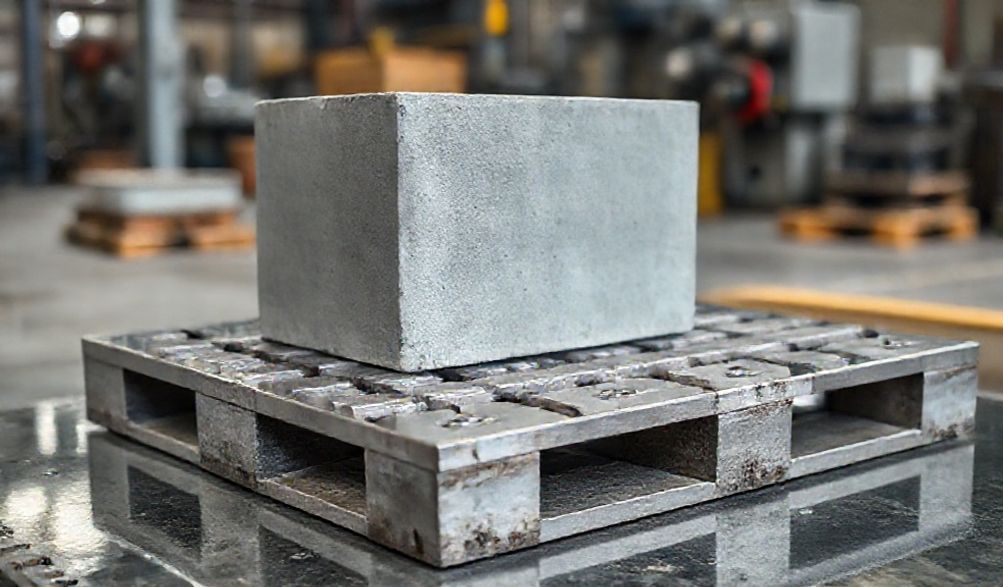
Một pallet máy đúc block là tấm thép di động quan trọng, trên đó bê tông được đúc khuôn, nén chặt và bảo dưỡng ban đầu. Nó tạo thành nền tảng cho sản phẩm của bạn, di chuyển qua các chu kỳ đổ đầy, nén và đẩy ra của máy trước khi chuyển block mới đúc đến khu vực bảo dưỡng.
Việc lựa chọn và duy trì loại pallet phù hợp không phải là nhiệm vụ mua sắm phụ trợ; đó là một khoản đầu tư trực tiếp vào lợi nhuận, chất lượng sản phẩm và tuổi thọ máy móc của nhà máy bạn. Một lựa chọn pallet kém sẽ âm thầm bào mòn biên lợi nhuận thông qua lãng phí, thời gian ngừng hoạt động và hao mòn gia tăng. Hướng dẫn toàn diện này cung cấp những hiểu biết có thể áp dụng để biến pallet của bạn từ một trung tâm chi phí thành trụ cột của sản xuất đáng tin cậy. Nếu bạn là chủ sở hữu nhà máy sản xuất khối, quản lý sản xuất, giám sát bảo trì hoặc nhân viên mua sắm, những thông tin sau đây dành cho bạn.
Tại Sao Lựa Chọn Pallet Cho Máy Ép Gạch Lại Quan Trọng Đối Với Lợi Nhuận
Bỏ qua pallet của bạn cũng giống như đội đua Công thức 1 bỏ qua lốp xe. Chúng là điểm tiếp xúc duy nhất giữa máy móc và sản phẩm của bạn, và tình trạng của chúng quyết định hiệu suất hoạt động. Các thông số kỹ thuật của pallet có tác động trực tiếp, có thể đo lường được đến lợi nhuận cuối cùng của bạn.
Tác động đến Chất lượng và Tính nhất quán của Sản phẩm
Chất lượng của các khối bạn tạo ra chỉ tốt như bề mặt mà chúng được hình thành trên đó.
- Độ chính xác kích thước:Độ phẳng của pallet là yếu tố tối quan trọng. Một pallet bị cong vênh hoặc lõm sẽ tạo ra các khối có chiều cao không đồng đều và kích thước ngoài tiêu chuẩn. Điều này dẫn đến kiểm tra chất lượng thất bại, khách hàng phàn nàn về khó khăn khi xếp, và lãng phí sản phẩm.
- Bề mặt hoàn thiện & Tháo khuônBề mặt pallet (nhẵn bóng, có kết cấu nhẹ) ảnh hưởng trực tiếp đến độ sạch sẽ của khối khi thoát khuôn. Bề mặt lõm hoặc nhám có thể gây dính, dẫn đến hư hại khối hoặc khuyết điểm bề mặt có thể nhìn thấy trên sản phẩm cuối cùng.
- Ngăn ngừa Khuyết tật:Vết nứt hoặc khuyết tật thực sự có thể bắt nguồn từ pallet. Bề mặt bị mòn nghiêm trọng hoặc tích tụ bê tông tạo ra sự hỗ trợ không đều trong giai đoạn nén áp suất cao, gây ra các điểm ứng suất biểu hiện thành vết nứt.
Ảnh Hưởng Trực Tiếp Đến Sức Khỏe & Thời Gian Hoạt Động Của Máy
Pallet của bạn bảo vệ tài sản quý giá nhất—chính là máy đúc gạch.
- Mặc nhanh:Tấm pallet mòn, không đều hoạt động như giấy nhám đối với đáy khuôn và đầu ép. Nó gây hao mòn sớm cho các bộ phận chính xác và đắt tiền này. Nó cũng làm tăng độ mài mòn trên xích băng tải và con lăn.
- Lệch và kẹt:Pallet warping hoặc hư hỏng cạnh là nguyên nhân chính gây kẹt trong bộ chứa pallet, bộ nạp liệu hoặc hệ thống chuyển giao. Những gián đoạn ngoài kế hoạch này làm dừng toàn bộ dây chuyền sản xuất của bạn, dẫn đến tổn thất đáng kể về sản lượng và việc khắc phục sự cố khẩn cấp.
Chi Phí Ẩn Từ Việc Chọn Sai Pallet
The initial savings from a cheaper, substandard pallet evaporate quickly under operational scrutiny.
- Increased Waste: Sticking and dimensional inaccuracies directly translate to broken or out-of-spec blocks that must be scrapped.
- Higher Maintenance Costs: Frequent replacement of molds, press heads, and conveyor parts due to accelerated wear becomes a recurring expense.
- Frequent Replacement Cycles: A pallet that wears out in 6 months has a much higher total cost than a premium pallet that lasts 3 years, when you factor in downtime for changeovers and procurement overhead.
- Energy Inefficiency: In steam curing environments, a warped pallet has poor contact with the curing bed, reducing heat transfer efficiency and potentially leading to uneven curing.
Types of Pallets for Block Making Machines: Materials & Specifications
Not all steel plates are created equal. Understanding the material science behind pallet options allows you to specify the right tool for your job.
Standard Steel Pallets: The Workhorse
These are the most common pallets, made from durable, abrasion-resistant steel plate.
- Typical Specs: Made from grades like Hardox 400 or AR400, with thicknesses typically ranging from 6mm to 12mm, depending on machine size and block weight.
- Ưu điểm: Excellent balance of durability and cost-effectiveness. They offer good impact resistance and heat transfer properties, making them suitable for high-volume production of standard blocks.
- Nhược điểm: While abrasion-resistant, they are not immune to wear and will gradually lose flatness. They are also susceptible to corrosion if exposed to moisture and the alkaline environment of concrete without protection.
Hardened & Ground Steel Pallets: For Precision & Longevity
This is the premium choice for operations focused on minimal downtime and superior product finish.
- Quy trình: After being cut to size, these pallets undergo a heat treatment (hardening) process, followed by precision grinding on large surface grinders. This creates an exceptionally hard, flat, and smooth surface.
- Ưu điểm chính:
- Superior Wear Resistance: The hardened surface withstands abrasion far longer than standard steel, drastically extending service life.
- Exceptional Flatness Retention: They resist warping and dishing under cyclic loading, maintaining dimensional accuracy for your blocks over time.
- Smooth Block Release: The mirror-like ground finish provides an almost non-stick surface, reducing release agent needs and improving block bottom finish.
- Công Dụng Lý Tưởng: Essential for producing high-tolerance products like interlocking paving stones, architectural masonry, and any application where a perfect bottom finish is required.
Specialty & Coated Pallets
For specific environmental or production challenges, specialized pallets offer solutions.
- Galvanized or Painted Pallets: A zinc coating (galvanizing) or a robust industrial paint system provides a barrier against corrosion. This is crucial for plants in coastal/humid regions or those using accelerants or mix designs that are particularly corrosive.
- Non-Stick Coatings: Applied over steel, coatings like PTFE (Teflon) or specialized polymers create a surface to which concrete minimally adheres. These are valuable for intricate mold designs with deep ribs or for mixes that are prone to sticking, though they may wear over time and require re-coating.
Key Specifications to Specify When Ordering
Never just order a “steel plate.” Provide a detailed specification sheet to your supplier.
- Kích thước: Exact length, width, and thickness. Include permissible tolerances (e.g., ±0.2mm on thickness).
- Flatness Tolerance: The most critical spec. Usually expressed as a deviation over a length (e.g., “±0.5mm over any 1-meter span”).
- Độ nhám bề mặt Specify “Precision Ground,” “Milled,” or “As-rolled.” For ground pallets, you may specify a surface roughness (Ra) value.
- Hardness: Define the Brinell Hardness Number (BHN). For example, AR400 has a nominal hardness of 400 BHN.
- Edge Preparation: Require all edges to be deburred, beveled, or radiused. Sharp edges are a safety hazard, damage conveyor guides, and can chip easily.
How to Select the Right Pallet for Your Machine and Product Mix
Selecting a pallet is a three-part equation: your machine’s requirements, your product’s demands, and your plant’s environment.
Matching Pallet to Machine Model
This is non-negotiable. Your block machine is engineered for a specific pallet profile.
- Consult the Manual: The manufacturer’s manual provides the exact dimensions, thickness, and maximum weight specifications. Deviating from these can void warranties and cause mechanical failure.
- Weight Matters: The machine’s pallet feeder, elevator, and turnover systems are designed for a specific weight range. A pallet that is too heavy can overload drives and cause misalignment.
Matching Pallet to Your Block Products
Different products exert different stresses on a pallet.
- Gạch Block Rỗng Tiêu Chuẩn Create a concentrated wear pattern along the outer edges of the mold. A durable, abrasion-resistant steel is key.
- Dense Pavers or Solid Blocks: Apply pressure more evenly across the entire pallet surface. Flatness retention under full-area compression is the critical factor here.
- Abrasive Mixes: If your mix contains industrial by-products like slag or certain manufactured aggregates, the abrasiveness skyrockets. This is a strong case for investing in the hardest, most wear-resistant pallet you can justify.
Evaluating Your Production Environment
The atmosphere in your plant plays a role in pallet longevity.
- Humidity & Corrosion Risk: Assess your climate and indoor humidity. If rust is a frequent sight, prioritize coated or galvanized pallets, or commit to a rigorous protective maintenance routine.
- Cleaning Processes: Do you use high-pressure water jets for cleaning? This forceful, concentrated water can accelerate corrosion if pallets are not dried and treated afterward. It can also damage non-stick coatings.
Best Practices for Pallet Maintenance & Maximizing Lifespan
A premium pallet is an investment; proper maintenance is the insurance policy. A simple, consistent routine can double or triple a pallet’s service life.
Daily & Weekly Inspection Routines
Catch problems early, before they damage blocks or the machine.
- Visual Checklist: Each shift, operators should quickly look for:
- Warping/Bowing: Sight down the length of the pallet.
- Edge Damage: Dings, curls, or cracks on the edges.
- Surface Pitting: Signs of corrosion or impact damage.
- Concrete Buildup: Residual “packing” on the surface.
- The Straightedge Test: Weekly, use a precision straightedge and a feeler gauge to check flatness. Document any pallets exceeding your flatness tolerance (e.g., >1mm gap).
Proper Cleaning Techniques
Remove concrete residue without damaging the pallet.
- Immediate Removal: Scrape off wet concrete buildup promptly before it cures.
- For Cured Residue: Use a plastic or nylon scraper. Avoid aggressive steel wire brushes, which score the surface and create grooves that promote sticking.
- Chemical Cleaners: If needed, use a mild, acidic concrete dissolver, but ensure it is compatible with your pallet’s material/coating and rinse thoroughly.
Correct Handling & Storage
Most physical damage occurs off the machine.
- Never Drop or Drag: Use designated pallet carts. Dropping pallets onto concrete floors is a surefire way to cause warping and edge damage.
- Flat, Dry Storage: When not in use, store pallets in a clean, dry area. Stack them flat on a level surface with support across their full area to prevent sagging.
When to Repair vs. Replace
Knowing when to retire a pallet saves money in the long run.
- Signs for Replacement:
- Excessive warping that cannot be corrected in a press (>3mm deviation).
- Deep grooves or scoring that affects block release.
- Severe corrosion that has pitted through the material, compromising structural integrity.
- Consider Repair/Refurbishment: For high-quality hardened pallets that have lost flatness or surface finish but are not deeply worn, professional re-grinding by a specialized workshop can be a cost-effective way to restore them to like-new condition, extending their life significantly.
Frequently Asked Questions (FAQ) About Block Machine Pallets
Q1: How often should I replace my block machine pallets?
A: There is no universal timeline. Replacement should be driven by condition, not calendar. A well-maintained hardened pallet in a low-abrasion environment could last 5+ years. A standard pallet in high-volume, abrasive production might need replacement in 12-18 months. Let your weekly inspection and flatness tests dictate the schedule.
Q2: Can I use a thicker pallet than what my machine manual specifies?
A: It is strongly discouraged without explicit written approval from the machine manufacturer. A thicker pallet may not fit in the magazine, can overload the elevator and drive mechanisms, and critically, it can alter the compression stroke distance, leading to under-compacted blocks or machine damage.
Q3: Why are my blocks sticking to the pallet?
A: Sticking is a common symptom with multiple potential causes. Diagnose in this order:
1. Pallet Surface: Is it pitted, rough, or contaminated with old buildup? Refurbish or replace.
2. Mix Design: Is the mix too wet or has a high fines content? Adjust the water-cement ratio.
3. Release Agent: Are you using one? Is it applied correctly and at the right dosage?
4. Machine Process: Is the vibration time and pressure sufficient for proper compaction and release?
Q4: Is it worth investing in more expensive hardened pallets?
A: Analyze it through Tổng Chi Phí Sở Hữu (TCO). While hardened pallets can cost 2-3x more upfront, consider:
* They last 3-5x longer than standard pallets.
* They drastically reduce downtime for pallet changes and machine wear.
* They improve product quality and reduce waste.
For high-volume or precision-focused plants, the math almost always favors hardened pallets in the long run.
Q5: How can I prevent my steel pallets from rusting?
A: A proactive approach is key:
1. Clean Thoroughly & Dry: After washing, ensure pallets are completely dry before storage.
2. Apply a Protective Film: During weekend shutdowns or extended inactivity, lightly spray or wipe pallet surfaces with a thin layer of a water-displacing, rust-inhibitive oil (ensure it’s compatible with concrete and won’t affect curing).
3. Control Storage Environment: Keep spare pallets in a dry, covered area off damp floors.
Conclusion
The pallet for your block making machine is far more than a simple slab of steel. It is a precision-engineered component that sits at the heart of your production quality, efficiency, and cost control. Treating it as a disposable commodity is one of the most common and costly oversights in block manufacturing.
The strategic choice is clear: prioritize quality, correct specifications, and a partnership with a reputable supplier who understands the demands of block production over the temptation of the lowest upfront cost. Your pallets should be an asset you manage, not an expense you dread.
Your Call to Action: This week, conduct a pallet audit. Pull 10-20 pallets from your line at random. Perform the straightedge test. Inspect for wear and damage. You may uncover the root cause of persistent production issues. For specific guidance, contact your machine’s OEM or consult with a trusted, specialized pallet manufacturer for a professional assessment of your needs.
By mastering the selection, use, and maintenance of your pallets, you pave the way for a smoother, more profitable, and sustainable block production operation for years to come.
<