
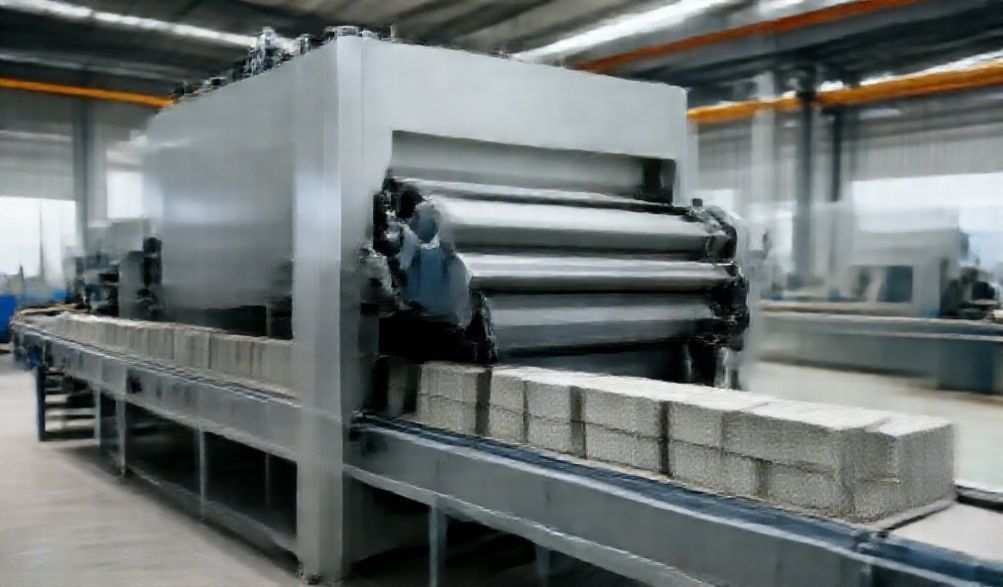
Jagorar Cikakkiyar Zaɓin Mai Sayar da Na'urar Yin Tubalin Siminti na Amintacce
Gabatarwa
A cikin duniyar gine-gine da masana'antu, jinkiri yana da tsada, kuma gazawar kayan aiki tana da mummunan sakamako. Kuna iya samun cikakken shirin kasuwanci, kasuwa mai shiri, da wuri mai kyau, amma idan layin samar da bulo ya tsaya saboda gazawar inji, ko kuma bulo din bai kai ma'aunin ƙarfin matsi ba, duk aikin ku - da ribar ku - suna cikin haɗari.
Wannan muhimmin rauni sau da yawa ya samo asali ne daga wani yanke shawara da aka yi tun kafin a fara ginin: zaɓin ku namashinanin yin bulo na siminti mai sayarwa.
Yawancin masu siye suna ciyar da makonni suna kwatanta ƙayyadaddun na'ura—ƙarfin fitarwa, matakin sarrafa kai, amfani da wutar lantarki—yayin da suke ba da kulawa kaɗan ga kamfanin da ke bayan ƙasida. Wannan kuskure ne na asali. Na'urar samfuri ce; mai kaya abokin tarayya ne. Dangantakar ku da su za ta ƙayyade damar ku ga tallafin fasaha, sahihiyar sassa na gani, horo mai mahimmanci, kuma a ƙarshe, dorewar shukar ku na dogon lokaci da dawowar saka hannun jari.
Wannan jagora an gina ta ne akan ƙwarewar masana'antu na shekaru da yawa. Ta wuce kwatancen injuna na asali don ba ku daidaitaccen tsarin dabarun da ake buƙata don tantancewa da zaɓar mai kayan aiki wanda zai zama gata ga aikin ku. A ƙarshe, za ku sami cikakken jeri na mahimman ma'auni, muhimman tambayoyin da za ku yi, alamun gargadi da za ku guji, da kuma kwarin gwiwar ƙulla haɗin gwiwa wanda zai tallafa wa ci gaban kasuwanci mai dorewa.
Dalilin Da Ya Sa Zabin Mai Bayarwa Ya Fi Muhimmanci Fiye Da Yadda Kuke Zato
Zaɓar mai sayar da kayayyaki ba aiki ne mai sauƙi na sayayya ba; yanke shawara ne na dabarun kasuwanci. Abokin tarayya da ya dace ya zama wani ɓangare na ƙungiyar ku, yayin da wanda bai dace ba zai iya zama tushen tsada da takaici na dindindin.
Bayan Na'ura: Mai Bayarwa a matsayin Abokin Haɗin gwiwa na Dogon Lokaci
Injin yin bulo na siminti babban jari ne mai muhimmanci wanda ke da rayuwa na shekaru masu yawa. Aikin da yake yi a tsawon wannan rayuwar yana da alaƙa da goyon bayan mai sayar da shi.
- Sabis na Bayan Sayarwa:Shin za su taimaka muku warware matsalar hydraulic da karfe 2 na safe? Mai dogaro da abokin ciniki yana da tsarin tallafi mai tsari.
- Samun Kayayyaki:Lokacin da wani muhimmin sashi kamar gyare-gyare ko hatimin hydraulic ya lalace, ana auna lokacin dakatarwa a cikin asarar kudaden shiga. Mai kyawun mai siyarwa yana riƙe da kayan gyara na gaske masu samuwa.
- Juyin Halitta na Fasaha:Yayin kasuwancinku ke girma ko buƙatun kasuwa suka canza, shin mai siyar da ku zai iya ba da shawara kan haɓakawa ko inganta hanyoyin aiki? Abokin haɗin gaskiya yana taimaka muku haɓaka.
Tasirin Kai Tsaye akan Dawowar Zuba Jari da Ingancin Samarwa
Mai kawo kayayyaki kai tsaye yana rinjayar ribar ku. Na'ura marar aminci daga mai kawo kayayyaki maras inganci yana haifar da:
- Ƙarancin Aiki na Injin:Katsalolin da ke faruwa akai-akai yana nufin ba kuna samar da bulo ba, amma har yanzu kuna biyan tsayayyun farashi.
- Rashin Daidaituwar Ingancin Tubali:Injinonin da ba a daidaita su da kyau ko kuma marasa inganci suna samar da bulo masu bambancin girma da ƙarfin matsi, wanda ke haifar da yawan ƙi daga wuraren gine-gine.
- Ƙarin Kudaden Aiki:Injinoni marasa inganci suna cinye ƙarin wutar lantarki da albarkatun ƙasa, yayin da kayan gyara na jabu ko waɗanda ba su dace ba sukan haifar da ƙarin lalacewa.
Wani sanannen mai bayar da kayayyaki yana samar da injuna da aka ƙera don dogaro da daidaito, yana kare dawowar ku na zuba jari tun daga ranar farko.
Ragewa Hadarin: Guje wa Tsadar Dakatarwa da Matsalolin Shari'a
Hatsarorin da za a iya samu daga zaɓen mai bayar da sabis mara kyau sun wuce haushi kawai.
- Hatsarorin Aminci:Injinonin da aka gina da kayan da ba su da inganci ko kuma daidaitaccen walda na iya haifar da haɗari mai tsanani ga masu sarrafa su.
- Rashin Bin Ka'ida:Mai kayan aiki wanda bai san ka'idojin gine-gine na gida ba, zai iya samar da injunan da ba za su iya samar da bulo masu bin ka'idojin ƙasa (kamar ka'idojin ASTM ko IS) ba, wanda zai sa ka fuskanci alhaki.
- Asarar Kuɗi:Baya ga farashin gyara, jinkirin aikin saboda karancin bulo na iya haifar da tarurruka masu nauyi daga abokan cinikin ku.
Mahimman Ma'auni Don Kimanta Mai Samar da Na'urar Yin Tubalin Siminti
Yi amfani da wannan tsarin don tantance abokan haɗin gwiwa ta tsari. Kada kawai ku karɓi maganarsu—ku nema shaida.
Gogewar Masana'antu da Ƙwarewar Fasaha da aka Tabbatar
Tsawon rai da zurfin ilimin fasaha sune alamomi masu ƙarfi na kwanciyar hankali da dogaro.
- Rikodin Aiki How many years has the company been operating? A supplier with 15+ years of history has likely navigated various market cycles and technical challenges.
- Ƙwarewar Injiniya: Are they original equipment manufacturers (OEMs) with in-house R&D and engineering teams, or are they simply resellers? OEMs typically have deeper product knowledge and better customization abilities.
- Market Understanding: Do they have experience with projects in your region? They should understand the characteristics of locally available raw materials (cement, fly ash, aggregate) and relevant construction standards.
Manufacturing and Quality Control Processes
The quality of the manufacturing process dictates the quality of the machine.
- Transparency: A trustworthy supplier is proud of their factory. They should offer virtual or (ideally) in-person facility tours.
- Takaddun shaida: Look for international quality and safety certifications like ISO 9001kumaCE marking. These are not just stickers; they represent adherence to documented quality management and safety standards.
- Abubuwan Kayan aiki & Abubuwanɗauri: Inquire about the grade of steel used in the frame and molds, and the brands of critical components (e.g., hydraulic systems from Bosch Rexroth, PLCs from Siemens). Reputable suppliers use known, durable brands.
Kewayon Samfurori Mai Cikakke da Keɓancewa
Your needs may evolve. A supplier with a narrow range cannot grow with you.
- Full Spectrum Offering: Can they supply everything from a simple manual egg-laying machine to a fully automatic stationary plant with robotic pallet handling? This indicates broad expertise.
- Customization Willingness: Can they modify a machine to produce a specific brick type you need—like interlocking pavers, hollow blocks for insulation, or specialized landscape bricks? Their ability to adapt is key.
After-Sales Support: The True Test of a Supplier
This is the most critical differentiator between a vendor and a partner.
- Shigarwa & Horarwa: Do they provide supervised installation and comprehensive, hands-on training for your operators and maintenance staff? This is non-negotiable for complex automatic plants.
- Warranty Structure: Read the fine print. What is covered (parts, labor)? What is the duration? What are the terms (e.g., must use their certified technicians)?
- Support Network: What is their average response time for technical queries? Do they have local service engineers or a network of authorized dealers, or must all support come from a distant headquarters?
Transparency, Reputation, and Client Testimonials
Trust must be earned and verified.
- Detailed Quotations: Proposals should be itemized, including machine price, spare parts list, shipping costs, duties (if applicable), and installation fees. Beware of suspiciously low “all-in” quotes.
- Verifiable References: Ask for 3-5 client references who have purchased similar equipment. Follow up. Ask those clients about machine performance, brick quality, and support responsiveness.
- Third-Party Validation: Check their profile on B2B platforms like Alibaba, Made-in-China, or industry-specific directories. Look for transaction history and authentic buyer reviews.
Essential Questions to Ask Your Potential Supplier
Come to negotiations prepared. These questions will separate the serious partners from the salespeople.
Questions About the Machine and Production
- “Based on my raw material mix (provide your proportions), what is the na gaske, mai dorewa in bricks per hour for this model, not the theoretical maximum?”
- “Can you provide a detailed technical drawing and a bill of materials for the machine?”
- “What is the expected brick density and compressive strength achievable with this machine using standard materials?”
- “Can you share a recommended annual maintenance schedule and a list of critical spare parts I should stock from day one?”
Questions About Business and Support
- “Can you walk me through your standard warranty document line by line? What are the most common exclusions?”
- “Is operator and maintenance training included? If so, what is the curriculum and duration?”
- “In case of a major breakdown, what is your escalation procedure and guaranteed response time?”
- “Can you facilitate a call or visit with one of your existing clients in a similar business?”
Red Flags: Warning Signs of an Unreliable Supplier
Heed these warnings to avoid costly mistakes.
Communication and Professionalism Red Flags
- Vagueness: Inability or unwillingness to provide clear, technical answers to specific questions.
- Pressure Tactics: “This price is only valid for 24 hours!” Legitimate businesses do not use such high-pressure sales on capital equipment.
- Lack of Documentation: No detailed manuals, technical specifications, or legally clear contracts.
Product and Service Red Flags
- The “Too-Good-To-Be-True” Price: A quote significantly lower than all others almost always indicates inferior materials, copied designs, or hidden costs.
- Ghost Operations: No verifiable physical address, refusal of a factory visit, or a website filled with stock photos and no real project case studies.
- No Client List: An unwillingness to provide any references or client testimonials.
Contract and Logistics Red Flags
- Unclear Payment Terms: Avoid suppliers demanding 100% upfront payment. Standard terms are often 30% deposit, 70% before shipment.
- Ambiguous Incoterms: The contract must clearly state who is responsible for shipping, insurance, and customs clearance (e.g., FOB, CIF, DAP). Misunderstanding here leads to unexpected fees.
- No Pre-Shipment Inspection (PSI): A reputable supplier will agree to an independent PSI where you or a third party can verify the machine’s build and function before it leaves the factory.
Navigating the Global Market: Local vs. International Suppliers
The choice isn’t always clear-cut and depends on your location, budget, and technical needs.
Advantages of a Local/Regional Supplier
- Faster Response Times: For service calls and spare parts delivery.
- Easier Communication: No language barriers or major time zone differences.
- Local Knowledge: Intimate understanding of local building codes, material availability, and business practices.
Advantages of an International/Manufacturer-Direct Supplier
- Farashin Gasar: Often lower factory-gate prices, especially for high-volume orders.
- Access to Technology: May offer the latest advancements in automation, vibration technology, and energy efficiency.
- Ƙwarewa Might be a global leader in a specific type of brick making technology.
Finding the Right Balance for Your Business
Consider the Farashin Gabaɗaya Mallaka (FGM), not just the purchase price. Factor in estimated shipping, import duties, costs of potential downtime, and spare parts logistics. For many, the ideal solution is a hybrid: an international OEM with a strong, authorized local dealer or service partner who can provide local support backed by global expertise.
FAQ: Your Cement Brick Machine Supplier Questions Answered
Q1: What is the typical lead time for receiving a cement brick making machine from an international supplier?
Lead times vary from 30 to 90 days after order confirmation, depending on machine complexity, customization, and the supplier’s production schedule. Always get a written commitment.
Q2: How do I verify the quality claims made by a supplier I found online?
Request a live video call from their factory floor to see machines in production. Ask for certificates of origin for major components (hydraulics, PLCs). Insist on a Pre-Shipment Inspection by a trusted third party.
Q3: What are the most important clauses to include in the purchase contract?
Key clauses cover: Detailed machine specifications, Warranty terms and exclusions, Payment schedule linked to milestones, Delivery Incoterms, Protocol for handling defects, and Agreement for Pre-Shipment Inspection.
Q4: Is it better to buy a fully automatic or a semi-automatic machine from a supplier?
This depends on your labor costs, target output, and budget. A reputable supplier should consult with you on this, not just push the most expensive option. Semi-automatic may be perfect for starting; fully automatic is for high-volume, consistent production.
Q5: What kind of training should a reputable supplier provide?
Training should cover: Safe machine operation, daily maintenance routines, basic troubleshooting, mold changing procedures, and quality control checks for raw materials and finished bricks. It should be hands-on and documented.
Q6: How do I budget for spare parts and maintenance in the first year?
A good supplier will provide a recommended spare parts list. Budget 3-5% of the machine’s purchase price for initial critical spares (like seals, relays, and wear parts for molds). Factor in the cost of routine lubricants and filters.
Ƙarshe
Selecting your mashinanin yin bulo na siminti mai sayarwa is a strategic decision that will echo through the life of your business. It determines not just the quality of the machine you receive, but the quality of support, the reliability of your production, and the security of your investment.
By using the criteria, questions, and warnings outlined in this guide as your due diligence checklist, you move from a position of hope to one of informed confidence. You are no longer just a buyer; you are a savvy partner seeking a mutually beneficial relationship.
Remember, the time and effort invested in this selection process is your most effective insurance policy against future downtime, quality issues, and financial loss. It is the first and most crucial step in building a profitable, sustainable brick manufacturing operation.
Ready to start conversations with vetted suppliers? Download our free Takaitaccen Binciken Mai Bayarwa to ensure you don’t miss a critical step during your negotiation and selection process.
<