
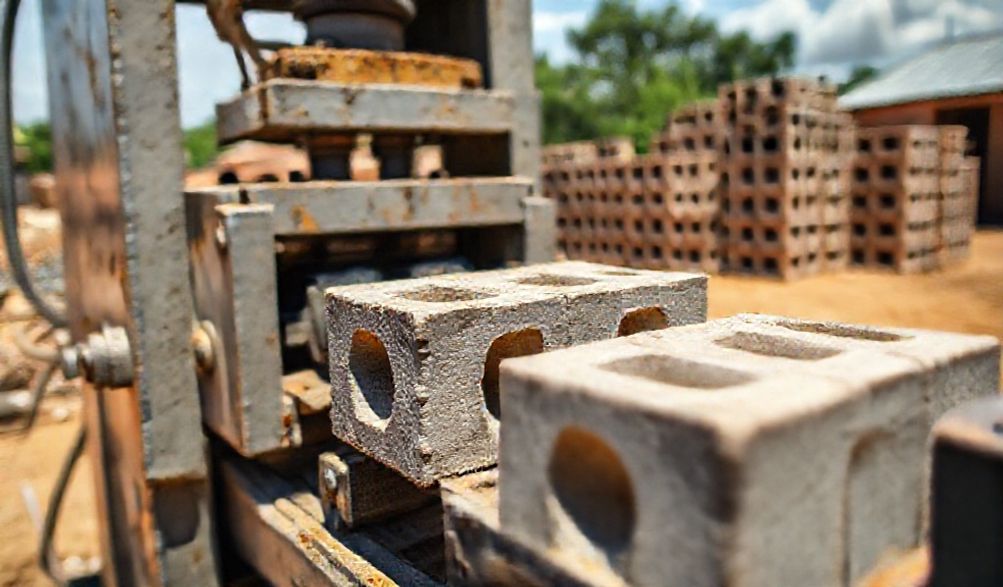
Farashin Injin Yin Tubalin Siminti a Uganda: Jagorar Mai Siyayya ta 2026 & Nazarin Kasuwa
Gabatarwa
Harken Uganda na canzawa. Tare da yawan ginin da ake yi a kowace shekara ya wuce kashi 6% kuma ana kiyasin ƙarancin gidaje a cikin miliyoyi, buƙatar kayan gini masu araha da aminci bata taɓa yin girma ba kamar yadda take a yanzu. A tsakiyar wannan juyin juya halin ginin akwai bulo na siminti mai sauƙi—wani muhimmin sashi na komai daga gidajen zama zuwa manyan gine-ginen kasuwanci. Ga ƙwararrun ƴan kasuwa da kuma ƙwararrun kamfanonin gine-gine, wannan yana ba da dama mai mahimmanci: saka hannun jari a cikin injin yin bulo na siminti. Amma tare da farashin da ya bambanta daga miliyan da yawa zuwa ɗaruruwan miliyoyin Shilling na Uganda, ta yaya za ku bi wannan muhimmin saka hannun jari?
Dangane da cikakkun binciken kasuwa da tuntuɓar masana’antun gida da kasuwancin gine-gine a duk faɗin Kampala, Jinja, da Mbarara, an tsara wannan jagorar don zama cikakkiyar hanyar ku ta samun bayanai. Ba za mu kawai jera farashin ba. Za ku sami cikakkiyar fahimtar abubuwan da ke ƙayyade farashi, koyon yadda ake ƙididdige ainihin jarin ku da yuwuwar dawowa, da kuma samun shawarwari masu amfani kan zaɓar mai sayarwa amintacce a cikin ƙwararrun kasuwar Uganda. Yi la’akari da wannan a matsayin taswirar ku don yin sayayya cikin masaniya da kwarin gwiwa wanda zai ƙarfafa ci gaban kasuwancin ku.
Fahimtar Kasuwar Tubalin Siminti na Uganda
Kafin nutse cikin cikakkun bayanan na'ura da farashin, yana da mahimmanci a fahimci ƙarfin kasuwa da ke taka rawa. Damar da ke cikin samar da tubalan yana da alaƙa kai tsaye da babban ci gaban ci gaban Uganda.
Buƙatar Gidaje Masu Araha da Ababen More Rayuwa
Manufarar Uganda ta 2040 da Shirin Ci Gaban Ƙasa na Uku (NDPIII) sun ba da fifiko musamman ga ci gaban ababen more rayuwa da birane. Mai da hankali gwamnati kan hanyoyi, makarantu, asibitoci, da wuraren masana'antu, tare da saurin ƙaura zuwa birane, suna haifar da buƙatu mai dorewa da yawa na kayan gini. Tubalan siminti an fi son su saboda dorewarsu, kaddarorin zafi, da tsada mai araha idan aka kwatanta da tsoffin tubalan kasa. Wannan buƙatun da manufofi ke tafiyar da su da na yawan jama'a suna samar da kasuwa mai ƙarfi ga masu kera tubalan.
Faidodin Fara Kasuwancin Tubalin Siminti a Uganda
Fara aikin samar da tubalin gini a Uganda yana da fa'ida ta musamman:
* Samun Kayan Gida:Abubuwan da ake amfani da su na asali—tsakuwa (dutse), yashi, da siminti—galibi ana samun su a cikin gida. Wannan yana rage haɗarin da farashin samar da kayayyaki na asali.
* Yuwuwar Samun Riba Mai Girma:Tare da ingantacciyar aiki, ribar da ke tsakanin farashin samarwa da farashin sayar da tubalan na iya zama mai yawa, musamman lokacin samar da ayyukan gine-gine masu ci gaba.
* Gudummawar Tattalin Arziki:Kuna ba da gudummawa kai tsaye ga samar da ayyukan yi na cikin gida da kuma shirin "Made in Uganda," ta samar da muhimmin samfur don ci gaban al'ummar kasar.
* Daidaituwa:Bulannai da ake yi da inji suna ba da daidaiton girma, siffa, da ƙarfi, wanda injiniyoyi da ’yan kwangila ke buƙata sosai don tabbatar da inganci.
Mahalli masu ƙayyade farashin injin bulo na siminti a Uganda
The price of a block machine is not arbitrary. It’s a direct reflection of its capabilities, complexity, and origin. Understanding these factors will help you align your budget with your business needs.
Nau'in Injini da Matakin Sarrafa Kansa
This is the most significant price determinant.
* Na'urorin Hannu: Operated entirely by hand lever. Lowest upfront cost but highest labor intensity and lowest output.
* Matsin Injin Mai Ƙaramin Gudanarwa: Feature an electric or diesel-powered vibration system to compact the concrete. The operator feeds material and removes blocks. Offers the best balance of price, output, and automation for many Ugandan businesses.
* Matsarori Masu Sarrafa Kansu Gabaɗaya: Computer-controlled systems that handle mixing, feeding, compaction, curing, and stacking with minimal human intervention. Command a premium price but offer unmatched output and consistency.
* Na'urorin Tura Tubalin na Wayar Hanka: Mounted on a trailer for easy transportation to large construction sites. Eliminates transport costs for finished blocks. Priced higher than stationary semi-automatic models due to added mobility.
Ƙarfin Samarwa (Tubalan A Sa'a/Rana)
Capacity is a primary driver of cost. A machine rated for 1,000 blocks per 8-hour shift will be significantly less expensive than one rated for 5,000 blocks. Be realistic about your market demand and growth projections. Over-investing in unused capacity ties up capital, while under-investing leaves money on the table.
Brand and Country of Origin
The source of the machine heavily influences its price, quality, and long-term cost of ownership.
* Chinese Machines: Dominant in the Ugandan market due to competitive pricing. Quality can vary dramatically between manufacturers. Vigilant supplier vetting is essential.
* Indian Machines: Often seen as a middle ground, offering robust build quality at prices slightly higher than Chinese equivalents, with generally good parts availability.
* European Machines: Represent the premium tier with superior engineering, durability, and automation. Prices are significantly higher, and parts/service networks in East Africa may be limited.
* Locally Assembled/Manufactured: A growing segment. These machines may use imported components but are assembled in Uganda, potentially offering better after-sales support and understanding of local conditions.
Block Type and Mold Configuration
The type of block you plan to produce affects the machine’s complexity and price.
* Standard Hollow/Solid Blocks: The most common and typically the least expensive mold option.
* Tubalan Masu Haɗa Kai: Require more precise molds and often stronger vibration, increasing cost.
* Paving Slabs, Kerbstones, and Designer Blocks: Specialized molds and sometimes different machine configurations are needed, raising the investment.
Tushen Wutar Lantarki
Your site’s infrastructure will guide this choice.
* Lantarki: Most common for semi and fully automatic stationary plants. Requires reliable grid or generator power.
* Dizal: Crucial for mobile machines or areas with unstable electricity. Higher operational fuel cost but ensures independence.
* Manual: No power cost, but severely limits production scale.
Concrete Block Making Machine Price Ranges in Uganda (2026)
Muhimmin Bayani: The following price ranges are indicative estimates for 2026 based on current market trends, inflation projections, and supplier data. Final prices are subject to change based on specific supplier negotiations, exact specifications, shipping costs, customs duties at the time of import, and currency exchange rate fluctuations. Always request a detailed, itemized quotation from your shortlisted suppliers.
Matsarorin Tukwane na Hannu
- Farashin Farashi: UGX 1,500,000 – UGX 6,000,000
- Mafi Kyau Don: Individuals, very small-scale startups, community-based organizations, or for producing blocks for a single personal construction project. Output is low and physically demanding.
Matsarori na Yin Tubali na Semi-Automatic
- Farashin Farashi: UGX 10,000,000 – UGX 45,000,000
- Mafi Kyau Don: The sweet spot for most growing small and medium enterprises (SMEs) in Uganda. Ideal for a dedicated block yard supplying local builders. Offers a strong balance between automation, output (500 – 3,000 blocks per day), and upfront cost.
Matsarorin Block Masu Sarrafa Kansu Gabaɗaya
- Farashin Farashi: UGX 50,000,000 – UGX 250,000,000+
- Mafi Kyau Don: Large-scale commercial production plants aiming to supply major contractors, government projects, or distributors across regions. Requires significant space, stable three-phase power, and higher technical expertise to operate and maintain.
Na'urorin Sake Gina Tubalan Wayoyin Hannu
- Farashin Farashi: UGX 25,000,000 – UGX 80,000,000
- Mafi Kyau Don: Construction companies undertaking large, long-duration projects (e.g., housing estates, factory complexes). Producing blocks directly on-site eliminates transport costs and block damage.
Beyond the Machine: Total Investment & Operational Costs
A seasoned operator in Namanve will tell you: the machine’s sticker price is just the beginning. Failing to budget for the total cost of ownership is a common pitfall for new entrants.
Hidden and Ancillary Costs
- Shipping, Customs Duty, and Taxes: If importing directly, factor in CIF (Cost, Insurance, Freight) charges, port clearing fees, and Uganda Revenue Authority (URA) import duties, which can add 25-35%+ to the ex-factory price.
- Foundation & Installation: A semi-automatic machine needs a solid, level concrete foundation. Installation may require a technician, sometimes at an extra cost.
- Kayan Aiki na Taimako: You will likely need a pan or drum concrete mixer, a wheelbarrow or conveyor system, curing racks or pallets, and a reliable water source. These are separate costs.
Raw Material & Labor Costs
- Kayan Aiki: As of 2026 trends, calculate the cost per block based on cement, sand, and aggregate prices in your region. Building relationships with local quarry and sand suppliers is key to managing this variable cost.
- Aiki A semi-automatic operation may require 3-5 workers for material handling, mixing, operation, and curing. Factor in competitive wages for your area.
Calculating Your Return on Investment (ROI)
Here’s a simplified framework:
1. Calculate Cost Per Block: (Cost of Cement + Sand + Aggregate + Labor + Power + Machine Depreciation) per block.
2. Determine Selling Price: Research the current market price for blocks in your target area (e.g., 6-inch hollow blocks).
3. Estimate Gross Profit Per Block: Selling Price – Cost Per Block.
4. Project Daily/Monthly Output: Based on your machine’s capacity and operational hours.
5. Calculate Payback Period: (Total Machine Investment + Ancillary Costs) / (Gross Profit Per Block x Monthly Block Output).
Example Snapshot for a UGX 30M Semi-Auto Setup:
* Estimated Production Cost per Block: UGX 1,200
* Average Selling Price: UGX 1,800
* Gross Profit per Block: UGX 600
* Daily Output (Target): 1,000 blocks
* Monthly Gross Profit (25 days): UGX 15,000,000
* This is a simplified illustration. Your detailed business plan must account for all overheads, market fluctuations, and downtime.
How to Choose the Right Supplier in Uganda
Your supplier relationship is critical for long-term success. A common challenge reported in Kampala is the difficulty of getting timely spare parts or technical support after the sale.
Local Dealers vs. Direct Import: Pros and Cons
- Local Dealer: Higher machine price, but includes warranty, potential installation help, and (crucially) local after-sales support. They handle import complexities.
- Direct Import from Abroad: Lower ex-factory price, but you bear all shipping, customs, and logistics risks. After-sales support is often slow or non-existent. Recommended only for experienced importers.
Vetting a Supplier: Essential Checklist
- Physical Visit: Do they have a showroom or workshop you can visit?
- After-Sales Promise: Get warranty terms (typically 1 year on major parts) in writing. Ask about the availability of common spare parts (vibration motors, hydraulic seals, molds) in their local stock.
- Abokan Kasuwanci: Insist on contacting 2-3 previous customers in Uganda. Ask about machine performance and the supplier’s responsiveness to issues.
- Demonstration: Can they show you a machine in operation, either at their yard or a client’s site?
Red Flags to Avoid
- Prices drastically lower than the market average.
- Suppliers who only communicate via WhatsApp with no verifiable physical address.
- Pressure to pay a large deposit before providing a detailed contract.
- Vague or unwilling answers about warranty and service.
Top Recommendations for Different Business Scales
Best Machine for a Small Startup/Individual
A manual or small semi-automatic machine (at the lower end of the UGX 10-20M range) is advisable. Focus on mastering the production process, building a local customer base, and generating cash flow before scaling up. A common recommendation from experienced owners is to start with a robust single-mold semi-automatic machine.
Best Machine for a Growing Construction Company
A medium-capacity semi-automatic machine (UGX 25-45M range) with options for multiple block molds (hollow, solid, interlocking) offers the flexibility to meet diverse project needs. Ensure it has a reliable diesel option if your site power is unstable.
Best Machine for a Large-Scale Block Production Plant
Investment in a Layin samarwa mai cikakken sarrafa kansa is justified. Partner with a reputable international brand that can provide commissioning support and training. Your focus should be on consistent high-volume output, supply contracts, and efficient logistics for distribution.
FAQ Section
Q1: What is the cheapest concrete block making machine available in Uganda?
The cheapest options are single-mold manual presses, which can be found from UGX 1.5 million upwards. However, consider your labor costs and output needs carefully.
Q2: Can I get a loan or financing for a block machine in Uganda?
Yes. Several financial institutions and SACCOs offer asset financing or business loans for equipment purchase. A solid business plan is essential for approval.
Q3: How much profit can I make per block?
Profit varies widely based on your location, material costs, and efficiency. Using the earlier framework, gross profits can range from UGX 300 to UGX 800 per standard block. Net profit is after deducting all overheads.
Q4: Are Chinese block machines in Uganda reliable?
They can be, but quality is not uniform. The key is the mai bayarwa, not just the country of origin. Choose a supplier with a long-term presence in Uganda and a proven track record of support.
Q5: What is the typical warranty period for these machines?
Typically 12 months on major components like the vibration motor, hydraulic system, and frame. Wear items like molds are often covered for a shorter period (e.g., 3-6 months).
Q6: How do I maintain my block making machine to avoid breakdowns?
Daily cleaning of concrete residue, regular checking and tightening of bolts, timely greasing of bearings, and ensuring the hydraulic oil is clean and at the correct level are the most critical routines.
Q7: Where are the main suppliers located in Uganda?
Most established suppliers and dealers are clustered in the industrial areas of Kampala (Namanve, Kisenyi, Bweyogerere)kumaJinja. Some also operate in larger regional towns like Mbarara and Gulu.
Ƙarshe
Investing in a concrete block making machine in Uganda is a strategic move into the backbone of the nation’s construction sector. As we’ve explored, the price is a function of automation, capacity, and brand, with total costs extending far beyond the initial purchase. The most critical step is partnering with a reputable supplier who will support your business long after the sale.
Use this guide as your foundation. Visit multiple suppliers, inspect their machines, talk to their past clients, and run your numbers meticulously. The potential for success is significant for those who combine a quality machine with sound business acumen and a commitment to serving Uganda’s growing built environment. Take the next step in your entrepreneurial journey with confidence.
<