
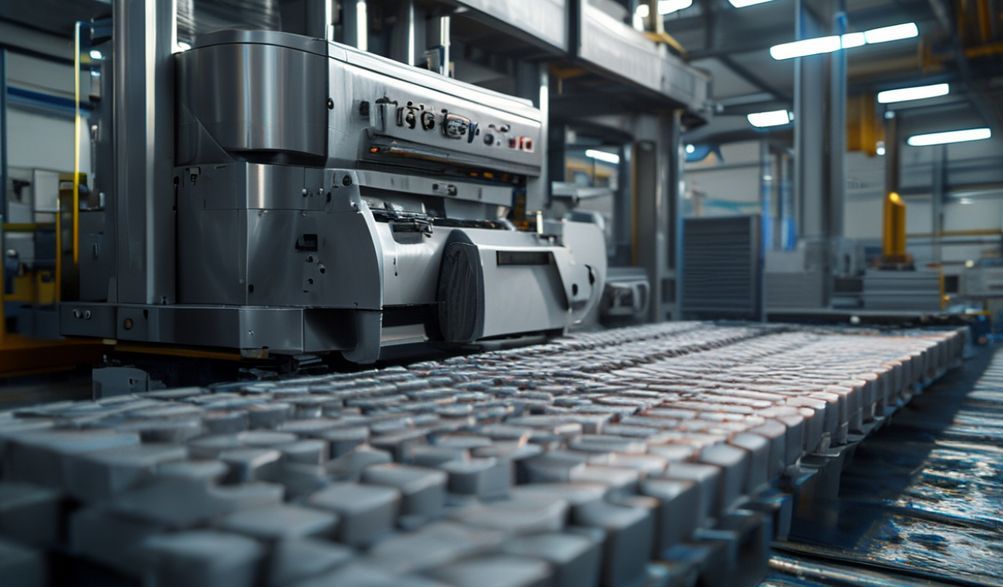
Gid ou pou yon bon kalite machin pou fè blòk siman | Apèsi nan faktori FUDA
Entwodiksyon
Nan mond konstriksyon ak fabrikasyon, gen kèk defi ki inivèsèl—e ki enpòtan anpil—tankou jwenn ekipman ki serye, efikas, ak ki gen pri ki abòdab. Siksè pwojè ou a, entegrite estrikti ou yo, ak sante finans ou yo souvan depann de desizyon sa a. Lè li rive pwodwi blòk siman fondamantal pou enfrastrikti modèn, enje yo pi wo ankò. Se poutèt sa, nou dwe mande: Kisa ki vrèman defini yon machin pou fè blòk siman ki gen "bon jan kalite", epi ki jan ou ka jwenn yon manifakti ou ka fè konfyans?
Blòk siman yo se zepòl dènye projè san konte, soti nan kay rezidansyèl rive nan devlopman komèsyal gwo echèl. Machin ki pwodui yo a se pa sèlman yon acha; se yon patnè alontèm nan pwodiktivite w. Kalite li dirije dirèkteman delè pwojè ou yo, konsistans materyèl yo, sekirite estriktirèl, ak pwofi an jeneral.
Gid konplè sa a baze sou prensip fondamantal jeni ak ekspètiz endistriyèl. Nou pral diseke anatomi yon machin siperyè epi ofri yon kad klè pou evalye. Pandan tout gid la, nou pral fè referans ak estanda ak pratik ki asosye ak manifakti etabli ki konsantre sou kalite, tankouFaktori pou fè brik FUDApou sèvi kòm yon referans konkè.
Nan fen atik sa a, w ap genyen yon lis klè sou karakteristik esansyèl yon bon kalite machin, yon metòd apwouve pou evalye manifaktirè ki depase katalòg atiran, ak kesyon enpòtan ou dwe poze anvan ou fè yon envestisman ki pral detèmine biznis ou pou ane kap vini yo.
Kisa ki defini yon machin pou fè blòk siman ki gen "bon kalite"?
Depase gwo mo piblisite yo, bon jan kalite reyèl nan yon machin pou fè blòk se yon konbinezon ki ka mezire ant jeni solid, fabrikasyon presi, ak konsepsyon ki byen reflechi. Se sa ki fè diferans ant yon byen ki dire yon ti tan ak yon machin ki ka travay di pou tout tan.
Jeni Enjenyè Debaz ak Entegrite Estriktirèl
Skelèt machin nan detèmine dire lavi li ak estabilite li anba chaj konstan ak pèsistan.
- Konstriksyon AnkadremanSa se fondasyon an. Chèche ankadreman asye solid ak ranfòse, tipikman konstwi ak gwo pout H oswa profile ki gen menm fòs. Soudu yo dwe pwòp, inifòm, ak fèt ak teknik pwofesyonèl pou anpeche fant sou kont vibrasyon ki pa sispann. Yon ankadreman fèb pral defòme, sa ki mennen nan dezalinman, kalite blòk ki pa konstan, ak echèk twò bonè.
- Sistèm Pouvwa:Kè operasyon an dwe serye. Pou sistèm idwolik, sa vle di ponp, valv, ak silenn ki gen bon jan kalite ki soti nan mak ki gen bon repitasyon, ki fèt pou kenbe presyon konstan san yo pa genyen koule. Pou machin ki baze sou vibrasyon, sa enplike motè vibrasyon ki gen gwo pouvwa, ki balanse, ki monte sou yon platfòm solid pou asire distribisyon fòs egal. Sistèm nan ta dwe fonksyone san pwoblèm ak minim bri ak chalè twòp.
Presizyon ak Konsistans nan Pwodiksyon
Yon bon machin pa fè blòk sèlman; li fèidantikblòk wo-espèk, pakèt apre pakèt.
- Kalite Mwazi:Moul la se nanm pwodwi ou a. Machin ki wo kalite yo itilize moul ki fèt ak asye alajay wo kalite ki trete (tankou Cr12, Cr12MoV) epi ki usine ak presizyon. Sa asire presizyon nan dimansyon (enpòtan anpil pou vitès depozisyon ak itilizasyon mòtye), yon fini lis pou blòk yo, ak yon rezistans eksepsyonèl kont melanj siman abrazif la. Moul ki pa bon yo dekoupe rapidman, sa ki mennen nan bò ki graj, varyasyon nan dimansyon, ak plis tan pèdi pou ranplasman.
- Sistèm Kontwòl:Sa se sèvo a. Pandan ke gen machin manyèl ki egziste, yon bon kalite machin souvan gen yon Kontwolè Lojik Pwogramab (PLC) ladan l. Yon PLC otomatize sik pwodiksyon an—melanje, manje, konpakte, vibre, ak ejeksyon—ak yon tan ak presyon egzak. Sa elimine erè imen, garanti yon dansite blòk inifòm ak yon fòs konpresif, epi li pèmèt operasyon ak depannaj pi fasil.
Dirab ak Fasil pou Antretyen
Yon machin ki pa fasil pou antretyen pral gen yon lavi operasyonèl kout, kèlkeswa jan li te konstwi an premye.
- Pye yo meteEleman tankou revètman mwazi, bag fèmen, ak sipò vibrasyon pral bezwen ranplasman. Yon machin byen konsevwa pèmèt aksè fasil nan pati sa yo san yo pa mande gwo demontaj. Anplis de sa, manifaktirè a ta dwe fasilman bay konsommab sa yo.
- Rezistans kont Korozyon: The operating environment is harsh. Look for machines treated with anti-rust primers and high-quality industrial paint. Powder coating is a strong indicator of attention to durability.
- Design for Serviceability: Can you easily reach lubrication points? Are electrical panels and hydraulic lines organized and labeled? Is there space to work around the machine for cleaning and repair? Good design anticipates and simplifies routine and corrective maintenance.
Key Features to Compare When Selecting Your Machine
With an understanding of core quality, you can now compare specific features to match a machine to your exact business needs.
Kapasite Pwodiksyon ak Nivo Otomatizasyon
Your choice here defines your output and labor model.
- Pwodiksyon ak Tan Sik Don’t just look at “theoretical maximum” output. Ask for the proven, sustainable production rate (blocks per hour or per 8-hour shift) for a standard block type. The cycle time (time to produce one pallet of blocks) is a key indicator of efficiency.
- Espes Otomatizasyon an:
- Manyèl: Lowest cost, highest labor. Operator controls every step.
- Semi-Otomatik: Automates core processes like compaction and vibration; operator handles block removal and pallet feeding. A great balance for many small to medium operations.
- Otomatik Konplè: Integrates a block elevator, stacker, and pallet return system. Maximizes output with minimal labor, ideal for large-scale production.
- Machin Mobil “Ponn Ze”: Produce blocks directly on the ground, perfect for on-site production. Stationary plants are for fixed factory settings with higher, more consistent output.
Versatility and Mold Options
Your market opportunities may change. A versatile machine protects your investment.
- Moules Entèchanjab: A key feature of a good system is the ability to switch molds to produce different products: hollow blocks (for load-bearing walls), solid blocks, paving stones, interlocking blocks for retaining walls, and even specialty shapes. The mold-changing process itself should be as streamlined as possible.
- Custom Mold Capabilities: Can the manufacturer engineer a custom mold for a unique design you want to bring to market? This speaks volumes about their engineering depth and flexibility.
Operational Efficiency
True cost is measured in ongoing expenses.
- Konsomasyon Enèji: Get clear data on power requirements (KW/h for electric, liters/hour for diesel). An efficient machine optimizes power use, especially during the high-energy vibration and compaction phases.
- Kondisyon Travay: How many operators are needed per shift for smooth, safe operation? Automation directly reduces this long-term cost.
- Konpatibilite Matyè Premye: Does the machine work optimally with your local mix of cement, aggregate, and sand? Can it be integrated with an automated batching and mixing system for a seamless production line?
Evaluating a Manufacturer: Beyond the Brochure (The FUDA Factory Example)
The machine is only as good as the company that stands behind it. Here’s how to assess a manufacturer, using the principles embodied by established factories like FUDA as a reference.
Ekspètiz ak Eksperyans nan Faktori
- In-House R&D & Engineering: A true manufacturer invests in designing and improving its own machines. Ask about their engineering team. Do they develop their own control systems and mechanical designs, or are they simply assembling bought-in parts?
- Industry Longevity: A company with a decade or more of history has likely iterated on its designs, solved common field problems, and built a reputation. It’s a marker of stability and resilience.
- Espesyalizasyon: A factory dedicated solely to block making machinery (like a specialized brick making factory) will typically possess deeper expertise than a general machinery trader who sells everything from excavators to generators.
Transparency and Authoritativeness
Trust is built on clarity and proof.
- Espesifikasyon Teknik Detaye: Request full, detailed spec sheets—not just a one-page flyer. This should include exact dimensions, steel grades, component brands, power specs, and weight.
- Verifiable Proof: Look for detailed case studies with photos/videos, a portfolio of past projects, and genuine customer testimonials (ideally with contactable references). A reputable factory is proud to show its machines in action.
- Konfòmite ak Estanda yo: While not a global guarantee, certifications like CE (for the European market) or ISO 9001 for quality management systems indicate a formal commitment to safety, quality control, and standardized manufacturing processes.
Trustworthiness in Service and Support
This is often the most critical differentiator between a good purchase and a regrettable one.
- Garanti ak Pyès Detache: Scrutinize the warranty. What is covered (typically core frame, hydraulics)? For how long? Is it a genuine parts-and-labor warranty? Crucially, ask for their spare parts price list and lead time for key components. A reliable manufacturer maintains a robust inventory and supply chain.
- Enstalasyon ak Fòmasyon: Do they offer supervised installation and commissioning? Do they provide comprehensive on-site training for both operators and maintenance technicians? This ensures you start on the right foot.
- Sipò Apre Vann How is technical support accessed? Via phone, WhatsApp, video call? What are their response time commitments? Do they have the capability to dispatch engineers for major issues? Clear support channels are essential.
The Total Cost of Ownership: Investment vs. Long-Term Value
The initial price tag is just the entry fee. Smart buyers analyze the Total Cost of Ownership (TCO).
Initial Purchase Price vs. Hidden Costs
- Visible Price: The machine’s quoted FOB or CIF cost.
- Hidden Initial Costs: International shipping, insurance, import duties and taxes, customs clearance fees, inland transportation to your site, and the cost of professional installation and foundation pouring.
Operational Costs Over Time
These are the recurring expenses that determine your profitability.
- Direct Costs: Monthly electricity/fuel bills, wages for operators, and the periodic cost of replacement wear parts (seals, liners, etc.).
- The Cost of Downtime: This is the silent profit-killer. An unreliable machine that frequently breaks down halts production, delays projects, and damages client relationships. The most “expensive” machine can be the cheap one that is constantly out of service.
ROI Calculation Framework
Create a simple model to justify the investment:
1. Calculate Daily Output Value: (Blocks per day) x (Your selling price per block).
2. Calculate Daily Operational Cost: (Energy + Labor + Material Cost for that output).
3. Calculate Daily Gross Profit: (Output Value – Operational Cost).
4. Factor in Initial Investment: Include all “Initial Purchase & Hidden Costs” from above.
5. Estimate Payback Period: (Total Initial Investment) / (Daily Gross Profit) = Approximate days to break even.
A higher-quality, more efficient machine may have a higher initial cost but a faster payback period due to greater output, lower downtime, and reduced operational waste.
Essential Questions to Ask Before You Buy
Arm yourself with these questions to cut through sales talk and get to the truth.
Questions About the Machine
- “Can you provide a real-time video of this exact model running in your factory or at a customer’s site, not a promotional clip?”
- “What are the brand and model of the core components (hydraulic pump, PLC, vibration motors)?”
- “What is the expected operational lifespan of the main frame and hydraulic system under normal use?”
- Kisa 80-20 la?exact lead time and cost for the three most commonly replaced spare parts?”
- “Can you share the technical drawing for the foundation required for this specific model?”
Questions About the Manufacturer
- “Can you connect me with two previous customers in a country with a similar climate and market to mine? I would like to speak to them directly.”
- “What specific training do your engineers provide during commissioning, and what manuals/videos are left with us?”
- “What is your standard process for handling a technical fault? What are the guaranteed response times for remote and on-site support?”
- “Do you provide a detailed electrical and hydraulic schematic diagram with the machine?”
Kesyon yo poze souvan (FAQ)
Q: What is the main difference between a hydraulic and a vibration-press block machine?
A: The core mechanism. Vibration-press machines use a combination of mechanical vibration and pressure to compact the concrete mix into a mold. They are excellent for standard hollow and solid blocks. Hydraulic machines use a high-pressure hydraulic cylinder to apply immense, controlled force, producing very dense, high-strength blocks with a superior finish, ideal for pavers, curbstones, and specialized products.
Q: How much space and what foundation is needed for a stationary block making machine?
A: Requirements vary greatly by model. Generally, you need a level, reinforced concrete floor (often 200-300mm thick) capable of handling the machine’s weight and dynamic loads. Factory space must accommodate the machine itself, raw material storage, a curing area, and finished block storage. Always follow the manufacturer’s specific foundation drawing.
Q: Can one machine produce different sizes and types of blocks?
A: Yes, this is a key advantage of quality stationary machines. By purchasing and installing different, interchangeable molds, the same host machine can produce a wide variety of block types and sizes. The changeover process can take from 30 minutes to a few hours.
Q: What is a typical warranty for a good quality machine?
A: Industry standards typically range from 1 to 2 years for the core components like the main frame, hydraulic system, and electrical cabinet. Wear parts like molds, seals, and liners often have a shorter warranty (e.g., 6 months). Always get the warranty terms in writing, clearly stating what is covered and what is not.
Q: How do I ensure the blocks produced meet local construction standards?
A: First, ensure the machine is capable of producing the required compressive strength (e.g., 5MPa, 7MPa, etc.) through consistent density. Then, when you receive the machine, produce sample blocks using your local materials and send them to an independent construction materials laboratory for official compressive strength testing. This validates both your mix design and the machine’s performance.
Konklizyon
Choosing a good quality cement block making machine is a strategic decision that extends far beyond the initial price tag. As we’ve explored, true quality is a multifaceted blend of uncompromising structural integrity, precision engineering for consistency, thoughtful design for durability, and, perhaps most importantly, the proven credibility and support of the manufacturer.
The most cost-effective choice is rarely the cheapest. It is the machine with the lowest Pri Total Posesyon—the one that delivers reliable, high-volume production with minimal downtime and operational waste for years to come. This is achieved by partnering with a manufacturer that demonstrates Expertise, Authoritativeness, and Trustworthiness (E-A-T) through transparent specifications, verifiable customer success, and robust after-sales support.
Your Next Steps:
1. Create a Checklist: Use the key points from the “What Defines Quality” and “Key Features” sections above as your evaluation matrix.
2. Request Detailed Documentation: Contact shortlisted manufacturers (including factories with the reputation and operational standards of a Faktori pou fè brik FUDA) for complete technical specs, a clear parts list, and a formal warranty document.
3. Demand Concrete Proof: Ask for specific customer references and real-world production videos. Validate every claim.
Investing this time in due diligence is the surest way to secure a machine that won’t just make blocks, but will build the foundation for your long-term success.
<