
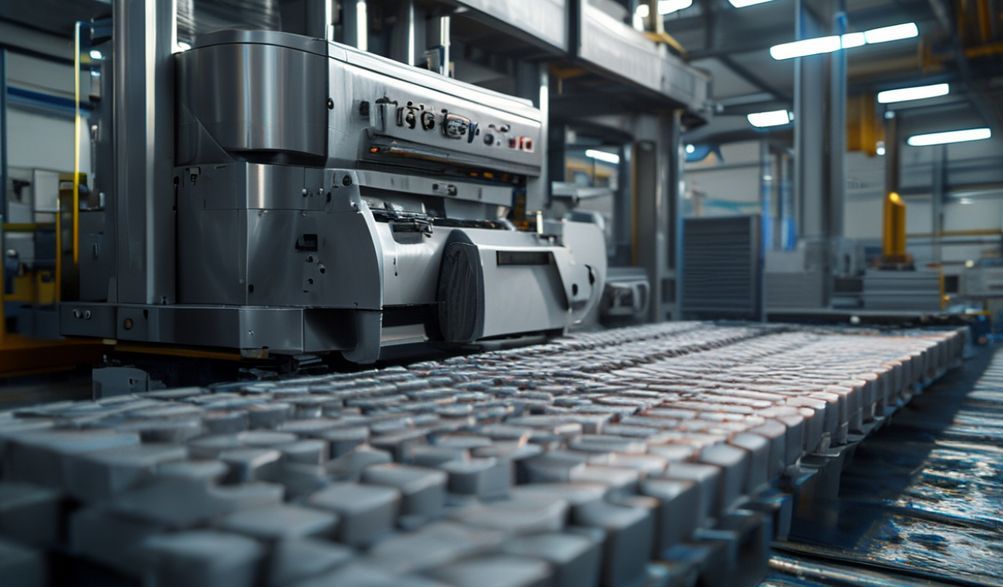
Panduan Anda untuk Mesin Pembuat Blok Semen Berkualitas Baik | Wawasan Pabrik FUDA
Pengantar
Di dunia konstruksi dan manufaktur, sedikit tantangan yang seseragam—dan sekritis—mendapatkan peralatan yang andal, efisien, dan hemat biaya. Kesuksesan proyek Anda, integritas struktur Anda, dan kesehatan laba Anda sering kali bergantung pada keputusan tunggal ini. Ketika menyangkut produksi blok bangunan fundamental dari infrastruktur modern, taruhannya bahkan lebih tinggi. Jadi, kita harus bertanya: Apa yang benar-benar mendefinisikan mesin pembuat blok semen 'berkualitas baik', dan bagaimana Anda menemukan produsen yang dapat dipercaya?
Blok semen adalah tulang punggung dari berbagai proyek, mulai dari rumah tinggal hingga pengembangan komersial berskala besar. Mesin yang memproduksinya bukan sekadar pembelian; itu adalah mitra jangka panjang dalam produktivitas Anda. Kualitasnya secara langsung menentukan jadwal proyek, konsistensi material, keamanan struktural, dan profitabilitas keseluruhan Anda.
Panduan komprehensif ini dibangun berdasarkan prinsip-prinsip rekayasa dasar dan keahlian industri. Kami akan menguraikan anatomi mesin unggulan dan menyediakan kerangka evaluasi yang jelas. Sepanjang pembahasan, kami akan merujuk pada standar dan praktik yang identik dengan produsen mapan yang berfokus pada kualitas sepertiPabrik pembuatan bata FUDAuntuk berfungsi sebagai tolok ukur yang nyata.
Di akhir artikel ini, Anda akan memiliki daftar periksa yang jelas tentang fitur-fitur mutlak dari mesin berkualitas, metode teruji untuk mengevaluasi produsen di balik brosur mengilap, serta pertanyaan-pertanyaan kritis yang harus diajukan sebelum melakukan investasi yang akan membentuk bisnis Anda untuk tahun-tahun mendatang.
Apa yang Mendefinisikan Mesin Pembuat Blok Semen "Berkualitas Baik"?
Melampaui jargon pemasaran, kualitas sejati dalam mesin pembuat bata adalah kombinasi terukur dari rekayasa yang kokoh, manufaktur presisi, dan desain yang matang. Inilah yang membedakan aset jangka pendek dari mesin kerja andal jangka panjang.
Inti Rekayasa dan Integritas Struktural
Kerangka mesin menentukan umur dan stabilitasnya di bawah beban konstan yang berat.
- Konstruksi Rangka:Ini adalah fondasinya. Carilah rangka baja yang kokoh dan diperkuat, biasanya terbuat dari balok H atau profil berdaya tinggi serupa. Las-lasannya harus bersih, seragam, dan dilakukan dengan teknik profesional untuk mencegah retak akibat getaran yang terus-menerus. Rangka yang lemah akan melengkung, menyebabkan ketidaksejajaran, kualitas balok yang tidak konsisten, dan kegagalan dini.
- Sistem Tenaga Listrik:Inti dari operasi harus dapat diandalkan. Untuk sistem hidrolik, ini berarti pompa, katup, dan silinder berkualitas tinggi dari merek terpercaya, yang dirancang untuk mempertahankan tekanan konsisten tanpa kebocoran. Untuk mesin berbasis getaran, ini melibatkan motor getaran yang kuat dan seimbang, dipasang pada platform yang kokoh untuk memastikan distribusi gaya yang merata. Sistem harus beroperasi dengan lancar, dengan kebisingan minimal dan pembangkitan panas berlebih yang rendah.
Presisi dan Konsistensi dalam Produksi
Sebuah mesin berkualitas tidak hanya membuat balok; ia menciptakanidentikblok spesifikasi tinggi, batch demi batch.
- Kualitas Cetakan:Cetakan adalah jiwa dari produk Anda. Mesin berkualitas tinggi menggunakan cetakan yang terbuat dari baja paduan berkualitas tinggi yang dikeraskan (misalnya, Cr12, Cr12MoV) dan diproses dengan presisi tinggi. Hal ini memastikan akurasi dimensi (kritis untuk kecepatan peletakan dan penggunaan mortar), hasil akhir balok yang halus, serta ketahanan luar biasa terhadap campuran semen yang abrasif. Cetakan berkualitas buruk akan cepat aus, menyebabkan tepian kasar, variasi dimensi, dan peningkatan waktu henti untuk penggantian.
- Sistem Kontrol:Ini adalah otaknya. Meskipun ada mesin manual, mesin berkualitas baik sering kali dilengkapi dengan Programmable Logic Controller (PLC). PLC mengotomatisasi siklus produksi—pencampuran, pengisian, pemadatan, getaran, dan pengeluaran—dengan waktu dan tekanan yang tepat. Hal ini menghilangkan kesalahan manusia, menjamin kepadatan dan kekuatan tekan balok yang seragam, serta memudahkan pengoperasian dan pemecahan masalah.
Daya Tahan dan Kemudahan Perawatan
Sebuah mesin yang tidak dapat dirawat dengan mudah akan memiliki umur operasional yang pendek, terlepas dari kualitas pembangunannya.
- Suku Cadang Aus:Komponen seperti pelapis cetakan, cincin penyegel, dan peredam getaran perlu diganti. Mesin yang dirancang dengan baik memungkinkan akses mudah ke bagian-bagian ini tanpa memerlukan pembongkaran besar. Selain itu, produsen harus dengan mudah menyediakan suku cadang habis pakai ini.
- Ketahanan Korosi:Lingkungan operasinya keras. Carilah mesin yang telah diberi lapisan anti karat primer dan cat industri berkualitas tinggi. Pelapisan bubuk (powder coating) merupakan indikator kuat dari perhatian terhadap daya tahan.
- Design for Serviceability: Can you easily reach lubrication points? Are electrical panels and hydraulic lines organized and labeled? Is there space to work around the machine for cleaning and repair? Good design anticipates and simplifies routine and corrective maintenance.
Key Features to Compare When Selecting Your Machine
With an understanding of core quality, you can now compare specific features to match a machine to your exact business needs.
Kapasitas Produksi & Tingkat Otomatisasi
Your choice here defines your output and labor model.
- Output & Waktu Siklus: Don’t just look at “theoretical maximum” output. Ask for the proven, sustainable production rate (blocks per hour or per 8-hour shift) for a standard block type. The cycle time (time to produce one pallet of blocks) is a key indicator of efficiency.
- Spektrum Otomasi:
- Panduan: Lowest cost, highest labor. Operator controls every step.
- Semi-Otomatis: Automates core processes like compaction and vibration; operator handles block removal and pallet feeding. A great balance for many small to medium operations.
- Sepenuhnya Otomatis: Integrates a block elevator, stacker, and pallet return system. Maximizes output with minimal labor, ideal for large-scale production.
- Mesin "Penelur" Ponsel: Produce blocks directly on the ground, perfect for on-site production. Stationary plants are for fixed factory settings with higher, more consistent output.
Versatility and Mold Options
Your market opportunities may change. A versatile machine protects your investment.
- Cetakan yang Dapat Dipertukarkan: A key feature of a good system is the ability to switch molds to produce different products: hollow blocks (for load-bearing walls), solid blocks, paving stones, interlocking blocks for retaining walls, and even specialty shapes. The mold-changing process itself should be as streamlined as possible.
- Custom Mold Capabilities: Can the manufacturer engineer a custom mold for a unique design you want to bring to market? This speaks volumes about their engineering depth and flexibility.
Operational Efficiency
True cost is measured in ongoing expenses.
- Konsumsi Energi: Get clear data on power requirements (KW/h for electric, liters/hour for diesel). An efficient machine optimizes power use, especially during the high-energy vibration and compaction phases.
- Kebutuhan Tenaga Kerja: How many operators are needed per shift for smooth, safe operation? Automation directly reduces this long-term cost.
- Kesesuaian Bahan Baku: Does the machine work optimally with your local mix of cement, aggregate, and sand? Can it be integrated with an automated batching and mixing system for a seamless production line?
Evaluating a Manufacturer: Beyond the Brochure (The FUDA Factory Example)
The machine is only as good as the company that stands behind it. Here’s how to assess a manufacturer, using the principles embodied by established factories like FUDA as a reference.
Keahlian dan Pengalaman Manufaktur
- In-House R&D & Engineering: A true manufacturer invests in designing and improving its own machines. Ask about their engineering team. Do they develop their own control systems and mechanical designs, or are they simply assembling bought-in parts?
- Industry Longevity: A company with a decade or more of history has likely iterated on its designs, solved common field problems, and built a reputation. It’s a marker of stability and resilience.
- Spesialisasi: A factory dedicated solely to block making machinery (like a specialized brick making factory) will typically possess deeper expertise than a general machinery trader who sells everything from excavators to generators.
Transparency and Authoritativeness
Trust is built on clarity and proof.
- Detailed Technical Specifications: Request full, detailed spec sheets—not just a one-page flyer. This should include exact dimensions, steel grades, component brands, power specs, and weight.
- Verifiable Proof: Look for detailed case studies with photos/videos, a portfolio of past projects, and genuine customer testimonials (ideally with contactable references). A reputable factory is proud to show its machines in action.
- Kepatuhan terhadap Standar: While not a global guarantee, certifications like CE (for the European market) or ISO 9001 for quality management systems indicate a formal commitment to safety, quality control, and standardized manufacturing processes.
Trustworthiness in Service and Support
This is often the most critical differentiator between a good purchase and a regrettable one.
- Garansi & Suku Cadang: Scrutinize the warranty. What is covered (typically core frame, hydraulics)? For how long? Is it a genuine parts-and-labor warranty? Crucially, ask for their spare parts price list and lead time for key components. A reliable manufacturer maintains a robust inventory and supply chain.
- Pemasangan & Pelatihan: Do they offer supervised installation and commissioning? Do they provide comprehensive on-site training for both operators and maintenance technicians? This ensures you start on the right foot.
- Dukungan Purna Jual: How is technical support accessed? Via phone, WhatsApp, video call? What are their response time commitments? Do they have the capability to dispatch engineers for major issues? Clear support channels are essential.
The Total Cost of Ownership: Investment vs. Long-Term Value
The initial price tag is just the entry fee. Smart buyers analyze the Total Cost of Ownership (TCO).
Initial Purchase Price vs. Hidden Costs
- Visible Price: The machine’s quoted FOB or CIF cost.
- Hidden Initial Costs: International shipping, insurance, import duties and taxes, customs clearance fees, inland transportation to your site, and the cost of professional installation and foundation pouring.
Operational Costs Over Time
These are the recurring expenses that determine your profitability.
- Biaya Langsung: Monthly electricity/fuel bills, wages for operators, and the periodic cost of replacement wear parts (seals, liners, etc.).
- The Cost of Downtime: This is the silent profit-killer. An unreliable machine that frequently breaks down halts production, delays projects, and damages client relationships. The most “expensive” machine can be the cheap one that is constantly out of service.
ROI Calculation Framework
Create a simple model to justify the investment:
1. Calculate Daily Output Value: (Blocks per day) x (Your selling price per block).
2. Calculate Daily Operational Cost: (Energy + Labor + Material Cost for that output).
3. Calculate Daily Gross Profit: (Output Value – Operational Cost).
4. Factor in Initial Investment: Include all “Initial Purchase & Hidden Costs” from above.
5. Estimate Payback Period: (Total Initial Investment) / (Daily Gross Profit) = Approximate days to break even.
A higher-quality, more efficient machine may have a higher initial cost but a faster payback period due to greater output, lower downtime, and reduced operational waste.
Essential Questions to Ask Before You Buy
Arm yourself with these questions to cut through sales talk and get to the truth.
Questions About the Machine
- “Can you provide a real-time video of this exact model running in your factory or at a customer’s site, not a promotional clip?”
- “What are the brand and model of the core components (hydraulic pump, PLC, vibration motors)?”
- “What is the expected operational lifespan of the main frame and hydraulic system under normal use?”
- “What is the exact lead time and cost for the three most commonly replaced spare parts?”
- “Can you share the technical drawing for the foundation required for this specific model?”
Questions About the Manufacturer
- “Can you connect me with two previous customers in a country with a similar climate and market to mine? I would like to speak to them directly.”
- “What specific training do your engineers provide during commissioning, and what manuals/videos are left with us?”
- “What is your standard process for handling a technical fault? What are the guaranteed response times for remote and on-site support?”
- “Do you provide a detailed electrical and hydraulic schematic diagram with the machine?”
Pertanyaan yang Sering Diajukan (FAQ)
Q: What is the main difference between a hydraulic and a vibration-press block machine?
A: The core mechanism. Vibration-press machines use a combination of mechanical vibration and pressure to compact the concrete mix into a mold. They are excellent for standard hollow and solid blocks. Hydraulic machines use a high-pressure hydraulic cylinder to apply immense, controlled force, producing very dense, high-strength blocks with a superior finish, ideal for pavers, curbstones, and specialized products.
Q: How much space and what foundation is needed for a stationary block making machine?
A: Requirements vary greatly by model. Generally, you need a level, reinforced concrete floor (often 200-300mm thick) capable of handling the machine’s weight and dynamic loads. Factory space must accommodate the machine itself, raw material storage, a curing area, and finished block storage. Always follow the manufacturer’s specific foundation drawing.
Q: Can one machine produce different sizes and types of blocks?
A: Yes, this is a key advantage of quality stationary machines. By purchasing and installing different, interchangeable molds, the same host machine can produce a wide variety of block types and sizes. The changeover process can take from 30 minutes to a few hours.
Q: What is a typical warranty for a good quality machine?
A: Industry standards typically range from 1 to 2 years for the core components like the main frame, hydraulic system, and electrical cabinet. Wear parts like molds, seals, and liners often have a shorter warranty (e.g., 6 months). Always get the warranty terms in writing, clearly stating what is covered and what is not.
Q: How do I ensure the blocks produced meet local construction standards?
A: First, ensure the machine is capable of producing the required compressive strength (e.g., 5MPa, 7MPa, etc.) through consistent density. Then, when you receive the machine, produce sample blocks using your local materials and send them to an independent construction materials laboratory for official compressive strength testing. This validates both your mix design and the machine’s performance.
Kesimpulan
Choosing a good quality cement block making machine is a strategic decision that extends far beyond the initial price tag. As we’ve explored, true quality is a multifaceted blend of uncompromising structural integrity, precision engineering for consistency, thoughtful design for durability, and, perhaps most importantly, the proven credibility and support of the manufacturer.
The most cost-effective choice is rarely the cheapest. It is the machine with the lowest Total Biaya Kepemilikan—the one that delivers reliable, high-volume production with minimal downtime and operational waste for years to come. This is achieved by partnering with a manufacturer that demonstrates Expertise, Authoritativeness, and Trustworthiness (E-A-T) through transparent specifications, verifiable customer success, and robust after-sales support.
Your Next Steps:
1. Create a Checklist: Use the key points from the “What Defines Quality” and “Key Features” sections above as your evaluation matrix.
2. Request Detailed Documentation: Contact shortlisted manufacturers (including factories with the reputation and operational standards of a Pabrik pembuatan bata FUDA) for complete technical specs, a clear parts list, and a formal warranty document.
3. Demand Concrete Proof: Ask for specific customer references and real-world production videos. Validate every claim.
Investing this time in due diligence is the surest way to secure a machine that won’t just make blocks, but will build the foundation for your long-term success.
<