
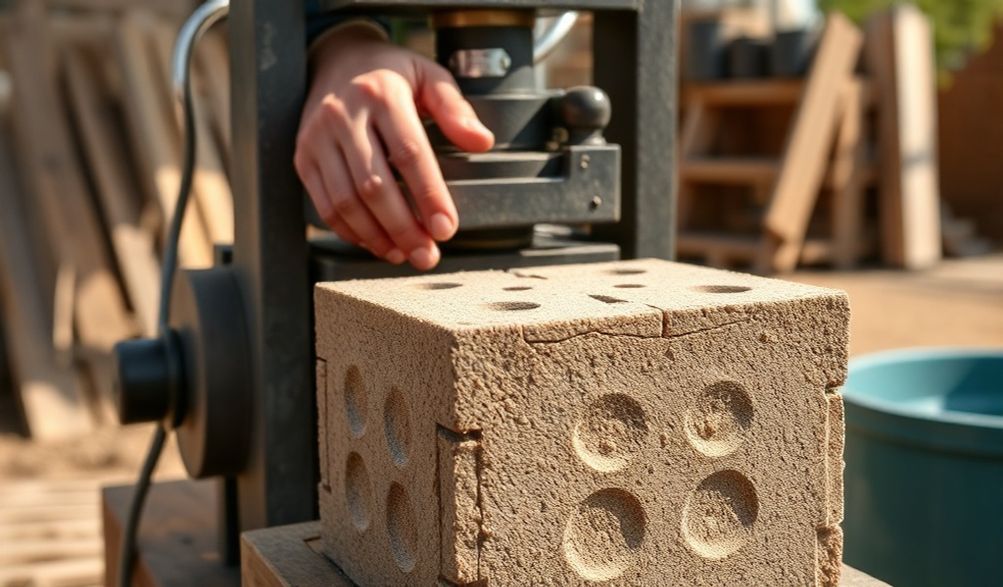
수동 인터록 블록 제작 기계 완전 가이드: 비용, 공정 및 장점
소개
전 세계의 건축업자, 지역사회 지도자, 그리고 주택 소유자들에게 있어, 경제적이고 내구성 있는 건축에 대한 꿈은 종종 가혹한 현실과 충돌합니다: 전통적 재료의 치솟는 비용과 환경적 부담이 그것입니다. 소성 점토 벽돌은 상당한 에너지를 요구하며, 산림 파괴에 기여하고, 그 운송만으로도 프로젝트 예산을 감당할 수 없는 수준으로 부풀릴 수 있습니다. 이러한 도전은 특히 외딴 지역과 자본이 제한된 사람들에게 더욱 심각합니다.
하지만 해결책이 단순히 다른 제품이 아니라, 당신이 통제할 수 있는 다른 과정이라면 어떨까요? 지속 가능한 건설 분야에서 수십 년간의 공학적 개선과 현장 적용을 바탕으로, 수동식 연동 블록 제조기는 정확히 그런 대안을 구현합니다. 이는 추측성 기술이 아닙니다. 현지에서 구할 수 있는 흙을 튼튼한 연동 건축 블록으로 변환하는 검증된 수동 프레스입니다.
이 가이드는 포괄적인 참고 자료 역할을 합니다. 비용 절감 방법을 탐구하는 건설업자, 소규모 사업 기회를 노리는 기업가, 지역사회 프로젝트를 계획하는 비정부기구, 열정적인 DIY 애호가를 막론하고, 우리는 이 강력한 도구의 신비를 풀어드릴 것입니다. 정확한 작동 원리, 실질적인 이점, 상세한 단계별 생산 과정, 투자 전 고려해야 할 핵심 요소를 다룰 것입니다. 우리의 목표는 귀하의 특정 프로젝트와 상황에 맞는 정보를 바탕으로 합리적인 결정을 내릴 수 있도록 신뢰할 수 있고 깊이 있는 정보를 제공하는 것입니다.
수동 인터록킹 블록 제작 기계란 무엇인가요?
본질적으로, 수동 인터록킹 블록 제작기는 인간의 힘으로 작동되며, 축축한 흙, 모래, 그리고 소량의 시멘트를 혼합한 재료를 고밀도의 기하학적 인터록킹 블록으로 압축하는 장치입니다. 이는 가마에서 소성할 필요를 없애, 원료 상태의 흙에서 완성된 건축 자재로 가는 과정을 극도로 단순화합니다.
핵심 기능과 설계
이 기계는 역학적 이점에 대한 우아한 연구물입니다. 설계는 다양하지만, 기본 구성 요소는 일관되게 유지됩니다.
- 지레 시스템:긴 강철 지렛대 팔이 필요한 힘을 제공합니다. 이 간단한 기계를 통해 작업자의 체중과 힘이 증폭되어 높은 압축력을 달성합니다.
- 금형/다이:이것은 블록에 모양을 부여하는 캐비티입니다. 일반적으로 지속적인 압력과 마모를 견디기 위해 경화 강철로 만들어집니다.
- 압축 챔버:원료 혼합물이 투입되는 곳입니다. 레버로 구동되는 피스톤이나 프레스 헤드가 혼합물을 수직 방향으로 엄청난 힘으로 압축합니다.
- 연동 키 디자인:이것은 몰드에 통합되어 블록의 상단, 하단 및 측면에 특징적인 혀와 홈 또는 돌기와 오목한 부분을 만듭니다.
과정은 순환적입니다: 채우기, 압축하기, 배출하기. 숙련된 작업자는 실제로 1분 이내에 블록을 생산할 수 있습니다.
인터로킹 블록의 과학
이 시스템의 천재성은 단순한 압축이 아니라 연결에 있습니다. 맞물리는 설계는 블록들 사이에 기계적 결합을 만들어냅니다.
- 박격포 제거:정밀하게 맞물리는 구조는 수직 모르타르 이음새의 필요성을 없애줍니다. 일반적으로 수평 모르타르 층만 얇게 깔아 단을 고르게 합니다.
- 고유의 이점:이로 인해 시공 속도가 빨라지고(모르타르 경화를 기다릴 필요가 없어), 숙련된 석공에 대한 의존도가 줄어들며, 상당한 자재 절감 효과를 얻을 수 있습니다.
- 구조적 안정성:연동 패턴은 벽을 단일하고 유연한 매트릭스처럼 작용하게 만듭니다. 지진대에서의 현장 관찰 결과, 잘 시공된 연동 블록 벽은 전통적인 조적조보다 균열 저항성이 더 우수할 수 있는데, 이는 연동 구조가 치명적 파괴 없이 미세한 움직임을 허용하기 때문입니다.
수동 블록 프레스 사용의 주요 장점
수동 프레스를 선택하는 것은 경제성, 생태, 권한 부여 등 다각적인 이점을 가진 전략적 결정입니다.
탁월한 가성비
금융적 측면에서 특히 소규모 및 중간 규모 프로젝트에 대한 매력이 큽니다.
- 낮은 자본 투자수만 달러에 달하는 전동식 또는 유압식 블록 공장과 비교하면, 고품질 수동 프레스는 최소한의 초기 비용을 의미합니다.
- 급진적인 재료비 절감:주 재료인 흙은 현장이나 지역에서 거의 무료로 구할 수 있는 경우가 많습니다. 시멘트 사용량은 최소화되어 있습니다(보통 체적 기준 5-10%).
- 지속적인 저축:수직 모르타르를 제거하면 모르타르 비용과 관련 인건비를 약 30-50% 절약할 수 있습니다.
지속 가능성 및 친환경 건설
이 기술은 친환경 건축 원칙에 완벽하게 부합합니다.
- 현지 자재 사용:현장 내 자재를 70~90% 활용하면 무거운 건축 자재 운반에 따른 탄소 배출과 비용을 획기적으로 줄일 수 있습니다.
- 낮은 체화 에너지 With no firing process, the energy input is virtually limited to human labor and the small cement fraction. This contrasts sharply with fired bricks, which are major consumers of coal or firewood.
- Non-Toxic & Recyclable: The blocks are made from natural earth and stabilize with cement. At end-of-life, they can be crushed and returned to the earth or re-used as aggregate.
Empowerment and Operational Simplicity
Perhaps the most profound advantage is the shift in control it offers.
- 주문형 생산: You are no longer at the mercy of supplier schedules or market price fluctuations. Blocks can be produced as needed, on-site.
- Low Technical Barrier: Operation can be learned in a matter of hours. Training focuses more on material preparation than complex machinery operation.
- Ideal for Diverse Contexts: This makes it a tool of choice for self-help housing projects, remote community development, disaster reconstruction (as promoted by organizations like UN-Habitat), and small-scale entrepreneurial ventures.
The Step-by-Step Block Production Process
Success with a manual press hinges on process, not just the machine. Here is the proven workflow, drawn from field-tested best practices.
Stage 1: Material Selection and Preparation
This is the most critical phase. Poor materials guarantee poor blocks.
- 토양 검사 Not all soil is suitable. You need a balanced mix of clay (as a binder), silt, and sand (for stability). Simple field tests are essential:
- Jar Test: Fill a clear jar with 1/3 soil and 2/3 water, shake vigorously, and let it settle over 24 hours. The layers will reveal the approximate proportions of sand, silt, and clay.
- Ribbon Test: Moisten a handful of soil and try to roll it into a thin ribbon. If it forms a long, flexible ribbon, it’s too clay-rich. If it crumbles immediately, it’s too sandy. A moderate ribbon that breaks is often a good sign.
- Mix Design: A common starting formula is approximately 70% soil, 25% sand, and 5% cement by volume. The sand corrects clay-heavy soil. Moisture content is crucial: The mix must be damp enough to bind, but not wet. The “hand-squeeze test” is key—a squeezed handful should form a ball that holds its shape without crumbling or dripping water.
2단계: 압축 및 성형
With your properly prepared mix, you move to the machine.
- Load: Fill the compression chamber evenly with the mix. Do not overfill or underfill; consistency is key for uniform block density.
- 압축: Pull down the lever arm firmly and steadily. You will feel significant resistance as the mix compacts. Apply full pressure. Some machines require a second “locking” press.
- 이젝트: Release the lever, open any latches, and pull the lever again to raise the piston and eject the fresh “green” block onto a pallet or board.
Stage 3: Curing and Quality Control
Fresh blocks are fragile and must be handled with care.
- 치유: Stack the green blocks in a shaded area and cover them with a plastic sheet. This traps moisture and allows the cement to hydrate slowly, gaining strength. Light watering for the first 7-10 days is beneficial. Avoid rapid drying in direct sun, which causes cracking.
- 품질 관리: Perform simple tests:
- Drop Test: After 7 days, lift a block to waist height and drop it onto a firm, flat surface. A good quality block should not break or chip severely.
- Visual Inspection: Check for large cracks, crumbling edges, or uneven shapes, which indicate incorrect mix or compression.
Critical Factors Before You Buy or Use One
A balanced, authoritative guide must address practical realities. Informed preparation prevents costly mistakes.
프로젝트 요구사항 평가하기
Ask yourself these questions first:
- What is my daily block requirement? (A manual press typically produces 80-150 blocks per 8-hour day with a crew).
- What soil types are available on or near my site? (Plan for testing and potential sand purchase).
- Is this for a single home, a community building, or a commercial block-making business? Scale dictates feasibility.
Machine Specifications and Features to Compare
Not all machines are created equal. Scrutinize these aspects:
- Block Size & Design: Common sizes are similar to standard bricks or larger (e.g., 225mm x 110mm x 75mm). Ensure the interlocking pattern is robust.
- 생산 능력 Linked to design efficiency. Test the lever mechanics—the action should be smooth and solid.
- 빌드 품질: Inspect weld points, steel thickness (especially the mold and lever), and overall finish. A heavier machine often indicates more durable steel.
- Support System: Does the supplier offer spare parts (like wear plates for the mold)? Is there technical support available?
Understanding Limitations and Challenges
Acknowledging these builds trust and sets realistic expectations:
- Labor Intensive: High-volume projects (e.g., a large school) require a significant, organized labor force.
- Soil Dependency: If your local soil is purely organic topsoil or gravel, you may need to import suitable material, affecting cost.
- 생산 속도 It cannot match the output of a fully automated electric or hydraulic machine. It is a tool for appropriate-scale projects.
Applications and Project Ideas
The versatility of interlocking blocks opens numerous doors:
- Affordable Housing and Community Projects: This is the primary application. From individual homes to clinics, schools, and community centers, the technology is championed by development organizations globally for its cost-control and community participation potential.
- Landscape and Garden Construction: A perfect pilot project. Build retaining walls, raised garden beds, compost bins, or decorative pathways. It’s a low-risk way to master the process.
- Entrepreneurial Opportunity: Starting a Small Block Yard Business: With one or two machines, you can establish a micro-enterprise, producing and selling blocks to local builders. Focus on consistent quality and educate your market on the benefits.
FAQ Section
Q: How strong are interlocking soil blocks compared to fired bricks?
A: Compressive strength typically ranges from 3 to 7 Megapascals (MPa), which is suitable for load-bearing walls in 1-2 story buildings, as per many building codes. While high-quality fired bricks can be stronger, properly made interlocking blocks provide more than adequate strength for most low-rise residential construction. The key is proper material selection and production.
Q: Can I use pure soil from my backyard?
A: Almost certainly not. Backyard topsoil contains organic matter, which decomposes and compromises block strength. You need mineral subsoil, typically found below the top 300mm. A simple jar test will tell you if it needs sand or clay amendment.
Q: Is a foundation different for interlocking blocks?
A: Yes, and getting it right is non-negotiable. The interlocking system begins above a stable, perfectly level base. A standard concrete strip foundation or a mortared rubble trench foundation is used. The first course of blocks is then laid in a full bed of mortar on this “plinth” to create a level starting point for the dry-stack interlocking system.
Q: What is the typical cost range for a good quality manual machine?
A: Prices vary widely by region, quality, and features. As a general guide, expect a range from approximately $500 to $2,000 USD. Be wary of machines at the very bottom end; they may use inferior steel and wear out quickly. Invest in robust construction from a reputable supplier.
Q: Where can I get training on using the machine?
A: Start with your machine supplier; many offer basic training. Look for NGOs or social enterprises working in sustainable construction (e.g., organizations inspired by the Good Earth Trust or Habitat for Humanity’s techniques). Reputable online video tutorials can also provide excellent visual guidance on the process.
결론
The manual interlocking block making machine is far more than a simple tool; it’s an enabler of affordable, sustainable, and community-empowered construction. It shifts the focus from buying expensive materials to understanding and utilizing local resources intelligently.
Our final expert insight is this: the machine’s success is only 50% dependent on its steel and leverage. The other 50% resides in the operator’s knowledge of material science and disciplined process. The true “technology” is the holistic system of soil, water, cement, compression, and care.
Your clear next step is to move from theory to practice. Begin with a simple jar test on your site’s soil. Reach out to local suppliers to inspect machines firsthand. Connect with others who have used this technology. Consider starting with a small, non-critical project like a garden wall. This hands-on experience is invaluable. Remember, prioritize learning and preparation—your first 100 blocks are a learning process that will pave the way to successful, durable construction.
<