
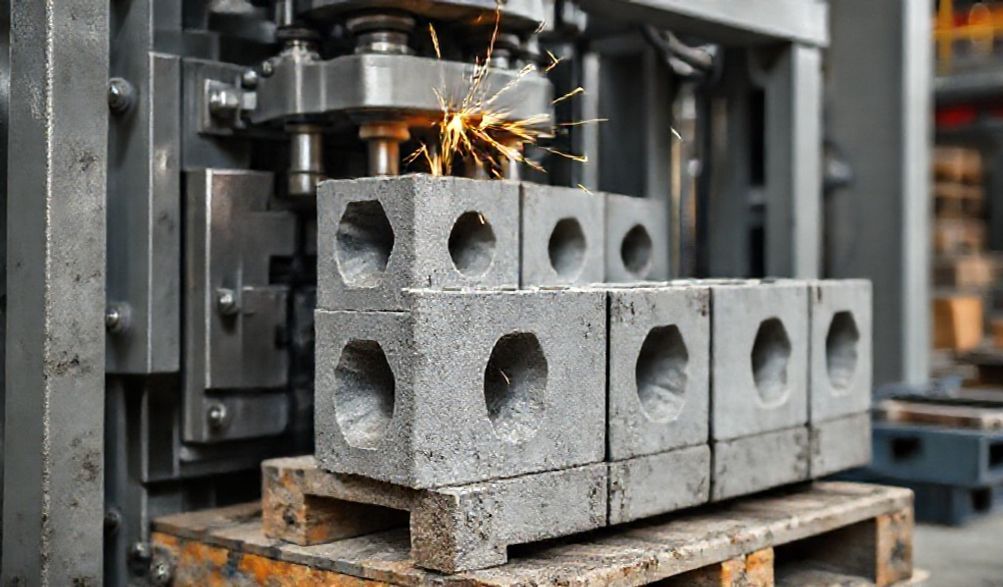
Panduan Muktamad untuk Mesin Pembuat Blok Konkrit Berongga: Pemilihan, Pengendalian & Kos
Pengenalan
Industri pembinaan global berada dalam perlumbaan berterusan untuk mengimbangi kos, kelajuan, dan ketahanan. Inti kepada cabaran ini terletak pada keperluan asas: bahan binaan yang mampu milik dan boleh dipercayai. Di sinilah peranan blok berongga konkrit yang sederhana—asas kepada kerja batu moden yang menawarkan kekuatan, kecekapan terma, dan penjimatan bahan. Namun, di sebalik setiap blok yang konsisten dan berkualiti tinggi terdapat mesin yang direka untuk ketepatan dan produktiviti. Bagi pembina, kontraktor, dan usahawan, memilih mesin pembuatan blok berongga konkrit yang tepat bukan sekadar pembelian; ia adalah pelaburan penting untuk masa depan projek atau perniagaan anda.
Panduan muktamad ini direka dari asas untuk berfungsi sebagai sumber yang boleh dipercayai. Kami telah mensintesis spesifikasi industri, prinsip kejuruteraan mekanikal teras, dan amalan terbaik operasi yang diperoleh melalui pengalaman untuk menembusi hingar pemasaran. Wawasan di sini diambil daripada parameter reka bentuk jentera dunia sebenar, kajian kes barisan pengeluaran, dan protokol penyelenggaraan yang menentukan kejayaan dalam pembuatan pembinaan.
Tujuan kami jelas: untuk melengkapkan anda dengan rangka kerja yang komprehensif dan boleh dipercayai untuk memahami, memilih, dan mengendalikan mesin pembuat blok konkrit berongga. Sama ada anda menilai usaha berskala kecil atau meningkatkan skala kilang besar, panduan ini akan membantu memastikan pelaburan anda berasaskan maklumat, pengeluaran anda cekap, dan hasil anda menguntungkan.
Kami akan membahas:
Mekanik asas dan kelebihan penghasilan blok berongga.
* Pecahan terperinci jenis mesin—dari manual ke automatik sepenuhnya.
* Ciri-ciri kritikal yang perlu diteliti sebelum membeli.
* Amalan terbaik untuk operasi dan penyelenggaraan bagi memaksimumkan jangka hayat mesin.
* Analisis kos dan ROI yang telus untuk membumikan perancangan perniagaan anda.
Memahami Mesin Pembuat Blok Berongga Konkrit
Sebelum menyelami spesifikasi dan pembekal, adalah penting untuk memahami apa yang dilakukan oleh mesin-mesin ini dan mengapa produk mereka begitu berharga dalam pembinaan kontemporari.
Apakah itu Mesin Pembuat Blok Berongga Konkrit?
Mesin pembuat blok konkrit berongga adalah sistem mekanikal yang direka untuk mengautomasikan acuan konkrit menjadi blok berongga yang piawai. Ia menggantikan kaedah manual yang tidak konsisten dan memerlukan tenaga kerja intensif dengan proses yang memastikan keseragaman, ketumpatan, dan integriti struktur melalui getaran dan tekanan terkawal.
Proses pengeluaran teras biasanya mengikuti peringkat-peringkat berikut:
1. Pemberian Makan:Bahan mentah (simen, pasir, agregat) dimuatkan ke dalam corong.
2. Mencampurkan:Bahan-bahan dicampur dengan air untuk mencapai campuran konkrit separa kering yang homogen.
3. Pembentukan:Campuran itu dimasukkan ke dalam rongga acuan di atas meja bergetar.
4. Pemadatan:Getaran frekuensi tinggi, sering digabungkan dengan tekanan hidraulik atau mekanikal, menghilangkan poket udara dan memadatkan konkrit dengan padat.
5. Pengeluaran & Pengerasan:Blok yang baru terbentuk dikeluarkan ke atas palet atau tanah untuk memulakan proses pengawetan kritikal, di mana ia memperoleh kekuatan.
Mengapa Blok Berongga? Kelebihan dalam Pembinaan Moden
Reka bentuk blok berongga bukanlah sewenang-wenangnya; ia memberikan manfaat kejuruteraan dan ekonomi yang ketara yang mendorong kepopularannya.beban galang batadan dinding pengisi.
- Kecekapan Bahan & Keberkesanan Kos:Inti berongga mengurangkan jumlah konkrit yang diperlukan setiap blok, menurunkan kos bahan dan beban mati keseluruhan pada struktur.
- Penebat Terma dan Akustik:Rongga udara dalam blok blok mencipta halangan semula jadi kepada haba dan bunyi, menyumbang kepada bangunan yang cekap tenaga dan lebih senyap.
- Kecekapan Pembinaan:Rongga tersebut menyediakan saluran yang mudah untuk mengalirkan saluran elektrik, paip paip, dan bar tetulang, dengan ketara mempercepatkan proses pembinaan.
- Mengurangkan Beban Struktur:Beratnya yang lebih ringan berbanding blok pepejal membolehkan reka bentuk asas yang lebih ringan dan lebih ekonomi.
Komponen Teras dan Cara Ia Berfungsi
Memahami komponen utama membantu menjelaskan mesin dan memudahkan keputusan penyelesaian masalah serta pembelian.
- Hopper & Feeder:Titik masuk untuk bahan mentah, selalunya dilengkapi dengan sistem pengukuran untuk saiz kelompok yang konsisten.
- Pengadun:Mencampurkan simen, agregat, dan air sehingga mencapai konsistensi tepat yang diperlukan untuk pemadatan yang optimum.
- Acuan (atau Mati):Jantung mesin. Kotak keluli yang boleh ditukar ganti ini menentukan saiz dan bentuk bongkah (cth., bongkah 4 inci, 6 inci, 8 inci). Kualitinya menentukan kemasan dan ketahanan bongkah.
- Meja Getaran & PenekanMotor menjana getaran frekuensi tinggi yang dihantar ke acuan. Dalam mesin yang lebih canggih, penekan hidraulik mengenakan tekanan ke bawah secara serentak. Sinergi ini penting untuk menghasilkan blok berketumpatan tinggi dan kuat.
- Sistem Kawalan:Julat daripada mekanisme mudah yang dikendalikan dengan tuil kepada pengawal logik boleh diprogram (PLC) yang mengautomasikan keseluruhan kitaran, memastikan kebolehulangan.
- Penghantar Palet/Penghantar:Membekalkan palet untuk blok-blok yang akan diawetkan (loji tetap) atau mengalihkan blok-blok daripada mesin.
Jenis-jenis Mesin Pembuatan Blok Konkrit Berongga
Pasaran menawarkan penyelesaian untuk setiap skala operasi. Pilihan anda secara asasnya memberi kesan kepada kapasiti pengeluaran, keperluan tenaga kerja, dan pelaburan modal.
Mesin Manual vs. Semi-Automatik vs. Sepenuhnya Automatik
| Ciri | Mesin Manual | Mesin Semi-Automatik | Mesin Sepenuhnya Automatik |
| :— | :— | :— | :— |
| Kapasiti Pengeluaran | Low (200-500 blocks/day) | Medium (1000-3000 blocks/8hr shift) | High (5000-20,000+ blocks/8hr shift) |
| Keperluan Tenaga Kerja | High (4-6 people) | Moderate (2-3 people) | Low (1-2 people for monitoring) |
| Pelaburan Awal | Low | Medium | High |
| Tahap Automasi | Human-powered operation, manual mixing. | Mechanized vibration and compaction; manual material feeding and block removal. | Fully automated cycle from feeding to block stacking; PLC-controlled. |
| Ideal Use Case | Very small projects, remote sites with no power. | Small-to-medium businesses, startups, block yards. | Large-scale block manufacturing plants, high-volume infrastructure projects. |
Guidance: A startup or small contractor might begin with a robust semi-automatic model to balance cost and output. A large developer or dedicated block supplier would prioritize the productivity and consistency of a fully automatic plant setup.
Mesin Membuat Blok Stesen
These are the workhorses of fixed-location block manufacturing plants.
- Penerangan: Heavy-duty, high-output machines installed on a solid concrete foundation. They produce blocks on pallets, which are then moved to curing racks or chambers via forklift or conveyor systems.
- Kelebihan:
- Highest production output and consistency.
- Superior block density and finish due to powerful, stable vibratory presssistem.
- Can be integrated into automated production lines.
- Keburukan:
- Requires significant space for the machine, curing area, and storage.
- Higher initial capital investment.
- Requires pallets, which add to operational cost and logistics.
Mobile Block Making Machines (Egg-Laying Type)
These machines bring production directly to the job site.
- Penerangan: As the machine operates, it moves forward on rails or wheels, depositing (“laying”) freshly molded blocks directly onto a level ground surface, much like a chicken laying eggs.
- Kelebihan:
- Eliminates the need for pallets, reducing a major cost component.
- Ideal for on-site production, cutting transport costs for blocks.
- Generally lower initial purchase price than stationary plants.
- Keburukan:
- More labor-intensive for block handling and ground preparation.
- Production output is typically lower and more weather-dependent.
- Block quality can be more variable due to less controlled curing conditions.
Key Features to Consider When Buying
Looking beyond the basic type, these features will determine your long-term satisfaction and profitability.
Kapasiti Pengeluaran (Blok Per Jam)
Don’t just look at the peak “blocks per hour” rating. Assess the sustainable 8-hour shift output. Calculate your required capacity based on:
* Project Demand: Average blocks needed per day/week for your contracts.
* Business Plan: Sales targets for a block manufacturing business.
* Future Growth: Consider a machine with 20-30% extra capacity to handle growth without immediate reinvestment.
Block Size and Mold Customization
- Saiz Piawai: Ensure the machine can produce the most in-demand sizes in your market (e.g., 4″, 6″, 8″ thick blocks).
- Acuan Boleh Tukar Ganti: The ability to quickly swap molds is essential for product diversification. Check the cost and availability of additional molds for pavers, curbstones, or solid blocks.
- Kualiti Acuan: Opt for hardened steel molds. They resist wear longer, ensuring consistent block dimensions and a smooth finish over thousands of cycles.
Power Source: Electric, Diesel, or Hybrid?
- Elektrik: Cleaner, quieter, and lower operating cost per hour. Requires a stable, high-capacity power grid.
- Diesel: Offers complete independence from the grid, crucial for remote sites or regions with frequent power cuts. Higher fuel and maintenance costs.
- Hibrid: Offers flexibility to switch between power sources, providing a valuable backup but at a higher purchase price.
Tahap Automasi dan Sistem Kawalan
Higher automation directly impacts:
* Konsistensi: PLC systems ensure every block receives identical vibration and pressure.
* Pengurangan Sisa: Precise material measurement minimizes spillage and rejects.
* Labor Skill Requirement: A fully automatic machine reduces physical labor but requires basic technical skills for monitoring and troubleshooting.
Machine Durability and After-Sales Support
This is the most critical factor for kebolehpercayaan in your investment.
- Kualiti Pembinaan: Inspect the frame and critical components. Are they made from heavy-duty, reinforced steel? Thin-gauge steel will flex and wear quickly.
- Jaminan: A reputable supplier will offer a clear, comprehensive warranty (e.g., 1 year on the machine, 6 months on wear parts).
- Sokongan Selepas Jualan: Ini tidak boleh dirunding. Verify:
- Availability of spare parts locally or via fast shipping.
- Provision of detailed operation and maintenance manuals.
- Access to technical support (phone, online, or in-person).
- A common oversight is choosing a cheap machine from a supplier with no local presence, leading to catastrophic downtime when a simple part fails.
Operating and Maintaining Your Machine for Longevity
Your machine’s performance and lifespan are directly tied to how you operate and care for it.
The Production Process: Step-by-Step
- Penyediaan Bahan Mentah: Use clean, well-graded aggregates. A common starting mix ratio is 1 part cement : 6 parts sand : 4 parts gravel (aggregate). Water should be added to achieve a semi-dry mix that holds its shape when squeezed.
- Operation Cycle: The operator feeds the mix into the machine, initiates the cycle (vibration + compaction), and the block is ejected onto a pallet or the ground.
- Penyembuhan: This is where blocks gain strength. Keep blocks moist and under cover (e.g., with plastic sheeting) for at least 7 days. Steam curing in a chamber can accelerate this to 24 hours for high-strength blocks.
Essential Safety Protocols
- Latihan: Never allow untrained personnel to operate the machine.
- Peralatan Perlindungan Diri (PPD): Mandatory use of safety glasses, gloves, steel-toe boots, and hearing protection.
- Machine Guards: Ensure all moving parts, especially the vibration mechanism and press, are properly guarded. Lock-out/tag-out procedures must be followed for any maintenance.
Routine Maintenance Checklist
Preventive maintenance is far cheaper than emergency repairs.
- Daily: Clean the machine thoroughly at the end of each shift. Check for loose bolts and nuts. Inspect the hydraulic system for leaks.
- Weekly: Lubricate all moving parts as per the manual. Check the oil level in the vibration motor and hydraulic tank. Inspect mold liners for wear.
- Monthly: Tighten all major structural bolts. Check the alignment of the feeding system and conveyor. Test safety interlocks.
Troubleshooting Common Issues
- Poor Block Strength: Usually caused by incorrect water-cement ratio (too much water), insufficient vibration time, or weak concrete mix. Re-calibrate your mix and compaction cycle.
- Surface Cracks: Often due to improper curing (drying too quickly) or excessive vibration. Ensure blocks are kept moist and adjust vibration duration.
- Machine Jams: Caused by overfilling the mold, overly wet concrete, or foreign objects in the mix. Stop the machine, clear the obstruction, and adjust feeding.
Cost Analysis and Return on Investment (ROI)
A clear financial picture separates a hopeful venture from a viable business.
Breaking Down the Investment Cost
- Machine Price: Ranges from ~$5,000 for a basic manual machine to over $100,000 for a high-end fully automatic line.
- Auxiliary Costs: Don’t forget: cost of additional molds ($500-$2,000 each), installation/commissioning fees, and the initial stockpile of raw materials.
Operational Costs: Raw Materials, Labor, and Power
To find your cost per block, track:
* Material Cost: (Cement + Sand + Aggregate) per block.
* Labor Cost: Wages allocated per block produced.
* Utilities & Depreciation: Power/fuel consumption and machine depreciation per block.
* Contoh: If total costs sum to $0.50 per block and you sell it for $0.80, your gross profit margin is $0.30 per block.
Calculating Your Potential ROI
Use this simplified framework:
ROI Timeframe = Total Investment / (Monthly Profit from Block Sales)
Factors dramatically affecting ROI:
* Local Market Demand & Pricing: What is the selling price in your area?
* Kecekapan Operasi: Can you achieve the machine’s rated output with minimal downtime?
* Skala: Higher production spreads fixed costs (like labor) over more blocks, increasing profit margin.
A well-run semi-automatic operation in a market with good demand can often see a full return on investment within 12-24 months.
Soalan Lazim (FAQ)
Q1: What is the average production capacity of a standard block making machine?
A: Capacity varies wildly. A small semi-automatic machine may produce 1,000-2,000 blocks in an 8-hour shift, while a large fully automatic plant can produce 10,000+. The key is to discuss “sustainable daily output” with your supplier, not peak theoretical capacity.
Q2: Can I produce different block sizes and designs with one machine?
A: Absolutely, through interchangeable molds. This is a major advantage. However, each mold is a separate purchase, and changing molds requires time (from 30 minutes to a few hours), which temporarily halts production.
Q3: What is the ideal concrete mix ratio for strong hollow blocks?
A: A reliable starting point is a 1:6:4 ratio (Cement: Sand: 3/8″ Gravel). However, the “ideal” ratio depends on the quality and properties of your local sand and aggregates. We strongly recommend conducting trial mixes and compression tests to optimize for your specific materials and machine.
Q4: How much space is required to set up a block manufacturing plant?
A: Consider three zones:
1. Production Shed: To house the machine (~300-500 sq. ft.).
2. Curing Area: A covered, level space 4-5 times larger than the production shed for blocks to gain strength.
3. Raw Material & Finished Block Storage: Additional open or covered space.
A micro plant might need 2,000 sq. ft., while a serious operation requires 10,000+ sq. ft.
Q5: How do I choose a reliable machine supplier?
A: This is the most critical step for your kebolehpercayaan and success.
* Check History & Reputation: How long has the company been in business? Search for independent reviews or complaints.
* Request Client References: Ask for contacts of past buyers, preferably in your region, and call them.
* Verify Quality Certifications: Do they have ISO or other relevant manufacturing quality certifications?
* Inspect Warranty & Support Terms: Are they clear, fair, and in writing? Is there a local service agent?
* Visit if Possible: If feasible, visit the supplier’s factory or a client’s working plant to see the machine in action. The quality of assembly and customer service will be evident.
Kesimpulan
Choosing and operating a concrete hollow block making machine is a significant technical and financial decision. The path to success lies in carefully matching the machine type—be it manual, semi-automatic, or fully automatic—to your specific production needs and budget. Prioritizing build quality, mold versatility, and, above all, the after-sales support from your supplier will protect your investment for years to come.
Remember, understanding the true operational costs, from raw materials to preventive maintenance, is just as important as the purchase price. This guide has provided the factual information and operational framework to ground your research.
Your Call to Action: Use this guide as a checklist when evaluating machines and speaking with suppliers. Demand detailed demonstrations, scrutinize warranty documents, and always start with a solid business and production plan. With thorough preparation, your investment in a concrete hollow block making machine can become a cornerstone of your construction efficiency or business growth.
<